
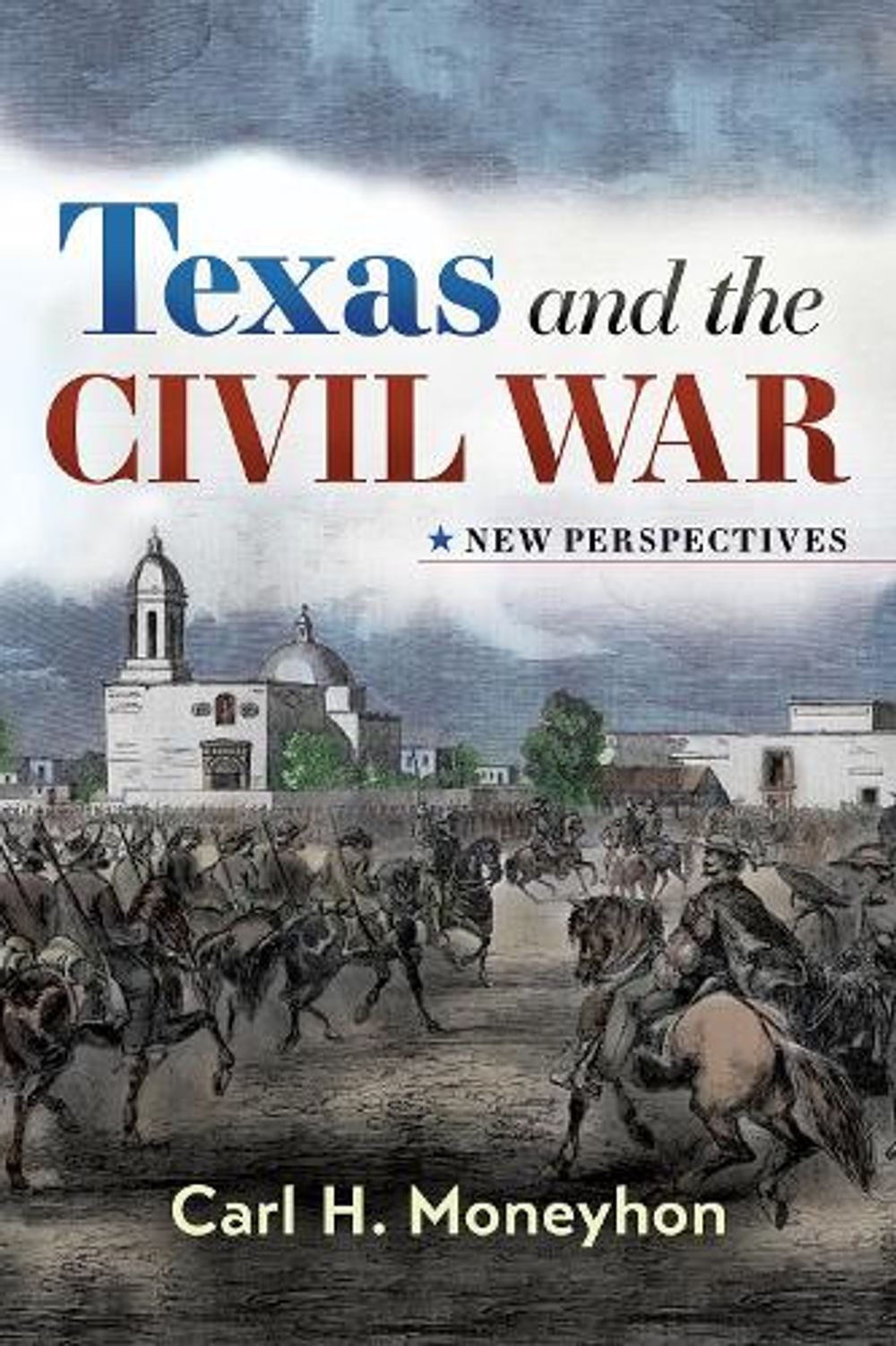
Texas and the Civil War, Volume 4
by Carl H. Moneyhon
When considering Texas in the Civil War, the traditional consensus among historians has been that the conflict had relatively little effect on the people at home. With no major military operations in the state, slavery remained untouched, food remained plentiful, towns stood undestroyed, and lives proceeded as they had before the war for most people. The development of social history in Texas studies over the last two decades has shown, however, that the war produced disruptions beyond the obvious end of slavery in the state. Carl H. Moneyhon tests the generalization that Texans emerged from the Civil War relatively unscathed. There is no question that Texas never saw large armies march across the landscape destroying farms, plantations, and towns in their path. Does that mean, however, that Texans paid no price for going to war? With deep reliance on primary sources, Moneyhon first examines the set of ideas about the North, enslaved people, and slavery that developed in Texas during the 1850s that provided the framework for secession, war, and military mobilization. He explores who joined the Confederate armies, why they continued to fight despite desperate conditions, and how their experiences affected them. Largely overlooked questions of finance and supply provide the focus of two chapters. Another considers the question of frontiers, bearing in mind the existence of multiple frontiers rather than simply that of the state's western and northwestern boundaries. Moneyhon investigates the breakdown of Confederate consensus and the development of anti-Confederate sentiment and movements. How the war affected family and class are topics that have received considerable recent attention and are also explored herein. Finally, he examines military history and Union activities in Texas, considering both the effect these actions had on the people of the state and the impact of defeat on soldiers and civilians.
Hardcover
Brand New
Review
"No one has ever written a history that covers the entire story of the Texas Civil War experience. The author really shines in his fantastic presentation of original, primary-source materials, and that is why this unprecedented book will be used, and cited, for many years to come."—Richard B. McCaslin, Texas State Historian and author of Tainted Breeze: The Great Hanging at Gainesville, Texas, October 1862 "This book is unique in its thematic breadth, chronological scope, and effective integration of military, social, economic, and cultural history. I am not familiar with any comparable single-volume study that offers the same comprehensive and analytical synthesis of Civil War Texas as found here. This is a groundbreaking study that offers a comprehensive reinterpretation of Texas's wartime experience, challenging the long-standing historiographical view that the state was largely peripheral to the broader disruptions of the Civil War."—Kenneth W. Howell, editor of The Seventh Star of the Confederacy: Texas During the Civil War (UNT Press) "This insightful study is more than just an overview of Texas in the Civil War. Moneyhon masterfully provides a comprehensive examination of Texas's role in the conflict and the war's impacts on the state, ranging from politics and the military to society and the economy. He blends established studies and new research, showcasing the importance of the Lone Star State in the most influential event in American history. Moneyhon's research and writing will be of interest to scholars, Civil War enthusiasts, and casual history readers."—Charles D. Grear, author of Why Texans Fought in the Civil War "For those who feel that Texas was extremely fortunate in escaping so much of the horror and destruction caused by the bloody years of the American Civil War, Texas and the Civil War: New Perspectives by Dr. Carl H. Moneyhon provides a convincing study of what was actually happening in Texas. Moneyhon presents a convincing case that the 'Seventh Star of the Confederacy' did, in fact, suffer as much if not more than the other stars in the Confederacy. After reading Moneyhon's most provocative new book, this reader will never again be able to visualize Texas and the Civil War in the same light."—Donaly E. Brice, reference archivist, retired, Texas State Library and Archives Commission, and co-author of Texas Rangers: Lives, Legend, and Legacy
Details
