
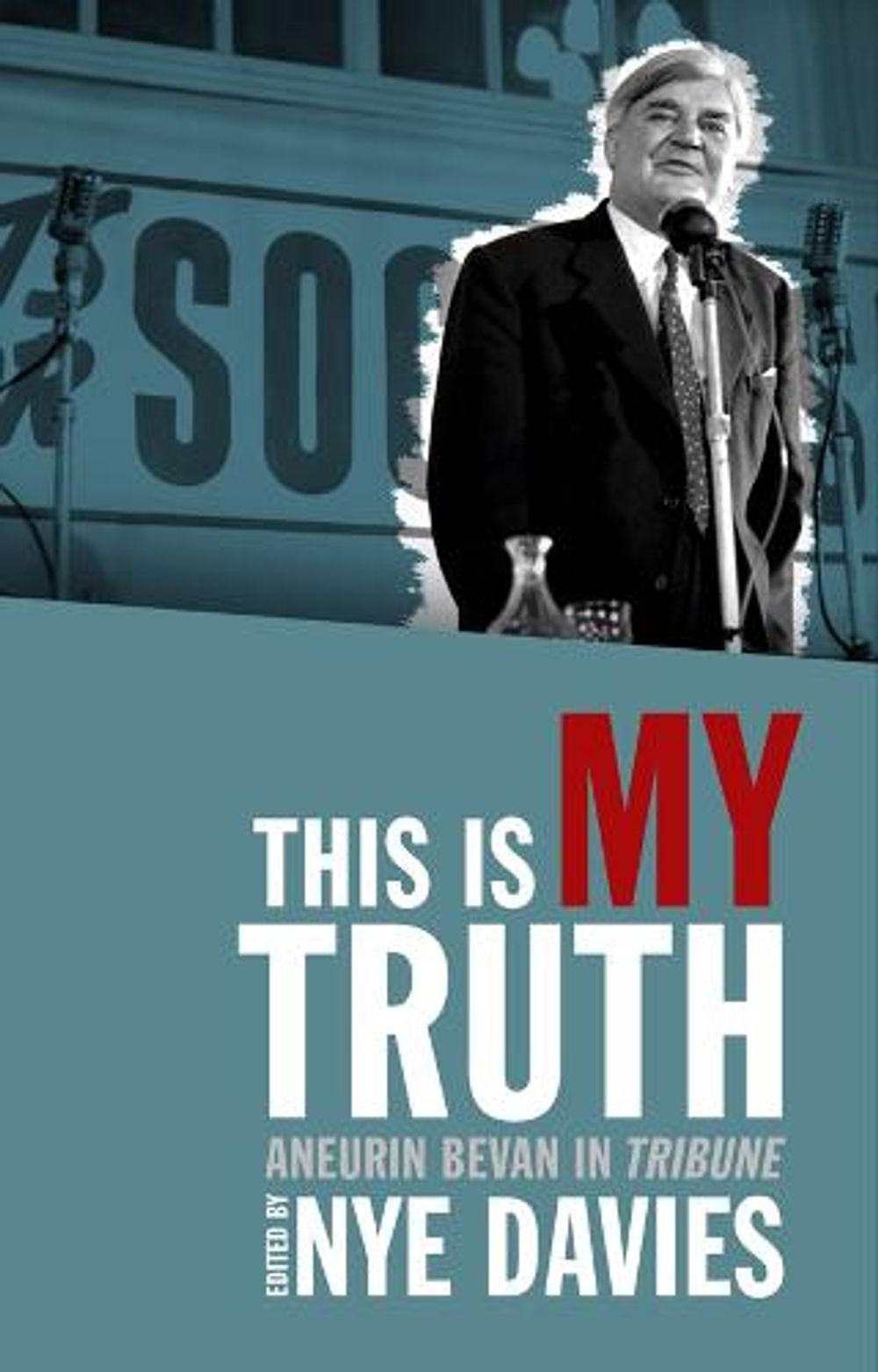
This is My Truth
by Nye Davies
This is My Truth is the first edited collection of Aneurin Bevan's writings in the socialist magazine Tribune. Showcasing Bevan's analysis of politics, society and the world, it provides readers with the opportunity to read Bevan in his own words.
Paperback
English
Brand New
Publisher Description
Aneurin Bevan is a revered figure in Welsh and British politics, celebrated for his role as the founder of one of the country's most cherished institutions, the National Health Service. As a result, he is continuously invoked, quoted widely, and is praised for his principles. However, Bevan was not only a significant politician. He was also a prolific writer, contributing extensively to the socialist magazine Tribune from its founding in 1937 until his death in 1960. This is My Truth represents the first edited collection of these writings. Beginning with an introduction that charts his writing career and emphasises his legacy, the collection showcases Bevan's analysis of class conflict, capitalism, democracy, the world and democratic socialism. This is My Truth provides readers with the opportunity to read Bevan in his own words and to reflect on a figure who remains a source of inspiration and controversy today.
Table of Contents
Acknowledgements
Introduction
Chapter 1: Capitalism, Power and Politics
Chapter 2: Labour and the Unions
Chapter 3: Ideas, Values and Society
Chapter 4: War
Chapter 5: International Relations
Bibliography
Review
"Bevan is a statesman of the past who is of central relevance to our present. The founding principle of his National Health Service--treatment based on medical need, not the ability to pay--is still improving the lives of millions more than seven decades after its creation. Expertly edited by Nye Davies, this collection of articles from Tribune is useful not only for students of Bevan's remarkable life, but for all those who seek to understand the course of post-war British politics."
--Nick Thomas-Symonds, MP for Torfaen, Shadow Secretary of State for International Trade
"In This is My Truth, Bevan uses such forensic language to probe and test all manner of subjects, from capitalist society through class conflict to the centrality of Government, along the way pausing to express his anger at what Nye Davies describes as 'the pernicious effects of the poverty and the exploitation he fought against throughout his life.'"-- ""
Details
