


Peoples of the Past: Phoenicians by Glenn E. Markoe.
NOTE: We have over 100,000 books in our library, over 12,000 different titles. Odds are we have other copies of this same title in varying conditions, some less expensive, some better condition. We might also have different editions as well (some paperback, some hardcover, oftentimes international editions). If you don’t see what you want, please contact us and ask. We’re happy to send you a summary of the differing conditions and prices we may have for the same title.
DESCRIPTION: Illustrated hardcover w/dustjacket: 224 pages. Publisher: University of California Press; (2000). OVERVIEW: One of the great enigmas of the ancient world, the Phoenicians were both lauded and despised in antiquity. They were celebrated as learned scribes who passed on the modern alphabet, as skilled seafarers and explorers, and as gifted artisans and engineers. Historical sources show they were also perceived as unscrupulous profiteers and cheaters, and as a morally corrupt race of people who prostituted their daughters and butchered their infant children in sacrifices to their gods. But who were the real Phoenicians, and what do we know of their origins and culture?

The heartland of the Phoenician empire consisted of a narrow coastal strip between the Lebanon mountains and the Mediterranean sea, a slightly extended version of modern Lebanon. The Phoenicians who lived along this coastline explored and colonized far away lands. But in many ways the Phoenician civilization is lost and many facts about it are unknown since not a single Phoenician manuscript has survived in the original or in translation. Digging deep into the historical and archaeological sources, Glenn Markoe reconstructs what we presently know about these mysterious people and their maritime culture. He fleshes out Phoenicia, giving accounts of its history, cities, economy, language and literature, religion, and its commercial expansion abroad.
This richly illustrated book includes photographs of Phoenician artifacts and excavations, along with many maps and drawings. Unlike other works that have treated the Phoenician culture as an Early Iron Age phenomenon, Markoe focuses on the continuity in tradition that characterized Phoenician history over a period of more than 1200 years, from the beginning of the Late Bronze Age (circa 1550 BC)-when Phoenician cities first emerged-to the start of the Hellenistic period around 300 BC. This book provides a comprehensive, unified view of a culture consisting of many disparate ethnic and geographical entities.
CONDITION: LIKE NEW. New hardcover w/dustjacket (224 pages) University of California (1999). Unblemished except for faint shelfwear to dustjacket and covers. Pages are pristine; clean, crisp, unmarked, unmutilated, tightly bound, unambiguously unread. Shelfwear to dustjacket is in the form of very mild crinkling along the top open edge of the dustjacket, principally involving the dustjacket spine head and the two upper open dustjacket corners (or "tips"). The "tips" of course are formed where the dustjacket folds beneath the covers to form the dustjacket flaps, i.e., the "open corners" of the dustjacket (top and bottom, front and back). And by "very mild", we mean precisely that, literally. It requires that you examine the dustjaket pretty closely to discern the very mild crinkling. Beneath the dustjacket the covers are clean and unsoiled, however they do echo some of the shelfwear of the overlying dustjacket, i.e., faint, tiny crinkles are the two open cover corners. If I had to guess, I would say that the upper open corner of the book was lightly tapped against either a bookshelf edge or the underside (rib) of an overhead bookshelf. And yeah, we're nitpicking to the point of absurdity...but we do try to give a thorough, transparent, and complete condition description. Notwithstanding the overall condition of the book is absolutely consistent with "new" (albeit "shelfworn") stock from a traditional, brick-and-mortar shelved bookstore environment (such as Barnes & Noble, B. Dalton, Borders/Waldenbooks, for example - or for that matter, from Amazon) wherein otherwise new books might evidence faint shelfwear, consequence simply of routine handling and the ongoing ordeal of constantly being shelved, re-shelved, and shuffled about. Satisfaction unconditionally guaranteed. In stock, ready to ship. No disappointments, no excuses. PROMPT SHIPPING! HEAVILY PADDED, DAMAGE-FREE PACKAGING! Selling rare and out-of-print ancient history books on-line since 1997. We accept returns for any reason within 30 days! #1760d.
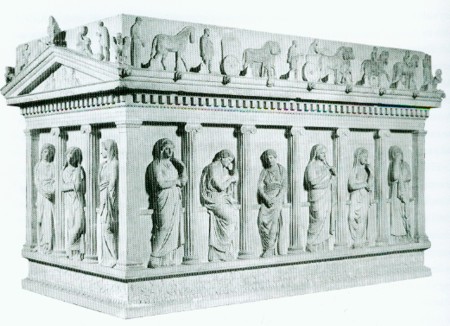
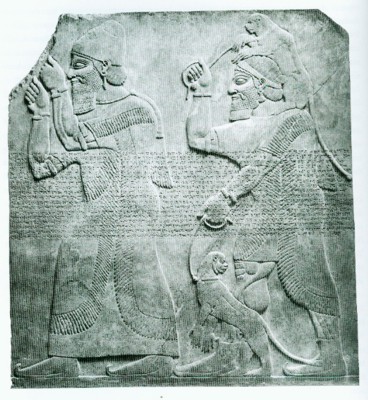
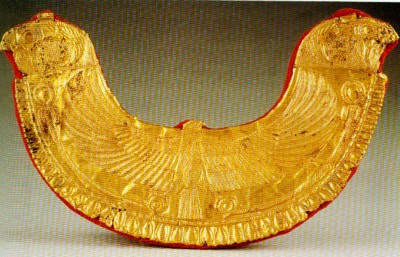
PLEASE SEE IMAGES BELOW FOR SAMPLE PAGES FROM INSIDE OF BOOK.
PLEASE SEE PUBLISHER, PROFESSIONAL, AND READER REVIEWS BELOW.
REVIEW: This book covers a period of some twelve hundred years, from the Late Bronze Age (1550-1200 B.C.) to the Persian period (550-300 B.C.). Dr. Glenn E. Markoe sets out what is known of the Phoenicians' complex history, culture, trading and political relationships, art, religion and language. In this study, he draws on the most recent research and excavations, which are gradually shedding light on this fascinating and elusive people of the past. The author, Glenn E. Markoe, is Curator of Classical and Near Eastern Art at the Cincinnati Art Museum.
TABLE OF CONTENTS:
--Maps.
--Introduction.
1. History.
2. The City.
3. Economy: Commerce and Industry.
 4. Language and Literature.
5. Religion.
6. Material Culture.
7. Commercial Expansion Abroad.
--Epilogue.
--Appendix: Survey of Cities in the Phoenician Homeland.
--Chronological Chart.
--Bibliographical Abbreviations.
--Notes.
--Glossary.
--Acknowledgments.
REVIEW: This text reviews the history and culture of a people who played an increasingly important role in the Near East and Mediterranean world between the Late Bronze Age (1600-200 BC) and the Persian period (500-330 BC). Credited with the invention of the first western alphabet, the Phoenicians yet remain somewhat shadowy in many people's minds. In this wide-ranging book, Glenn Markoe sets out what is known of their complex history, culture, trading and political relationships, art, religion and language, drawing on recent and excavations which are gradually revealing more about this people of the past.
REVIEW: Who were the Phoenicians and where did they come from? The answers might never be known, but Markoe offers a significant contribution to a better understanding of the enigma of the Phoenicians by reconstructing their past and their maritime culture. Examines the history of its cities, economy, language, literature, religion, and its commercial expansions abroad. Provides a much-needed account of the shadowy people who flourished after the late Bronze Age. Exceptionally well done!
REVIEW: Digging deep into the historical and archaeological sources, Glenn Markoe (Curator of Classical and Near Eastern Art at the Cincinnati Art Museum) reconstructs what we presently know about these mysterious people and their maritime culture. This richly illustrated book includes photographs of Phoenician artifacts and excavations, along with many maps and drawings. Unlike other works that have treated the Phoenician culture as an Early Iron Age phenomenon, Markoe focuses on the continuity in tradition that characterized Phoenician history over a period of more than 1200 years, from the beginning of the Late Bronze Age (1550 B.C.), when Phoenician cities first emerged, to the start of the Hellenistic period around 300 B.C. This book provides a comprehensive, unified view of a culture consisting of many disparate ethnic and geographical entities.
REVIEW: I have been reading many textbooks in the course of Ancient History at undergraduate level, and this book stands out in its handling of the Phoenicians in the Bronze to late Iron ages, 1,550 - 300 BC. The imprint is readable, numerous excellent illustrations, and discussion is reasonably well supported by references to current archaeological digs. There is a balanced account of the disputed issue of child sacrifice, and a discussion of the sites where archaeological evidence indicates it did occur, why and whether it was state sponsored or a private devotional offering. Among the commercial interests mentioned are the Phoenicians' reputation as slavers and kidnappers; this is referenced in Polybius and Herodotus, and Carthage's second treaty with Rome. No comment is made as to the varying reliability of the sources, which is worth considering. Really worth considering as a clear introduction and well referenced for further enquiry.
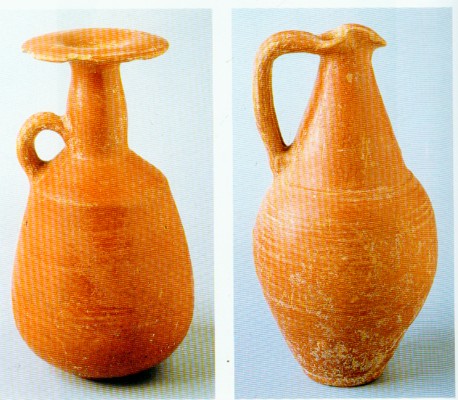 REVIEW: For a culture that had such a profound effect on the course of Middle Eastern and Western European history generally, we know remarkably little about the Phoenicians -- not even what they called themselves, though something close to "Canaanite" is probably a good guess. Their homeland is generally described as the Levant, from the Gulf of Alexandretta south to the edge of the Sinai, but that's probably overstating things. But it doesn't really matter because the Phoenicians seem to have been less a "nation" than a commercial hegemony. Their cities -- Byblos, Sidon, Tyre, Carthage -- were each fiercely independent of and competitive with each other, but they shared a language (including an alphabetic script which is the basis of all European written languages) and a knack for mercantilism. But because of where they lived, and because their were not only defeated but utterly destroyed by the nascent Roman state, not a single Phoenician manuscript has surveyed, not so much as a warehouse inventory. Markoe, a curator of classical and Near Eastern art, does a very good job of reconstructing and bringing together what we do know about their history, urban culture, economy, literature, religion, and commercial (rather than "imperial") expansion, interspersing the text with numerous plates and illustrations of historical sites and surviving artifacts.
REVIEW: Part of the very informative 'Peoples of the Past' series this covers history and culture of the Phoenician cities from formation of the original Levant coast trade association in the Late Bronze era, circa 1550 BC, to loss of independent identity after 332 BC. The book explores history, culture, religion and legacy of the association of independent cities. In the course of history they came under influence of Persian, Egyptian, Assyrians and Greeks. Never a political unity, some of the Phoenician cities allied mainly with Egypt against Assyrian hegemony, joined Ionian revolt against Persia in 499BC and sided with Sparta in the Peloponnesian War. The trade economy suffered extensive deprivations and interruption from the invasions of the Sea Peoples. More a history of individual cities than a Phoenician political entity, it covers cities such as Ugarit, Arwad, Byblos Sidon, and Tyre and later development of Beirut and Akko.
Colonial extensions involved Cyprus, Sardinia, Sicily, Italy, Spain and Morocco competing with Greek colonies in many locales. Most interesting is a history of Carthage after founding as a colony of Tyre circa 800BC. There's detailed study of religion as they worshiped Baal and more variations than I could relate. There is considerable evidence that Carthaginians engaged in human sacrifice, primarily of children. Structure of cities for defense, especially regarding harbors, is described along with metal work and pottery. Commerce features the familiar role of Hiram king of Tyre in facilitating Solomon's temple. The book illustrates expansion of Sidon and Tyre as commercial powers, trading in Asia, Europe and Africa as political hegemony varied. Reminiscent of an early Venetian empire. There's interesting study of the Semitic Phoenician language evolving into Hebrew and Aramaic. I think it would take an expert specialist to verify the analysis.
After the siege of Tyre in 332BC the Phoenician cities lost individual identity becoming Hellenized and falling to the Ptolemaic Empire as the Greek world split up after Alexander. Carthage maintained its own distinct identity, independent of its founders, until its destruction after the third Punic War. This densely packed informative book contains fascinating insights in spite of Marcoe saying that much remains unknown, obscuring Phoenician legacy.
REVIEW: A full yet concise book about Phoenician History. Starting all the way from their beginning and covering their lives all the way until they disappeared. The book gives and over all summary of their history in time line pattern. Other chapters describe their city and house lay-out, overseas colonies and religion. The Phoenicians were North Western Semites they were a subgroup along with the Israelites of the Canaanites. Not much is known about the Phoenicians save what others have written about them. It is quite Ironic that they are the ones who gave us our alphabet and were one of the most literate societies of the Middle East, yet very few of their writing remain. What we know about the Phoenicians comes to us from outside sources. That would also mean their opponents or enemies, so what is said about them must be taken with a grain of salt.
Outside sources say mixed things about the Phoenicians. On the one hand they are known as master shipbuilders, architects, and businessmen. Yet on the other hand they bare depicted as being devoid of morality or being so low as to sell their own daughter for a profit. The question remains, how did the Phoenicians? Define themselves? They had no country to speak of , rather they had city-state each with it's own king. The word Phoenicians comes from the Greek word Poinex which could be a reference to the purple dye they were known for or the red color of their skin. It is Doubtful they called themselves Phoenicians.
It is shortly after the expulsion off the Hykso that Egypt invaded Canaan. At this point in time the two super powers were the Hittites and the Egyptians. The Egyptian had control a good portion of the time. The Egyptians bought lots of timber from the Phoenicians. It could be noted that the Egyptians had a stronger cultural impact on the Phoenicians than did the Hittites. A number of Egyptian Gods were added to the Phoenician pantheon. Also the Phoenicans incorporated the ankh and the scarabs. When the Egyptian had control things went well as trade routes into Arabia and the South were open. The Phoenicians even set up a trading colony in Memphis as evidenced by the Phoenician temples. When the Hittites were in control Many Phoenicians would trade to the north and even settle in the North. Penultimately The Egyptians won out.
With the coming of the Assyrians the Phoenicians put up stiff resistance. In the end the city of Tyre was besieged and taken over but not totally destroyed as the Assyrians knew that Tyre if allowed to trade would be a cast cow. Several times though did the Phoenicians rebel against the Assyrians even under Egyptian sponsorship. The rebellion was crushed. When the Babylonians came to power the Phoenician were loyal until the Persians came about. Under the Persians it was the Phoenicians who built their ship and composed a majority of their navy. When the Greeks came under Alexander the Great the Phoenician put up a stiff resistance. In the end Tyre was besieged and fell. Within a short time the Phoenicians on mainland Phoenicia would Hellenize and lose their identity. Their over seas colonies would last much longer before disappearing.
There were four major Phoenician cities in the mainland. They were Tyre, Arwad, Byblos and Sidon. Tyre was most famous for setting up Carthage and other colonies in the Mediterranean Sea basin. While there was an over all pantheon of Gods in Phoenicia each city state worshiped it's own God and Goddess. In Tyre Astarte and Melqart were worshiped. Based on the agricultural cycle with the male G0d dying and then being reborn in Marriage to the Goddess. In other City-States it was Eshmun and Astarte or Baal and Astarte. In Carthage it would be Punay and Tanite. The Phoenicians did have sacrifices of mostly plants and animals. On occasions there were human sacrifices to the God Baal Hamon and Tanite. When Carthage was about to be over taken by the Roman they sacrificed 200 noble born children. This was after they sacrificed 200 poor children. Temple prostitution was also prevalent with both male and female prostitutes. The temples were usually open air court yards with an altar in the middle. They were ran by priests and priestesses. Sometimes priestesses could be in charge. THe king was usually the high priest of a temple. There was a ritual called Marzeh which was intense eating and drinking in honor of the dead.
Their cities were built near the coast and tended not to be too large. Their harbors were defensible. The warehouses were often located near the shore. Houses were square shaped and tend to have a corridor with room on the side. Two story houses were around also with residences being on the second floor and the first floor being devoted to business. The Phoenicians set up colonies all over the known world. They reached as far as Spain. Most of their colonization was driven by trade, and the search for metallic ore. Their economy aslo relied on slavery and their metal working as well as their purple dye. Cathage and Cadiz (in Spain) developed into full blown cities. Kition was a Phoenician settlement in Cyprus. The Phoenicians even had settlements in Italy and had good relations with the Etruscans and Etrurians. The Phoenician in fact even allied with these two groups to fight against Greeks.
Phoenician culture disappeared after Carthage's defeat from the Romans during the Punic war. Yet their legacy goes on forever.
REVIEW: The definitive account of the archaeology and history of the mysterious Phoenician civilization. I could never really seem to find an authoritative volume on this least-understood but pervasive culture of the ancient world--until now. I wish I could thank this author in person for his tremendous scholarly contribution.
REVIEW: The Phoenicians by Glenn E. Markoe covers the history of the Phoenician people in the Levant and their colonies in the western Mediterranean area of North Africa and their interaction with their neighbors and their enemies throughout the Bronze Age and into the Iron Age.
REVIEW: Very informative. I was primarily looking at the history, culture, and commerce of the Phoenician race as well as information for three specific cities. I felt the book was well-written, informative, and "easy to read" [unlike other tomes which might provide a lot of information, but are too dense or boring to read on a more informal basis]. I did like the author's style, the way he presented the information. Each chapter was further broken down into sections, which helped me if my bookmarks fell out while I was looking for a blurb or quote that I liked. He had a section in the Appendix that covered several Phoenician cities, which was very helpful when used in conjunction with the information in the text itself.
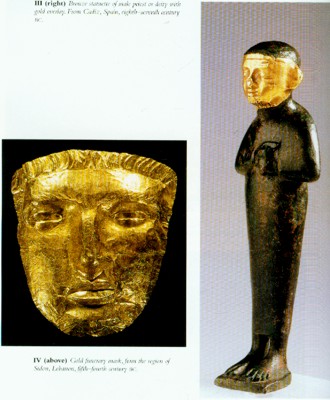 REVIEW: Excellent and very scientific. Very, very high level of erudition. A must on Phoenician civilization.
REVIEW: An excellent history of a now obscure civilization.
REVIEW: Well written...used for my research into the Material Culture of the 'Phoenicians'.
REVIEW: So pretty and loaded with good history and great images.
REVIEW: An in-depth look at the life & beliefs of an ancient society. Nicely done.
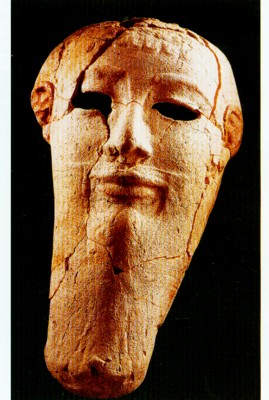 REVIEW: A very good, and thorough overview of the history of the Phoenicians.
REVIEW: I learned a lot about the Phoenicians - I had no idea how much impact they had throughout the Mediterranean region.
ADDITIONAL BACKGROUND:
THE CANAANITES & PHOENICIANS: From the Canaanites it is believed arose the ancient empire of Phoenicia. It was destined to become both part of the Hellenic and Roman Empires, and was in its own right one of the more significant ancient cultures in the world's history. The area that ultimately became known as Phoenicia (derived from the Greek name Phoinikes) was at the western end of the Fertile Crescent, and was settled sometime around 3000 B.C. There anthropologists believe that the westward expansion of these peoples from Mesopotamia met the Mediterranean. Also known as the Phoenicians, the Canaanites were in myth descended from Ham. “Recorded” history traditionally begins with Abraham being promised by God that he would become the father of a great nation. If the events described in the Bible actually took place they would appear to take place around 1,800 BC. Traditional history refers to the early inhabitants of Jericho as the sons of Shem. The history does speak of an invasion by a people called Canaanites, and Jericho was taken over by the Canaanites around 1900 BC. Jericho reached its greatest prominence between 1700 and 1550 BC. This was due to the rise of aristocrats that utilized chariots. These aristocrats were Maryannu from the Mitannite state to the north. Their rise caused a greater urbanization in the surrounding area, including Jericho. By this time there were two walls around the city forming a double enclosure made of mud brick. The outside wall rested on top of a stone base.
Most historians believe these events ascribed to Abraham to be purely mythical. What history does record is that in about 1600 BC Egypt was conquered by Canaanite tribes known by the Egyptians as the Hyksos. The Hyksos were eventually defeated by the Pharaoh Kamose. Kamose was the last king of ancient Egypt’s 17th dynasty. However it is believed that much of the Hyksosian population might have remained settled in the region of the Nile Delta under Egyptian dominion. Egypt's 19th dynasty began with the reign of Ramses I. Ramses II who reigned from 1279 to 1213 BC signed a treaty with the Hittites. This occurred after losing the northern Levant to the Hittite Empire.
If Moses was a historical figure, this is about the time of the Exodus. Historians believe it probable that the Exodus involved the remaining Hyksosian population. Persecuted by the ethnic Egyptians the Hyksos returned to Canaan. Specifically it is believed that the Hyksos returned to that region of Canaan recently lost by Egypt to the Hittites. According to the Bible, Moses led the Israelites out of Egypt and eventually came to "the promised land" in Canaan. Historians believe that this exodus was in actuality a return to their ancestral homeland. Moses died before entering Canaan, and Joshua became the next leader.
About 1,200 BC the Hittites were conquered from the north, and the northern coastal Canaanites (called the Phoenicians by the Greeks) were temporarily displaced. However the Canaanites returned when the invading tribes showed no inclination to settle but instead continued southward toward Egypt. The ancient Egyptians referred to this horde of invading tribes that swept across Asia Minor and the Mediterranean the “Sea Peoples”. Some hold that the Philistines originated from the “Sea Peoples”. In any event by 1185 BC the invasion of the Sea Peoples had been repelled by the ancient Egyptians. Deflected back northward, the “Sea Peoples” settled in Canaan, in the cities of Gaza, Gat, Gezer, Ashkelon, and Ashdod. These people are the Philistines of the Bible and provided the name Palestine to the area. In about 1140 BC the Canaanite tribes tried to destroy the Israelite tribes of northern and central Canaan. According to the Bible, the Israelite response was led by Barak, and the Hebrew prophet Deborah.
Ultimately the Canaanites were defeated, and ancient Israel was ruled by a series of “Judges”. Saul became the first king of the Israelites in approximately 1020 BC. David succeeded him in 1006 BC and moved the capital from Hebron to Jerusalem. David waged several successful military campaigns, annexing a large area from Philistine to Damascus. David was succeeded by his son Solomon in about 965 BC, who constructed the Temple of Solomon at Jerusalem and had a prosperous reign. Following the death of King Solomon in about 922 BC, the realm was divided into a Northern Kingdom, known as Israel and a Southern Kingdom, known as Judah, whose capital was Jerusalem. For the first sixty years the kings of Judah aimed at re-establishing their authority over the kingdom of the other ten tribes (the Northern Kingdom), so that there was a state of perpetual war between them. However for the following century they were for the most part in friendly alliance, co-operating against their common enemies, especially against the Syrians.
The earliest record of the Phoenicians themselves is from about 1600 B.C. They developed one of the earliest ancient and great seafaring Western cultures, using commerce as their principal motivation and source of influence. In fact, their name for themselves seems to have been Kena'ani (or Canaanites), a word which in Hebrew means "merchants." The prophet Ezekiel in his Biblical foretelling of the fall of one of Phoenicia's great cities, Tyre, reviews the extensive scope of Phoenician trade. It is believed that Byblos was the first city founded in Phoenicia, followed shortly thereafter by Tyre and Sidon. The later two cities gained prominence after about 1300 B.C., when Byblos was repeatedly sacked and razed by successive waves of raiders. The Phoenicians had developed a vast commercial empire with settlements which stretched as far as North Africa and the coast of Spain.
Phoenicia was centered along the coast of what is now Lebanon, but as the centuries past it expanded along the coast north and south. Ugarit to the north was absorbed, and to the south substantial settlements grew into cities which survive in modern Israel; Accho (contemporary Acre), Joppa (Tel Aviv-Yafo) and Dor (Nasholim). However the Phoenicians were more of a trading empire, and never much of a political or military empire like the ancient Greeks and Romans to follow. Consequentially Phoenicia was almost always under the dominion of another political-military empire. After about 1000 B.C. for instance, the Assyrians required regular tribute payments to their king. Before the Assyrians were the Egyptians, and following the Assyrians were the Persians, then the Greeks under Alexander, and finally the Romans.
However regardless of what throne claimed the land and the cities of Phoenicia, they nonetheless maintained economic independence. To the ancient Phoenicians the first order of business was business, and political considerations were secondary. It was only a question of to which throne tribute was to be paid. Thus the ancient Phoenicians were compelled to pushed west in search of new resources and commodities, founding great cities like Utica, and Carthage, a center that grew to become the biggest city in the western Mediterranean and the principal maritime and commercial center. In the process, and formed long-lasting alliances with many other regional powers such as the Kingdom of Israel. Unfortunately, as with much of what was once Phoenicia, little remains of the great cities that stood at the center of this ancient maritime power. None of the original buildings they lived in and temples they built are still standing, and there is no great wealth of art depicting exactly how they lived.
Unfortunately the Roman Empire was not satisfied with anything less than complete subjugation. Conflict between the Phoenician and Roman Empires in the 3rd century B.C. (the Punic Wars) led to its total destruction, dispersion of its forces and people, and, for all practical purposes, the end of the era of Phoenicia's part in the development of the Mediterranean. However the Phoenician people themselves continued to thrive, trade, and flourish, despite their incorporation into the Roman province of Syria. The Roman Empire had become the paramount player in the region, and would tolerate no political, economic, or ideological competitor. And so the great Phoenician Empire was crushed underneath the feet of the Roman Legions and disappeared. However the great legacy of the alphabet, higher learning, and the capital cities of Phoenicia's past - Byblos, Sidon, Tyre, Ugarit and Carthage, survive even to today as testaments to the vitality of that ancient empire.
THE CARTHAGINIANS: The Phoenicians are also renowned for their greatest colony, Carthage, which was located on Africa's northern Mediterranean shore. The Carthaginians were famed in antiquity for their seafaring skills and innovation in ship design. The empire their navy protected stretched from Sicily to the Atlantic coast of Africa. Able to match the tyrants of Sicily and the Hellenistic kingdoms Carthage’s dominance of the seas would be challenged and ultimately replaced by the Romans, who were able to create a navy that became just as successful as their land army. Carthage took over the old Phoenician colonies in the Mediterranean and created many new ones so that its empire included North Africa, the Iberian peninsula, Sicily, Sardinia, Corsica, and many other islands.
To maintain trade contacts between these cities and to police their interests the Carthaginians used a naval fleet which became the envy of the ancient world. Such was its strength that Rome, although successful in land battles, was forced to build its first ever fleet in order to defeat Carthage and claim the western Mediterranean for its own. For three centuries prior to the Punic Wars, though, the Carthaginian fleet ruled the waves. Inheriting the skills passed on to them by the mother country Phoenicia the Carthaginians were admired across the ancient Mediterranean not only for their seamanship but also the quality of their ships.
Such were the requirements of Carthage’s large navy that ships were constructed using mass-produced pieces marked with numbers for ease of assembly. The wood used for ships was oak, fir, and pine. The size of the fleet changed depending on the period, but according to the ancient historian Polybius, Carthage had a fleet of 350 ships in 256 B.C. During the Punic Wars with Rome between 264 B.C. and 146 B.C. the fleet had to be constantly renewed to recover from losses in battles and storms. The naval fleet of Carthage was composed of large warships propelled by sail and oars which were used to ram enemy vessels using a bronze ram mounted on the prow below the waterline. Direction was controlled by two steering-oars fixed to either side of the stern.
Each oar was fitted with a horizontal bar for the helmsmen to handle. The Phoenicians had invented the trireme with three banks of rowers, but after using these in their early history the Carthaginians would later progress in the 4th century B.C. to the bigger and faster ships with four and five men per oar, the quadrireme and quinquereme. The quinquereme, so called for its arrangement of five rowers per vertical line of three oars, became the most widely used in the Punic fleet. Catapults could be mounted on the deck of these large vessels but were probably limited to siege warfare and not used in ship-to-ship battles.
The main aim in a naval battle was to ram and hole an enemy vessel or break its bank of oars. Sails were not used in battle conditions, but oar-power could give a ship a speed of 7-8 knots. Crews had to be well-trained to not only maneuver a ship as best as possible but also know when not to drive too far into an enemy ship and so become stuck when the ram impaled it. The second stage was to assault the enemy with missiles and, if necessary, board using grappling hooks and fight hand-to-hand. Polybius describes the skills and tactics of the Carthaginian navy in battle thus: "They much surpassed the Romans in speed, owing to the superior build of their ships and the better training of the rowers, as they had freely developed their line [formation] in the open sea. For if any ships found themselves hard pressed by the enemy it was easy for them, owing to their speed, to retreat safely to open water and from thence, fetching round on the ships that pursued…them, they either got in their rear or attacked them in the flank. As the enemy then had to turn round they found themselves in difficulty owing to the weight of the hulls and the poor oarsmanship of the crews, [so the Carthaginians] rammed them repeatedly and sunk many."
Attempts to ram enemy ships could be made in two ways. The first, the diekplous or breakthrough, was when ships formed a single line and sailed right through the enemy lines at a selected weak point. The defending ships would try not to create any gaps in their formation and perhaps stagger their lines to counter the diekplous. The diekplous was used with great effect in 217 B.C. by a Roman fleet to defeat the Carthaginians at the battle of Ebro.
The second tactic, known as periplous, was to try and sail down the flanks of the enemy formation and attack from the sides and rear. This strategy could be countered by spreading one’s ships as wide as possible but not too much so as to allow a diekplous attack. Positioning a fleet with one flank protected by a shoreline could also help counter a periplous maneuver, especially from a more numerous enemy. While all this chaotic ramming was going on, smaller vessels were used to haul stricken ships away from the battle lines or even to tow away captured vessels.
Aside from naval battles, the Carthaginian fleet was also vital for transporting armies, resupplying them by providing an escort for transport ships, coastal raids, attacking enemy supply ships, blockading enemy ports, and relieving Carthaginian forces when they were themselves besieged. The Carthaginian navy was also employed to sink trading vessels from rival states if they attempted to promote commercial activity in places Carthage considered it held a trade monopoly.
Command of the navy was in the hands of an admiral selected by the council of Carthage. He had equal status to the commander of the land army, and only very rarely were the two forces commanded by the same person. Each ship was run by three officers, one of whom was the navigator. A typical quinquereme crew would have consisted of 300 rowers taken from the citizenry of Carthage and allied cities such as Utica. In later times slaves were also used to meet the high demands of warfare. The lesser-skilled slaves could be used to good effect in the larger ships where two men manipulated most of the oars.
This arrangement allowed one skilled oarsman to guide the oar but also benefit from the power of the second man. The find of the Marsala shipwreck, a 3rd-century B.C. Carthaginian naval vessel that sank off Sicily, revealed not only the labeled pieces of the ship’s hull for easy assembly but also what the crew ate and drank: dried meat (poultry, horse, beef, goat, pork, and venison), almonds and walnuts, washed down with wine.
Oarsmen could not relax when beached as they were expected to fight in landing operations but not in ship-to-ship battles. Crews might also be employed in the building of siege engines, too. The larger ships were decked and would have carried complements of armed men, both archers and marines armed with spears, javelins, and swords, who could board enemy vessels given the opportunity.
The Punic naval fleet had its own harbor separate from but connected to the merchant harbor at Carthage. The naval harbor was massive and circular whilst the merchant ships anchored in a rectangular one. Both ports were manmade, about two meters deep, and they possibly date to 220-210 B.C. The center of the naval harbor was dominated by a tower structure known as the ‘the admiral’s island’ which connected to the outer ring via a causeway. Appian gives an idea of the great size of the naval harbor by describing the central island’s capacity for 30 ships and the 21-meter wide entrance.
The outer ring of ship sheds could hold another 170 ships. From recent archaeology we now know that the harbor was 325 meters in diameter and matches Appian’s description. The roofed sheds fronted by Ionic columns allowed the relatively light wooden ships to be pulled up a wooden slipway for repair and to avoid them becoming water-logged when not needed. The sheds were 30-48 meters long and 6 meters wide. The harbor also had a large platform (choma) which infantry and even chariots could use to board the ships. Both harbors were protected by massive fortification walls.
The first known sea battle involving the Carthaginian navy was in 535 B.C. against the Phocaeans off Corsica. Carthage’s seemingly never-ending battle for control of Sicily produced many naval battles throughout the 5th and 4th centuries B.C. with losses more or less equaling victories. Wars against Dionysius I of Syracuse (four), Timoleon, and Agathocles all saw naval engagements, blockades, and coastal raids. Carthage also provided its fleet for logistical support to the Romans in their war against Pyrrhus in the early 3rd century B.C.
However, the best documented naval engagements, and those most vital to Carthage’s survival, came during the Punic Wars with Rome now as enemy number one. In the First Punic War (264 and 241 B.C.) Rome quickly realized that to defeat Carthage they would have to do what they had never done before - build their own naval fleet. Accordingly, in the spring of 260 B.C. Rome constructed a fleet of 20 triremes and 100 quinquereme warships in only 60 days. Copying the design of a captured Carthaginian ship, the Romans then added a whole new feature: the corvus (raven).
This was a rotating 11-meter long platform with a giant holding spike (like a beak, hence the bird name) which could be lowered onto an enemy vessel to allow a heavy infantry unit (perhaps 80-120 men) to board them. The idea would negate the superior seamanship of the Carthaginians and make naval combat more like a land battle. This masterstroke of inventiveness was an immediate success when their fleet of 145 ships defeated the Carthaginian fleet of 130 ships at the battle of Mylae (Milazzo) in 260 B.C.
The Carthaginians, so dismissive of their opponent’s seafaring skills, had not even bothered to form battle lines. When the Carthaginian flagship was captured, the commander was forced to flee in a rowing boat. The Roman commander Duilius was honored with a Roman triumph, the first in Rome’s history to be awarded for a naval victory. Carthage seemed to have no answer to the corvus and more defeats came at Sulcis in 258 B.C. and in the battle of Ecnomus in 256 B.C. The latter was one of the largest naval engagements in history with the Romans commanding 330 ships and the Carthaginians a similar number.
The Romans formed four distinct battle groups which disrupted the Carthaginian lines. 100 of the enemy ships were destroyed compared to 24 Roman losses. Carthage fought back in 249 B.C. with an important victory at Drepana (Trapani) where their superior seamanship saw them outmaneuver the Roman fleet out at sea. The Carthaginian fleet was ably led by Adherbal who captured 93 of the 120 enemy ships. The Roman commander, Publius Claudius Pulcher, who had rashly decided to attack at night, was tried for treason back in Rome.
Round one of the Punic Wars was finally won by the Romans with their victory off the Aegates Islands (Isole Egadi) on 10th March, 241 B.C. The Carthaginian fleet, led by Hanno and sent to relieve the besieged city of Drepana on Sicily, was defeated by a 200-ship Roman fleet commanded by the consul Gaius Lutatius Catulus. Catulus had spent all the previous summer training his crews and the effort paid off when 50 Carthaginian ships were sunk, 70 captured, and 10,000 prisoners taken. This loss was not huge, but after decades of war, it drove the cash-strapped Carthaginians to seek peace terms.
The Second Punic War (218-201 B.C.) was largely fought on land, but the fleets of both sides were crucial in transporting land armies, resupplying them, and blockading ports throughout the conflict. Hamilcar Barca had already sailed in 237 B.C. with an army to conquer much of southern Spain. In 216 B.C. the fleet was used to transport an army to Sardinia in a failed attempt to take back the island and another army to Spain to relieve the pressure from Scipio Africanus the Elder. In 213 B.C. an army was transported to Sicily, but again the Carthaginians could not prevent Marcellus from taking Syracuse.
In 205 B.C. Carthage sent yet another army, led by Mago, to relieve his brother Hannibal who was by now cornered in southern Italy. Unfortunately, they could only land in Liguria, northern Italy because of the Roman naval dominance and their control of the major ports further south. In 204 B.C. Scipio managed to cross to Africa unimpeded with an army of 30,000 men. In 202 B.C. the Roman general then defeated an army led by Hannibal at the Battle of Zama. The second and most decisive round was over with Rome once again the victor.
Land battles had been decisive in the war but so too had Carthage’s lack of naval dominance. Crucially, Carthage had not been able to resupply Hannibal, join the armies of the two brothers together, or prevent Scipio from landing in Africa. The Roman dominance of the seas following the First Punic War had made them unstoppable. Part of the peace terms after the Second Punic War stipulated that Carthage could never again possess a fleet and the once great navy was limited to a paltry 10 ships.
The Third Punic War (149-146 B.C.) turned out to be something of a mismatch. Carthage, without a navy, could do nothing to prevent the Romans landing an army of over 80,000 men in North Africa. Despite valiant resistance behind Carthage’s impressive fortifications and a brave attempt to break the siege with a fleet of 50 secretly constructed ships, Rome was able to carry out the senator Cato’s famous command to the letter, Carthage was destroyed.
Rome had lost 600 ships in the Punic Wars (most of those due to storms) and more men than its opponent but its ability to replace them and the superiority of the land army meant Carthage was not only defeated time and again but the city obliterated and the population sold into slavery. The Carthaginian navy had initially been the Mediterranean’s innovators in ship design and they had enjoyed many victories against multiple enemies but by the time of the Punic Wars the world had changed.
Very few ancient wars up to that time were ever settled by sea engagements alone as land warfare remained the principal means to inflict total defeat on the enemy. Even before the Punic Wars had started, Carthage had gone a generation without having to fight a naval battle with the consequence that its mariners had little real battle experience. Rome took up naval warfare with great success and displayed an astounding ability to replace its fleets almost at will. In Spain and North Africa Romans defeated the Carthaginian armies on land. Hannibal’s four great victories in Italy proved to be the exception, not the rule, and his gamble that Rome would collapse from within failed.
Thus, Rome, with its professional army and navy of highly-trained and well-disciplined troops led by a clear command structure lusting for military glory within their term of office, swept aside Carthage both on land and at sea. Carthage was not helped by overly-conservative commanders but, in any case, it simply did not have the military or financial means to compete with the Mediterranean’s new superpower. Ancient warfare had evolved into a multi-weapon, multi-trooped, and multiple theatre activity at which the Romans excelled above all others. [Ancient History Encyclopedia].
THE PUNIC WARS: The Punic Wars were a series of conflicts fought between the forces of ancient Carthage and Rome between 264 B.C. and 146 B.C. The name Punic comes from the word Phoenician (Phoinix in the Greek, Poenus from Punicus in Latin) as applied to the citizens of Carthage, who were of Phoenician ethnicity. As the history of the conflict was written by Roman authors, they labeled it 'The Punic Wars'.
Carthage grew from a small port-of-call to the richest and most powerful city in the Mediterranean region before 260 B.C. She had a powerful navy, a mercenary army and, through tribute, tariffs, and trade, enough wealth to do as she pleased. Through a treaty with the small city of Rome, she barred Roman trade in the Western Mediterranean and, as Rome had no navy, was able to easily enforce the treaty. Roman traders caught in Carthaginian waters were drowned and their ships taken.
As long as Rome remained the little city of trade by the Tiber River, Carthage reigned supreme; but the island of Sicily would be the flashpoint for growing Roman resentment of the Carthaginians. Sicily lay partly under Carthaginian and partly under Roman control. When Heiro II of neighboring Syracuse fought against the Mamertines of Messina, the Mamertines asked first Carthage and then Rome for help. The Carthaginians had already agreed to help and felt betrayed by the Mamertines’ appeal to Rome.
The Carthaginians changed sides, sending forces to Hiero II. The Romans fought for the Mamertines of Messina and, in 264 B.C., Rome and Carthage declared war on each other for the control of Sicily. Although Rome had no navy and knew nothing of sea battles, they swiftly built and equipped 330 ships. As they were far more used to fighting land battles, they devised the clever device of the corvus, a moveable gangplank, which could be attached to an enemy’s ship and held in place with hooks.
By immobilizing the other ship, and attaching it to their own, the Romans could manipulate a sea engagement through the strategies of a land battle. Even so, they lacked the expertise at sea of the Carthaginians and, more importantly, were lacking a general with the skill of the Carthaginian Hamilcar Barca. Hamilcar was surnamed Barca (meaning `lightning’) because of his speed in attacking anywhere and the suddenness of the action.
He struck without warning up and down the coast of Italy destroying Roman outposts and cutting supply lines. Had the Carthaginian government better supplied and reinforced Hamilcar, they most probably would have won the war but, instead, they contented themselves with hoarding their wealth and trusted to Hamilcar and his mercenaries to take care of the war. He defeated the Romans at Drepana in 249 B.C. but then was forced to withdraw due to a lack of man power and supplies.
According to the historian Durant, “Worn out almost equally, the two nations rested for nine years. But while in those years Carthage did nothing…a number of Roman citizens voluntarily presented to the state a fleet of 200 men-of-war, carrying 60,000 troops.” The Romans, more experienced at sea battles now and better equipped and led, won a series of decisive victories over Carthage and in 241 B.C. the Carthaginians sued for peace.
This war was costly to both sides but Carthage suffered more seriously owing to the corruption and incompetence of her government (which embezzled funds which should have gone to the military and consistently refused to send much needed supplies and reinforcements to generals in the field), the mostly mercenary army (who often simply refused to fight), and an over-reliance on the brilliance of Hamilcar Barca. Further, however, they seriously underestimated their enemy.
While Carthage would largely ignore the war, leaving the fighting to Hamilcar and his mercenaries, Rome would be building and equipping more ships and training more men. Even though Rome had never had a navy before the First Punic War, they emerged in 241 B.C. as masters of the sea and Carthage was a defeated city. During the war, the Carthaginian government had repeatedly failed to pay its mercenary army and, also in 241 B.C., these mercenaries laid siege to the city.
Hamilcar Barca was called upon to raise the siege and did so, even though Carthage had refused him the much needed supplies and reinforcements on his campaigns on her behalf and he had led most of these mercenaries in battle himself. The Mercenary War lasted from 241-237 B.C. and, while Carthage was engaged in this conflict, Rome occupied the Carthaginian colonies of Sardinia and Corsica. While Carthage was unhappy with this development, there was little they could do about it.
They concentrated their efforts on the conquest of Spain rather than trying to drive the Romans out of their former colonies. In 226 B.C. the Ebro Treaty was signed between Carthage and Rome agreeing that the Romans would hold Spanish territory north of the Ebro River, Carthage would hold the area they had already conquered south of the river, and neither nation would cross the boundary.
To the south of the border lay the city of Saguntum, a Roman ally, and, in 219 B.C., the great Carthaginian general Hannibal (Hamilcar’s son) lay siege to the city and took it. The Romans objected to this attack and demanded that Carthage deliver Hannibal to Rome. The Carthaginian senate refused to comply and so began the Second Punic War (218-202 B.C.). Hannibal, a sworn enemy of Rome, received intelligence that Roman armies were moving against him and, in a bold gamble, marched his forces over the Alps and into northern Italy.
Hannibal then proceeded to win every single engagement against the Romans, conquering northern Italy and gathering former allies of Rome to his side. Having lost many of his elephants on his march over the mountains, and lacking necessary siege engines and troops, Hannibal was caught in southern Italy in a cat and mouse game with the Roman army under Quintus Fabius Maximus. Fabius refused to engage Hannibal directly relying, instead, on cutting off his supplies and starving his army.
Fabius’ strategy might have worked had not the Romans become impatient with their legions’ inactivity. Further, Hannibal used counter-intelligence to reinforce and spread the rumor that Fabius refused to fight because he was in the pay of the Carthaginians. Fabius was replaced by Caius Terentius Varro and Lucius Aemilius Paulus who threw off caution and led their troops against Hannibal in the region of Apulia. At the Battle of Cannae in 216 B.C., Hannibal placed his Gauls in the center of his lines, expecting they would give way before the Roman forces.
When they did exactly that, and the Romans pressed what they saw as an advantage and followed them, Hannibal closed from behind and the sides, enveloping the Roman forces and crushing them. 44,000 Roman soldiers died at Cannae compared with 6000 of Hannibal’s forces. Hannibal won his greatest victory but could not build upon it as Carthage refused to send him the reinforcements and supplies he needed. Shortly after this, the Roman general, Publius Cornelius Scipio (later known as Scipio Africanus, who had fought against Hannibal at Cannae) was defeating the Carthaginian forces in Spain (under Hannibal’s brother, Hasdrubal).
Recognizing that Hannibal’s army would be recalled if Carthage were attacked, Scipio manned a fleet and sailed to North Africa where he took the Carthaginian city of Utica. Carthage recalled Hannibal from Italy to save their city but Scipio was a great admirer of Hannibal and had studied his tactics carefully. At the Battle of Zama in 202, Hannibal sent an elephant charge against the Romans which Scipio, mindful of Hannibal’s strategies, deflected easily. The Romans killed the Carthaginians on the elephants and sent the animals back into the Carthaginian ranks, then followed with a combined cavalry charge and infantry advance which caught the enemy between and crushed them.
Hannibal returned to the city and told the senate that Carthage should immediately surrender. Scipio allowed Carthage to retain her colonies in Africa but she had to surrender her navy and was not allowed to make war under any circumstances without Rome’s approval. Carthage was also to pay Rome a war debt of 200 talents every year for fifty years. Carthage was, again, a defeated city but, retaining its trading ships and ten warships to protect them, was able to struggle on and begin to prosper. The Carthaginian government, however, still as corrupt and selfish as it had always been, taxed the people heavily to help pay the war debt while they, themselves, contributed nothing.
Hannibal came out of retirement to try to rectify the situation, was betrayed by the rich Carthaginians to the Romans, and fled. He died by his own hand, drinking poison, in 184, aged sixty-seven. Carthage continued paying the war debt to Rome for the proscribed fifty years and, when it was done, considered their treaty with Rome completed also. They went to war against Numidia, were defeated, and had to then pay that nation another war debt. As they had gone to war without Rome’s approval, the Roman senate considered Carthage a threat to the peace again.
The Roman senator Cato the Elder took the threat so seriously that he would end all of his speeches, no matter the subject, with the phrase, “And, further, I think that Carthage should be destroyed.” In 149 B.C. Rome sent an embassy to Carthage suggesting exactly that course: that the city should be dismantled and moved inland away from the coast. The Carthaginians refused to comply with this and so began the Third Punic War (149-146 B.C.).
The Roman general Scipio Aemilianus besieged the city for three years and, when it fell, sacked it and burned it to the ground. Rome emerged as the pre-eminent power in the Mediterranean and Carthage lay in ruin for over one hundred years until it was finally re-built following the death of Julius Caesar. The Punic Wars provided Rome with the training, the navy, and the wealth to expand from a small city to an empire which would rule the known world. [Ancient History Encyclopedia].
Ancient Canaanites:
The Canaanites were the inhabitants of ancient Canaan, a region that roughly corresponds to present-day Israel and Palestine, western Jordan, southern and coastal Syria, Lebanon, and continued up to the southern border of Turkey. They are believed to have been one of the oldest civilizations in human history. The Levant was inhabited by people who referred to the land as ka-na-na-um as early as the mid-third millennium BC. The Akkadian word "kinahhu" referred to the purple-colored wool, dyed from the Murex molluscs of the coast—which was a key export of the region. When the ancient Greeks later traded with the Canaanites, this meaning of the word seems to have predominated, as they referred to the Canaanites as Phoenikes (Phoenicians), which may derive from the Greek-language word "phoenix" ("crimson" or "purple"), and also described the cloth for which the Greeks traded. The word "phoenix" was transcribed by the Romans to "poenus"; the descendants of the Canaanite settlers in Carthage were likewise referred to as Punic. Thus, while "Phoenician" and "Canaanite" refer to the same culture, archaeologists and historians commonly refer to the Bronze Age pre-1200 BC Levantine peoples as Canaanites, while their Iron Age descendants, particularly those living on the coast, are referred to as Phoenicians.
Canaan was an ancient Semitic-speaking civilization and region of the Southern Levant during the late second millennium BC. Canaan had significant geopolitical importance in the Late Bronze Age Amarna Period (14th century BC) as the area where the spheres of interest of the Egyptian, Hittite, Mitanni, and Assyrian Empires converged or overlapped. Much of present-day knowledge about Canaan stems from 20th century archaeological excavations in this area at sites such as Tel Hazor, Tel Megiddo, En Esur, and Gezer. The name "Canaan" appears throughout the Bible as a geography associated with the "Promised Land". The demonym "Canaanites" serves as an ethnic catch-all term covering various indigenous populations—both settled and nomadic-pastoral groups—throughout the regions of the southern Levant. It is by far the most frequently used ethnic term in the Bible. Biblical scholar Mark Smith, citing archaeological findings, suggests "that the Israelite culture largely overlapped with and derived from Canaanite culture...In short, Israelite culture was largely Canaanite in nature."
The name "Canaanites" is attested, many centuries later, as the endonym of the people later known to the Ancient Greeks from around 500 BC as Phoenicians, and after the emigration of Phoenicians and Canaanite-speakers to Carthage (founded in the 9th century BC), was also used as a self-designation by the Punics (as "Chanani") of North Africa during Late Antiquity. Retjenu ('Retenu') was the usual ancient Egyptian name for Canaan or Syria. It was divided into two parts; Lower Retjenu and Upper Retjenu, roughly Palestine and Syria. The region between Ascalon and the Lebanon, stretching inland to the Sea of Galilee, was named Djahy.
There are several periodization systems for Canaan. One popular is: prior to 4500 BC (prehistory – Stone Age): hunter-gatherer societies slowly giving way to farming and herding societies. 4500–3500 BC (Chalcolithic): early metal-working and farming. 3500–2000 BC (Early Bronze): prior to written records in the area. 2000–1550 BC (Middle Bronze): development of city-states. 1550–1200 BC (Late Bronze): Egyptian hegemony. Circa 1200: Iron Age. After the Iron Age the periods are named after the various empires that ruled the region: Assyrian, Babylonian, Persian, Hellenistic (related to Greece) and Roman.
Canaanite culture developed in situ from multiple waves of migration merging with the earlier Circum-Arabian Nomadic Pastoral Complex, which in turn developed from a fusion of their ancestral Natufian and Harifian cultures with Pre-Pottery Neolithic farming cultures, practicing animal domestication, during the 6200 BC climatic crisis which led to the Neolithic Revolution/First Agricultural Revolution in the Levant. The majority of Canaan is covered by the Eastern Mediterranean conifer–sclerophyllous–broadleaf forests ecoregion. The first wave of migration, called Ghassulian culture, entered Canaan circa 4500 BC. This is the start of the Chalcolithic in Canaan. From their unknown homeland, they brought an already complete craft tradition of metalwork. They were expert coppersmiths and their work is similar to artifacts from the later Maykop culture, leading some scholars to believe they represent two branches of an original metalworking tradition. Their main copper mine was at Wadi Feynan. The copper was mined from the Cambrian Burj Dolomite Shale Unit in the form of the mineral malachite. All of the copper was smelted at sites in Beersheba culture.
The end of the Chalcolithic period saw the rise of the urban settlement of 'En Esur on the southern Mediterranean coast. Tell es-Sakan in Gaza was inhabited by the Canaanites from approximately 2600 BC to 2300 BC, reinhabiting an earlier Egyptian settlement. By the Early Bronze Age other sites had developed, such as Ebla (where an East Semitic language, Eblaite, was spoken), which by around 2300 BC was incorporated into the Mesopotamia-based Akkadian Empire of Sargon the Great and Naram-Sin of Akkad (biblical Accad). Sumerian references to the Martu ("tent dwellers", later Amurru, i.e. Amorite) country west of the Euphrates River date from even earlier than Sargon, at least to the reign of the Sumerian king, Enshakushanna of Uruk, and one tablet credits the early Sumerian king Lugal-Anne-Mundu with holding sway in the region.
Amorites at Hazor, Kadesh (Qadesh-on-the-Orontes), and elsewhere in Amurru (Syria) bordered Canaan in the north and northeast. The collapse of the Akkadian Empire in 2154 BC saw the arrival of peoples using Khirbet Kerak ware (pottery), coming originally from the Zagros Mountains (in modern Iran) east of the Tigris. In addition, DNA analysis revealed that between 2500 and 1000 BC, populations from the Chalcolithic Zagros and Bronze Age Caucasus migrated to the Southern Levant. The first cities in the southern Levant arose during this period. The major sites were 'En Esur and Meggido. These "proto-Canaanites" were in regular contact with the other peoples to their south such as Egypt, and to the north Asia Minor (Hurrians, Hattians, Hittites, Luwians) and Mesopotamia (Sumer, Akkad, Assyria), a trend that continued through the Iron Age.
Canaanite civilization was a response to long periods of stable climate interrupted by short periods of climate change. During these periods, Canaanites profited from their intermediary position between the ancient civilizations of the Middle East—Ancient Egypt, Mesopotamia (Sumer, Akkad, Assyria, Babylonia), the Hittites, and Minoan Crete—to become city-states of merchant princes along the coast, with small kingdoms specializing in agricultural products in the interior. Since 3100 BC, most Canaanites, particularly those that lived on the land that is now Israel/Palestine, lived in walled settlements in the plains and coastal regions. These settlements were surrounded by mud-brick fortifications and agricultural hamlets, which the inhabitants relied on for food. Early Canaanite civilization was characterized by these small walled market towns, surrounded by peasant farmers growing a range of local horticultural products, along with commercial growing of olives, grapes for wine, and pistachios, surrounded by extensive grain cropping, predominantly wheat and barley.
Harvest in early summer was a season when transhumance nomadism was practiced—shepherds staying with their flocks during the wet season and returning to graze them on the harvested stubble, closer to water supplies in the summer. Evidence of this cycle of agriculture is found in the Gezer calendar and in the biblical cycle of the year. Periods of rapid climate change generally saw a collapse of this mixed Mediterranean farming system; commercial production was replaced with subsistence agricultural foodstuffs; and transhumance pastoralism became a year-round nomadic pastoral activity, whilst tribal groups wandered in a circular pattern north to the Euphrates, or south to the Egyptian delta with their flocks. Occasionally, tribal chieftains would emerge, raiding enemy settlements and rewarding loyal followers from the spoils or by tariffs levied on merchants. Should the cities band together and retaliate, a neighboring state intervenes or should the chieftain suffer a reversal of fortune, allies would fall away or intertribal feuding would return. It has been suggested that the Patriarchal tales of the Bible reflect such social forms.
In the 2nd millennium BC, urban Canaanite elites ruled over rural and pastoral areas. The material culture of the city-states was relatively uniform. New burial customs were implicitly influenced by a belief in the afterlife. Eventually, the prosperity of this trade would attract more powerful regional neighbors, such as Ancient Egypt, Assyria, the Babylonians, Persians, Ancient Greeks, and Romans, who would control the Canaanites politically, levying tribute, taxes, and tariffs. Often in such periods, overgrazing would result in a climatic collapse and market-driven agriculture would relapse toward subsistence faming/pastoralism. During the periods of the collapse of Akkadian Empire in Mesopotamia and the First Intermediate Period of Egypt, the Hyksos invasions and the end of the Middle Bronze Age in Assyria and Babylonia, and the Late Bronze Age collapse, trade through the Canaanite area would dwindle, as Egypt, Babylonia, and to a lesser degree Assyria, withdrew into their isolation. When the climates stabilized, trade would resume firstly along the coast in the area of the Philistine and Phoenician cities.
As markets redeveloped, new trade routes that would avoid the heavy tariffs of the coast would develop from Kadesh Barnea, through Hebron, Lachish, Jerusalem, Bethel, Samaria, Shechem, Shiloh through Galilee to Jezreel, Hazor, and Megiddo. Secondary Canaanite cities would develop in this region. Further economic development would see the creation of a third trade route from Eilath, Timna, Edom (Seir), Moab, Ammon, and thence to the Aramean states of Damascus and Palmyra. Earlier states (for example the Philistines and Tyrians in the case of Judah and Samaria, for the second route, and Judah and Israel for the third route) tried generally unsuccessfully to control the interior trade. The end of the period is marked by the abandonment of the cities and a return to lifestyles based on farming villages and semi-nomadic herding, although specialized craft production continued and trade routes remained open.
Archaeologically, a Late Bronze Age state of Ugarit (at Ras Shamra in Syria) is considered quintessentially Canaanite, even though its Ugaritic language does not belong to the Canaanite language group proper. A disputed reference to a "Lord of ga-na-na" in the Semitic Ebla tablets (dated 2350 BC) from the archive of Tell Mardikh has been interpreted by some scholars to mention the deity Dagon by the title "Lord of Canaan". If correct, this would suggest that Eblaites were conscious of Canaan as an entity by 2500 BC. Jonathan Tubb states that the term ga-na-na "may provide a third-millennium reference to Canaanite", while at the same time stating that the first certain reference is in the 18th century BC.
During the Middle Bronze Age (2000–1550 BC) urbanism returned and the region was divided among small city-states, the most important of which seems to have been Hazor. Many aspects of Canaanite material culture now reflected a Mesopotamian influence, and the entire region became more tightly integrated into a vast international trading network. As early as Naram-Sin of Akkad's reign (around 2240 BC), Amurru was called one of the "four quarters" surrounding Akkad, along with Subartu/Assyria, Sumer, and Elam. Amorite dynasties also came to dominate in much of Mesopotamia, including in Larsa, Isin and founding the state of Babylon in 1894 BC. Later on Amurru became the Assyrian/Akkadian term for the interior of south as well as for northerly Canaan. At this time the Canaanite area seemed divided between two confederacies, one centered upon Megiddo in the Jezreel Valley, the second on the more northerly city of Kadesh on the Orontes River.
An Amorite chieftain named Sumu-abum founded Babylon as an independent city-state in 1894 BC. One Amorite king of Babylonia, Hammurabi (1792–1750 BC), founded the First Babylonian Empire, which lasted only as long as his lifetime. Upon his death the Amorites were driven from Assyria but remained masters of Babylonia until 1595 BC, when they were ejected by the Hittites. The semi-fictional Story of Sinuhe describes an Egyptian officer, Sinuhe, conducting military activities in the area of "Upper Retjenu" and "Fenekhu" during the reign of Senusret I (around 1950 BC). The earliest bona fide Egyptian report of a campaign to "Mentu", "Retjenu" and "Sekmem" (Shechem) is the Sebek-khu Stele, dated to the reign of Senusret III (around 1862 BC).
A letter from Mut-bisir to Shamshi-Adad I (around 1776 BC) of the Old Assyrian Empire (2025–1750 BC) has been translated: "It is in Rahisum that the brigands (habbatum) and the Canaanites (Kinahnum) are situated". It was found in 1973 in the ruins of Mari, an Assyrian outpost at that time in Syria. Additional unpublished references to Kinahnum in the Mari letters refer to the same episode. Whether the term Kinahnum refers to people from a specific region or rather people of "foreign origin" has been disputed. However the "first certain cuneiform reference" to Canaan is found on the Alalakh statue of King Idrimi from Alalakh in modern Syria. After a popular uprising against his rule, Idrimi was forced into exile with his mother's relatives to seek refuge in "the land of Canaan", where he prepared for an eventual attack to recover his city. There are other references to Canaan in the Alalakh texts.
Around 1650 BC, Canaanites invaded the eastern Nile delta, where, known as the Hyksos, they became the dominant power. In Egyptian inscriptions, Amar and Amurru (Amorites) are applied strictly to the more northerly mountain region east of Phoenicia, extending to the Orontes. A Canaanite Anra scarab showing Egyptian nswt-bjt and ankh symbols bordering a cartouche with an undeciphered sequence of hieroglyphs has been discovered by archaeologists dating to between 1648 and 1540 BC. Archaeological excavations of a number of sites, later identified as Canaanite, show that prosperity of the region reached its apogee during this Middle Bronze Age period, under the leadership of the city of Hazor, at least nominally tributary to Egypt for much of the period. In the north, the cities of Yamkhad and Qatna were hegemons of important confederacies, and it would appear that biblical Hazor was the chief city of another important coalition in the south.
During the Late Bronze Age (1550–1200 BC), early on, Canaanite confederacies centered on Megiddo and Kadesh, before being fully brought into the Egyptian Empire and Hittite Empire. Later still, the Neo-Assyrian Empire assimilated the region. According to the Bible, the migrant ancient Semitic-speaking peoples who appear to have settled in the region included (among others) the Amorites, who had earlier controlled Babylonia. The Hebrew Bible mentions the Amorites in the Table of Peoples (in the Book of Genesis). Evidently, the Amorites played a significant role in the early history of Canaan. In Book of Genesis, the Book of Joshua, and the Book of Deuteronomy we find them located in the southern mountain country, while verses such as Book of Numbers and the Book of Joshua tell of two great Amorite kings residing at Heshbon and Ashteroth, east of the Jordan. Other passages, including Book of Genesis, Book of Joshua 24:15, and the Book of Judges regard the name Amorite as synonymous with "Canaanite". The name Amorite is, however, never used for the population on the coast.
In the centuries preceding the appearance of the biblical Hebrews, parts of Canaan and southwestern Syria became tributary to the Egyptian pharaohs, although domination by the Egyptians remained sporadic, and not strong enough to prevent frequent local rebellions and inter-city struggles. Other areas such as northern Canaan and northern Syria came to be ruled by the Assyrians during this period. Under Thutmose III (1479–1426 BC) and Amenhotep II (1427–1400 BC), the regular presence of the strong hand of the Egyptian ruler and his armies kept the Amorites and Canaanites sufficiently loyal. Nevertheless, Thutmose III reported a new and troubling element in the population. Habiru or (in Egyptian) 'Apiru', are reported for the first time. These seem to have been mercenaries, brigands, or outlaws, who may have at one time led a settled life, but with bad luck or due to the force of circumstances, contributed a rootless element to the population, prepared to hire themselves to whichever local mayor, king, or princeling would pay for their support.
Although Habiru SA-GAZ (a Sumerian ideogram glossed as "brigand" in Akkadian), and sometimes Habiri (an Akkadian word) had been reported in Mesopotamia from the reign of the Sumerian king, Shulgi of Ur III, their appearance in Canaan appears to have been due to the arrival of a new state based in Asia Minor to the north of Assyria and based upon a Maryannu aristocracy of horse-drawn charioteers, associated with the Indo-Aryan rulers of the Hurrians, known as Mitanni. The Habiru seem to have been more a social class than an ethnic group. One analysis shows that the majority were Hurrian, although there were a number of Semites and even some Kassite and Luwian adventurers amongst their number. The reign of Amenhotep III, as a result, was not quite so tranquil for the Asiatic province, as Habiru/'Apiru contributed to greater political instability.
It is believed that turbulent chiefs began to seek their opportunities, although as a rule they could not find them without the military assistance of a neighboring king. The boldest of the disaffected nobles was Aziru, son of Abdi-Ashirta, who endeavored to extend his power into the plain of Damascus. Akizzi, governor of Katna (near Hamath) reported this to Amenhotep III, who seems to have sought to frustrate Aziru's attempts. In the reign of the next pharaoh, Akhenaten (reigned 1352 to 1335 BC) both father and son caused infinite trouble to loyal servants of Egypt like Rib-Hadda, governor of Gubla (Gebal),[47] by transferring their loyalty from the Egyptian crown to the Hittite Empire under Suppiluliuma I (who reigned from 1344–1322 BC).
Egyptian power in Canaan thus suffered a major setback when the Hittites (or Hatti) advanced into Syria in the reign of Amenhotep III, and when they became even more threatening in that of his successor, displacing the Amorites and prompting a resumption of Semitic migration. Abdi-Ashirta and his son Aziru, at first afraid of the Hittites, afterwards made a treaty with their king, and joining with the Hittites, attacked and conquered the districts remaining loyal to Egypt. In vain did Rib-Hadda send touching appeals for aid to the distant Pharaoh Akhenaten, who was far too engaged in his religious innovations to attend to such messages. The Amarna letters tell of the Habiri in northern Syria. Etakkama wrote thus to the Pharaoh:
"Behold, Namyawaza has surrendered all the cities of the king, my lord to the SA-GAZ in the land of Kadesh and in Ubi. But I will go, and if thy gods and thy sun go before me, I will bring back the cities to the king, my lord, from the Habiri, to show myself subject to him; and I will expel the SA-GAZ." Similarly, Zimrida, king of Sidon (named 'Siduna'), declared, "All my cities which the king has given into my hand, have come into the hand of the Habiri." The king of Jerusalem, Abdi-Heba, reported to the Pharaoh: "If (Egyptian) troops come this year, lands and princes will remain to the king, my lord; but if troops come not, these lands and princes will not remain to the king, my lord."
Abdi-heba's principal trouble arose from persons called Iilkili and the sons of Labaya, who are said to have entered into a treasonable league with the Habiri. Apparently this restless warrior found his death at the siege of Gina. All these princes, however, maligned each other in their letters to the Pharaoh, and protested their own innocence of traitorous intentions. Namyawaza, for instance, whom Etakkama (see above) accused of disloyalty, wrote thus to the Pharaoh, "Behold, I and my warriors and my chariots, together with my brethren and my SA-GAZ, and my Suti ?9 are at the disposal of the (royal) troops to go whithersoever the king, my lord, commands."
Around the beginning of the New Kingdom period, Egypt exerted rule over much of the Levant. Rule remained strong during the Eighteenth Dynasty, but Egypt's rule became precarious during the Nineteenth and Twentieth Dynasties. Ramses II was able to maintain control over it in the stalemated battle against the Hittites at Kadesh in 1275 BC, but soon thereafter, the Hittites successfully took over the northern Levant (Syria and Amurru). Ramses II, obsessed with his own building projects while neglecting Asiatic contacts, allowed control over the region to continue dwindling. During the reign of his successor Merneptah, the Merneptah Stele was issued which claimed to have destroyed various sites in the southern Levant, including a people known as "Israel".
Egypt's withdrawal from the southern Levant was a protracted process lasting some one hundred years beginning in the late 13th century BC and ending close to the end of the 12th century BC. The reason for the Egypt's withdrawal was most likely political turmoil in Egypt proper rather than the invasion by the Sea Peoples, as there is little evidence that the Sea Peoples caused much destruction (circa about 1200 BC). Many Egyptian garrisons or sites with an "Egyptian governor's residence" in the southern Levant were abandoned without destruction including Deir al-Balah, Ascalon, Tel Mor, Tell el-Far'ah (South), Tel Gerisa, Tell Jemmeh, Tel Masos, and Qubur el-Walaydah. However not all Egyptian sites in the southern Levant were abandoned without destruction. The Egyptian garrison at Aphek was destroyed, likely in an act of warfare at the end of the 13th century BC. The Egyptian gate complex uncovered at Jaffa was destroyed at the end of the 12th century between 1134–1115 BC, while Beth-Shean was partially though not completely destroyed, possibly by an earthquake, in the mid-12th century.
Tel Kabri contains the remains of a Canaanite city from the Middle Bronze Age (2000–1550 BC). The city, the most important of the cities in the Western Galilee during that period, had a palace at its center. Tel Kabri is the only Canaanite city that can be excavated in its entirety because after the city was abandoned, no other city was built over its remains. It is notable because the predominant extra-Canaanite cultural influence is Minoan; Minoan-style frescoes decorate the palace.
Numerous and frequent references to Canaanites are also found throughout the Amarna letters of Pharaoh Akhenaten circa 1350 BC. In these letters, some of which were sent by governors and princes of Canaan to their Egyptian overlord Akhenaten (Amenhotep IV) in the 14th century BC, are found, beside Amar and Amurru (Amorites), the two forms Kinahhi and Kinahni, corresponding to Kena and Kena'an respectively, and including Syria in its widest extent. The letters are written in the official and diplomatic East Semitic Akkadian language of Assyria and Babylonia, though "Canaanitish" words and idioms are also in evidence. Other Late Bronze Age mentions includes a copy of a letter of the king of Ugarit to Ramesses II concerning money paid by "the sons of the land of Ugarit" to the "foreman of the sons of the land of Canaan. Another Ugarit reference shows a list of traders assigned to royal estates, one of the estates having three Ugaritians, an Ashdadite, an Egyptian and a Canaanite.
Also extant is a Middle Assyrian letter during the reign of Shalmaneser I which includes a reference to the "travel to Canaan" of an Assyrian official. And there are frequent mentions of the Canaanites from Hattusa. And additional Egyptian reference in an Ramesses II letter to Hattusili III, in which Ramesses suggested he would meet "his brother" in Canaan and bring him to Egypt. Another letter from Ramesses II to Hattusili III, describing Ramesses' visit to the "land of Canaan on his way to Kinza and Harita, Additionally an incomplete text which refers to Canaan as an Egyptian sub-district.
Just after the Amarna period, a new problem arose which was to trouble the Egyptian control of southern Canaan (the rest of the region then being under Assyrian control). Pharaoh Horemhab campaigned against Shasu (Egyptian for "wanderers"), nomadic pastoralist tribes who had moved across the Jordan River to threaten Egyptian trade through Galilee and Jezreel. Seti I (around 1290 BC) is said to have conquered these Shasu, Semitic-speaking nomads living just south and east of the Dead Sea, from the fortress of Taru (Shtir?) to "Ka-n-'-na". After the near collapse of the Battle of Kadesh, Rameses II had to campaign vigorously in Canaan to maintain Egyptian power. Egyptian forces penetrated into Moab and Ammon, where a permanent fortress garrison (called simply "Rameses") was established. Some believe the "Habiru" signified generally all the nomadic tribes known as "Hebrews", and particularly the early Israelites of the period of the "Judges", who sought to appropriate the fertile region for themselves. However, the term was rarely used to describe the Shasu. Whether the term may also include other related ancient Semitic-speaking peoples such as the Moabites, Ammonites and Edomites is uncertain.
During the Late Bronze Age collapse it has been established that cities such as Jerusalem were large and important walled settlements in the pre-Israelite Middle Bronze and the Israelite Iron Age period (around 1800–1550BC and then around 720–586 BC), but that during the intervening Late Bronze and early Iron Age sites like Jerusalem were small and relatively insignificant and unfortified towns. Following the collapse, at least around the time of 1200 BC, there is little evidence that any major city or settlement in the southern Levant was destroyed. At Lachish a temple was ritually terminated. A nearby home appears to have burned in a house fire (the most severe evidence of burning was next to two ovens while no other part of the city had evidence of burning). After this though the city of Lachish was rebuilt in a grander fashion than before. In Megiddo, most parts of the city did not have any signs of damage. It is possible that a palace might have been destroyed though this is not certain. While the monumental structures at Hazor were indeed destroyed, this destruction was in the mid-13th century BC long before the end of the Late Bronze Age began. However, many sites were not burned to the ground around 1200 BC including: Asqaluna, Ashdod (ancient city), Tell es-Safi, Tel Batash, Tel Burna, Tel Dor, Tel Gerisa, Tell Jemmeh, Khirbet Rabud, Tel Zeror, and Tell Abu Hawam among others.
Despite many theories which claim that trade relations broke down after 1200 BC in the southern Levant, there is ample evidence that trade with other regions continued after the end of the Late Bronze Age in the Southern Levant. Archaeologists have demonstrated that while the common assumption is that trade in Cypriot and Mycenaean pottery ended around 1200 BC, trade in Cypriot pottery actually largely came to an end at 1300, while for Mycenaean pottery, this trade ended at 1250 BC, and destruction around 1200 BC could not have affected either pattern of international trade since it ended before the end of the Late Bronze Age. At the same time it has been demonstrated that trade with Egypt continued after 1200 BC. Archaeometallurgical studies performed by various teams have also shown that trade in tin, a non-local metal necessary to make bronze, did not stop or decrease after 1200 BC, even though the closest sources of the metal were modern Afghanistan, Kazakhstan, or perhaps even Cornwall, England. Lead from Sardinia was still being imported to the southern Levant after 1200 BC during the early Iron Age. Padiiset's Statue is the last known Egyptian reference to Canaan, a small statuette labelled "Envoy of the Canaan and of Peleset, Pa-di-Eset, the son of Apy". The inscription is dated to 900–850 BC, more than 300 years after the preceding latest known inscription.
By the Early Iron Age, the southern Levant came to be dominated by the kingdoms of Israel and Judah. In addition there were Philistine city-states on the Mediterranean coast, the kingdoms of Moab, Ammon, and Aram-Damascus east of the Jordan River, and Edom to the south. The northern Levant was divided into various petty kingdoms, the so-called Syro-Hittite states and the Phoenician city-states. The entire region (including all Phoenician/Canaanite and Aramean states, together with Israel, Philistia, and Samaria) was conquered by the Neo-Assyrian Empire during the 10th and 9th centuries BC, and would remain so for three hundred years until the end of the 7th century BC. Assyrian Emperor-kings such as Ashurnasirpal, Adad-nirari II, Sargon II, Tiglath-Pileser III, Esarhaddon, Sennacherib and Ashurbanipal came to dominate Canaanite affairs. During the Twenty-fifth Dynasty the Egyptians made a failed attempt to regain a foothold in the region but were vanquished by the Neo-Assyrian Empire, leading to an Assyrian conquest of Egypt.
Between 616 and 605 BC the Neo-Assyrian Empire collapsed due to a series of bitter civil wars, followed by an attack by an alliance of Babylonians, Medes, and Persians and the Scythians. The Neo-Babylonian Empire inherited the western part of the empire, including all the lands in Canaan and Syria. They successfully defeated the Egyptians and remained in the region in an attempt to regain a foothold in the Near East. The Neo-Babylonian Empire itself collapsed in 539 BC, and the region became a part of the Persian Achaemenid Empire. During the period of about 900 through 330 BC, the dominant Neo-Assyrian and Achaemenid Empire make no mention of Canaan. The area remained under Persian rule until in 332 BC when it was conquered by the Greeks under Alexander the Great, later to fall to the Roman Empire in the late 2nd century BC, and then Byzantium, and then the Arab conquest in the 7th century AD.
During all of these latter times, though under the dominion of various empires, Canaan continued to be recognized as referring to a specific geographical polity. The Greeks popularized the term Palestine, named after the Philistines or the Aegean Pelasgians (the indigenous people of the Aegean before the ancient Greeks arrived). The term Palestine corresponded roughly with the region of Canaan, excluding Phoenicia, with Herodotus' first recorded use of the term "Palaistinê" being around 480 BC. Coins of the city of Beirut/Laodicea bear the legend, "Of Laodicea, a metropolis in Canaan". These coins are dated to the reign of Hellenic Antiochus IV (175–164 BC) and his successors until 123 BC. From 110 BC, the Hasmoneans extended their authority over much of the region, creating a Judean-Samaritan-Idumaean-Ituraean-Galilean alliance.
The Judean control over the wider area resulted in it also becoming known as Judaea, a term that had previously only referred to the smaller region of the Judean Mountains, the allotment of the Tribe of Judah and heartland of the former Kingdom of Judah. Between 73 and 63 BC, the Roman Republic extended its influence into the region in the Third Mithridatic War, conquering Judea in 63 BC, and splitting the former Hasmonean Kingdom into five districts. Around about 130 to 135 AD, as a result of the suppression of the Bar Kochba revolt, the province of Iudaea was joined with Galilee to form a new province of Syria Palaestina. There is circumstantial evidence linking Hadrian with the name change, although the precise date is not certain. The end of later Canaanite civilization occurred with the incorporation of the area into the Greco-Roman world (as the Roman province of Judaea), and after the fall of Rome, as a Byzantine province. Even as late as the fifth century AD Saint Augustine mentioned that one of the terms the seafaring Phoenicians called their homeland was "Canaan". Augustine also records that the rustic people of Hippo in North Africa retained the Punic self-designation Chanani.
The fall of the Byzantine Judaean Province to the Umayyad Caliphate was the final end to the geographic polity of Canaan. Western Aramaic, one of the two lingua francas of Canaanite civilization, is still spoken in a number of small Syrian villages, whilst Phoenician Canaanite disappeared as a spoken language in about 100 AD. A separate Akkadian-infused Eastern Aramaic is still spoken by the existing Assyrians of Iraq, Iran, northeast Syria, and southeast Turkey.
SHIPPING & RETURNS/REFUNDS: We always ship books domestically (within the USA) via USPS INSURED media mail (“book rate”). Most international orders cost an additional $25.49 to $65.99 for an insured shipment in a heavily padded mailer. There is also a discount program which can cut postage costs by 50% to 75% if you’re buying about half-a-dozen books or more (5 kilos+). Our postage charges are as reasonable as USPS rates allow. Please be aware that postal rates are routinely hiked three times each year by the USPS, and have increased exponentially over the past decade. We set shipping rates as low as possible. However eBay charges steep commissions on shipping charges. And we have no control over the draconian rate increases the USPS levies multiple times every year (FOUR TIMES in the past 12 months as of April of 2026). ADDITIONAL PURCHASES do receive a VERY LARGE discount, typically about $5 per book (for each additional book after the first) so as to reward you for the economies of combined shipping/insurance costs.
Your purchase will ordinarily be shipped within 48 hours of payment. We package as well as anyone in the business, with lots of protective padding and containers. All of our shipments are fully insured against loss, and our shipping rates include the cost of this coverage (through stamps.com, Shipsaver.com, the USPS, UPS, or Fed-Ex). Please note for international shipments that eBay/DHL shipping is typically less expensive than what the US Postal Service charges. But please be aware that DHL shipments generally offer very limited tracking, and inasmuch as shipments go to eBay first, then are consolidated, they tend to be pretty slow.
International tracking is provided free by the USPS for almost all countries. We do offer U.S. Postal Service Priority Mail, Registered Mail, and Express Mail for both international and domestic shipments, as well United Parcel Service (UPS) and Federal Express (Fed-Ex). Please ask for a rate quotation. Please note for international purchasers we will do everything we can to minimize your liability for VAT and/or duties. But we cannot assume any responsibility or liability for whatever taxes or duties may be levied on your purchase by the country of your residence. If you don’t like the tax and duty schemes your government imposes, please complain to them. We have no ability to influence or moderate your country’s tax/duty schemes.
If upon receipt of the item you are disappointed for any reason whatever, I offer a no questions asked 30-day return policy. Send it back, I will give you a complete refund of the purchase price; 1) less our original shipping/insurance costs, 2) less any non-refundable fees imposed by eBay. Please note that though they generally do, eBay may not always refund payment processing fees on returns beyond a 30-day purchase window. So except for shipping costs and any payment processing fees not refunded by eBay, we will refund all proceeds from the sale of a return item. Obviously we have no ability to influence, modify or waive eBay policies.
ABOUT US: Prior to our retirement we used to travel to Eastern Europe and Central Asia several times a year seeking antique gemstones and jewelry from the globe’s most prolific gemstone producing and cutting centers. Most of the items we offer came from acquisitions we made in Eastern Europe, India, and from the Levant (Eastern Mediterranean/Near East) during these years from various institutions and dealers. Much of what we generate on Etsy, Amazon and Ebay goes to support worthy institutions in Europe and Asia connected with Anthropology and Archaeology. Though we have a collection of ancient coins numbering in the tens of thousands, our primary interests are ancient/antique jewelry and gemstones, a reflection of our academic backgrounds.
Though perhaps difficult to find in the USA, in Eastern Europe and Central Asia antique gemstones are commonly dismounted from old, broken settings – the gold reused – the gemstones recut and reset. Before these gorgeous antique gemstones are recut, we try to acquire the best of them in their original, antique, hand-finished state – most of them originally crafted a century or more ago. We believe that the work created by these long-gone master artisans is worth protecting and preserving rather than destroying this heritage of antique gemstones by recutting the original work out of existence. That by preserving their work, in a sense, we are preserving their lives and the legacy they left for modern times. Far better to appreciate their craft than to destroy it with modern cutting.
Not everyone agrees – fully 95% or more of the antique gemstones which come into these marketplaces are recut, and the heritage of the past lost. But if you agree with us that the past is worth protecting, and that past lives and the produce of those lives still matters today, consider buying an antique, hand cut, natural gemstone rather than one of the mass-produced machine cut (often synthetic or “lab produced”) gemstones which dominate the market today. We can set most any antique gemstone you purchase from us in your choice of styles and metals ranging from rings to pendants to earrings and bracelets; in sterling silver, 14kt solid gold, and 14kt gold fill. When you purchase from us, you can count on quick shipping and careful, secure packaging. We would be happy to provide you with a certificate/guarantee of authenticity for any item you purchase from us. There is a $3 fee for mailing under separate cover. I will always respond to every inquiry whether via email or eBay message, so please feel free to write.