AE676C Multi-purpose Astronomy Camera
A lightweight multi-purpose astronomy camera for planets, Moon, Sun, deep sky, meteors, Milky Way imaging and all-sky monitoring.
Technical Specifications
Key Advantages
Sony IMX676 Color CMOS
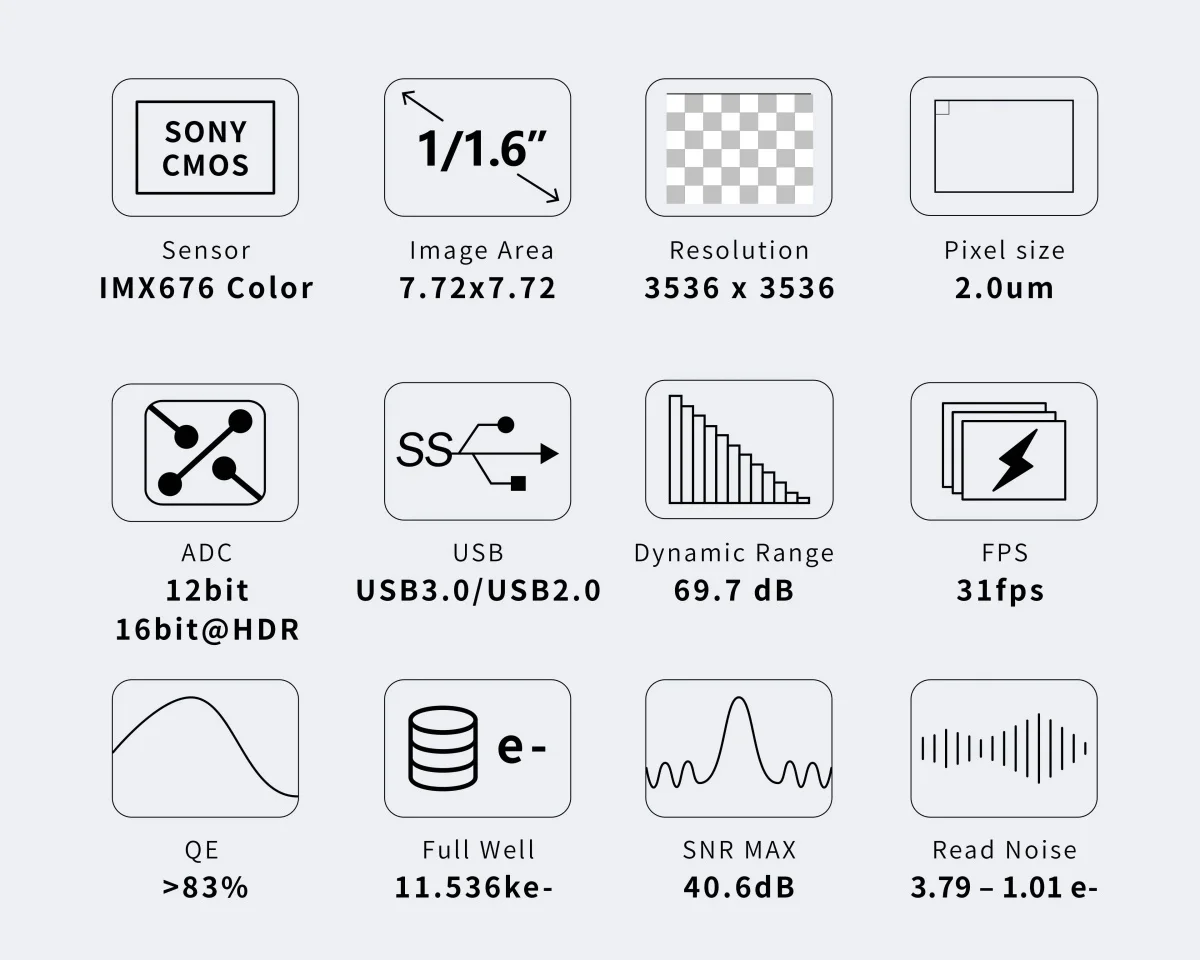
1/1.6” square sensor with 12.5MP resolution for flexible framing and versatile astrophotography applications.
High Infrared Sensitivity
Near-monochrome infrared performance enables better Milky Way, meteor and low-light imaging.
Magnetic Cooling Module
Switch freely between compact vibration-free mode and enhanced cooling mode with detachable magnetic cooling.
Wide Compatibility
Compatible with telescopes, guide scopes, lenses, tripods and multiple astronomy software platforms.
Multi-Purpose Astronomy Imaging
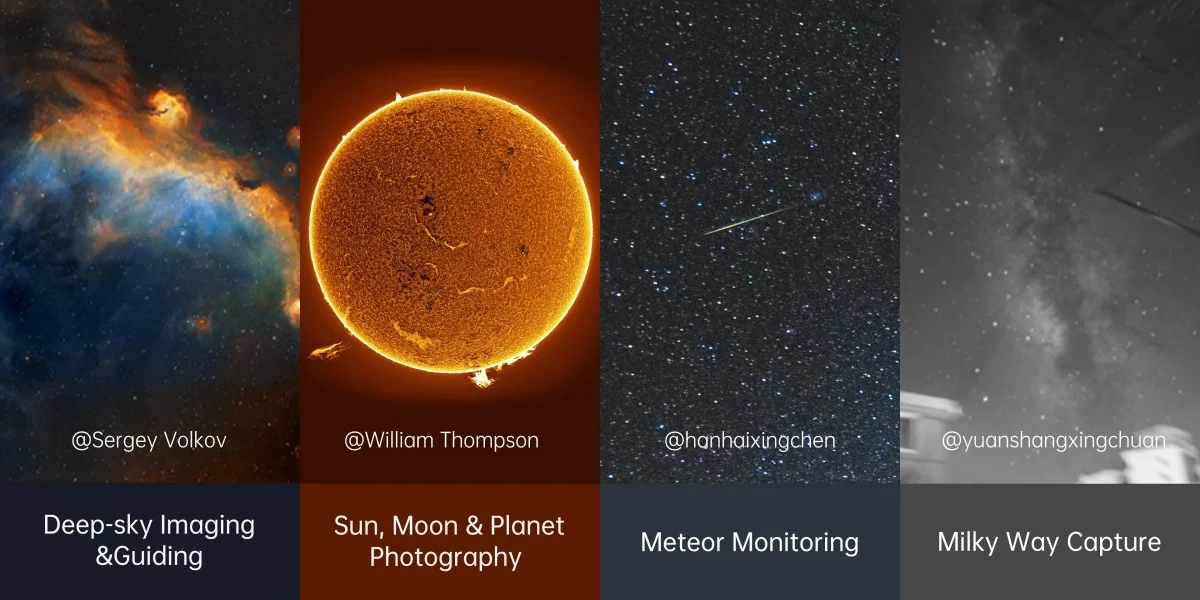
From planetary imaging and lunar details to deep-sky objects, meteors, Milky Way and all-sky monitoring, AE676C is designed as an easy entry point for exploring more astrophotography possibilities.
Square Sensor for Flexible Framing
AE676C features a 1/1.6” square sensor, reducing the hassle of aligning different aspect ratios and offering better flexibility for all-sky monitoring, meteor detection, Milky Way photography and wide-angle imaging.
Easier Mosaic Stitching
Square framing helps reduce cropping and improves the stitching workflow.
Faster Post-processing
A more balanced frame makes alignment and composition easier.
Wide-angle Friendly
Pairs well with fisheye and wide-angle lenses for broader sky coverage.
Superior Infrared Sensitivity for Low-Light Imaging
Built on Sony Starvis 2 technology, AE676C delivers strong sensitivity in both visible and infrared light. With high QE at 825nm and beyond, it enables excellent low-light performance and near full-pixel IR response comparable to monochrome sensors.
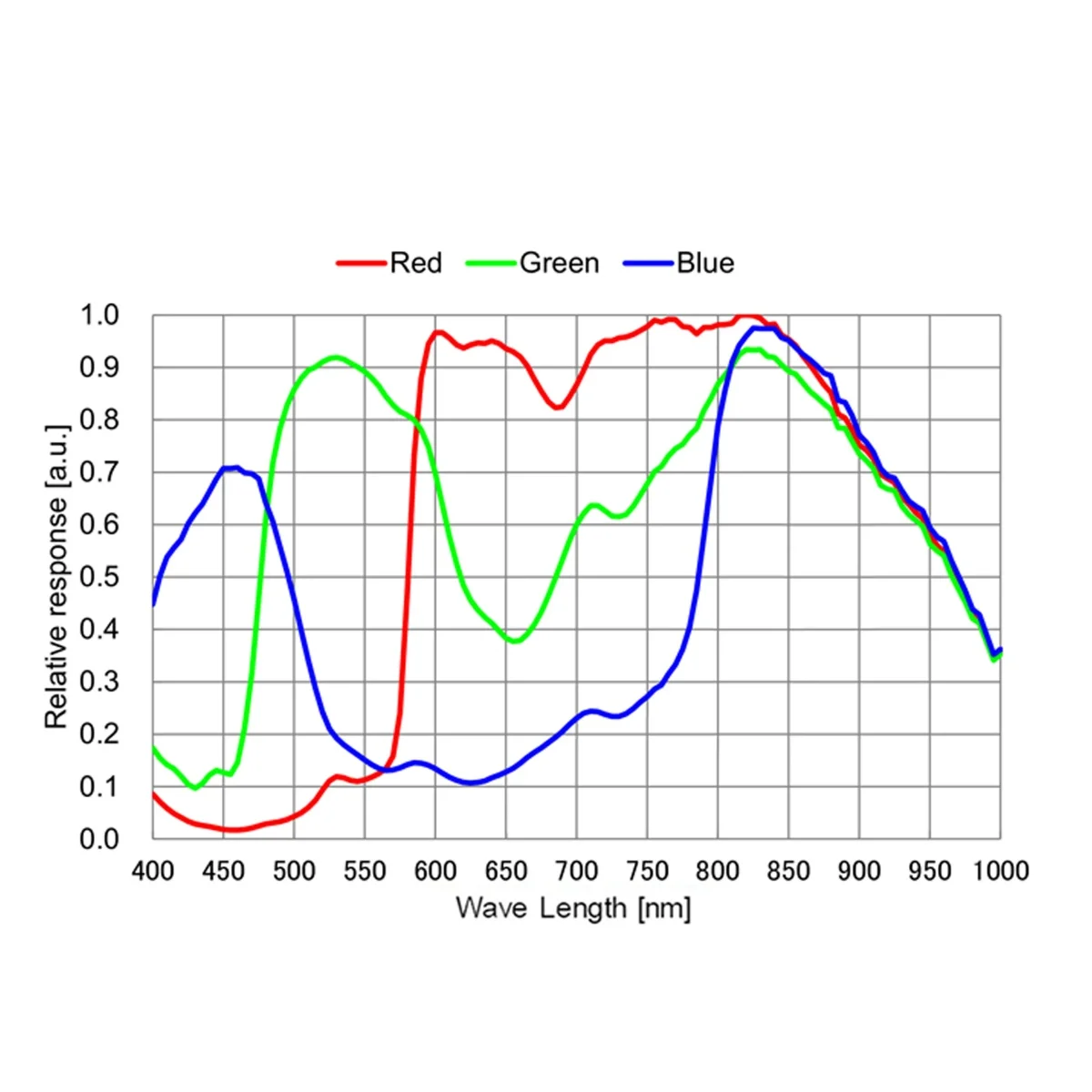
AR-Coated Protective Window
AE676C features a dual-sided AR-coated optical window to reduce reflections and light loss, protect against dust and physical damage, and enhance transmission across 400–1100nm wavelengths.
Modular Magnetic Cooling System
AE676C features a magnetic detachable rear cooling fan module for quick installation and removal. The camera body integrates single-stage TEC cooling, a precision multi-channel heat dissipation structure, and active air cooling to reduce thermal noise during long exposures.
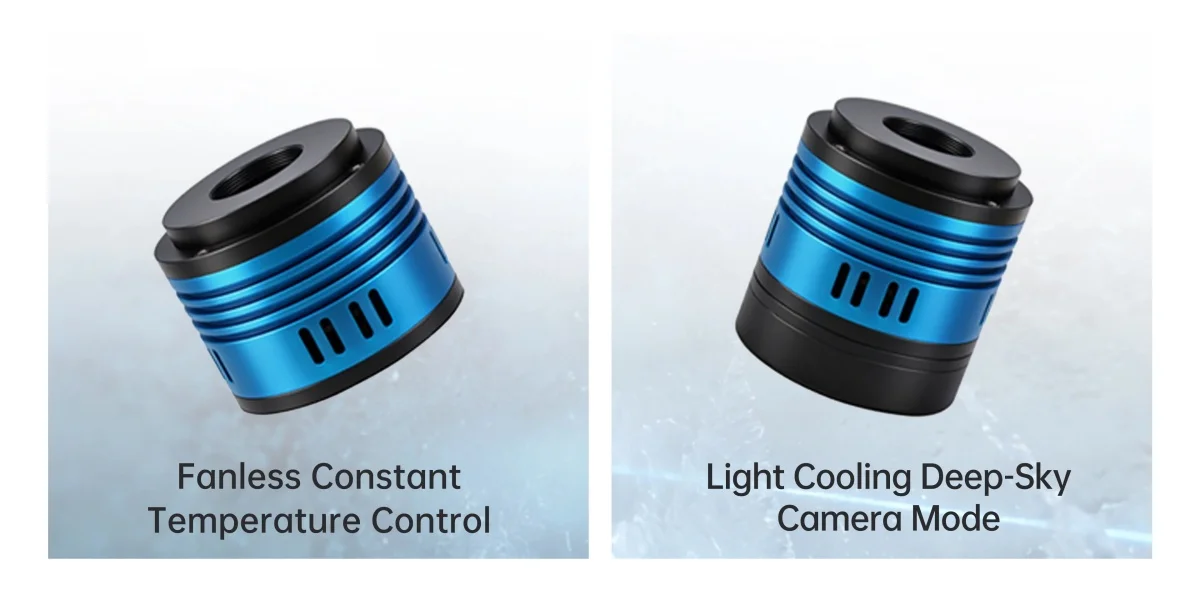
Zero-vibration Constant Temperature Mode
With the integrated TEC module and PID temperature control algorithm, AE676C enables precise cooling within 5°C below ambient, with ±0.1°C stability for sharp long-focal-length imaging.
Enhanced Cooling Mode
With the magnetic cooling fan attached, AE676C can reduce the sensor temperature by up to 20°C below ambient, minimizing thermal noise during longer exposures.
*Tested under long-exposure conditions at 25°C ambient temperature with proper ventilation. Actual performance may vary depending on environmental conditions and exposure duration.
Native 12-bit ADC & Hardware ROI
Capture 12-bit images natively, with software pixel binning from 1×1 to 8×8 and hardware binning from 1×1 to 2×2. Hardware ROI allows higher frame rates by reducing the readout area, reaching up to 993 FPS at reduced resolution in 8-bit mode.
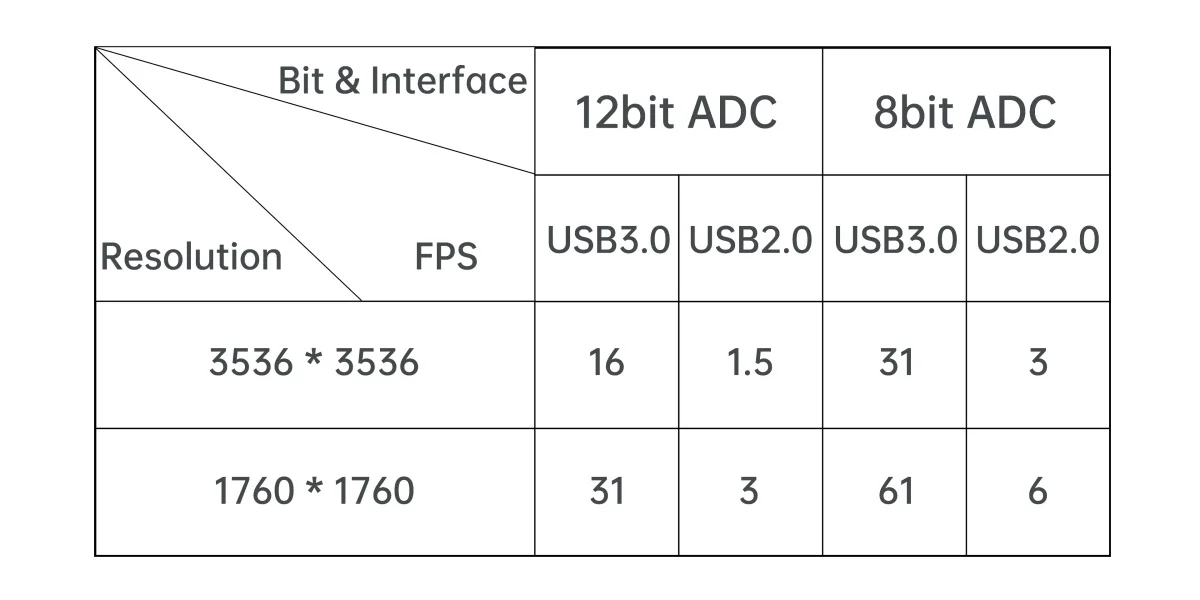
Stable Performance with 512MB DDR3 Cache
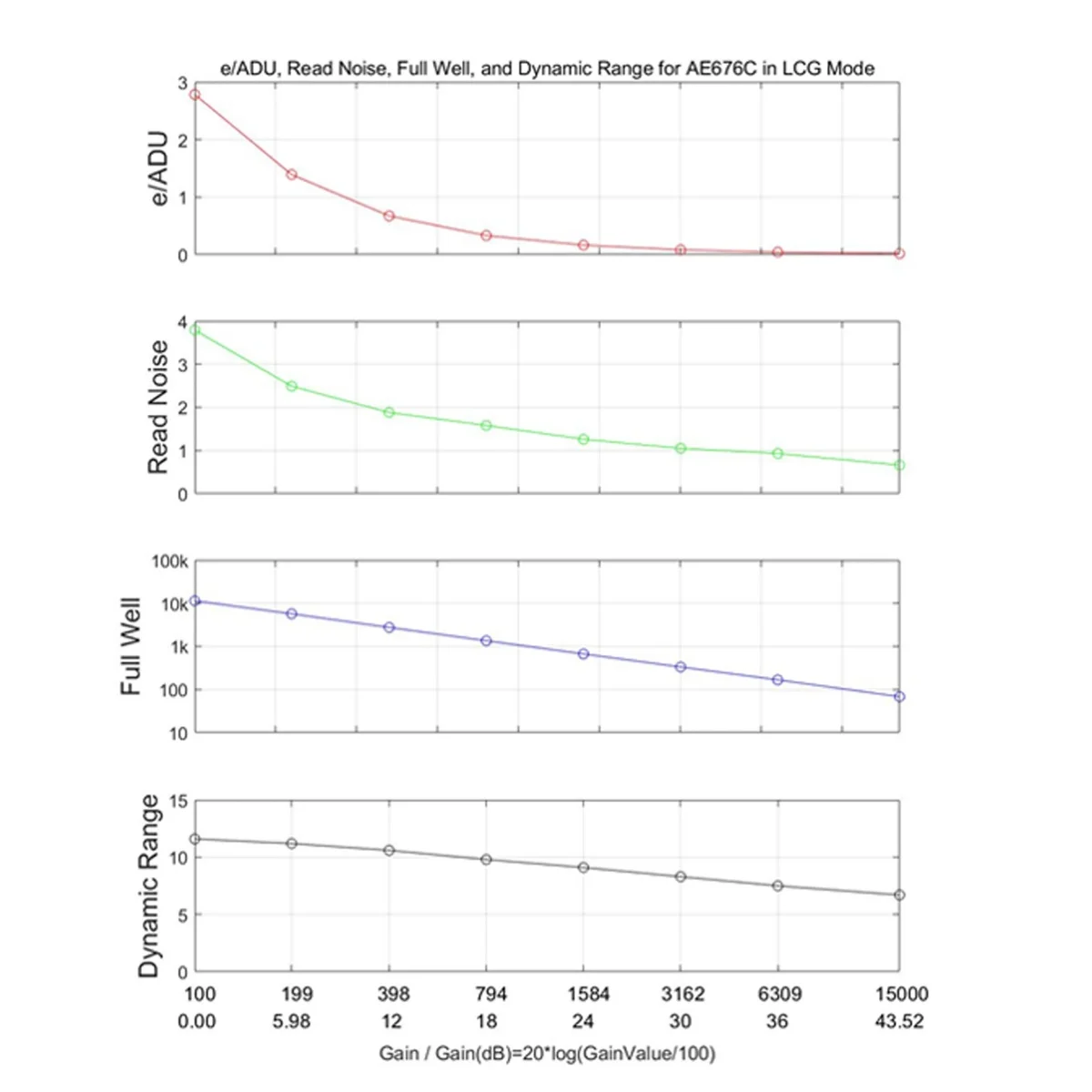
Equipped with a 512MB DDR3 buffer, AE676C ensures stable data transfer and helps prevent frame drops even under bandwidth limitations. Read noise is as low as 1.01e⁻ for clean backgrounds, while the 69.7dB dynamic range preserves details in both bright and dark areas.
Gain Modes for Different Scenarios
HCG Mode
Reduces readout noise while maintaining high dynamic range for faint deep-sky objects and guiding.
LCG Mode
Prevents overexposure in bright targets while preserving highlight details.
HDR Mode
Combines HCG low noise and LCG high full-well capacity for superior image quality.
Software Compatibility
Connect via StellaVita App, ToupSky software, or use ASCOM, INDI and DirectShow SDK. Third-party software compatible with these SDKs can also integrate via drivers available on the ToupTek Astro official website.
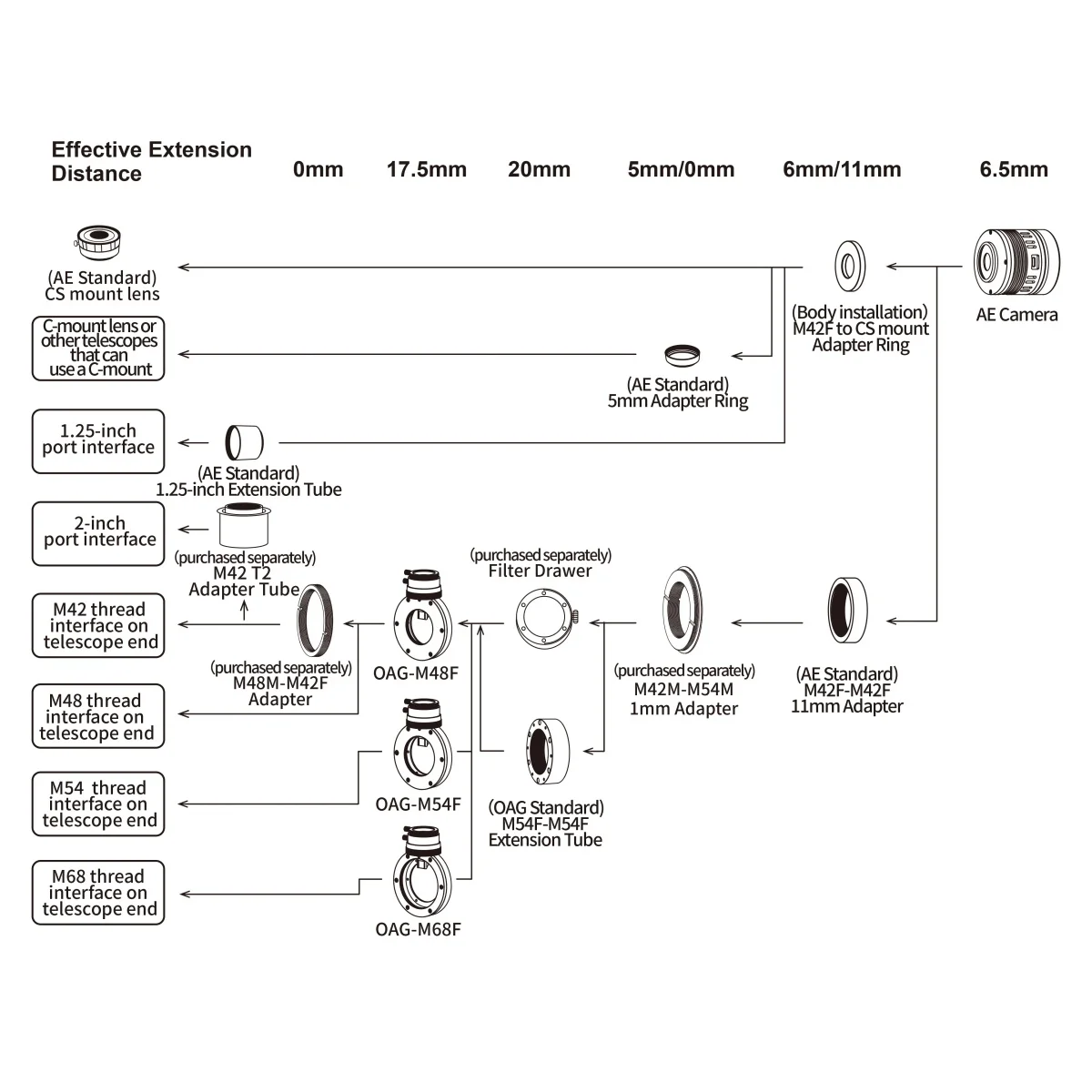
Flexible Back Focus Connectivity
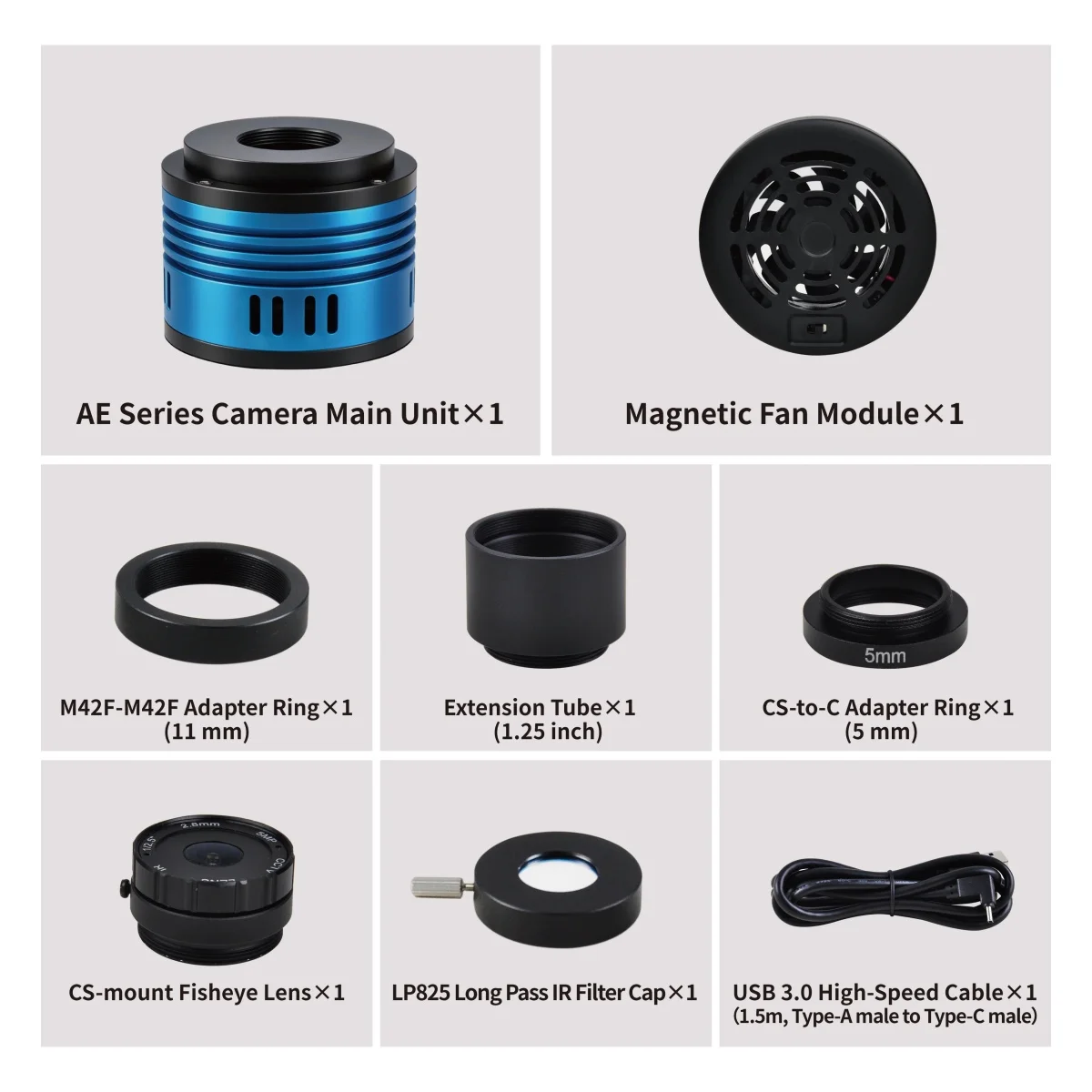
What's in the Box