
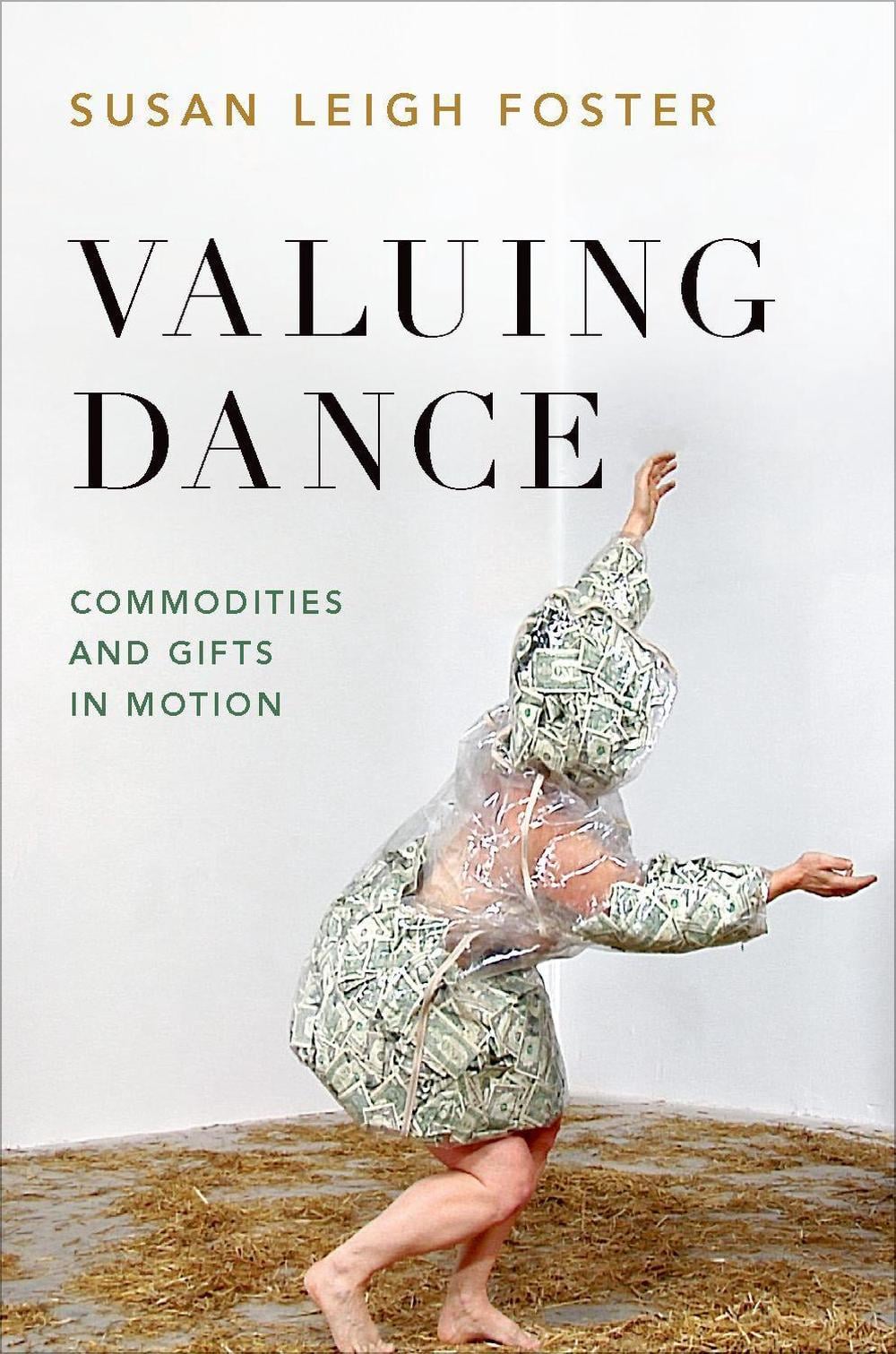
Valuing Dance
by Susan Leigh Foster
Valuing Dance looks at the occasion when dancing passes from one person to another as an act of exchange, one that is redolent with symbolic meanings, including those associated with its history and all the labor that has gone into its making.
Paperback
English
Brand New
Publisher Description
Because dance materializes through and for people, because we learn to dance from others and often present dance to others, the moment of its transmission is one of dance's central and defining features. Valuing Dance looks at the occasion when dancing passes from one person to another as an act of exchange, one that is redolent with symbolic meanings, including those associated with its history and all the labor that has gone into its making. It examinestwo ways that dance can be exchanged, as commodity and as gift, reflecting on how each establishes dance's relative worth and merit differently. When and why do we give dance? Where and to whom do we sellit? How are such acts of exchange rationalized and justified? Valuing Dance poses these questions in order to contribute to a conversation around what dance is, what it does, and why it matters.
Table of Contents
Introduction Chapter 1 - Dance's Resource-fullness Dance as Bringing People into Relation Dance as Energizing Dance as Adapting Chapter 2 - Commodifying and Giving Part A - Dance as Commodity Standardizing, Spectacularizing, and Promoting Bringing People into Relation as Constructing Interactivity Energizing as Targeting Vitality Adapting as Developing Transportability Part Z - Dance as Gift Giving, Receiving, and ReciprocatingBringing People into Relation as Affirming Connectivity Energizing as Embracing Irrepressibility Adapting as Cultivating Locality Chapter 3 - The Social Life of Dances The Global Reach of Hip Hop Learning to Dance in the Privately Owned Studio On the Powwow Circuit Chapter 4 - Why Dance? Why Sell? Why Give? Who is Dancing? Philosophies of Giving - Deborah Hay, William Forsythe, Savion Glover Index
Review
"Valuing Dance maintains this duality of dance -- between gift function and commodity exchange -- by showing that most dance forms flicker between commodity and gift and are not wholly subsumed by one value system. ... In advocating for dance-as-gift, Valuing Dance is not being nostalgic or Pollyannaish; rather, it strives to identify and preserve the dynamism of dance. To do so is urgent, Foster argues, because it's only as gift that dance"function[s] to stabilize a society and to affirm continuity and strength in the face of loss, impermanence, and change." -- Heather Houser , Public Books"What is dance, or dancing, worth? In magisterial analyses, Foster explores how dance operates as labor and the unlikely, but inevitable, material of global capital and exchange. In Valuing Dance, we learn of the exquisite and complex action of sharing gesture, of creating gift through our very movements, and of the diverse and divergent ways dancers pass physically through systems of belief. Foster takes on the challenging questions of gesturalequivalencies with capacious determination and unfailing insight. For anyone who has ever wondered, 'Why Dance?'" --Thomas F. DeFrantz, Duke University and Director, SLIPPAGE: Performance, Culture, Technology"'Actions create value,' Susan Leigh Foster argues in her bold and brilliant Valuing Dance. But what kind of value, labor, and systems of exchange give dance its value? As she moves us through the economies of gift and commodity exchange, Foster advocates for choreographies that offer more just and sustainable futures. This work is a necessary intervention for scholars across a broad range of disciplines." --Diana Taylor, University Professor, New YorkUniversity
Long Description
Because dance materializes through and for people, because we learn to dance from others and often present dance to others, the moment of its transmission is one of dance's central and defining features. Valuing Dance looks at the occasion when dancing passes from one person to another as an act of exchange, one that is redolent with symbolic meanings, including those associated with its history and all the labor that has gone into its making. It examinestwo ways that dance can be exchanged, as commodity and as gift, reflecting on how each establishes dance's relative worth and merit differently. When and why do we give dance? Where and to whom do we sell it? How are such acts of exchange rationalized and justified? Valuing Dance poses these questions inorder to contribute to a conversation around what dance is, what it does, and why it matters.
Review Text
"Valuing Dance maintains this duality of dance -- between gift function and commodity exchange -- by showing that most dance forms flicker between commodity and gift and are not wholly subsumed by one value system. ... In advocating for dance-as-gift, Valuing Dance is not being nostalgic or Pollyannaish; rather, it strives to identify and preserve the dynamism of dance. To do so is urgent, Foster argues, because it's only as gift that dance"function[s] to stabilize a society and to affirm continuity and strength in the face of loss, impermanence, and change." -- Heather Houser , Public Books"What is dance, or dancing, worth? In magisterial analyses, Foster explores how dance operates as labor and the unlikely, but inevitable, material of global capital and exchange. In Valuing Dance, we learn of the exquisite and complex action of sharing gesture, of creating gift through our very movements, and of the diverse and divergent ways dancers pass physically through systems of belief. Foster takes on the challenging questions of gesturalequivalencies with capacious determination and unfailing insight. For anyone who has ever wondered, 'Why Dance?'" --Thomas F. DeFrantz, Duke University and Director, SLIPPAGE: Performance, Culture, Technology"'Actions create value,' Susan Leigh Foster argues in her bold and brilliant Valuing Dance. But what kind of value, labor, and systems of exchange give dance its value? As she moves us through the economies of gift and commodity exchange, Foster advocates for choreographies that offer more just and sustainable futures. This work is a necessary intervention for scholars across a broad range of disciplines." --Diana Taylor, University Professor, New YorkUniversity
Review Quote
"What is dance, or dancing, worth? In magisterial analyses, Foster explores how dance operates as labor and the unlikely, but inevitable, material of global capital and exchange. In Valuing Dance, we learn of the exquisite and complex action of sharing gesture, of creating gift through our very movements, and of the diverse and divergent ways dancers pass physically through systems of belief. Foster takes on the challenging questions of gestural equivalencies with capacious determination and unfailing insight. For anyone who has ever wondered, 'Why Dance?'" --Thomas F. DeFrantz, Duke University and Director, SLIPPAGE: Performance, Culture, Technology "'Actions create value,' Susan Leigh Foster argues in her bold and brilliant Valuing Dance. But what kind of value, labor, and systems of exchange give dance its value? As she moves us through the economies of gift and commodity exchange, Foster advocates for choreographies that offer more just and sustainable futures. This work is a necessary intervention for scholars across a broad range of disciplines." --Diana Taylor, University Professor, New York University
Feature
Selling point: A new theory and an entirely new way to think about danceSelling point: Written by preeminent scholar and author
Details
