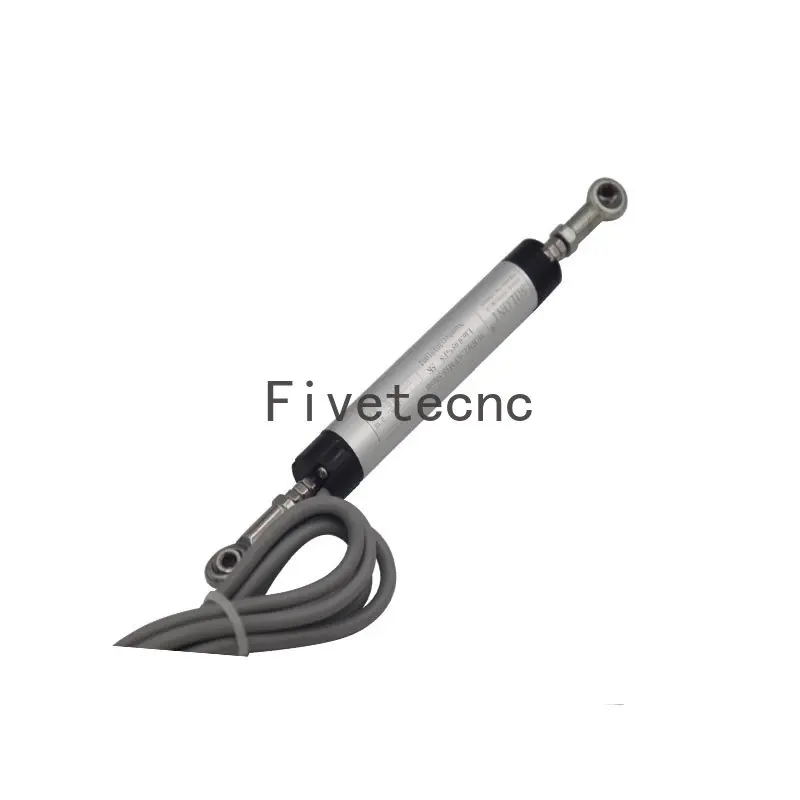
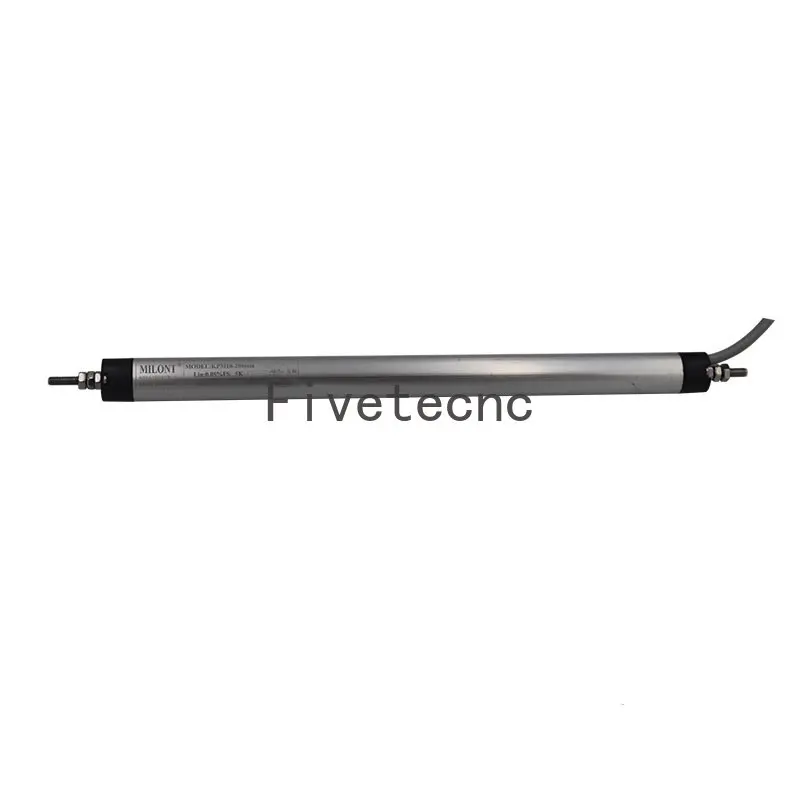
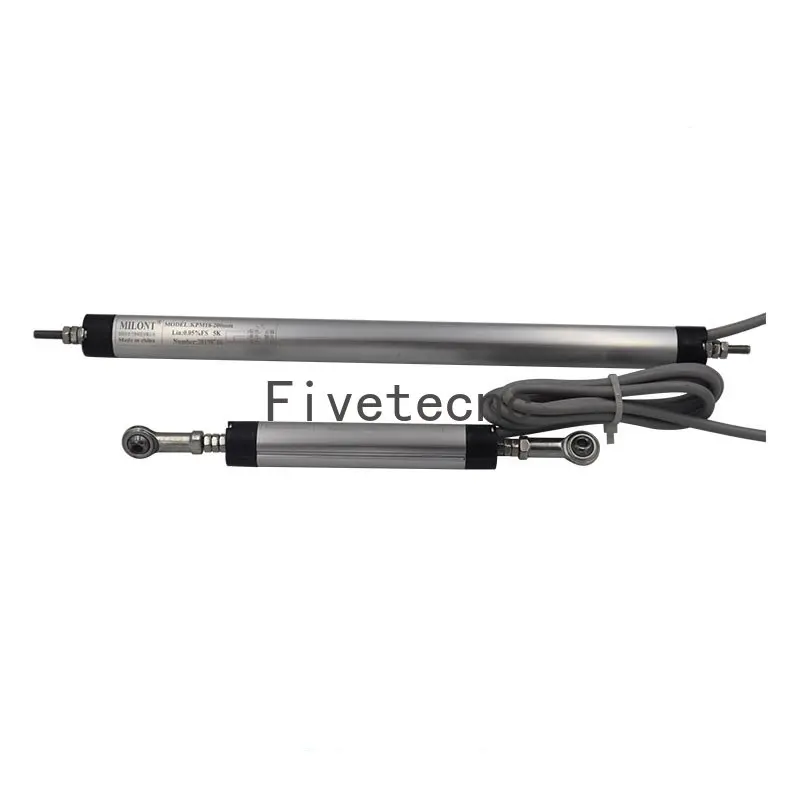
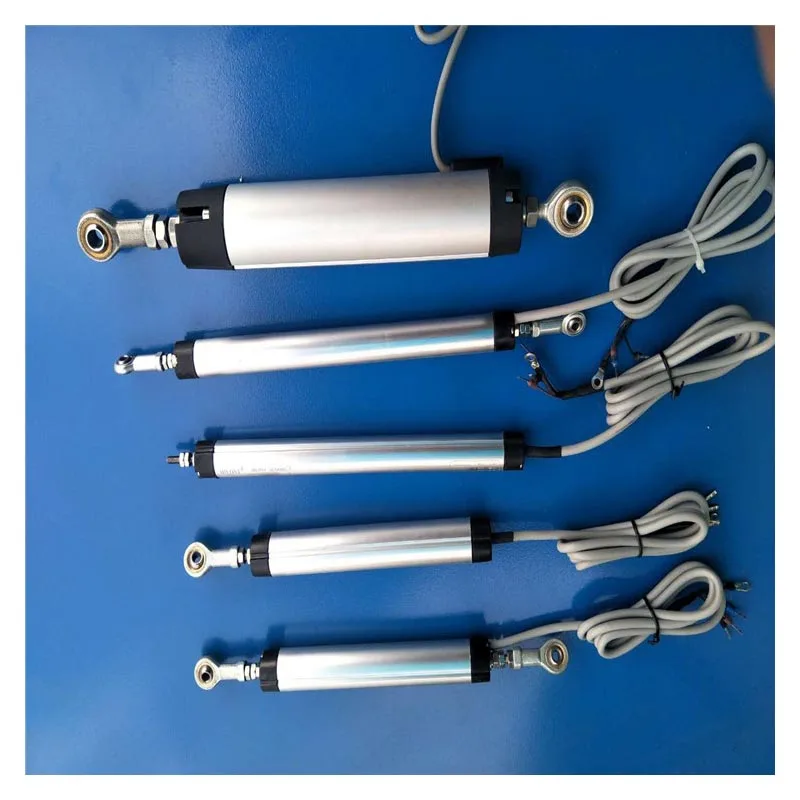
Articulated High-precision Displacement Sensor KPM18 50-300mm Travel
KPM18 micro hinged linear displacement sensor has a measuring range of 50mm~300mm, a total of 3mm buffer stroke at both ends, linear accuracy of 0.1% FS, and repeatability of ± 0.01mm.
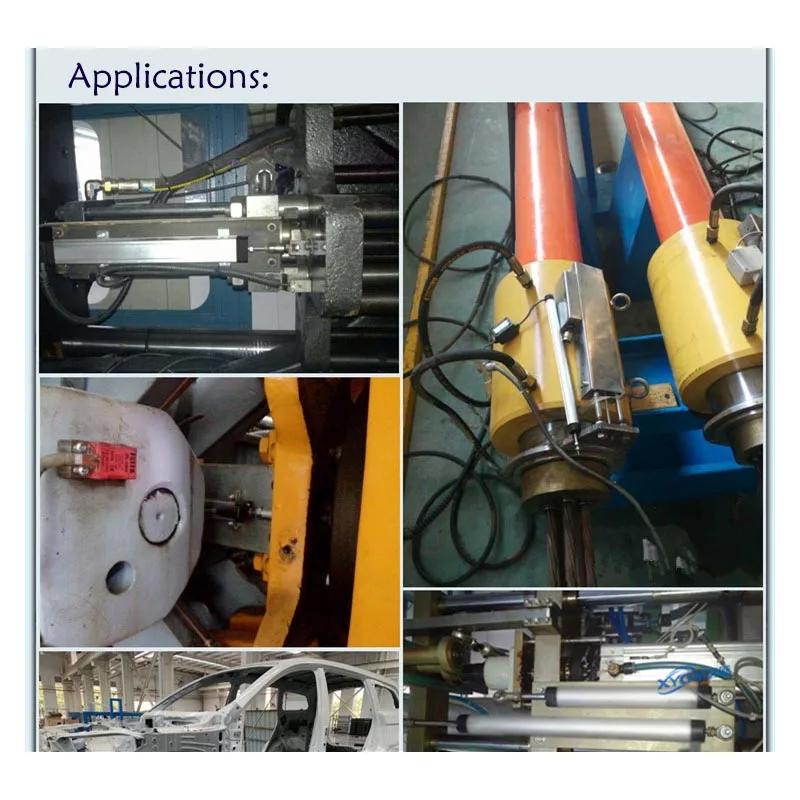
Sensors are widely used in prestressed tensioning equipment, potentiometer principle, absolute position measurement displacement sensor, and output DC voltage signal. It can also be equipped with voltage module, current module or RS485 module to output standard 0-5V and 0-10V voltage signals; 4-20mA current signal or RS485 digital signal can meet the requirements of system acquisition or remote transmission.
Notes:
Input 5V, output 5V;
Input 0-24V, output 0-24V;
Input 24V, output 0-5V, it need to adapt a module.
If need a module, please pay it via this link.
https://www.aliexpress.us/item/3256802372723772.html?spm=a2g0o.detail.1000023.5.506531ca2G0Vw7&gatewayAdapt=glo2usa4itemAdapt&_randl_shipto=US
Features:
small installation size
Long service life, up to 100 million times
It can be used stably for a long time in high-speed operation
Protection grade IP65
DIN standard connector
Free from impact and vibration
Cable connection
Description:
shell anodized aluminum
Splicing at both ends of assembly
Transmission stainless steel
Bearing slewing sliding bearing
Resistance element conductive plastic
Brush assembly Precious metal multi shock brush with elastic damping
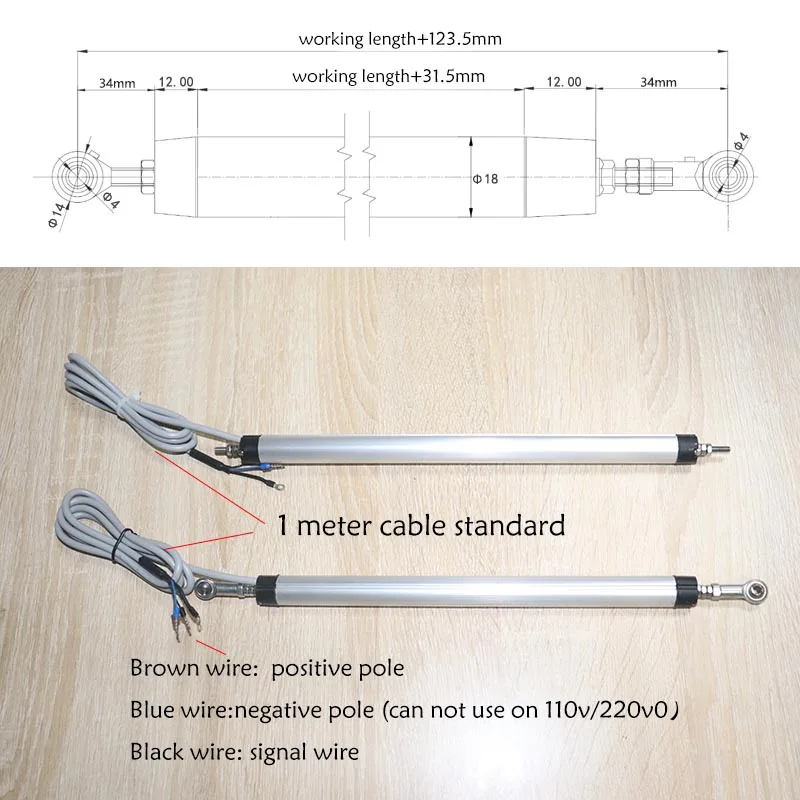
Electrical connection 3-core non internal stress shielded cable, standard cable length is 1m
Parameters of the sensor:
|
Travel range |
50/100/125/150/200/225/250/300mm |
|
Linear Accuracy |
0.1% |
|
Repeatability accuracy |
±0.01mm |
|
Resolution |
Infinite |
|
Max working voltage |
24V DC |
|
Recommended current |
≤10mA |
|
Mechanical stroke |
Travel range+3mm |
|
Output signal |
0-100% given input working voltage (varying with displacement) |
|
Max working speed |
10M/S |
|
Working temperature |
-60 to 150 ℃ |
|
temperature coefficient |
|
|
<1.55PPM/℃ |
|
|
Impact coefficient |
IEC68-2-29:1968 50g |
|
Vibration coefficient |
IEC68-2-6:1982 20g |
|
resistance |
5K Ohms |
Main application fields: KPM18 micro hinged linear displacement sensor, with fish eye universal joints at both ends hinged, is suitable for installation in small size and swing situations, and has no special requirements for installation and neutral. Such as injection molding machine ejector pin, shoe machine, 3D seat (5D seat), prestressed jack, mechanical arm, robot, extractor, brick machine, ceramic machine, sluice control, etc.
Sensor installation and use instructions:
The range of linear displacement sensor shall be selected with allowance. Generally, the range of one specification larger than the actual stroke can be selected. When installing the sensor, it is advisable to leave the margin at both ends evenly, and lock the bracket screws after the position is adjusted.
The sensor shall be installed with universal joint, and the neutral point shall be adjusted. If the alignment deviation and tilt deviation are large at the same time, the measurement stability and service life of the sensor will be affected.
The linear displacement sensor is connected to the circuit as a voltage divider to display the actual value of the measured position with relative voltage.
The power supply voltage of the sensor shall be stable, and the industrial power supply shall be stable by ± 0.1%, otherwise the measured data will fluctuate greatly.
The power supply must have enough capacity. If the power supply capacity is too small, it is easy to cause the display data to jump. Especially, when the solenoid valve drive power supply and the sensor power supply are together, the digital jump is more likely to occur.
There shall be no external interference, including electrostatic interference and high-frequency interference. Therefore, the sensor signal line shall be routed separately from the equipment power line; The sensor shall be installed with a forced grounding bracket, and the sensor shell shall be well grounded; The signal wire shall be shielded wire, and the shielded wire shall be grounded at one end of the electrical box or connected to the negative pole of the DC power supply.
The sensor should be correctly wired. If the wiring is wrong, the sensor may be seriously damaged.
Long term use of the sensor will affect the contact resistance of the brush due to the intrusion of water, oil, dust, etc., which will lead to the jumping of the sensor measurement data.