


warning
Due to the product is a professional assembled model that requires glue and painting after completion, However, paint and glue is flammable and explosive, please store it in a safe place

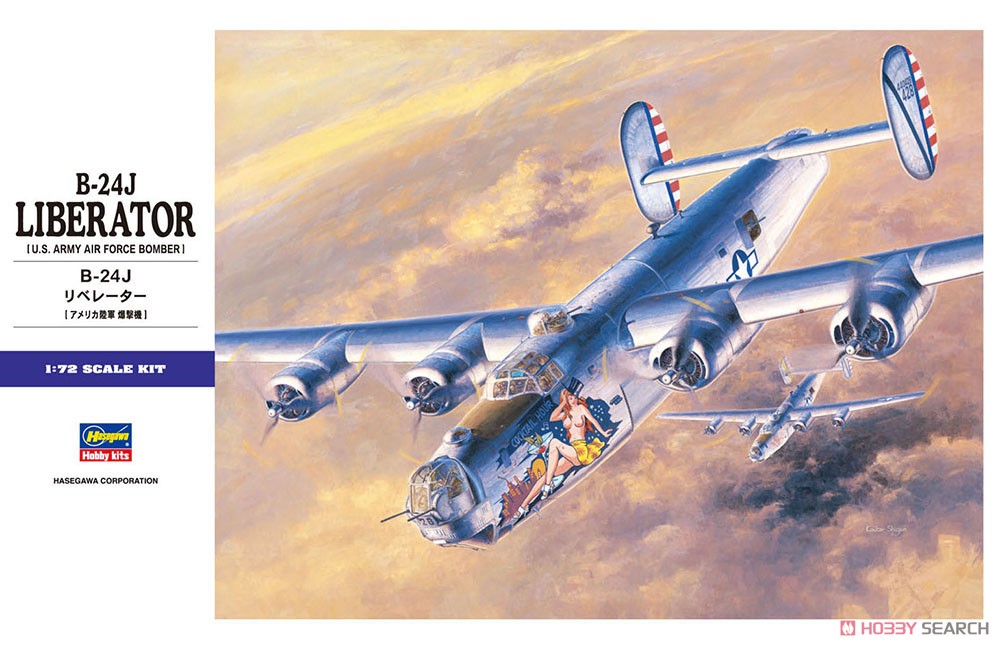
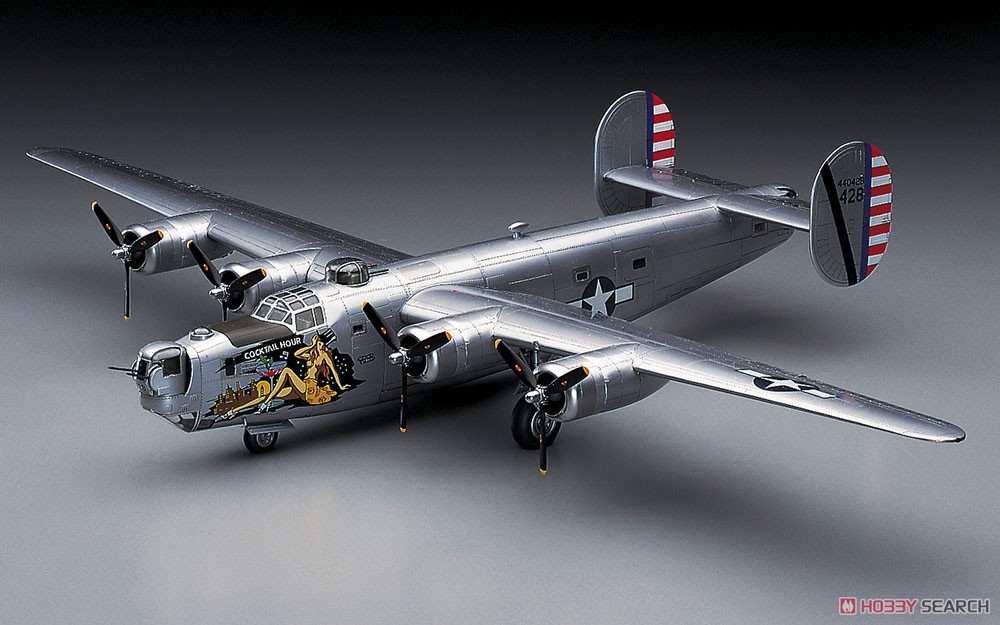
Hasegawa 01559 1/72 B-24J Liberator Bombers (Plastic model)
-A variation of the US Army's four heavy bombers, the B-24, reproduces the J type equipped with a conveyor A-6A power gun on the nose.
-Prepare clear molded nose parts as new mold parts. J-type parts will be used for gun noses on the nose and gun seats on the lower and tail sides of the fuselage.
-The lower part of the gun body parts can be stored and can be operated. Bomb hold door is open / close selection type.
-Eight 1000 lb bombs included.
-The B-24 Liberator is a large bomber from the United States Army.
-The development of the B-24 began about four years after the first flight of the B-17, and the US Army designed the new bomber to replace the B-17 in January 1939, replacing the B-17. It started from having asked to consider.
-At that time, the request from the Army was the maximum speed of 483km / h (300mph) or more, the range 4,830km (3,000miles), the practical rise limit 10,680m (35,000ft), and the bomb loading capacity 3,629kg (8,000lb) The required value was quite high.
-The design team prioritized the cruising distance for development.
-This is because the weakness of B-17 was insufficient range.
-First of all, using a large aspect ratio wing called Davis wing, the air resistance was reduced, and the fuel tank could be fully loaded in the large wing.
-The fuselage was made extremely thick so that it could carry more bombs than can be considered by common sense at the time, but this later led to the height of versatility and became a major feature of this machine.
-The tail wing is a distinctive dual vertical wing aimed to reduce air resistance, but it seems to have been the trend at that time.
-The B-24 was immediately designed as a Model 32, and the design was completed at an astonishing speed, and a document review was conducted on February 21, 1932.
-As a result, on March 30, the same year, a manufacturing contract was made with a prototype and a mockup.
-The wing and fuselage of the XB-24 were completed on October 26, 1939, and the first flight took place on December 29, the same year.
-The B-24 has produced more than 18,000 bombers with the largest mass production in the United States.
-This number is the highest record of WWII aircraft including fighters in the United States.
-The B-24 is also famous as the bomber used in the most battlefields in the world, including Europe and the Pacific Front.
-The activity on the Pacific Front was especially remarkable, and it was the main force of the heavy bomber until the successor B-29 appeared.
-The B-24J is the most widely produced type of the B-24 series, making a total of 6,678 machines.
-The first unit was completed on August 31, 1943. The features of the B-24J include the installation of the R-1830-65 engine with a turbo charger, the C-1 autopilot, and the installation of the M-9 bombarding sight.
-Armed with rotary guns attached to the nose and tail, and a Sperry A-13 spherical gun at the bottom of the fuselage.
-There are several types of front and rear turrets of B-24J depending on the production plant, but the main ones are Consa A-6A type and Emerson A-15 type respectively equipped with two 12.7mm M-2 machine guns.
[B-24J data]
-Crew: 10 people
-Total width: 33.53 m
-Total length: 20.47 m
-Total height: 5.46m
-Maximum take-off weight: 29,500 kg
-Engine: Pratt & Whitney R-1830-65 twin wasp air-cooled star double row 14-cylinder x 4
-Lifting output: 1,200hp
-Maximum speed: 475 km / h (altitude 7,620 m)
-Range: 3380 km
-Armed: 12.7 mm machine gun x 10
-Bomb loading amount: 4,000 kg
-First flight December 29, 1939 (XB-24)
-Additional plastic parts: Gun head equipped with a gun head
-Decal: 43rd Bombarded Air Group 64th Bombardment Squadron [428: COCKTAIL HOUR] (Front Unpainted Silver: 1945: Philippines)
-Package illustration: Mr. Shigeo Koike
-Prepare clear molded nose parts as new mold parts. J-type parts will be used for gun noses on the nose and gun seats on the lower and tail sides of the fuselage.
-The lower part of the gun body parts can be stored and can be operated. Bomb hold door is open / close selection type.
-Eight 1000 lb bombs included.
-The B-24 Liberator is a large bomber from the United States Army.
-The development of the B-24 began about four years after the first flight of the B-17, and the US Army designed the new bomber to replace the B-17 in January 1939, replacing the B-17. It started from having asked to consider.
-At that time, the request from the Army was the maximum speed of 483km / h (300mph) or more, the range 4,830km (3,000miles), the practical rise limit 10,680m (35,000ft), and the bomb loading capacity 3,629kg (8,000lb) The required value was quite high.
-The design team prioritized the cruising distance for development.
-This is because the weakness of B-17 was insufficient range.
-First of all, using a large aspect ratio wing called Davis wing, the air resistance was reduced, and the fuel tank could be fully loaded in the large wing.
-The fuselage was made extremely thick so that it could carry more bombs than can be considered by common sense at the time, but this later led to the height of versatility and became a major feature of this machine.
-The tail wing is a distinctive dual vertical wing aimed to reduce air resistance, but it seems to have been the trend at that time.
-The B-24 was immediately designed as a Model 32, and the design was completed at an astonishing speed, and a document review was conducted on February 21, 1932.
-As a result, on March 30, the same year, a manufacturing contract was made with a prototype and a mockup.
-The wing and fuselage of the XB-24 were completed on October 26, 1939, and the first flight took place on December 29, the same year.
-The B-24 has produced more than 18,000 bombers with the largest mass production in the United States.
-This number is the highest record of WWII aircraft including fighters in the United States.
-The B-24 is also famous as the bomber used in the most battlefields in the world, including Europe and the Pacific Front.
-The activity on the Pacific Front was especially remarkable, and it was the main force of the heavy bomber until the successor B-29 appeared.
-The B-24J is the most widely produced type of the B-24 series, making a total of 6,678 machines.
-The first unit was completed on August 31, 1943. The features of the B-24J include the installation of the R-1830-65 engine with a turbo charger, the C-1 autopilot, and the installation of the M-9 bombarding sight.
-Armed with rotary guns attached to the nose and tail, and a Sperry A-13 spherical gun at the bottom of the fuselage.
-There are several types of front and rear turrets of B-24J depending on the production plant, but the main ones are Consa A-6A type and Emerson A-15 type respectively equipped with two 12.7mm M-2 machine guns.
[B-24J data]
-Crew: 10 people
-Total width: 33.53 m
-Total length: 20.47 m
-Total height: 5.46m
-Maximum take-off weight: 29,500 kg
-Engine: Pratt & Whitney R-1830-65 twin wasp air-cooled star double row 14-cylinder x 4
-Lifting output: 1,200hp
-Maximum speed: 475 km / h (altitude 7,620 m)
-Range: 3380 km
-Armed: 12.7 mm machine gun x 10
-Bomb loading amount: 4,000 kg
-First flight December 29, 1939 (XB-24)
-Additional plastic parts: Gun head equipped with a gun head
-Decal: 43rd Bombarded Air Group 64th Bombardment Squadron [428: COCKTAIL HOUR] (Front Unpainted Silver: 1945: Philippines)
-Package illustration: Mr. Shigeo Koike
Item Size/Weight : 42.3 x 27 x 8.2 cm / 650g