Kimono / Navy Kimono with Botanical Motif – Cool & Classic Style / 2505081
With its sharp contrast and elegant design, this piece gives off a cool, composed impression. While there is a minor stain on the inner collar lining, it remains completely hidden when worn and does not affect its wearability.
Perfect for wearing as-is, or repurposing into craft projects or interior decor, this kimono offers both style and versatility.
Size
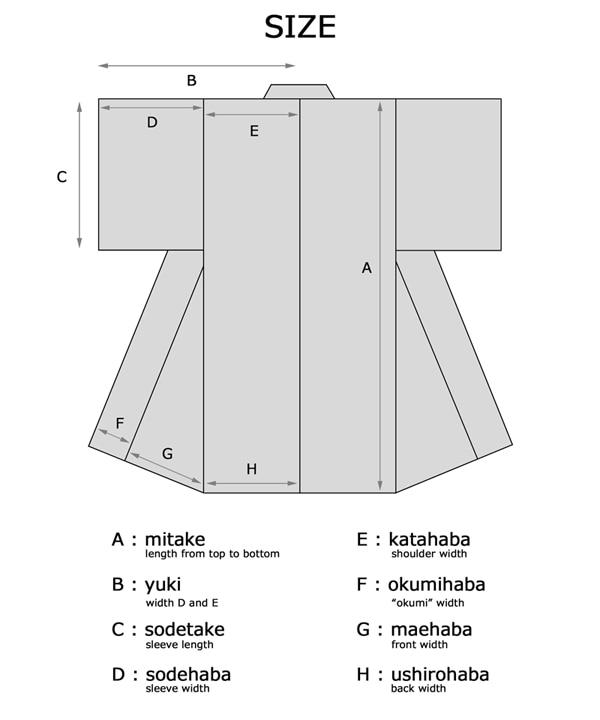
Mitake (A): 152cm (59.8")
Yuki (B): 65cm (25.6")
Sodetake (C): 46cm (18.1")
Maehaba (G): 24.5cm (9.6")
Ushirohaba (H): 30cm (11.8")
*Please refer to the illustration for kimono sizing.
In Japan, wearing kimono involves adjusting the style according to the seasons. There are three main types for different weather conditions: Awase (lined kimono), Hitoe (unlined kimono), and Usumono (sheer kimono). Here?s a breakdown of each:
Awase (Lined Kimono) ? Worn from October to May
Awase is a lined kimono typically worn during the spring, fall, and winter seasons, from October to May. It includes inner linings on the body, sleeves, and hem, making it slightly heavier and more structured. This weight and structure can make the Awase kimono photogenic, and some people wear it throughout the year for this reason. Additionally, many people choose to have their first kimono tailored as an Awase due to its versatility.
Hitoe (Unlined Kimono) ? Worn in June and September
Hitoe is made from the same outer fabric as Awase but is crafted without any inner lining, giving it a lighter feel. It is typically worn during the transitional months of June and September when the seasons shift between spring and summer or summer and fall. Hitoe is paired with the same accessories as Awase, including the obi, obiage, and obijime, although the lack of inner lining can sometimes make the fabric appear softer or less defined.
Usumono (Sheer Kimono) ? Worn in July and August
In the hot summer months of July and August, Usumono, a sheer kimono, is the choice. Made from loosely woven fabrics such as Joufu, Sha, and Ro, Usumono is designed to maximize airflow, keeping the wearer cool. Usumono is unlined and is paired with summer-specific accessories, including a lightweight obi, obiage, obijime, and summer undergarments like the nagajuban.
While these guidelines provide a basic rule of thumb, it's recommended to choose kimono style and material flexibly, taking into account the specific climate, region, and personal comfort.