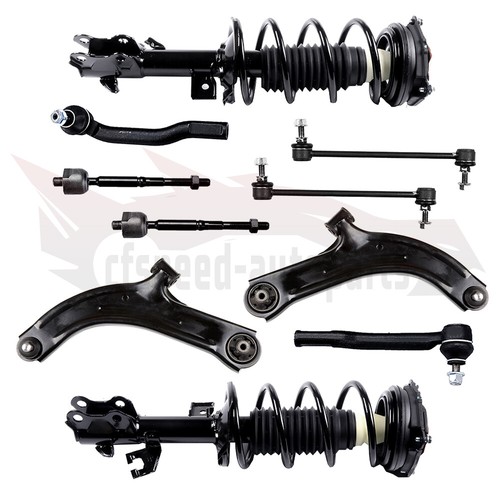
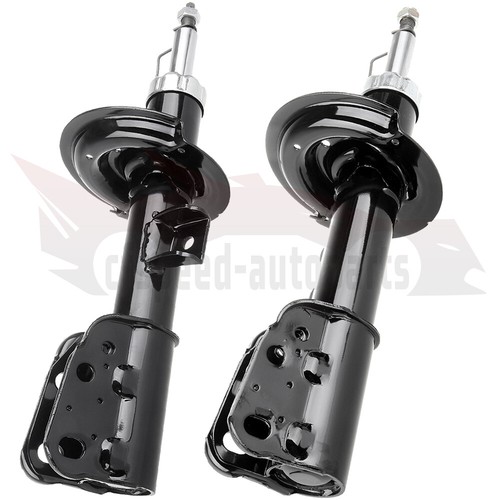
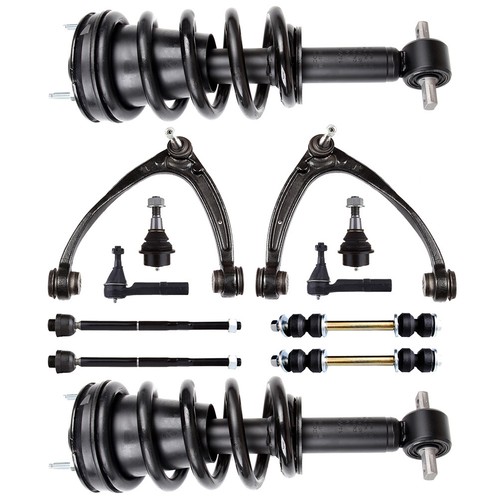
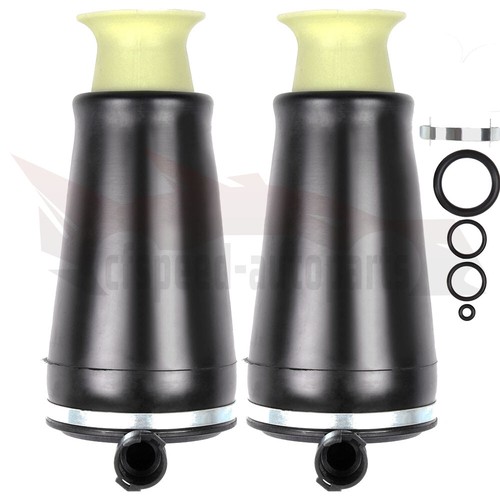
1.Fitting the Following vehicle:
1979-1980 Dodge Ram CB300
1994-2003 Dodge Ram Van 1500
1994-2003 Dodge Ram Van 2500
1994-2003 Dodge Ram Van 3500
1979-1980 Dodge Ram Van B100
1981-1993 Dodge Ram Van B150
2.Package Includes:
2 x Part # K7106 Idler Arm
3.Note
Although some parts have grease fittings, other parts are factory sealed, but do not affect the fit and quality of the parts.
1 Year Warranty
Please check above compatibility list to make sure it fits your vehicle.
If you want to find more about suspension kits,clicking our store.
Steering Systems
The steering system works with the suspension system to provide directional control with a comfortable amount of steering effort. It must do this while allowing for the necessary movement in the vehicle's suspension system. Some parts serve both systems. The steering system consists of a steering gear, steering linkage, a steering column and a steering wheel. Two types of steering systems are widely used in today's vehicles: "rack-and-pinion" steering and "conventional" steering.

Idler Arm Replacement Guideline:
With any steering complaints, it is necessary to check the components of the steering linkage for wear and damage. Slight problems in any of these components may result in significant steering problems and tire wear. Looseness in the idler arm may cause excessive toe change on rough road surfaces, leading to a wandering condition. Looseness in and of the tie-rod ends may be felt as loose steering and is frequently mistaken as a steering gear problem. Each of the steering system joints must be inspected for excessive wear or damage. If the vehicle is equipped with a steering damper, it can cause a shimmy in the steering wheel after hitting a bump in the road. Refer to the online service information for the procedure and specifications for inspecting and replacing these components.


Picture(A)
1.Safely raise the vehicle with the lift set at the OEM-suggested lifting points.
2.Push the center link at the idler arm up and down, and watch the idler arm for excessive movement.
Picture(B)
3.If the movement is out of specifications, the idler arm will need to be replaced.
4.Remove the cotter pin, and loosen the nut connecting the idler arm taper stud to the center link.


Picture(C)
5.Separate the idler arm taper stud, using the double hammer method, a pickle fork, or the appropriate puller.
6.Remove the bolts holding the idler arm to the frame.
Picture(D)
7.Install the new idler arm in reverse order of removal. Note that some idler arms must be installed with the steering centered to avoid inducing a twisting force on the steering linkage, causing the vehicle to pull to one side.
Frequently Asked Questions
(1).What is the symptom when idler arm wears out?
A worn and loose idler arm results in excessive freeplay of the steering linkage. It makes the vehicle wander on the road. If you experience any of the symptoms mentioned above, you may need to replace your idler arm to prevent possible damage to your car's steering system.
(2).How to diagnose a bad idler arm?
To diagnose a bad idler arm you only have to observe the connections as the wheels are turned. Observe the connection at the end of the idler arm, where the shaft is set into the bushing near the wheel. Use the flashlight if necessary. If the shaft of the idler arm moves in any direction, prior to the wheel beginning to turn, the bushing is bad and the idler arm needs to be replaced.
(3).Road Walking
Also known as road wandering, this scary phenomenon occurs when a vehicle seems to wander or weave back and forth on its owm. If you are being attentive and steady on the steering wheel but are experiencing road walking, it will be genuinely difficult for you to keep the vehicle straight.
(4).Play In The Wheel
If you have suspicions that the idler arm is in poor condition, this symptom can be tested under safer and easier conditions than road walking. While the vehicle is sitting still, try moving the steering wheel. If you can move the wheel considerably from side to side without much resistance, your steering wheel has too much play.
While you certainly don't want your car to be unresponsive when you make steering maneuvers, a wheel that has too little resistance is also bad and a sign of idler arm problems.
(5).Free Wheeling
This symptom can only be observed and tested in a garage or mechanic setting, as the car must be raised so that the front wheels are suspended off of the ground.
Always use suggested and available safety equipment when working underneath a vehicle.
While the vehicle is raised, go to your front wheels and without manipulating the steering wheel at all, see if it's possible to move the front wheels from side to side. If the wheels do shift back and forth, it's a sign that you should look into the idler arm.