RARE & HARD TO FIND.
READY TO COMPLETE YOUR COLLECTION. FILL IN THE GAPS! NOTE- AUCTION
PROTECTION WATERMARKING ON THESE IMAGES ATTACHED TO THIS AUCTION DO NOT APPEAR
ON AUCTUAL PUBLICATION.
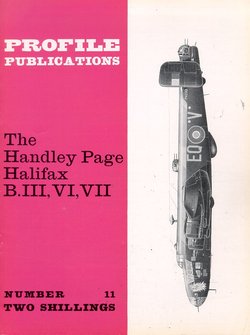
THIS IS A 20-PAGE SOFTBOUND BOOKLET FROM THE PROFILE PUBLICATIONS
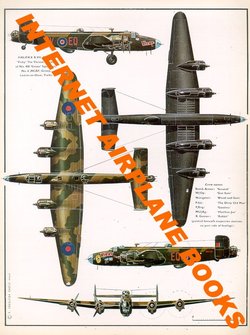
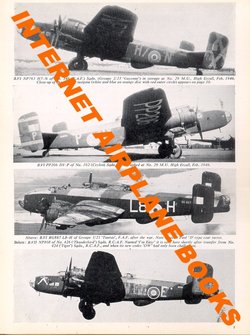
SERIES PUBLISHED IN THE SIXTIES CONTAINING B/W PHOTOGRAPHS, 2-PAGES OF COLOR
PROFILES / COLOR THREE VIEW SCALE DRAWINGS CENTERFOLD, TECHNICAL
SPECIFICATIONS, DETAILS OF DEVELOPMENT AND OPERATIONAL USE. THIS IS A CLASSIC REFERENCE BOOK ON THE
SUBJECT AIRCRAFT IT IS NOT A PLASTIC MODEL KIT.
IT IS ALSO NOT ONE OF THE
ILLEGAL AND POOR QUALITY SCANNED COPIES OF THIS HARD-TO-FIND BOOKLET
NOW APPEARING ON EBAY. PUBLISHED
IN ENGLAND UK BY PROFILE PUBLICATIONS LIMITED.
YOU WILL FIND GREAT DEALS ON
HARD-TO-FIND AVIATION, ARMOR, NAUTICAL AND MILITARIA MAGAZINES AT MY EBAY STORE
“INTERNET AIRPLANE MAGAZINES AND BOOKS”!
I HAVE HUNDREDS OF ADDITIONAL LISTINGS USING THE SIMPLE
“BUY-IT-NOW” FORMAT. I SPECIALIZE IN
AVIATION REFERENCE MAGAZINES AND BOOKS. I ALSO CARRY TITLES ON MILITARY
HISTORY, ARMOR, TANKS, SHIPS, ELITE SPECIAL UNITS AND AMERICAN CIVIL WAR. THESE
ARE EXCELLENT GIFTS & REFERENCES FOR PILOTS, MILITARY AIRCREW, VETERANS,
MILITARY RE-ENACTORS, SCALE MODELERS & AIRCRAFT ENTHUSIASTS. TITLES CURRENTLY LISTED INCLUDED: THE ELITE,
TAKE OFF, WARPLANE, PROFILE PUBLICATIONS, AIRCRAFT ILLUSTRATED, AIRCRAFT ILLUSTRATED
EXTRA, AIR COMBAT, AIR ENTHUSIAST, AMERICAN AIRMAN AND THE ILLUSTRATED
ENCYCLOPEDIA OF AIRCRAFT.
HARD TO FIND GIFTS FOR SCALE MODELERS, PILOTS, AIRCREW &
VETERANS
- HERE'S AN INEXPENSIVE FATHER'S DAY
GIFT, BIRTHDAY PRESENT OR CHRISTMAS PRESENT FOR THE VETERAN, REENACTOR, SCALE
MODELER, MILITARIA ENTHUSIAST OR HISTORY CHANNEL LOVER IN YOUR FAMILY
PAYMENT INSTRUCTIONS: AFTER THE AUCTION HAS COMPLETED, YOU WILL RECEIVE AN INVOICE FROM
ME. PAYPAL ACCEPTED. ALL AUCTIONS MUST BE COMPLETED WITHIN 10
DAYS. I WILL DO MY PART AND SHIP ASAP AFTER RECEIVING PAYMENT (SEE MY FEEDBACK
FILE).
MONEY BACK GUARANTEE! - YOU WILL LOVE MY CUSTOMER FRIENDLY RETURN POLICY. I WANT YOU OR YOUR GIFT RECIPIENT TO BE HAPPY
WITH YOUR PURCHASE. I GUARANTEE THAT THE
ITEM SHIPPED WILL BE AS DESCRIBED. YOU
MAY RETURN THE ITEM WITHIN 14 DAYS FOR ANY REASON. JUST EMAIL ME AND RETURN POST THE PACKAGE
ADEQUATELY PROTECTED AGAINST SHIPPING DAMAGE) AND I WILL RETURN YOUR ITEM
PURCHASE PRICE IN FULL.
I WILL POST POSITIVE FEEDBACK FOR YOU AFTER THE TRANSACTION
IS COMPLETE AND I AM REASONABLY SURE THAT YOU HAVE RECEIVED THE ITEM. IF THERE IS ANY PROBLEM, PLEASE EMAIL ME TO
WORK THINGS OUT BEFORE LEAVING FEEDBACK.
MY GOAL IS TO LEAVE EVERY CUSTOMER 100% SATISFIED WITH MY PRODUCTS AND
SERVICE.
------------------------------------------------------------------------------------------------------------------
Additional Information from Internet Encyclopedia
The Handley
Page Halifax was one of the four-engined heavy bombers of the Royal Air
Force during the Second World War. A contemporary of the famous Avro Lancaster,
the Halifax remained in service until the end of the war, performing a variety
of duties in addition to bombing. The Halifax was also operated by squadrons of
the Royal Canadian Air Force, Royal Australian Air Force, Free French Air
Force, and Polish forces, and after the Second World War by the Royal Egyptian
Air Force, the Armée de l'Air and the Royal Pakistan Air Force.
The introduction of the successful P.13/36
candidates was delayed by the necessity of ordering more Armstrong-Whitworth
Whitley and Vickers Wellington bombers first. For quicker delivery Avro and
HP.56 designs were ordered "off the drawing board" in mid-1937. At
the end of July, Handley Page was told to redesign the HP.56 for four engines
rather than two, as the Vulture was already suffering technical problems. The
Avro Manchester was built with Vultures and entered RAF service, but also
suffered from engine problems.
The redesign increased the span from 88 ft
(27 m) to 99 ft (30 m) and put on 13,000 pounds (5,900 kg)
of weight. Four Merlins were specified by the Ministry in September 1937. The
mockup was assessed at the end of the year and construction of the two
prototypes of the HP 57 began in March 1938.
Modifications resulted in the definitive H.P.57,
which upon acceptance was given the service name Halifax, following the
practice of naming heavy bombers after major towns – in this case, Halifax
in the West Riding of Yorkshire. The H.P.57 was enlarged and powered by four
1,280 hp (950 kW) Rolls-Royce Merlin X engines. Such was the promise
of the new model that the RAF had placed their first order for 100 Mk.I
Halifaxes "off the drawing board" in January 1938 with serials
already assigned to HP.56 switched to HP.57. The maiden flight of the Halifax
took place on 25 October 1939 from RAF Bicester, not long after Britain
declared war on Germany.
Halifax production subsequently began at Handley
Page's (now English Electric) site in Samlesbury, Lancashire, with over 2,000
bombers being built by this factory during the war.
The Mk.I had a 22 ft (6.7 m) long bomb
bay as well as six bomb cells in the wings, enabling it to carry 13,000 lb
(5,900 kg) of bombs. Defensive armament consisted of two .303 in
(7.7 mm) Browning machine guns in a Boulton Paul Type C nose turret, with
an additional four in a Boulton Paul Type E tail turret, and, in some aircraft,
two .303 in (7.7 mm) Vickers K machine guns in beam (side, or
"waist") positions. The Merlins drove constant speed wooden-bladed
Rotol propellers. Subtle modifications distinguished the Mk I aircraft.
Aircraft of the first batch of fifty Mk I Halifaxes were designated Mk I Series
I.
These were followed by 25 of the Mk I Series II
with increased gross weight (from 58,000 lb/26,310 kg to
60,000 lb/27,220 kg) but with maximum landing weight unchanged at
50,000 lb (23,000 kg). The Mk I Series III had increased fuel
capacity (1,882 gal/8,556 L), and larger oil coolers to accept the
Merlin XX. A two-gun BP Type C turret mounted dorsally replaced the beam guns
Introduction of 1,390 hp (1,040 kW)
Merlin XX engines and a twin .303 in (7.7 mm) dorsal turret instead
of waist guns resulted in the B Mk II Series I Halifax. The Mk II Series I
(Special) achieved improved performance by removing the nose and dorsal
turrets. The Mk II Series IA had a moulded Perspex nose (the standard for
future Halifax variants), a four-gun Defiant-type dorsal turret, Merlin 22
engines and larger, trapezoidal-shaped vertical tail surfaces which solved
control deficiencies from fin-stall with the roughly triangular-shape original
surfaces, leading to rudder overbalance in the early marks. Halifax IIs were
built by English Electric and Handley Page; 200 and 100 aircraft respectively.
Owing to a shortage in Messier-built landing gear
and hydraulics, Dowty landing gear was used. As it was incompatible with the
Messier equipment this gave Halifaxes with new designations: a Mark II built
with Dowty gear was the Mark V. The use of castings rather than forgings in the
Dowty undercarriage speeded production but resulted in a reduced landing weight
of 40,000 lb (18,000 kg). The Mark V were built by Rootes Group at
Speke and Fairey at Stockport and were generally used by Coastal Command and
for training. Some 904 had been built when Mark V production ended at the start
of 1944, compared to 1,966 Mk II.
The most numerous Halifax variant was the B Mk III
of which 2,091 were built. First appearing in 1943, the Mk III featured the
Perspex nose and modified tail of the Mk II Series IA but replaced the Merlin
with the more powerful 1,650 hp (1,230 kW) Bristol Hercules XVI
radial engine. Other changes included de Havilland Hydromatic propellers and
rounded wing tips. The Mk IV was a non-production design using a turbocharged
Hercules powerplant.
The definitive version of the Halifax was the B Mk
VI, powered by the 1,800 hp (1,300 kW) Hercules 100. The final bomber
version, the Mk VII, reverted to the less powerful Hercules XVI. However, these
variants were produced in relatively small quantities.
The remaining variants were the C Mk VIII unarmed
transport (8,000 lb/3,630 kg cargo pannier instead of a bomb bay,
space for 11 passengers) and the Mk A IX paratroop transport (space for 16
paratroopers and gear). A transport/cargo version of the Halifax was also
produced, known as the Handley Page Halton.
The bomb aimer's position was in the extreme nose
with the navigator's table behind it, both posts being fulfilled by the same crew
member. Above the navigator was the forward gun turret. The wireless (radio)
operator was behind the navigator's position, separated by a half width
partition. The pilot (left side) and co-pilot (right side) (the flight engineer
filled in as a co-pilot, seated on a folding seat, during crucial manoeuvres
such as take-off) occupied the cockpit, above the wireless operator. Aft of the
pilots and on the same level as the navigator and wireless operator was the
flight engineer's compartment. A further compartment aft of the flight engineer
contained two bunks originally intended for resting crew members, but almost
always used for treating and berthing injured crew. This area led to the
two-gun dorsal turret. The tail gunner occupied a four-gun turret at the
extreme aft end of the aircraft.
In the Mk
II Series IA and from the Mk III
onward, there was no longer a nose turret. The bomb aimer occupied a
streamlined perspex nose, with a single hand-held machine gun. The two-gun
dorsal turret was replaced by a four-gun Boulton Paul turret.
The maximum bomb load was 14,500 lb
(6,600 kg), carried in a bomb bay in the fuselage with six separate bomb
compartments, and three bomb compartments in each wing inboard section. This
division of bomb bays and compartments limited the maximum size of bomb which
could be carried to 2,000 lb (910 kg).
Halifaxes were assembled from prebuilt sub
assemblies. The surface panels were flush riveted although the application of
the matte black night bomber camouflage probably negated the benefit.
Total Halifax production was 6,178 with the last
aircraft delivered in April 1945. In addition to Handley Page, Halifaxes were
built by English Electric, Fairey Aviation, and Rootes Motors (Rootes
Securities Ltd) in Lancashire and by the London Aircraft Production Group. At
peak one Halifax was completed every hour.
The Halifax entered service with No. 35 Squadron
RAF at RAF Linton-on-Ouse in November 1940; its first operational raid was
against Le Havre on the night of 11–12 March 1941.
Air Chief Marshal Arthur Harris, head of Bomber
Command, was scathing in his criticism of the Halifax's performance compared to
the new Avro Lancaster, primarily of its bomb-carrying capability : it was
calculated that an average Halifax would drop 100 tons of bombs in its lifetime
compared to a Lancaster's 154. The fact that later Hercules-engined Halifaxes
had lower loss rates and higher crew survival rates after abandoning the
aircraft than Lancasters, and came very close to its speed and altitude
performance, did not alter his opinion. Also, unlike the Lancaster, the
Halifax's bomb bay could not be effectively adapted to carry the 4,000 pound
"Cookie" blast bomb which was an integral part of Harris's
fire-bombing tactics. It was progressively outnumbered in frontline service
over occupied Europe as more Lancasters became available from 1943 onwards,
with many squadrons converting to the Lancaster. Halifaxes continued to be
built because it was considered more efficient to allow existing manufacturing
facilities to continue producing them at a by-now efficient rate rather than
stop production for an unknown period while they converted to the Lancaster,
while new manufacturing facilities were devoted to the Lancaster. Halifax
bombers were progressively relegated to secondary theatres such as North Africa
and Italy, while many were converted to or built new as glider tugs, transports
and maritime reconnaissance.
In service with RAF Bomber Command, Halifaxes flew
82,773 operations and dropped 224,207 tons of bombs. 1,833 aircraft were
lost. In addition to bombing missions, the Halifax served as a glider tug,
electronic warfare aircraft for No. 100 Group RAF and special operations such
as parachuting agents and arms into occupied Europe. Halifaxes were also
operated by RAF Coastal Command for anti submarine warfare, reconnaissance and
meteorological roles.
After the war Halifaxes remained in service with
Coastal Command and RAF Transport Command.
Halifax B.I Series
I: Four-engined long-range heavy-bomber
aircraft; the first production version. Armament consisted of nose turret with
two guns, tail turret with four guns and two beam guns
Halifax B.I Series
II: Stressed for operating at a higher gross weight.
Halifax B.I Series
III: Re-engined with Merlin XX engines,
introduced new upper turret in place of beam guns, with revised undercarriage
and additional centre-section fuel tanks.
Halifax Mk II: New
variant with increased takeoff weight, fuel and weapons carriage.
Halifax B.II
Series I: First series of the bomber variant; from March 1942 onwards, these
were fitted with TR1335 navigation aids.
Halifax B.II
Series I (Special), SOE: Special version for Special Operations Executive (SOE) used to drop supplies over Europe. Nose armament
and dorsal turret removed, the nose being faired over, as well as changes to
the fuel vent pipes and exhaust shrouds.
Halifax B.II
Series I (Special): Generally similar to the aircraft used by the SOE, these
were employed in the bombing role. These aircraft were more varied in
appearance, especially concerning the fitting of dorsal armament with some
aircraft retaining the standard Boulton Paul "Type C" turret in different mounts with
others mounting a "Type A" turret. There were also examples with no
dorsal turret, similar to the SOE-aircraft.
Halifax B.II
Series IA: Modified with new glazed nose section, new radiators and new
"D" fin and rudder. The dorsal turret was changed to a four-gun
Boulton Paul Type A Mk VIII, and there were improvements to the bomb bay door
sealing. Some aircraft were fitted with the H2S radar.
Halifax B.II
Series I, Freighter: A few Mk IIs were employed in the transport role in Great
Britain (unmodified SOE-aircraft) and in the Middle East (simple modifications to allow carriage of engines or Spitfire fuselages).
Halifax B.II
Series II: Single aircraft (HR756)
modified with three-blade Rotol propellers and
Merlin 22 engines. Rejected in favour of Mk III.
Halifax GR.II: Coastal Command variant of the Halifax B.II.
Halifax GR.II
Series I: A handful of aircraft converted from Series I or Special to GR.II
standard, having differences in dorsal armament. The main difference was the
fitting of a ASV.Mk 3 radar in
an H2S type fairing. Sometimes, a .50 in (12.7 mm) machine gun was
fitted in the faired nose.
Halifax GR.II
Series IA: Definitive Coastal Command variant of the GR.II with glazed nose
mounting .50 in (12.7 mm) machine gun, Merlin XX or 22 engines, B-P
A-type dorsal turret and extra long-range fuel tanks in fuselage. A ventral
turret holding a single .50 in (12.7 mm) machine gun was mounted on
most aircraft although some employed the ASV.Mk 3 radar in its place.
Halifax B.III:
Main production variant, fitted with Bristol Hercules engines. B.III bombers were fitted with transparent nose
dome with single machine gun, Boulton Paul dorsal turret with four guns and
tail turret with four guns. Some B.IIIs had extended round wingtips.
Halifax A.III:
Halifax B.III bombers converted into glider tug and paratroop transport
aircraft.
Halifax C.III:
Halifax B.III bombers converted into military transport aircraft.
Halifax B.V:
Four-engined long-range heavy-bomber, powered by four Rolls-Royce Merlin XX engines with square empennage and wingtips. Armament
as B.III
Halifax B.V Series
I (Special)
Halifax A.V:
Halifax B.V bombers converted into glider tugs and paratroop transport
aircraft.
Halifax GR.V:
Coastal Command variant. Halifax B.V bombers converted into maritime
reconnaissance aircraft.
Halifax B.VI:
Four-engined long-range heavy-bomber, powered by four 1,615 hp
(1,204 kW) Bristol Hercules XVI radial engines with H2S radar. No dorsal turret. Square empennage, round wing tips.