RARE & HARD TO
FIND. READY TO COMPLETE YOUR COLLECTION. FILL IN THE GAPS!
NOTE- AUCTION PROTECTION WATERMARKING ON THESE IMAGES ATTACHED TO THIS AUCTION
DO NOT APPEAR ON AUCTUAL PUBLICATION.
THIS IS A 20-PAGE SOFTBOUND
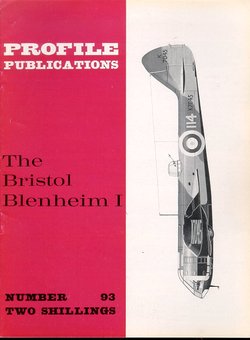
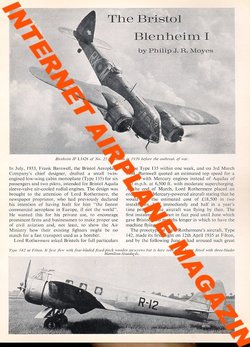
BOOKLET FROM THE PROFILE PUBLICATIONS SERIES PUBLISHED IN THE SIXTIES
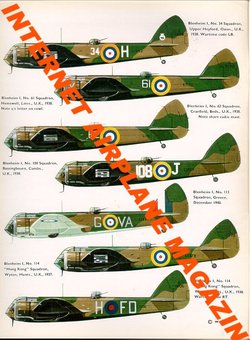
CONTAINING B/W PHOTOGRAPHS, 2-PAGES OF COLOR PROFILES / COLOR THREE VIEW SCALE
DRAWINGS CENTERFOLD, TECHNICAL SPECIFICATIONS, DETAILS OF DEVELOPMENT AND
OPERATIONAL USE. THIS IS A CLASSIC
REFERENCE BOOK ON THE SUBJECT AIRCRAFT IT IS NOT A PLASTIC MODEL KIT. IT IS
ALSO NOT ONE OF THE ILLEGAL AND POOR QUALITY SCANNED COPIES OF
THIS HARD-TO-FIND BOOKLET NOW APPEARING ON EBAY. PUBLISHED IN ENGLAND UK BY PROFILE
PUBLICATIONS LIMITED.
YOU WILL
FIND GREAT DEALS ON HARD-TO-FIND AVIATION, ARMOR, NAUTICAL AND MILITARIA
MAGAZINES AT MY EBAY STORE “INTERNET AIRPLANE MAGAZINES AND BOOKS”!
I HAVE HUNDREDS OF
ADDITIONAL LISTINGS USING THE SIMPLE “BUY-IT-NOW” FORMAT. I SPECIALIZE IN AVIATION REFERENCE MAGAZINES
AND BOOKS. I ALSO CARRY TITLES ON MILITARY HISTORY, ARMOR, TANKS, SHIPS, ELITE
SPECIAL UNITS AND AMERICAN CIVIL WAR. THESE ARE EXCELLENT GIFTS &
REFERENCES FOR PILOTS, MILITARY AIRCREW, VETERANS, MILITARY RE-ENACTORS, SCALE
MODELERS & AIRCRAFT ENTHUSIASTS.
TITLES CURRENTLY LISTED INCLUDED: THE ELITE, TAKE OFF, WARPLANE, PROFILE
PUBLICATIONS, AIRCRAFT ILLUSTRATED, AIRCRAFT ILLUSTRATED EXTRA, AIR COMBAT, AIR
ENTHUSIAST, AMERICAN AIRMAN AND THE ILLUSTRATED ENCYCLOPEDIA OF AIRCRAFT.
HARD TO FIND GIFTS FOR SCALE MODELERS, PILOTS, AIRCREW &
VETERANS - HERE'S AN INEXPENSIVE FATHER'S DAY GIFT, BIRTHDAY PRESENT OR
CHRISTMAS PRESENT FOR THE VETERAN, REENACTOR, SCALE MODELER, MILITARIA
ENTHUSIAST OR HISTORY CHANNEL LOVER IN YOUR FAMILY
PAYMENT INSTRUCTIONS: AFTER THE AUCTION HAS
COMPLETED, YOU WILL RECEIVE AN INVOICE FROM ME.
PAYPAL ACCEPTED. ALL AUCTIONS
MUST BE COMPLETED WITHIN 10 DAYS. I WILL DO MY PART AND SHIP ASAP AFTER
RECEIVING PAYMENT (SEE MY FEEDBACK FILE).
MONEY BACK GUARANTEE! - YOU WILL LOVE MY CUSTOMER
FRIENDLY RETURN POLICY. I WANT YOU OR
YOUR GIFT RECIPIENT TO BE HAPPY WITH YOUR PURCHASE. I GUARANTEE THAT THE ITEM SHIPPED WILL BE AS
DESCRIBED. YOU MAY RETURN THE ITEM
WITHIN 14 DAYS FOR ANY REASON. JUST
EMAIL ME AND RETURN POST THE PACKAGE ADEQUATELY PROTECTED AGAINST SHIPPING
DAMAGE) AND I WILL RETURN YOUR ITEM PURCHASE PRICE IN FULL.
I WILL POST POSITIVE FEEDBACK FOR YOU AFTER THE TRANSACTION
IS COMPLETE AND I AM REASONABLY SURE THAT YOU HAVE RECEIVED THE ITEM. IF THERE IS ANY PROBLEM, PLEASE EMAIL ME TO
WORK THINGS OUT BEFORE LEAVING FEEDBACK.
MY GOAL IS TO LEAVE EVERY CUSTOMER 100% SATISFIED WITH MY PRODUCTS AND
SERVICE.
--------------------------------------------------------------------------------------------------------------
Additional Information from
Internet Encyclopedia
The Bristol
Blenheim is a British light bomber aircraft designed and built by the
Bristol Aeroplane Company that was used extensively in the first two years of
the Second World War. It was adapted as an interim long-range and night
fighter, pending the availability of the Beaufighter. It was one of the first
British aircraft to have all-metal stressed-skin construction, retractable
landing gear, flaps, a powered gun turret and variable-pitch propellers.
A Canadian-built variant named the Bolingbroke was
used as an anti-submarine and trainer. The Blenheim Mk I outran most biplane
fighters in the late 1930s but stood little chance against the German
Messerschmitt Bf 109 during daylight operations, though it proved successful as
a night fighter. The Mark IV variant was equally unsuccessful in its daylight
bombing role, suffering many losses in the early stages of the war.
The Air Ministry was obviously interested in such
an aircraft and quickly sent out Specification B.28/35 for prototypes of a
bomber version; the 'Type 142M' (M for military). The main change was to move
the wing from a low-wing to a mid-wing position, allowing room under the main
spar for a bomb bay. The aircraft was all-metal with two Bristol Mercury VIII
air-cooled radial engines, each of 860 hp (640 kW). It carried a crew
of three – pilot, navigator/bombardier and telegraphist/air gunner. Armament
comprised a single forward-firing .303 in (7.7 mm) Browning machine gun
outboard of the port engine and a .303 in (7.7 mm) Lewis Gun in a
semi-retracting Bristol Type B Mk I dorsal turret firing to the rear. From 1939
onwards, the Lewis gun was replaced by the more modern .303 in
(7.7 mm) Vickers VGO machine gun of the same calibre. A 1,000 lb
(450 kg) bomb load could be carried in the internal bay.
The aircraft was ordered directly from the drawing
board with the first production model serving as the only prototype. The
service name then became Blenheim Mk I
after the famous battle during the War of the Spanish Succession. Subsequent
deliveries started on 10 March 1937, with 114 Squadron being the first squadron
to receive the Blenheim. The aircraft was built under license by countries
including Finland and Yugoslavia, which built 60 aircraft. Other countries
bought it, including Romania, Greece and Turkey. Total production of the
Blenheim Mk I in England was 1,351 aircraft.
Work on an extended-range reconnaissance version
started as the Blenheim Mk II,
which increased tankage from 278 gal (1,264 L) to 468 gal
(2,127 L), but only one was completed. Another modification resulted in
the Blenheim Mk III, which
lengthened the nose, and thereby dispensed with the "stepless
cockpit" format of the Mk.I in introducing a true windscreen in front of
the pilot, to provide more room for the bombardier. This required the nose to
be "scooped out" in front of the pilot to maintain visibility during
takeoff and landing. However both of these modifications were instead combined,
along with a newer version of the Mercury engine with 905 hp (675 kW)
and the turret acquired a pair of Brownings instead of the Vickers K; creating
the Blenheim Mk IV. A total of
3,307 were produced.
Another modification led to a long-range fighter
version; the Blenheim Mk IF. For
this role, about 200 Blenheims were fitted with a gun pack under the fuselage
for four .303 in (7.7 mm) Brownings. Later, the Airborne Intercept
(AI) Mk III or IV radar was fitted to some aircraft in use as night fighters;
these were the first British fighters to be equipped with radar. Their
performance was marginal as a fighter, but they served as an interim type,
pending availability of the Beaufighter. About 60 Mk IVs were also equipped
with the gun pack as the Mk IVF
and were used by Coastal Command to protect convoys from German long-range
bombers.
The last bomber variant was conceived as an
armoured ground attack aircraft, with a solid nose containing four more
Browning machine guns. Originally known as the Bisley, (after the shooting competitions held at Bisley), the
production aircraft were renamed Blenheim
Mk V and featured a strengthened structure, pilot armour,
interchangeable nose gun pack or bombardier position, and yet another Mercury
variant, this time with 950 hp (710 kW). The Mk V was ordered for
conventional bombing operations, with the removal of armour and most of the
glazed nose section. The Mk V, or Type
160, was used primarily in the Middle East and Far East.
The Blenheim served as the basis for the Beaufort
torpedo bomber, which itself led to the Beaufighter, with the lineage
performing two complete circles of bomber-to-fighter.
On the day that war was declared on Germany, a
Blenheim piloted by Flying Officer Andrew McPherson was the first British
aircraft to cross the German coast and the following morning 15 Blenheims from
three squadrons set off on one of the first bombing missions. With the rapid
advances in technology which had taken place in the late 1930s, by then the
aircraft was already obsolescent. The Blenheim was regarded as a pleasant
aircraft to fly, although it did have some characteristics which could catch
even experienced pilots by surprise. It had become heavier as extra service
equipment was installed; much of this was found to be needed through
operational experience. This, coupled with the rapid performance increases of
fighters, had eclipsed the Blenheim's speed advantage.
The light armament of one .303 in
(7.7 mm) Vickers VGO in the turret and one .303 in (7.7 mm)
Browning machine gun in the port wing was seldom able to deter fighter
opposition. Squadrons were forced to use several different improvisations in an
attempt to provide better defensive armament, until officially sanctioned
modifications were able to be introduced in early 1940. The Blenheim also
proved to be vulnerable to flak,
especially around the rear fuselage. Flexible, self-sealing liners had been
fitted to the fuel tanks but they were still not fully protected against the
20 mm MG FF cannon carried by the Luftwaffe 's
Bf 109s and Bf 110s.
After France fell to Germany in June 1940, the
Free French Air Force was formed at RAF Odiham in the form of Groupe Mixte de Combat (GMC) 1,
consisting of a mixed bag of Blenheims and Westland Lysander
liaison/observation aircraft, which eventually went to North Africa and saw
action against the Italians and Germans.
The Bristol Blenheim was used by both Bomber and
Fighter Commands. Some 200 Mk I bombers were modified into Mk IF long-range
fighters with 600 (Auxiliary Air Force) Squadron based at Hendon, the first
squadron to take delivery of these variants in September 1938. By 1939, at
least seven squadrons were operating these twin-engined fighters and within a
few months, some 60 squadrons had experience of the type. The Mk IF proved to
be slower and less nimble than expected, and by June 1940, daylight Blenheim
losses were to cause concern for Fighter Command. It was then decided that the
Mk IF would be relegated mainly to night fighter duties where No. 23 Squadron
RAF, which had already operated the type under nighttime conditions, had better
success.
In the German night-bombing raid on London on 18
June 1940, Blenheims accounted for five German bombers, thus proving that they
were better-suited for night fighting. In July, No. 600 Squadron, by then based
at RAF Manston, had some of its Mk IFs equipped with AI Mk III radar. With this
radar equipment, a Blenheim from the Fighter Interception Unit (FIU) at RAF
Ford achieved the first success on the night of 2–3 July 1940, accounting for a
Dornier Do 17 bomber. More successes came, and before long the Blenheim proved
itself invaluable as a night fighter. Gradually, with the introduction of the
Bristol Beaufighter in 1940–1941, the Blenheim was supplanted by its faster,
better-armed descendant.
Blenheims continued to operate widely in many combat
roles until about 1943, equipping RAF squadrons in the UK and on British bases
in Egypt, Iraq, Aden, India, British Malaya, Singapore, and the Dutch East
Indies. Many Blenheims were lost to Japanese fighters during the Malayan
Campaign, battles for Singapore, and Sumatra. By that point, the traditional
daylight light bomber role was more effectively carried out by suitable
fighter-bombers, and the surviving examples were relegated to training duties.
Nonetheless, the Blenheim played a role in preventing India from falling and
recapturing Burma, destroying over 60 aircraft on the ground in raids on
Bangkok early in the campaign.
In 1936, the Finnish Air Force ordered 18 Blenheim
Mk Is from Britain and two years later, they obtained a manufacturing license
for the aircraft. Before any aircraft could be manufactured at the Valtion lentokonetehdas (State
Aeroplane Factory) in Finland, the Winter War broke out, forcing the Finns to
order more aircraft from the UK. A further 24 British-manufactured Blenheims
were ordered during the Winter War. After the Winter War, 55 Blenheims were
constructed in Finland, bringing the total number to 97 aircraft (75 Mk Is and
22 Mk IVs).
The Finns also received 20 half-completed
ex-Yugoslavian Mk IV Blenheims captured by Germany, together with manufacturing
tools and production equipment, as well as a huge variety of spare parts.
Yugoslavia had ceased production of the Mk I and commenced a production run of
Mk IVs just prior to the April 1941 invasion.
The Finnish Blenheims flew 423 missions during the
Winter War, and close to 3,000 missions during the Continuation War and Lapland
War. Blenheim machine-gunners also shot down eight Soviet aircraft.
Thirty-seven Blenheims were lost in combat during the wars.