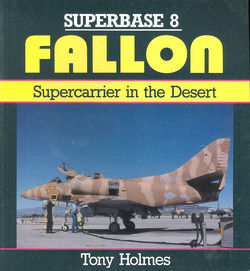
OSPREY SUPERBASE 8 NAS FALLON USN F-5E F-16N F-14 A-4F F/A-18
A-6E S-3 SH-3H EA-6B E-2C HH-3A UH-1N SH-2
PUBLISHED BY
MOTORBOOKS / OSPREY AEROSPACE
SOFTBOUND BOOK
***LIKE NEW CONDITION***
“SUPERCARRIER IN THE DESERT”
US NAVY NAS FALLON
NEVADA
NORTHROP F-5E
TIGER II VFA-127 CYLONS OPFOR AGGRESSOR SQUADRON
NORTHROP QT-38
TALON
GENERAL DYNAMICS
F-16N FIGHTING FALCON VF-126 BANDITS / NAVAL FIGHTER WEAPONS SCHOOL “TOP GUN” /
TF-16N
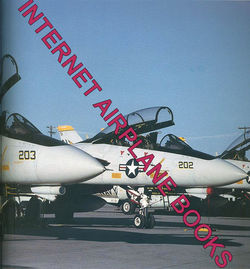
GRUMMAN F-14
TOMCAT VF
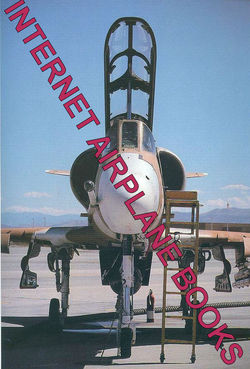
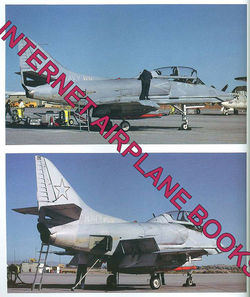
McD A-4F “SUPER
FOX” SKYHAWK & TA-4J TWO-SEAT SKYHAWK
USNR NAVY RESERVE
SKYHAWKS VFC-13 SAINTS
GRUMMAN A-6E
INTRUDER TRAM VA
GRUMMAN KA-6D
INTRUDER TANKER / REFUELLERS
GRUMMAN EA-6B
PROWLER VAQ VMAQ
McD F/A-18 HORNET
VFA VMFA
GRUMMAN E-2C
HAWKEYE VAW
LOCKHEED S-3
VIKING VS
----------------------------------------
Additional Information from Internet Encyclopedia
Naval Air Station Fallon or NAS Fallon (IATA: NFL,
ICAO: KNFL, FAA LID: NFL) is the United States Navy's premier air-to-air and
air-to-ground training facility. It is located southeast of the city of Fallon,
east of Reno in western Nevada. Since 1996, it has been home to the U.S.
Navy-Fighter Weapons School (TOPGUN) taking over from the former NAS Miramar, California,
and the surrounding area contains 240,000 acres (97,000 ha) of bombing and
electronic warfare ranges. It is also home to the Naval Aviation Warfighting
Development Center (NAWDC), which includes TOPGUN, the Carrier Airborne Early
Warning Weapons School (CAEWWS) and the Navy Rotary Wing Weapons School. Navy
SEAL Combat Search and Rescue (CSAR) training also takes place there.
The airfield is named Van Voorhis Field in honor
of Commander Bruce Van Voorhis (1908–1943) who was awarded a posthumous Medal
of Honor.
History
The airfield at NAS Fallon was originally built in
1942 as part of a defensive network to repel a feared Japanese invasion of the
west coast. It was soon taken over by the Navy for training use and has been
used as such ever since with the exception of the period of 1946 to 1951,
during which it was used by the Bureau of Indian Affairs. During the years
prior to 1972, the base was known as Naval Auxiliary Air Station and was
heavily used during the Vietnam War by various squadrons that rotated through
the base before deploying to carriers headed for Vietnam. During these same
years prior to 1972, many ground troops were temporarily assigned to NAAS
Fallon for their hot weather training (during the summer months) and cold
weather training (during the winter months). On 1 January 1972, the Navy
recognized NAS Fallon's importance to naval aviation by upgrading the base from
auxiliary air station status to a major aviation command as a full-fledged
naval air station. While NAS Fallon provides training for visiting carrier air
wings, Strike Fighter Squadron 127 (VFA-127), the "Desert Bogeys",
was the air station's only permanently based squadron from October 1987 until
it was disestablished on 23 March 1996.
The Navy relocated its Navy Fighter Weapons
School, or TOPGUN, from NAS Miramar to NAS Fallon in 1996, following the
transfer of NAS Miramar to the Marine Corps and its redesignation as MCAS
Miramar. This move resulted in the construction of a new ramp, hangars and
academic buildings. The new command, the Naval Strike and Air Warfare Center
(NSAWC), was established on 11 July 1996 and was a unification of TOPGUN,
Strike University (Strike U), the Naval Strike Warfare Center, and TOPDOME, the
Carrier Airborne Early Warning Weapons School. In addition to transferring the
NSAWC squadron, a Navy Reserve adversary squadron, Fighter Squadron Composite
THIRTEEN (VFC-13), the "Saints," was also permanently relocated from
its former base at NAS Miramar to NAS Fallon. As a result, VFC-13 replaced the
disestablished VFA-127 in the fighter adversary role.
Associated bombing ranges checker the surrounding
Lahontan Valley and Dixie Valley, which is the next valley to the east. Dixie
Valley also contains a simulated air defense network, including approximately
20 operational radar installations. Many demilitarized armored vehicles,
including some exotics, have been scattered throughout the area, presumably for
ambiance. Most of this area is publicly accessible, with the exception of areas
immediately surrounding the radar installations. The entire training area
surrounding NAS Fallon is known as the Fallon Range Training Complex (FRTC).
USAF Radar Station
Between 1956 and 1975, the United States Air Force
Air Defense Command (ADC) operated a General Surveillance Radar station at NAS
Fallon. The Air Force area was named Fallon Air Force Station[4] (AFS) and
designated ADC site SM-156 (later NORAD site Z-156). The 858th Aircraft Control
and Warning Squadron moved to Fallon AFS from Hamilton Air Force Base (AFB),
California[4] in the south central section of NAS Fallon in 1956. It initially
activated AN/MPS-7 search and AN/MPS-14 height-finder radar sets, and initially
the station functioned as a Ground Control Intercept (GCI) and warning station.
As a GCI station, the squadron's role was to guide interceptor aircraft toward
unidentified intruders picked up on the unit's radar scopes. An AN/FPS-3 search
set briefly saw service in 1959.
During 1962 Fallon AFS joined the Semi Automatic
Ground Environment (SAGE) system, initially feeding data to DC-16 at Stead AFB,
Nevada. After joining, the squadron was redesignated as the 858th Radar
Squadron (SAGE) on 1 December 1962.[4] The radar squadron provided information
24/7 the SAGE Direction Center where it was analyzed to determine range,
direction altitude speed and whether or not aircraft were friendly or hostile.
Also in this time frame, the radar site was relocated from the original
location in the south central part of the Naval Air Station grounds to the far
southwest corner. At the new SAGE radar site, the squadron used an AN/FPS-35
search radar that replaced the AN/MPS-7 set in 1963. In 1964 an AN/FPS-6
height-finder radar was added.
In addition to the main facility at NAS Fallon,
the squadron also operated a remote AN/FPS-14 Gap Filler site:
Gabbs, NV (SM-156A):
Around 1965, Fallon became an FAA/ADC joint-use
facility. The AN/MPS-14 radar was retired in 1969. In the early 1970s, the
AN/FPS-35 was replaced with an AN/FPS-66A.
Over the years, the equipment at the station was
upgraded or modified to improve the efficiency and accuracy of the information
gathered by the radars. The 858th Radar Sq was inactivated and replaced by the
858th Air Defense Group in March 1970.[5] The upgrade to group status was done
because of Fallon AFS' status as a Backup Interceptor Control (BUIC) master
control center site. BUIC sites were alternate control sites in the event that
SAGE Direction Centers became disabled and unable to control interceptor
aircraft.[6] The group was inactivated and replaced by the 858th Radar Squadron.[4][5]
as defenses against manned bombers were reduced only to be inactivated in June
1975.[4] The group was disbanded in 1984. The FAA retained the AN/FPS-66A
search radar, still in-use today and is networked into the Joint Surveillance
System (JSS); the radar tower still is painted with red-and-white checkerboard.
Museum
The navy maintains the Naval Air Station Fallon
Air Park museum on the base.
Search and rescue team
Since 1972 the base has had its own search and
rescue team. Originally named Desert Angels and later renamed Longhorns, the
team's mission is to provide SAR support for visiting Carrier Air Groups and
other NAS Fallon tenant commands. The Longhorns flew the Bell UH-1N from 1972
to 2009 and the Sikorsky SH-60F from 2009 to 2011. The team currently flies the
Sikorsky MH-60S.The Longhorns frequently support civilian search, rescue and
medical evacuation efforts in conjunction with local law enforcement, medical
and search and rescue agencies.