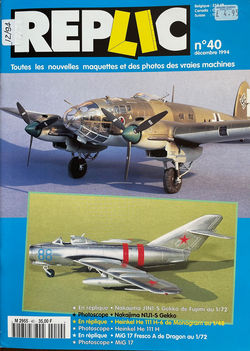
REPLIC
40 WW2 IJN NAKAJIMA J1N1-2 GEKKO IRVING – He-111H – MIG-17 FRESCO
WW2 IJN NAKAJIMA J1N1-2 GEKKO “IRVING”
TWIN ENGINE FIGHTER
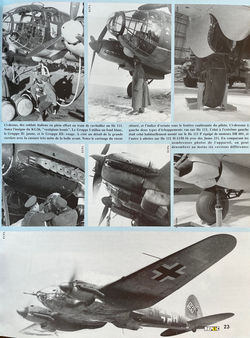
WW2 GERMAN LUFTWAFFE HEINKEL He-111H-6
MEDIUM BOMBER KG KAMPFGESCHWADER
MIKOYAN MIG-17 FRESCO SOVIET AIR FORCE
/ WARSAW PACT / MIDDLE EAST AF / PLAAF CHINA / INDONESIA
TEXT IS PRIMARILY IN FRENCH WITH SOME PHOTO
CAPTIONS IN ENGLISH. REPLIC IS WAY MORE
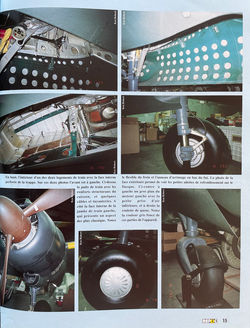
THAN A MAGAZINE FOR THE IPMS PLASTIC MODELLING HOBBYIST COMMUNITY. EACH ISSUE IS PACKED WITH BOTH VINTAGE
PHOTOGRAPHS AND FULL COLOR CLOSE-UP DETAILED PHOTOGRAPHS OF FULL-SCALE
AIRCRAFT. IF YOU LIKE KOKU FAN OR
FLYPAST OR COMBAT AIRCRAFT OR AIR FORCES MONTHLY THAN THIS IS A REFERENCE FOR
YOU.
----------------------
Additional Information from Internet Encyclopedia
The Nakajima J1N1 Gekkō ("Moonlight") is a
twin-engine aircraft used by the Japanese Imperial Navy during World War II and
was used for reconnaissance, night fighter, and kamikaze missions. The first
flight took place in May 1941. It was given the Allied reporting name
"Irving", since the earlier reconnaissance version the J1N1-C, was mistaken
for a fighter.
In mid-1938 the Japanese Imperial Navy requested a
twin-engine fighter designed to escort the principal bomber used at the time,
Mitsubishi G3M "Nell". The operating range of the standard Navy
fighter, the Mitsubishi A5M "Claude", was only 1,200 km (750 mi),
insufficient compared with the 4,400 km (2,730 mi) of the G3M. Moreover, at the
time, the potential of the "Zero", then still under development,
remained to be evaluated, stressing the need for a long-range escort fighter,
much as the Luftwaffe had done with the Messerschmitt Bf 110 Zerstörer,
introduced the year before.
In March 1939, Mitsubishi and Nakajima began the
development of a project 13-Shi. The prototype left the factory in March 1941
equipped with two 843 kW (1,130 hp) Nakajima Sakae 21/22, 14-cylinder radial
engines. There was a crew of three, and the aircraft was armed with a 20 mm
Type 99 cannon and six 7.7 mm (.303 in) Type 97 aircraft machine guns. Four of
these machine guns were mounted in two rear-mounted powered turrets, the weight
of which reduced the performance of the aircraft considerably. Because of the
sluggish handling, being used as an escort fighter had to be abandoned.
Instead, production was authorized for a lighter reconnaissance variant, the
J1N1-C, also known by the Navy designation Navy Type 2 Reconnaissance Plane.
One early variant, the J1N1-F, had a spherical turret with one 20 mm Type 99
Model 1 cannon mounted immediately behind the pilot.
Operation history
In early 1943, Commander Yasuna Kozono of the 251st
Kōkūtai in Rabaul came up with the idea of installing 20 mm cannons, firing
upwards at a 30-degree angle in the fuselage.[1] Against orders of central
command, which was skeptical of his idea, he tested his idea on a J1N1-C as a
night fighter. The field-modified J1N1-C KAI shot down two B-17s of 43rd Bomb
Group attacking air bases around Rabaul on 21 May 1943.
The Navy took immediate notice and placed orders with
Nakajima for the newly designated J1N1-S nightfighter design. This model was
christened the Model 11 Gekkō ("Moonlight"). It had a crew of two,
eliminating the navigator position. Like the KAI, it had twin 20 mm Type 99
Model 1 cannon firing upward in a 30° upward angle, but added a second pair
firing downward at a forward 30° angle, allowing attacks from above or below.
This arrangement was effective against B-17 Flying Fortress bombers and B-24
Liberators, which usually had Sperry ball turrets for ventral defense. The
Gekkō's existence was not quickly understood by the Allies, who assumed the
Japanese did not have the technology for night fighter designs. Early versions
had nose searchlights in place of radar. Later models, the J1N1-Sa Model 11a,
omitted the two downward-firing guns and added another 20 mm cannon to face
upward as with the other two. Other variants without nose antennae or
searchlight added a 20 mm cannon to the nose.
The J1N1-S was used against B-29 Superfortresses in
Japan, though the lack of good radar and insufficient high-altitude performance
handicapped it, since usually only one pass could be made against the
higher-speed B-29s. However, some skillful pilots had spectacular successes,
such as Lieutenant Sachio Endo, who was credited with destroying eight B-29s
and damaging another eight before he was shot down by a B-29 crew, Shigetoshi
Kudo (nine victories), Shiro Kurotori (six victories), and Juzo Kuramoto (eight
victories); the last two claimed five B-29s during the night of 25–26 May 1945.
Another Gekkō crew shot down five B-29's in one night, but these successes were
rare. Many Gekkō's were also shot down or destroyed on the ground.