


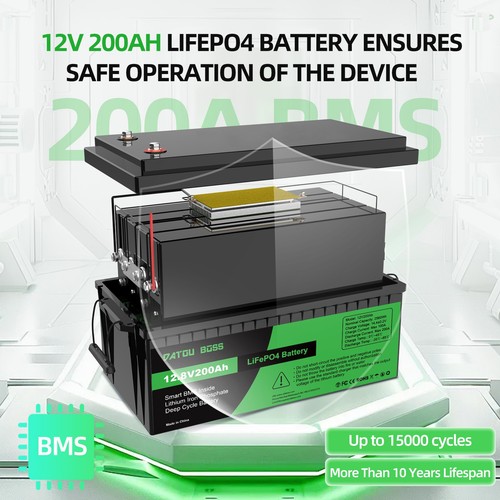




- Overcharge protection
Before the battery is discharged (e.g. when the voltage drops below the set value), the discharge circuit is forcibly interrupted to prevent the internal structure of the battery from being damaged by deep discharge and to ensure reversible charging and discharging capability. - Discharge protection
Before the battery is discharged (e.g. when the voltage drops below the set value), the discharge circuit is forcibly interrupted to prevent the internal structure of the battery from being damaged by deep discharge and to ensure reversible charging and discharging capability. - Overvoltage protection
Real-time monitoring of the battery voltage; if the voltage suddenly rises due to abnormalities (e.g. circuit failure), the circuit is immediately interrupted to prevent the high voltage from penetrating the components or triggering the risk of thermal runaway. - Short circuit protection
When an abnormal short-circuit current is detected (response time of one millisecond), the circuit is quickly interrupted to prevent high temperatures, melting or fires caused by the high current and to protect the battery and electrical equipment.

【Ultra Long Service Life】
Designed for a lifespan of up to 10 years, it supports over 15000 cycles of charging and discharging, and remains stable even with frequent deep discharges.
【Ultra Lightweight & Compact Design】
Only 18kg, 65% weight reduction and a 50% reduction in installation space. Fewer installation restrictions, mobility at all times and suitability for a wide range of applications, including mobile homes, private solar systems and ships.


【Flexiable Capacity expansion】
The 200Ah lithium battery can not only be connected in parallel, but also in series. When connected in series, it can be paired with up to 4 identical units, allowing you to customise power output to match your specific needs.

【Fast Charging and Discharging Capability】
Supports high current charging and discharging, significantly shortens charging time, and improves usage efficiency.
【Wide Application】
🚐 RV/Camping Power Supply
☀️ Solar energy storage system
🏠 Home backup power supply/emergency power supply
🚢 Ship equipment/electric thrusters
🎣 Power supply for outdoor leisure, fishing, photography and other equipment

TIPS FOR BETTER PERFORMANCE
1.Please make sure all batteries that are connected meet the following criteria:
◆ Batteries have the Same Voltage (V), Same Capacity (Ah), and are the Same Type (Lithium iron phosphate (LiFePO4)).
◆ As the built-in battery management system (BMS) may vary between brands, we advise you to choose batteries from the Same Brand forconnection.
2.For optimal performance, we kindly advise you to follow the requirementslisted below:
◆ Fully charge all ready-to-connect batteries.
◆ All battery interconnect cables should be the same wire gauge (AWG) and length, and come from the same brand. Otherwise, the impedance will be inconsistent, resulting in unbalanced charge and discharge perfor-mance.
◆ Connect your batteries one by one in series (up to 4 batteries) or in parallel (up to 4 batteries). Secure all cable connections between the cablelugs and terminals.
3.When determining the cable size (AWG) for your system, there are two factors to consider:
◆ The size of the electrical load you want to power.
◆ The distance between the electrical load and your batteries. For reference, see the following chart: —Cables for Controller to Battery Solar Input Current 5A 10A 20A 30A 40A

