| Date | AD 128–c.130 |
| Mint | Uncertain eastern mint |
| Diameter | 19mm |
| Weight | 3.93 g |
| Die axis | 6h |
| Obverse | Laureate & draped bust right |
| Reverse | Victory flying right, holding trophy |
| Reference | RIC II.3 3116 var. (obv. legend) |
| Condition | dark gray patina |
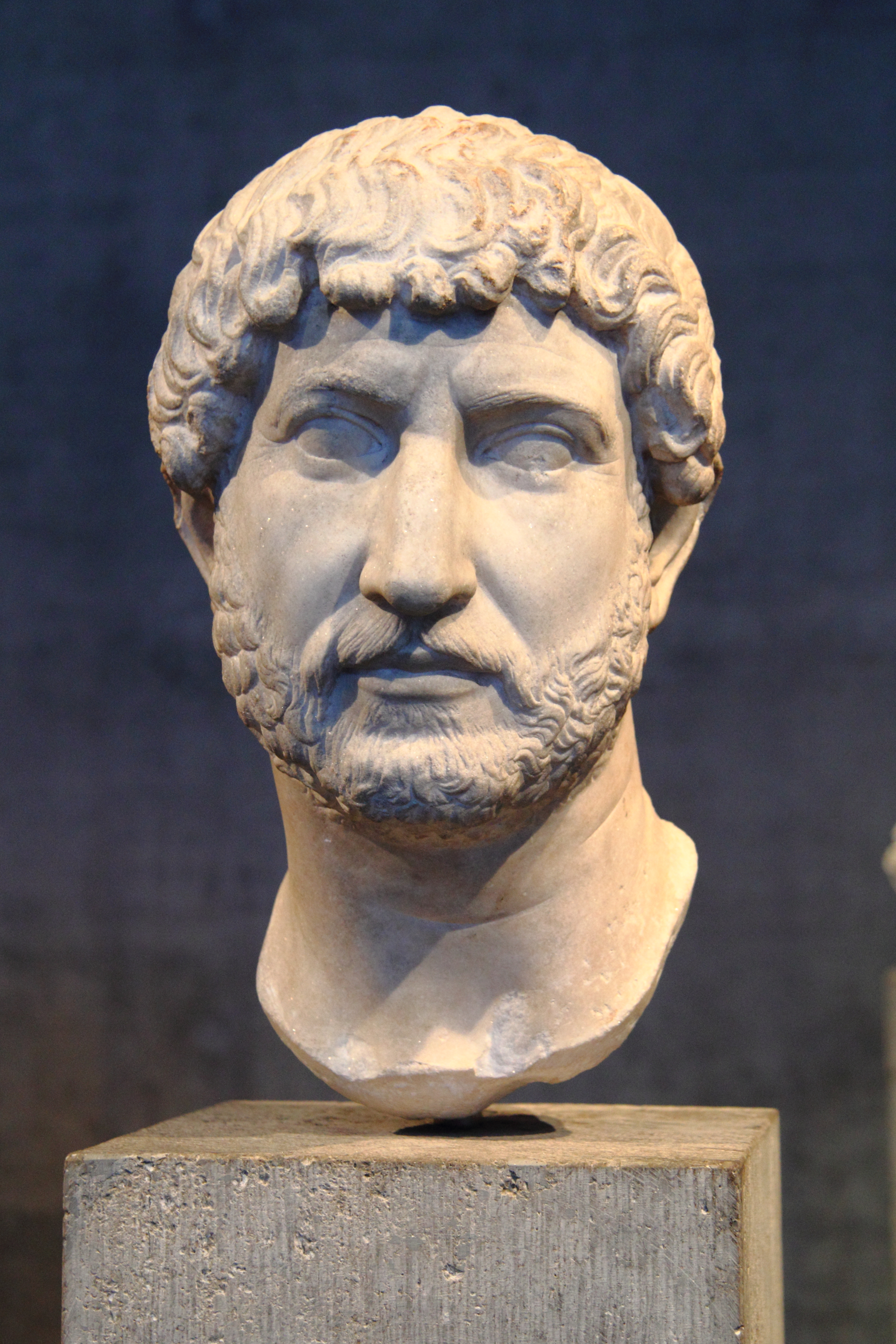
Here’s a fascinating silver denarius of the Roman emperor Hadrian, struck between about AD 128 and 130 at an uncertain eastern mint. It’s 19 millimeters across and weighs 3.93 grams, with a dark gray patina. The obverse shows Hadrian’s portrait, and the reverse features Victory flying right, holding a trophy in both hands. It’s a rare type, recorded as RIC II.3 3116 variant.
What stands out here is the attribution to an uncertain eastern mint. Instead of the usual Rome output, this is one of the denarii associated with production somewhere in the eastern part of the empire, struck around AD 128 to 130.
Hadrian is one of the most distinctive Roman emperors—more builder and organizer than conqueror. He ruled from AD 117 to 138 and inherited an empire stretched to its limits. Rather than chasing constant expansion, he focused on strengthening what Rome already controlled, improving defenses, and bringing stability to far-flung provinces. His name is forever tied to Hadrian’s Wall in Britain, a symbol of that policy of consolidation and border security.
He was also an emperor who truly moved through his world. Hadrian traveled extensively—far more than most rulers—visiting major cities, meeting local elites, and sponsoring construction projects that still shape what we think of as the Roman world today. In Rome, he rebuilt the Pantheon in its iconic form, and his villa at Tivoli became a showcase of architectural ideas drawn from across the Mediterranean.
A coin like this captures that wider empire—Hadrian’s portrait on one side, Victory on the other, and an eastern origin that quietly points beyond Rome to the provinces that defined his reign.