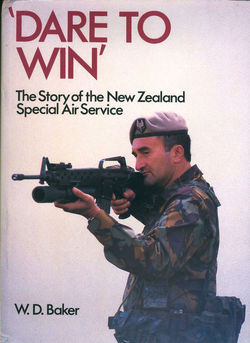
DARE TO WIN HBDJ NEW ZEALAND
SPECIAL AIR SERVICE NZ SAS MALAYA BORNEO VIETNAM WEAPONS EQUIPMENT UNIFORMS
HARDBOUND BOOK with DUSTJACKET by W.D. BAKER (106 PAGES)
INTRODUCTION (WW2 LONG RANGE DESERT RECONNAISSANCE GROUP
LRDG � NORTH AFRICA, DAVID STIRLING)
BUILDING THE SAS (PAPAKURA ARMY CAMP)
SELECTION AND TRAINING (PRE-SELECTION COURSE, SWIMMING
TEST, WEAPONS TRAINING, SELECTION COURSE, UNARMED COMBAT, FIELD CRAFT, LAND
NAVIGATION. ROCK CLIMBING)
SPECIALIST ROLES (COUNTER-TERRORIST, PARACHUTE TRAINING,
BOAT TROOP, TRACKING, DIVING, TERRITORIAL FORCE)
WEAPONS, EQUIPMENT AND UNIFORMS (MINIMI LIGHT MACHINE GUN
LMG, STERLING MACHINE CARBINE, M79 GRENADE LAUNCHER, L4A1 BREN, L7A1, ENFIELD
NUMBER 5 Mk.I, ENFIELD NUMBER 4 Mk.I, L1A1 SLR, M16A1 RIFLEPARKER-HALE 1220 TX
SNIPER RIFLE, AUG, SHOTGUNS, PISTOLS, BROWNIN G9mm, GRENADES, EXPLOSIVES, VEHiCLES,
PARACHTES, DIVING EQUIPMENT, PACKS, INFLATABLES ,KLEPPERS, SERVICE DRESS
WINTER, SERVICE DRESS SUMMER, WORKING DRESS, COMBAT DRESS
MALAYA 1955-57
THAILAND 1962
BORNEO 1965-66
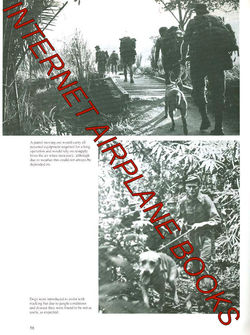
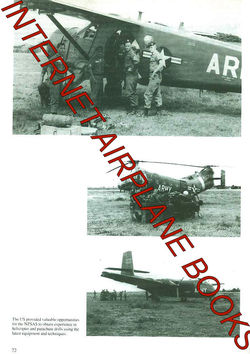
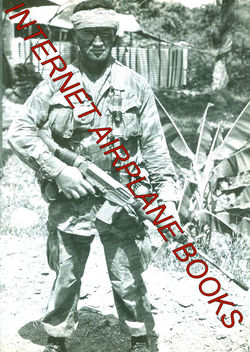
VIETNAM 1968-71
THE NZSAS � PAST & FUTURE
--------------------------------------------------------------------------------
Additional Information from Internet Encyclopedia
The New Zealand Special Air Service, abbreviated as the
NZSAS, was formed on 7 July 1955 and is the special forces unit of the New
Zealand Army, closely modelled on the British Special Air Service (SAS). It
traces its origins to the Second World War and the famous Long Range Desert
Group that New Zealanders served with.
The New Zealand Government states that NZSAS is the
"premier combat unit of the New Zealand Defence Force" and it has
been operationally deployed to locations including the Pacific region,
Afghanistan and the jungles of South-East Asia. Individual members of the NZSAS
have received honours and awards, most notably the Victoria Cross for New
Zealand awarded to Corporal Willie Apiata. In 2004, the unit was awarded the
United States Presidential Unit Citation for its contribution in Afghanistan.
The NZSAS was accorded regimental status in 2013. It has
the responsibility of conducting counter-terrorism and overseas special
operations, and performing the disposal of chemical, biological, radiological,
nuclear and explosive hazards for military and civilian authorities.
On 20 November 1955 the NZSAS Squadron departed from New
Zealand and after completing parachute training in Changi, Singapore, a
133-strong NZSAS Squadron was attached to the British SAS in Malaya.[26] After
undertaking jungle training in the rugged mountains of Perak, the Squadron went
on to spend approximately 18 of the 24 months it was in Malaya operating in the
jungle against communist insurgents.
SAS operations in Malaya consisted of going deep into the
jungle, locating local people and moving them for their protection, then
seeking out terrorists in the area and 'destroying' them.[28] From 2 April 1956
when the New Zealand Squadron became operational it was deployed to the Fort
Brooke area, bordering the states of Perak and Kelantan.[29] From late 1956 the
Squadron operated in the 'mountainous' area of Negri Sembilan,[30] between the
towns of Seremban, Kuala Pilah, and Tampin. In both locations the squadron was
involved in successful operations eliminating the local Malayan Races
Liberation Army groups.[31] During the two-year tour New Zealand patrols were
involved in 14 separate engagements with the enemy, killing fifteen, capturing
one and taking the surrender of nine others.[6] The Squadron suffered two
fatalities. On 2 May 1956 while patrolling, Trooper A.R. Thomas was fatally
wounded,[32] and on 11 May 1957 Corporal A.G. Buchanan died of heat stroke
while on patrol.[33] The Squadron returned home in December 1957.
At the request of the Royal Thai Government a detachment
of 30 men were stationed in Thailand from 2 June to 16 September 1962 during
the Laotian crisis.[34] The detachment was split into two Troops, with one
working with United States Special Forces and the Marines at Udon in the
north-east and the other deployed with a reinforced United States Army battle
group at Khao in the central region.[35] Neither Troop took part in any
operations involving action against the enemy, but the deployment provided the
detachment with an opportunity to train in jungle and mounted operations while
working with American and Thai forces.
In late 1964, during the Indonesian Confrontation
(Konfrontasi) in West Malaysia, the New Zealand Government authorised the
deployment of a New Zealand Special Air Service detachment[37] to assist with
countering Indonesian Communist insurgents in Borneo. The unit was deployed
alongside its British and Australian Special Air Service counterparts.[38] The
Detachments served under the operational command of the 22nd Special Air
Service Regiment and were employed on reconnaissance tasks and ambushing
operations[39] including CLARET operations. These involved crossing the border
into Indonesia to gain intelligence information, and later, to deter the
Indonesians from infiltrating across the border into Borneo.
In February 1965, the first detachment of 40 men under
the command of Major W.J.D. (Bill) Meldrum, known as 1 Detachment, 1st Ranger
Squadron, New Zealand Special Air Service, departed for Malaysia.[38] However,
as a result of a perceived operational security breach Meldrum was replaced by
Major Brian Worsnop from 3 April 1965.[41] After a period of training with 22
SAS, 1 Detachment inserted its initial patrols on 8 April 1965.[42] 1 Detachment
carried out patrols, stopping for a training break from June to July 1965,
until it was replaced by 2 Detachment on 11 October 1965.[43] 2 Detachment was
commanded by Major Rod Dearing and again considered of 40 men. It performed
similar tasks to 1 Detachment, 2 Detachments later patrols were conducted in
the Sabah area which was "particularly rugged, steep and rocky".[44]
The detachment was withdrawn from operations on 10 February 1966,[45] and was
replaced by 3 Detachment which was commanded by Major David Ogilvy, who had
previously deployed to Malaya with the original NZSAS Squadron.[45] 3
Detachment conducted patrols from February, with Detachment's last patrol
conducted over the period 16 to 28 May 1966,[46] which was also the last CLARET
patrol conducted by the NZSAS.[47] 4 Detachment arrived in Borneo in June 1966
under the command of Major David Moloney, just after CLARET operations had been
stopped.[48] As a result, this Detachment was utilised to continue a
'hearts-and-mind' campaign to gain support of local Punan tribes living near
the border.[48] On 12 August 1966 a formal peace treaty was signed by Indonesia
and Malaysia[49] and with the Confrontation finally at an end, 4 Detachment
officially became non-operational on 9 September 1966. However the Detachment
remained in Borneo until October 1966 before it returned to New Zealand.
On 16 November 1968, a Troop from 1 Ranger Squadron,
NZSAS known as 4 Troop, New Zealand Special Air Service, was deployed to the
Republic of South Vietnam.[51] The Troop consisting of one officer and 25 other
ranks,[51] was based in Nui Dat, South Vietnam and served in the 1st Australian
Task Force, attached to the Australian Special Air Service Regiment (SASR).[52]
The troopers were primarily employed on Long-Range Reconnaissance Patrols
(LRRP) to collect information for 1ATF and were sometimes additionally tasked
to conduct ambushes of communist forces.[53] After a build-up period, the first
New Zealand commanded patrol commenced on 7 January 1969.
Each tour of duty in South Vietnam was for 12 months. At
the end of each year, the Troop was replaced by another Troop from 1 Ranger
Squadron, NZSAS.[53] The first Troop was commanded by Captain Terry Culley,
this Troop was replaced in full in late 1969 by a Troop commanded by Captain
Graye Shattky. Members of this first replacement Troop took part in an
operational Squadron parachute insertion on 15�16 December 1969.[55] The final
rotation occurred in late 1970, when the Troop was again replaced by a new body
of men commanded by Second Lieutenant Jack Hayes.[56] 4 Troop was withdrawn
from South Vietnam on 20 February 1971, as a part of the New Zealand
Government's withdrawal policy.[57] On 14 January 1970 Sergeant G.J. Campbell
was killed in action, being the first and only fatal NZSAS casualty during the
unit's time in Vietnam[58] with otherwise four wounded.
The NZSAS did a total of 155 patrols in their 26 months
of service in Vietnam[60] and it was a NZ patrol that made the last contact
with enemy forces before Australian and New Zealand SAS operations ceased,
killing two Viet Cong soldiers north-west of Thua Tich on 4 February 1971.