IPMS
CANADA RANDOM THOUGHTS V6 N5 ITALIAN D.520 RCAF DH GENET MOTH
WW2 ITALIAN REGIA AERONAUTICA
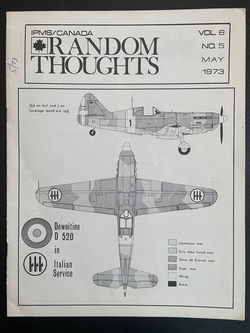
DEWOITINE D.520
RCAF DH GENET MOTH (A small
number of DH.60 Moths were fitted with the Armstrong Siddeley Genet radial
engine. The type was used by the Royal Air Force Central Flying School for
display purposes, six built.)
WW2 JAPAN KAWANISHI E15K1 SHIUN
“VIOLET CLOUD” NORM HIGH-PERFORMANCE FLOATPLANE
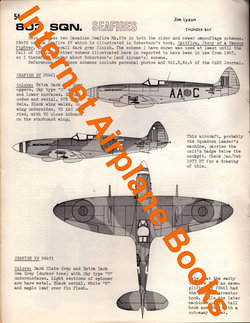
ROYAL CANADIAN NAVY SEAFIRE
Mk.XV No.803 SQUADRON RCN HMCS WARRIOR
SWEDISH AIR FORCE SVENSKA
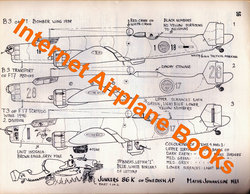
FLYGVAPNET JUNKERS Ju86K F1 BOMBER WING 1938 / TRANSPORT / TORPEDO BOMBER F17 1946
(The Ju 86K was an export model, also built under license in Sweden by Saab as
the B 3 with (905 hp) Bristol Mercury XIX radial engines. Several aircraft
remained in service with the Swedish Air Force until 1958. A few were converted
for radio interception activities.)
SEXTON 25-POUNDER SELF-PROPELLED
GUN TRACKED
SKYWAY AIR SERVICES GRUMMAN
AVENGER FIRE BOMBER AIR TANKER ABBOTSFORD, BRITISH COLUMBIA B.C. 1966 (Skyway
Air Services was started shortly after the close of WW2. They were pioneers in
the development and operation of aerial firefighting, agricultural and pest
control spraying. Les Kerr had worked for Skyway Air Services for seventeen
years and put together the five-man group to take control of the fire control
and aerial agricultural interests of Skyway. In the transaction, they took 35
employees and 19 single engine aircraft. This took place after the owner of
Skyway (Art Seller), had suffered a stroke and wanted to eliminate some of his
workload. After the interests were sold, Skyway continued to operate as a
flying school and charter business out of Langley, British Columbia.)
--------------------------
Additional Information from
Internet Encyclopedia
The Kawanishi E15K Shiun
("Violet Cloud") was a single-engined, Japanese reconnaissance
floatplane of World War II. The Allied reporting name for the type was
"Norm" after Squadron Leader Norman O. Clappison of the RAAF, a
member of the Allied Technical Air Intelligence Unit (ATAIU).
In 1939, the Imperial Japanese
Navy instructed the Kawanishi Aircraft Company to develop a two-seat,
high-speed reconnaissance floatplane, which was required to have sufficient
performance to escape interception by land-based fighters as well as an 800-nautical
mile range. It was planned to equip a new class of cruisers, intended to act as
a flagship for groups of submarines, operating six of the new floatplanes to
find targets. The first of the new cruisers, Ōyodo, was also ordered in 1939.
Kawanishi designed a
single-engined, low-wing monoplane, powered by a 1,460 hp (1,090 kW) Mitsubishi
MK4D Kasei 14 14-cylinder radial driving two contra-rotating two-bladed
propellers, the first installation of contra-rotating propellers produced in
Japan, while a laminar flow airfoil section was chosen to reduce drag. It had a
single main float under the fuselage and two stabilizing floats under the
wings. The stabilizing floats were designed to retract into the wing, while the
central float was designed to be jettisoned in case of emergency, giving a
sufficient increase in speed (estimated as approximately 50 knots (90 km/h)[3])
to escape enemy fighters.
The first prototype of
Kawanishi's design, designated E15K1 in the Navy's short designation system,
made its maiden flight on 5 December 1941. Five more prototypes followed during
1941–42. Development became protracted due to the E15K1's advanced features,
and the project fell behind schedule. Problems were encountered with the
retractable stabilizing floats, resulting in several accidents when the floats
could not be lowered for landing, and the system was eventually abandoned, with
the stabilizing floats being fixed and a more powerful Mitsubishi MK4S Kasei 24
engine fitted to compensate for the increased drag.
Operational history
Despite these problems, the
E15K1 was ordered into limited production as the Navy Type 2 High-speed
Reconnaissance Seaplane Shiun Model 11. Six prototype and service trial E15Ks
were built and evaluated from 1941-42. Production finally got underway in 1943,
but the first operational E15K1s did not enter service until April 30, 1944,
when six were assigned to the 12th Reconnaissance Squadron of the 61st Air
Flotilla.
On June 1, the first of its
Shiuns arrived at Palau Island in the South Pacific. By that time, new Allied
fighters of much higher performance, specifically the Grumman F6F Hellcat, had
entered service. Compounding Japanese crews' undoubted frustration, when under
attack, the Shiun's main float jettison mechanism, which had been wind-tunnel
tested but never tried on an actual airplane prior to manufacture, failed to
work in combat. Coupled with high maintenance and other mechanical issues,
further production was cancelled in February 1944, with only fifteen Shiuns
completed - including the six prototypes.
-----------------
About 60 D.520s were acquired by
the Regia Aeronautica (the Italian Air Force or RA). Italian pilots appreciated
the aircraft's capabilities and Hispano-Suiza HS.404 cannon, at least by
1940–1941 standards. The first three D.520s were assigned to 2° Stormo based at
the Torino-Caselle airfield, where they were used for the defence of Torino's
industrial area. Other D.520s were captured in Montélimar, Orange, Istres and
Aix-en-Provence.
At the beginning of 1943, the
Italian ace Luigi Gorrini ferried D.520s taken as prizes of war to Italy to be
used for defence. "I have collected several dozen Dewoitines from various
French airfields and the Toulouse factory", he recalled later. "At
the time, when we were still flying the Macchi C.200, it was a good, if not
very good, machine. Compared to the Macchi 200, it was superior only in one
point: its armament of the Hispano-Suiza HS 404 20 mm (0.787 in) cannon."
Italian pilots liked the 20 mm (0.787 in) gun, the modern cockpit, the
excellent radio set and the easy recovery from a spin but they also complained
about the weak undercarriage and the small [cannon] ammunition drum capability;
the ammunition was not available in quantities (the HS.404 was not compatible
with Breda and Scotti 20 mm (0.787 in) guns, so everything depended on France's
depots). At the end of February the 359a Squadriglia (22° Gruppo), led by Major
Vittorio Minguzzi, received eight Dewoitine D.520. At that time, American B-24s
frequently bombed Naples, so an effective interceptor was badly needed, and
D.520s were all that were available in early 1943. The 359a Squadriglia pilots
used Dewoitines with some success.
On
1 March 1943, Maggiore Minguzzi claimed a B-24 while flying a D.520. This claim
was initially only claimed as a probable but was later upgraded to a confirmed.
This was probably the first Italian claim using this aircraft. On 21 May 1943,
the Regia Aeronautica and the Luftwaffe agreed to exchange 39 Lioré et Olivier
LeO 451s, captured by the Italians at the SNCASE factory in Ambérieu-en-Bugey
(Lyon), with a stock of 30 D.520s. Subsequently, in the spring and summer of
1943, the Dewoitines were used by 161° Gruppo Autonomo, based in southern Italy
with 163a Squadriglia in Grottaglie, 162a Squadriglia in Crotone and 164a
Squadriglia in Reggio Calabria. On 31 July 1943, the Regia Aeronautica still
had 47 Dewoitines in service. After the armistice of 8 September 1943, three
D.520s, previously in service with 24° Gruppo, were used by the Aeronautica
Nazionale Repubblicana of the Italian Social Republic for training