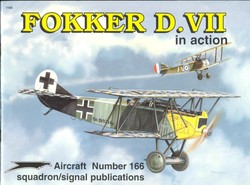
SQUADRON SIGNAL FOKKER D.VII IN ACTION WW1 GERMAN JASTA BIPLANE FIGHTER
AIRCRAFT NUMBER 166 BY D. EDGAR BRANNON. COLOR BY DON GREER. ILLUSTRATED BY JOE SEWELL 1996
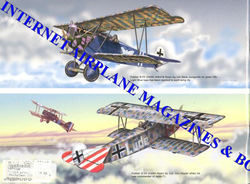
LOTHAR VON RICHTHOFEN COLOR COVER
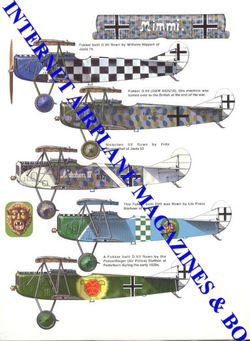
HERMANN GOERING RITTMEISTER JAGDGESCHWADER 1 FOKKER D.VIIF
INTRODUCTION � THE AIR WAR IN 1917 / THE AIR WAR IN 1918
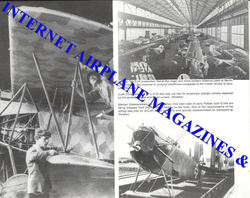
DEVELOPMENT � EARLY EXHAUST PIPES, MERCEDES 160 hp D.III ENGINE, SHOCK ABSORBER, TAIL SKID, FOKKER FACTORY SCHWERIN GERMANY, ALBATROSS FACTORY BERLIN-JOHANNISTHAL
SPANDAU MAXIM LIGHTENED MACHINE GUN
IN FLIGHT FIRES (ENGINE COOLING LOUVERS)
FOKKER D.VIIF 185 hp BMW ENGINE (EXHAUST SYSTEM)
REAR VIEW MIRROR IN WING CUT OUT
COCKPIT (FOOT PEDALS & THROTTLE CONTROL)
THE FOKKER D.VII AFTER THE GREAT WAR (USAAS, POLAND POLISH AIR FORCE, DUTCH ARMY AIR SERVICE, SWISS ARMY AIR SERVICE)
YOU WILL FIND GREAT DEALS ON HARD-TO-FIND AVIATION, ARMOR, NAUTICAL AND MILITARIA MAGAZINES AT MY EBAY STORE �INTERNET AIRPLANE MAGAZINES AND BOOKS�!
I HAVE HUNDREDS OF ADDITIONAL LISTINGS USING THE SIMPLE �BUY-IT-NOW� FORMAT. I SPECIALIZE IN AVIATION REFERENCE MAGAZINES AND BOOKS. I ALSO CARRY TITLES ON MILITARY HISTORY, ARMOR, TANKS, SHIPS, ELITE SPECIAL UNITS AND AMERICAN CIVIL WAR. THESE ARE EXCELLENT GIFTS & REFERENCES FOR PILOTS, MILITARY AIRCREW, VETERANS, MILITARY RE-ENACTORS, SCALE MODELERS & AIRCRAFT ENTHUSIASTS. TITLES CURRENTLY LISTED INCLUDED: THE ELITE, TAKE OFF, WARPLANE, PROFILE PUBLICATIONS, AIRCRAFT ILLUSTRATED, AIRCRAFT ILLUSTRATED EXTRA, AIR COMBAT, AIR ENTHUSIAST, AMERICAN AIRMAN AND THE ILLUSTRATED ENCYCLOPEDIA OF AIRCRAFT.
HERE'S AN INEXPENSIVE FATHER'S DAY GIFT, BIRTHDAY PRESENT OR CHRISTMAS PRESENT FOR THE VETERAN, REENACTOR, SCALE MODELER, MILITARIA ENTHUSIAST OR HISTORY CHANNEL LOVER IN YOUR FAMILY
PAYMENT INSTRUCTIONS:
AFTER THE AUCTION HAS COMPLETED, YOU WILL RECEIVE AN INVOICE FROM ME. PAYPAL ACCEPTED. ALL AUCTIONS MUST BE COMPLETED WITHIN 10 DAYS. I WILL DO MY PART AND SHIP ASAP AFTER RECEIVING PAYMENT (SEE MY FEEDBACK FILE).
MONEY BACK GUARANTEE!
YOU WILL LOVE MY CUSTOMER FRIENDLY RETURN POLICY. I WANT YOU OR YOUR GIFT RECIPIENT TO BE HAPPY WITH YOUR PURCHASE. I GUARANTEE THAT THE ITEM SHIPPED WILL BE AS DESCRIBED. YOU MAY RETURN THE ITEM WITHIN 14 DAYS FOR ANY REASON. JUST EMAIL ME AND RETURN POST THE PACKAGE ADEQUATELY PROTECTED AGAINST SHIPPING DAMAGE) AND I WILL RETURN YOUR ITEM PURCHASE PRICE IN FULL.
I WILL POST POSITIVE FEEDBACK FOR YOU AFTER THE TRANSACTION IS COMPLETE AND I AM REASONABLY SURE THAT YOU HAVE RECEIVED THE ITEM. IF THERE IS ANY PROBLEM, PLEASE EMAIL ME TO WORK THINGS OUT BEFORE LEAVING FEEDBACK. MY GOAL IS TO LEAVE EVERY CUSTOMER 100% SATISFIED WITH MY PRODUCTS AND SERVICE. YOU
Visit my Ebay Store to find more issues of KOKU FAN, AIRPOWER, WINGS, AIR CLASSICS, FINE SCALE MODELLER, SCALE AIRCRAFT MODELLER, SCALE AVIATION MODELLER INTERNATIONAL, AIRPLANE (ORBIS), WARPLANE (ORBIS), ILLUSTRATED ENCYCLOPEDIA OF AIRCRAFT, NAVAL AVIATION NEWS, AIR COMBAT, WAR MONTHLY, HISTORY OF THE SECOND WORLD WAR, COMBAT AIRCRAFT, AIR FAN, OSPREY AIRCRAFT OF THE ACES, AIRCRAFT PROFILE, SEA CLASSICS, AIR INTERNATIONAL, AIR ENTHUSIAST, ALL HANDS, FLYING, FLYPAST, AEROPLANE MONTHLY, RAF FLYING REVIEW, AIRCRAFT ILLUSTRATED, AIR EXTRA, TAKE OFF, THE ELITE, AIR FORCES MONTHLY, WAR MACHINE (ORBIS), MODEL AIRPLANE NEWS
------------------------------------------------------------
The Fokker D.VII was a German World War I
fighter aircraft designed by Reinhold Platz of the Fokker-Flugzeugwerke.
Germany produced around 3,300 D.VII aircraft in the second half of 1918. In
service with the Luftstreitkr�fte,
the D.VII quickly proved itself to be a formidable aircraft. The Armistice
ending the war specifically required Germany to surrender all D.VIIs to the
Allies. Surviving aircraft saw continued widespread service with many other
countries in the years after World War I.
Fokker's factory
was not up to the task of meeting all D.VII production orders. Idflieg therefore directed Albatros
and AEG to build the D.VII under license, though AEG did not ultimately produce
any aircraft. Because the Fokker factory did not use detailed plans as part of
its production process, Fokker simply sent a completed D.VII airframe for
Albatros to copy. Albatros paid Fokker a five percent royalty for every D.VII
built under license. Albatros Flugzeugwerke and its subsidiary, Ostdeutsche
Albatros Werke (OAW), built the D.VII at factories in Johannisthal (designated
Fokker D.VII (Alb)) and Schneidem�hl (Fokker D.VII (OAW)), respectively.
Many sources
erroneously state that the D.VII was equipped with the 120 kW
(160 hp) Mercedes D.III engine. The Germans themselves used the generic
D.III designation to describe later versions of that engine. The earliest
production D.VIIs were equipped with 170-180 hp Mercedes D.IIIa.
Production quickly switched to the intended standard engine, the
higher-compression 134 kW (180-200 hp) Mercedes D.IIIa�. It appears
that some early production D.VIIs delivered with the Mercedes D.IIIa were later
re-engined with the D.IIIa�.
By mid-1918, some
D.VIIs received the "overcompressed" 138 kW (185 hp) BMW
IIIa, the first product of the BMW firm. The BMW IIIa followed the SOHC,
straight-six configuration of the Mercedes D.III, but incorporated several improvements.
Increased displacement, higher compression, and an altitude-adjusting
carburetor produced a marked increase in speed and climb rate at high altitude.
Because the BMW IIIa was overcompressed, using full throttle at altitudes below
2,000 m (6,700 ft) risked premature detonation in the cylinders and
damage to the engine. At low altitudes, full throttle could produce up to
179 kW (240 hp) for a short time. Fokker-built aircraft with the new
BMW engine were designated D.VII(F), the suffix "F" standing for Max
Friz, the engine's designer.
BMW-engined
aircraft entered service with Jasta
11 in late June 1918. Pilots clamored for the D.VII(F), of which about 750 were
built. Production of the BMW IIIa was very limited and the D.VII continued to
be produced with the 134 kW (180 hp) Mercedes D.IIIa� until the end
of the war.
D.VIIs flew with
different propeller designs from different manufacturers. Despite the differing
appearances there is no indication these propellers gave disparate performance.
Axial, Wolff, Wotan, and Heine propellers have been noted.
The D.VII entered
squadron service with Jasta 10
in early May 1918. When the Fokker D.VII appeared on the Western Front in April
1918, Allied pilots at first underestimated the new fighter because of its
squarish, ungainly appearance, but quickly revised their view. The type quickly
proved to have many important advantages over the Albatros and Pfalz scouts.
Unlike the Albatros scouts, the D.VII could dive without any fear of structural
failure. The D.VII was also noted for its high maneuverability and ability to
climb at high angles of attack, its remarkably docile stall, and its reluctance
to spin. It could literally "hang on its prop" without stalling for
brief periods of time, spraying enemy aircraft from below with machine gun
fire. These handling characteristics contrasted with contemporary scouts such
as the Camel and SPAD, which stalled sharply and spun vigorously.
The D.VII also had
problems. Several aircraft suffered rib failures and fabric shedding on the
upper wing. Heat from the engine sometimes ignited phosphorus ammunition until
cooling vents were installed in the engine cowling, and fuel tanks sometimes
broke at the seams. Aircraft built by the Fokker factory at Schwerin were noted
for their lower standard of workmanship and materials. Nevertheless, the D.VII
proved to be a remarkably successful design, leading to the familiar aphorism
that it could turn a mediocre pilot into a good one, and a good pilot into an
ace.
Manfred von
Richthofen died days before the D.VII began to reach the Jagdstaffeln and never flew it in
combat. Other pilots, including Erich L�wenhardt and Hermann G�ring, quickly
racked up victories and generally lauded the design. Aircraft availability was
limited at first, but by July there were 407 on charge. Larger numbers became
available by August, when D.VIIs achieved 565 victories. The D.VII eventually
equipped 46 Jagdstaffeln. When
the war ended in November, 775 D.VII aircraft were in service.
The Allies
confiscated large numbers of D.VII aircraft after the Armistice. The United
States Army and Navy evaluated 142 captured examples. Several of these aircraft
were re-engined with American-built Liberty L-6 motors, very similar in
appearance to the D.VII's original German power plants. France, Great Britain,
and Canada also received numbers of war prizes.
Other countries
used the D.VII operationally. The Polish deployed approximately 50 aircraft
during the Polish-Soviet War, using them mainly for ground attack missions. The
Hungarian Soviet Republic used a number of D.VIIs, both built by MAG and
ex-German aircraft in the Hungarian-Romanian War of 1919.
The Dutch, Swiss,
and Belgian air forces also operated the D.VII. The aircraft proved so popular
that Fokker completed and sold a large number of D.VII airframes that he had
smuggled into the Netherlands after the Armistice. As late as 1929, the Alfred
Comte company manufactured eight new D.VII airframes under license for the
Swiss Fliegertruppe.