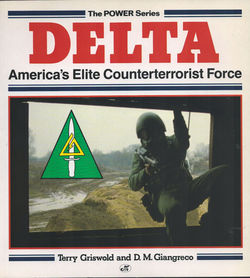
DELTA
AMERICAN ELITE COUNTER-TERRORIST FORCE HISTORY TRAINING WEAPONS LITTLE BIRDS
MOTORBOOKS SOFTBOUND BOOK IN
ENGLISH BY TERRY GRISWOLD and D.M. GIANGRECO
------------------------------------
Additional Information from
Internet Encyclopedia
The 1st Special Forces
Operational Detachment–Delta (1st SFOD-D), referred to variously as Delta
Force, Combat Applications Group (CAG), Army Compartmented Elements (ACE), or
within Joint Special Operations Command (JSOC), Task Force Green,[2] is a
special operations force of the United States Army, under operational control
of JSOC. The unit's missions primarily involve counterterrorism, hostage
rescue, direct action, and special reconnaissance, often against high-value
targets.
Delta Force, along with its Navy
and Air Force counterparts, DEVGRU and the 24th Special Tactics Squadron, are
the U.S. military's tier one special mission units that are tasked with
performing the most complex, covert, and dangerous missions directed by the
President of the United States and the Secretary of Defense.
Most Delta Force operators are
selected from the Army Special Operations Command's elite 75th Ranger Regiment
and Special Forces, though selection is open to other special operations units
and conventional forces across the Army and sometimes other military branches.
History
Delta Force was created in 1977
after numerous well-publicized terrorist incidents led the U.S. government to
develop a full-time counter-terrorism unit.
Key military and government
figures had already been briefed on this type of unit in the early 1960s.
Charlie Beckwith, a Special Forces (Green Berets) officer and Vietnam War
veteran, served as an exchange officer with the British Army's 22nd Special Air
Service Regiment during the Malayan Emergency. On his return, Beckwith
presented a detailed report highlighting the U.S. Army's vulnerability in not
having a SAS-type unit. U.S. Army Special Forces in that period focused on
unconventional warfare providing training and medical care to indigenous resistance
fighters, but Beckwith recognized the need for "not only a force of
teachers, but a force of doers".[12] He envisioned highly adaptable and
completely autonomous small teams with a broad array of special skills for
direct action and counter-terrorism missions. He briefed military and
government figures, who were resistant to creating a new unit outside of
Special Forces or changing existing methods.
Finally, in the mid-1970s, as
the threat of terrorism grew, Pentagon and Army senior leaders appointed Beckwith
to form the unit.[14] Beckwith estimated that it would take 24 months to get
his new unit mission ready. Beckwith's estimate came from a conversation he had
had earlier with Brigadier John Watts while in England in 1976. Watts had made
it clear to Beckwith that it would take eighteen months to build a squadron,
but advised him to tell Army leaders that it would take two years, and not to
"let anyone talk (him) out of this." To justify why it would take two
years to build Delta, Beckwith and his staff drafted what they dubbed the
"Robert Redford Paper," which outlined its necessities and historical
precedents for a four-phase selection/assessment process.
Delta Force was established on
19 November 1977, by Beckwith and Colonel Thomas Henry.[16] In the meantime,
Colonel Bob "Black Gloves" Mountel of the 5th Special Forces Group
created a unit "to breach the short-term gap" that existed until
Delta was ready, dubbed Blue Light.[17] The initial members of the unit were
screened from volunteers and put through a specialized selection process in
early 1978, involving a series of land navigation problems in mountainous
terrain while carrying increasing weight. The purpose was to test candidates'
endurance, stamina, willingness to endure, and mental resolve. The first
training course lasted from April to September 1978. Delta Force was certified
as fully mission capable in fall 1979, right before the Iran hostage crisis.
On 4 November 1979, 52 American
diplomats and citizens were taken captive and held in the U.S. embassy in
Tehran, Iran. Delta Force was tasked to plan and execute Operation Eagle Claw,
the effort to recover the hostages from the embassy by force on the nights of
24 and 25 April in 1980. The operation was aborted due to helicopter failures.
The review commission that examined the failure found 23 problems with the
operation, among them unexpected weather encountered by the aircraft,
command-and-control problems between the multi-service component commanders, a
collision between a helicopter and a ground-refueling tanker aircraft, and
mechanical problems that reduced the number of available helicopters from eight
to five (one fewer than the minimum desired) before the mission contingent
could leave the trans-loading/refueling site.
After the failed operation, the
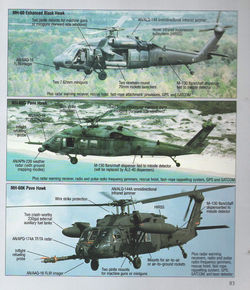
U.S. government realized more changes were needed. The 160th Special Operations
Aviation Regiment (Airborne), also known as the "Night Stalkers", was
created for special operations requiring air support. The Navy's SEAL Team Six,
an earlier incarnation of the current Naval Special Warfare Development Group,
was created for maritime counter-terrorism operations. The Joint Special
Operations Command was created for command and control of the military's
various counter-terrorism units.
Name
In a 2010 article, Marc Ambinder
reported that Army Compartmented Elements (ACE) was a new cover name for Delta
Force.[21] However, Ambinder subsequently wrote an e-book about JSOC in which
he reported that the Army Compartmented Elements is a different unit from
Delta.
In January 2022 it was reported
that the name of the unit may have recently been changed to the 3rd Operational
Support Group.
Organization and structure
The unit is under the
organization of the U.S. Army Special Operations Command (USASOC), but is
controlled by the Joint Special Operations Command (JSOC). Command of 1st
SFOD-D is a colonel's billet. Virtually all information about the unit is
highly classified and details about specific missions or operations generally
are not available publicly. The unit is headquartered at Fort Liberty, North
Carolina.
Delta Force's structure is
similar to the British 22 SAS Regiment, which inspired Delta's formation. In
Not a Good Day to Die: The Untold Story of Operation Anaconda, Army Times staff
writer Sean Naylor describes Delta as having, at the time (in 2001), nearly
1,000 soldiers, of whom about 250 to 300 are trained to conduct direct action
and hostage rescue operations. The rest are combat support and service support
personnel who are among the very best in their fields.
Naylor further details Delta
Force's structure in his book Relentless Strike: The Secret History of Joint
Special Operations Command. He describes a few formations in Delta, primarily
the following operational squadrons:
A Squadron (Assault)
B Squadron (Assault)
C Squadron (Assault)
D Squadron (Assault)
E Squadron (Aviation)[26]
G Squadron (Advanced Force
Operations (AFO), formerly known as Operational Support Troop (OST))[27]
Signal Squadron
Combat Support Squadron
Computer Network Operations
Squadron (CNOS)
Tactical Evaluation and
Operational Research Squadron (TEOR)
Selection and Training Squadron
A, B, C, and D Squadrons are
sabre squadrons (assault). C Squadron was activated in 1990 and D Squadron in
2006. Combat Support Squadron was activated in 2005. E Squadron was activated
in 1989 and is stationed separately in Fort Eustis, Virginia, where it is known
as the Aviation Technology Office. An earlier forerunner of the unit was known
as SeaSpray.
Within each squadron there are
three troops: two assault troops for direct action, and a reconnaissance and
surveillance troop.[25] Each squadron is commanded by a Lieutenant Colonel
(O-5)[28] and troops are led by Majors (O-4).[29] Each troop has four teams,
each one led by a team leader, a Master Sergeant (E-8) or Sergeant First Class
(E-7), and an assistant team leader who can also have the same rank. Each team
can have as many as twelve, or as few as one or two operators.
Recruitment
Since the 1990s, the Army has
posted recruitment notices for the 1st SFOD-D. The Army, however, has never
released an official fact sheet for the elite force. The recruitment notices in
Fort Liberty's newspaper, Paraglide, refer to Delta Force by name, and label it
"...the U.S. Army's special operations unit organized for the conduct of
missions requiring rapid response with surgical application of a wide variety
of unique special operations skills...".[33] The notice states that
applicants must be male, in the grade of E-4 through E-8, have at least two and
a half years of service remaining in their enlistment, be 22 years or older,
and have a Armed Services Vocational Aptitude Battery GT score of 110 or higher
to attend a briefing to be considered for admission. Candidates must be
airborne qualified or volunteer for airborne training. Officer candidates need
to be O-3 or O-4. All candidates must be eligible for a security clearance
level of "Secret" and have not been convicted by court-martial or
have disciplinary action noted in their official military personnel file under
the provisions of Article 15 of the Uniform Code of Military Justice.
On 29 June 2006 during a session
of the Committee on Armed Services, General Wayne Downing testified before the
U.S. House of Representatives that "[t]he Delta Force is probably 70
percent Rangers who have come out of either a Ranger [to] Special Forces track
or directly from [the] Ranger Regiment to Delta".
Selection process
Selection is held twice a year
(March to April, and September to October) at Camp Dawson, West Virginia, and
lasts 4 weeks. Eric Haney's book Inside Delta Force described the selection
course and its inception in detail. Haney wrote that the course began with
standard tests including push-ups, sit-ups, and a 2-mile (3.2 km) run, an
inverted crawl and a 110-yard (330 ft; 100 m) swim fully dressed. The
candidates were then put through a series of land navigation courses, one of
which required them to travel 18 miles (29 km) at night while carrying a
40-pound (18 kg) rucksack. With every successive challenge, the distance to
cover and the weight of the rucksack are increased, while less time is
allotted. The final challenge was a 40-mile (64 km) march with a 45-pound (20
kg) rucksack over rough terrain that had to be completed in an unknown amount
of time; this was also colloquially known as "The Long Walk".[35]
Haney wrote that only the senior officer and NCO in charge of selection were
allowed to see the set time limits, but all assessment and selection tasks and
conditions were set by Delta training cadre.
The mental portion of the
testing began with numerous psychological exams. Each candidate was then called
to face a board of Delta instructors, unit psychologists, and the Delta
commander, who asked the candidate a barrage of questions and then dissected
every response and mannerism to exhaust the candidate mentally. The commander
then approaches the candidate and informs him if he has been selected. Those
who passed the screening process underwent an intense six-month Operator
Training Course (OTC), to learn counter-terrorism and counter-intelligence
techniques, and training with firearms and other weapons. Participants were
allowed very little contact with friends and family for the duration.
In an interview, former Delta
operator Paul Howe mentioned the high attrition rate of the Delta selection
course. He said that out of his two classes of 120 applicants each, 12 to 14
completed the selection.
The Central Intelligence
Agency's secretive Special Activities Center (SAC) and more specifically its
Special Operations Group (SOG), often works with – and recruits – former
operators from Delta Force.
Training
Delta Force operators in
clandestine attire
According to Eric Haney, the
unit's Operator Training Course is approximately six months long. While the course
is constantly changing, the skills taught broadly to include the following:
Marksmanship
The trainees shoot without
aiming at stationary targets at close range until they gain almost complete
accuracy, then progress to moving targets.
Once these shooting skills are
perfected, trainees move to a shoot house and clear rooms of "enemy"
targets – first one only, then two at a time, three, and finally four. When all
can demonstrate sufficient skill, "hostages" are added to the mix.
Demolitions and Breaching
Trainees learn how to pick many
different locks, including those on cars and safes.
Advanced demolition, and
bomb-making using common materials.
Combined skills. The FBI, FAA,
and other agencies were used to advise the training of this portion of OTC.
The new Delta operators use
demolition and marksmanship at the shoot house and other training facilities to
train for hostage and counter-terrorist operations with assault and sniper
troops working together. They practice terrorist or hostage situations in buildings,
aircraft, and other settings.
All trainees learn how to set
sniper positions around a building containing hostages. They learn the proper
ways to set up a Tactical Operations Center (TOC) and communicate in an
organized manner. Although Delta has specialized sniper troops, all members go
through this training.
The students then go back to the
shoot house and the "hostages" are replaced with other students and
Delta Force members. Live ammunition is known to have been used in these
exercises, to test the students, and build trust between one another.[39]
Tradecraft. During the first
OTCs and Delta creation, CIA personnel were used to teach this portion.
Students learn different
espionage-related skills, such as dead drops, brief encounters, pickups, load
and unload signals, danger and safe signals, surveillance and
counter-surveillance.
Executive Protection. During the
first OTCs and creation of Delta, the U.S. State Department's Diplomatic
Security Service and the United States Secret Service advised Delta.
Students take an advanced
driving course to learn to use a vehicle or many vehicles as defensive and
offensive weapons.
They then learn techniques for
VIP and diplomatic protection developed by the Secret Service and DSS.
Culmination Exercise
A final test requires the
students to apply and dynamically adapt all of the skills that they have
learned.
Delta Force trains with other
foreign special operations units to improve tactics and increase relationships
with them including the Australian Special Air Service Regiment, the British
Special Air Service and Canada's Joint Task Force 2.
Secrecy
The Department of Defense
tightly controls information about Delta Force and usually refuses to comment
publicly on the highly secretive unit and its activities, unless the unit is
part of a major operation or a unit member has been killed. Delta operators are
granted an enormous amount of flexibility and autonomy during military
operations overseas.[1] Civilian hair styles and facial hair are allowed to
enable the members to blend in and avoid recognition as military personnel.
In Veritas, the Journal of Army
Special Operations History, Charles H. Briscoe stated that "SF did not
misappropriate the appellation. Unbeknownst to most members of the ARSOF (Army
Special Operations Forces) community, that moniker was adopted by Special
Forces in the mid to late 1950s." He goes on to state that all qualified
enlisted and officers in Special Forces had to "voluntarily subscribe to
the provisions of the 'Code of the Special Forces Operator' and pledge
themselves to its tenets by witnessed signature."
Inside the United States Special
Operations community, an operator is a Delta Force member who has completed
selection and has graduated OTC (Operator Training Course).
"Operator" was used by Delta Force to distinguish between combat
personnel and combat support/service support assigned to the unit.
Operations
Most operations assigned to
Delta are classified, but some details have become public knowledge. For
service during Operation Urgent Fury, the United States' invasion of Grenada,
Delta was awarded the Joint Meritorious Unit Award. The unit was awarded the
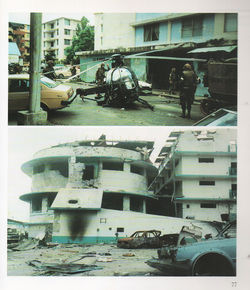
Valorous Unit Award for extraordinary heroism during the Modelo Prison hostage
rescue mission and the capture of Manuel Noriega in December 1989 during
Operation Just Cause in Panama. 1st SFOD-D operators from C Squadron were also
involved in Operation Gothic Serpent in Somalia.
During Operation Enduring
Freedom and Operation Iraqi Freedom, 1st SFOD-D was awarded the Presidential
Unit Citation for combat operations in Afghanistan from 4 October 2001 to 15
March 2002 and Iraq from 19 March 2003 to 13 December 2003.
On 26 October 2019, Delta
operators accompanied by members of the 75th Ranger Regiment conducted a raid
on the compound of Islamic State leader Abu Bakr al-Baghdadi, leading to his
death.