Behringer BEQ700 Bass Graphic Equalizer

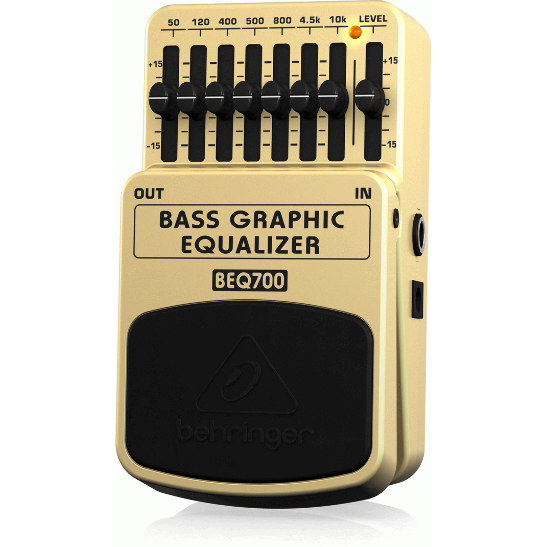
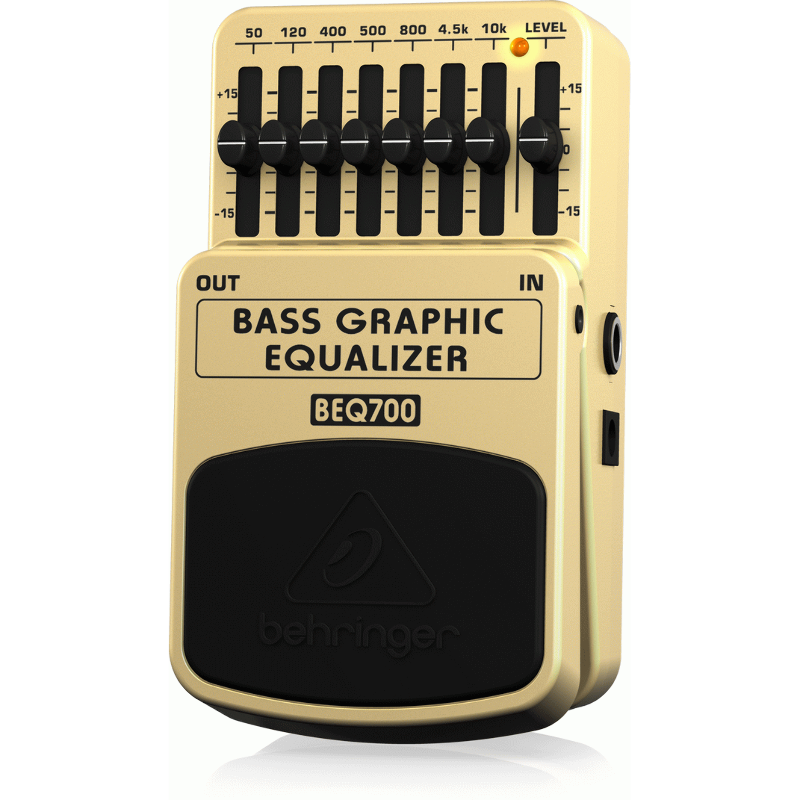
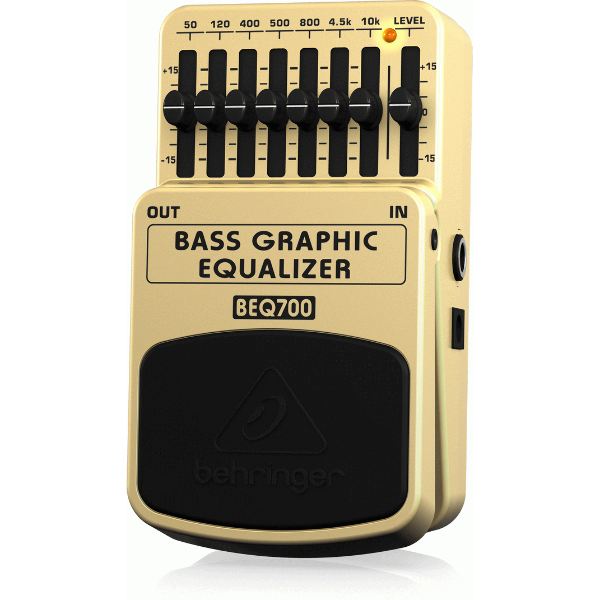
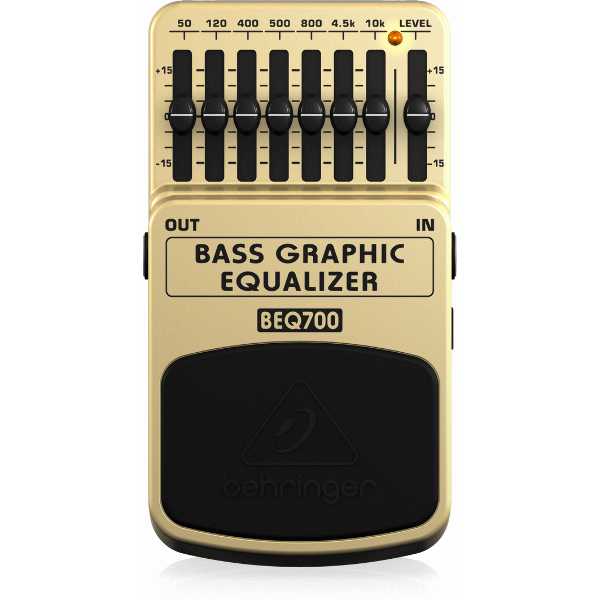
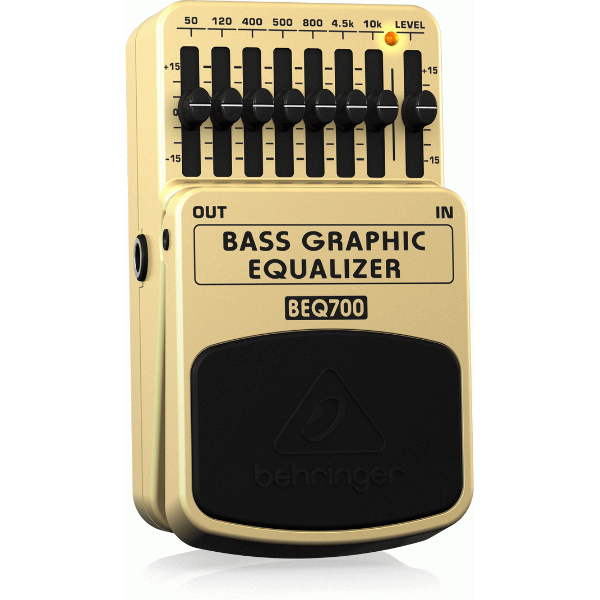
Master of Tone With 15 dB available boost or cut per band, the BEQ700’s seven frequency bands have been carefully chosen to provide the ultimate tools for EQing the bass guitar, even extended range instruments. Of course, to make full use of its capabilities, you should first understand some basics about the frequency range of your axe. The BEQ700 covers the audio spectrum from below 50 Hz to over 10 kHz, allowing you to effectively cut or boost specific frequencies that help focus your sound. Special attention has been paid to the critical midrange frequencies, which can either make or break your sound. The following section offers tips that will have you sculpting the perfect bass sound in no time at all. How Does Equalization Work? Imagine the audio frequency range as a very wide highway with lots of “lanes”. Each of these lanes represents a specific frequency band. The lanes on the left side contain the really low frequency content, mainly bass, bass vocals, and the kick and tom drums The middle lanes make up the fundamental zone of most musical instruments and the male and female vocals The right-hand lanes have all the high-frequency stuff , such as snare drums, cymbals, higher pitched percussion instruments and the content that adds sizzle to the mix Applying EQ to Bass Instruments When frequencies from 20 Hz - 200 Hz are boosted or cut, the bass is affected dramatically, since sounds in this range are often felt, as well as being heard. Boosting frequencies within this range can increase the sensation of power and punch. Conversely, reductions in this range can weaken or muddy low-frequency response. The fundamental notes of most basses fall within the 40 Hz - 1000 Hz range. Even slight changes in this range can cause a tremendous variation in overall bass energy and impact, as the human ear is especially sensitive to this range. Boosting frequencies around 200 Hz often gives the bass warmth and body, without a loss of definition, while boosting frequencies in the 500 Hz to 1000 Hz range tend to make bass sounds brittle. Often, better EQ results can be achieved by reducing the frequency bands that are off ending, and by turning up the overall volume rather than boosting one specific band. How the specific frequency bands of the BEQ700 can shape your sound 50 Hz (sub-bass)Boost: To thicken up sub-bass content, which is mostly felt rather than heardCut: To eliminate stage “rumble” and sub-bass content that can rob sound system power 120 Hz (soft bass)Boost: To enhance the lower end of the bass spectrumCut: To reduce the tendency of low frequency content to overwhelm a small room 400 Hz (hard bass)Boost: To enhance the “hard” bass punch of fundamental tonesCut: To reduce punch for better linkage with the kick drum 500 HzBoost: or Cut: To control clarity and warmth 800 HzBoost: To add an aggressive edge to the overall bass soundCut: For reducing somewhat nasal or horn-like content 4.5 kHzBoost: To make the bass cut through the mix. Creates a more distinctive plucked toneCut: To eliminate harshness 10 kHzBoost: To bring out the upper harmonics and add edge to the overall bass tonalityCut: Apply a cut to reduce harsh high-frequency content or hiss Sound Value The BEQ700 offers more features than anything in its class – and it’s kind to your wallet! From its easy–to-use controls, to its noise-free On/Off switch – the BEQ700 will keep you solidly in the zone. Try one out at your local dealer, and see just how good you and your bass can sound.

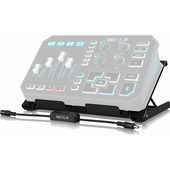
Behringer BEQ700 Bass Graphic Equalizer

Master of Tone

With 15 dB available boost or cut per band, the BEQ700’s seven frequency bands have been carefully chosen to provide the ultimate tools for EQing the bass guitar, even extended range instruments. Of course, to make full use of its capabilities, you should first understand some basics about the frequency range of your axe.

The BEQ700 covers the audio spectrum from below 50 Hz to over 10 kHz, allowing you to effectively cut or boost specific frequencies that help focus your sound. Special attention has been paid to the critical midrange frequencies, which can either make or break your sound. The following section offers tips that will have you sculpting the perfect bass sound in no time at all.

How Does Equalization Work?

Imagine the audio frequency range as a very wide highway with lots of “lanes”. Each of these lanes represents a specific frequency band.

  • The lanes on the left side contain the really low frequency content, mainly bass, bass vocals, and the kick and tom drums
  • The middle lanes make up the fundamental zone of most musical instruments and the male and female vocals
  • The right-hand lanes have all the high-frequency stuff , such as snare drums, cymbals, higher pitched percussion instruments and the content that adds sizzle to the mix
Applying EQ to Bass Instruments

When frequencies from 20 Hz - 200 Hz are boosted or cut, the bass is affected dramatically, since sounds in this range are often felt, as well as being heard. Boosting frequencies within this range can increase the sensation of power and punch. Conversely, reductions in this range can weaken or muddy low-frequency response.

The fundamental notes of most basses fall within the 40 Hz - 1000 Hz range. Even slight changes in this range can cause a tremendous variation in overall bass energy and impact, as the human ear is especially sensitive to this range. Boosting frequencies around 200 Hz often gives the bass warmth and body, without a loss of definition, while boosting frequencies in the 500 Hz to 1000 Hz range tend to make bass sounds brittle. Often, better EQ results can be achieved by reducing the frequency bands that are off ending, and by turning up the overall volume rather than boosting one specific band.

How the specific frequency bands of the BEQ700 can shape your sound

  • 50 Hz (sub-bass)
    Boost: To thicken up sub-bass content, which is mostly felt rather than heard
    Cut: To eliminate stage “rumble” and sub-bass content that can rob sound system power
  • 120 Hz (soft bass)
    Boost: To enhance the lower end of the bass spectrum
    Cut: To reduce the tendency of low frequency content to overwhelm a small room
  • 400 Hz (hard bass)
    Boost: To enhance the “hard” bass punch of fundamental tones
    Cut: To reduce punch for better linkage with the kick drum
  • 500 Hz
    Boost: or Cut: To control clarity and warmth
  • 800 Hz
    Boost: To add an aggressive edge to the overall bass sound
    Cut: For reducing somewhat nasal or horn-like content
  • 4.5 kHz
    Boost: To make the bass cut through the mix. Creates a more distinctive plucked tone
    Cut: To eliminate harshness
  • 10 kHz
    Boost: To bring out the upper harmonics and add edge to the overall bass tonality
    Cut: Apply a cut to reduce harsh high-frequency content or hiss

Sound Value

The BEQ700 offers more features than anything in its class – and it’s kind to your wallet! From its easy–to-use controls, to its noise-free On/Off switch – the BEQ700 will keep you solidly in the zone. Try one out at your local dealer, and see just how good you and your bass can sound.

Postage info

We offer a flat, set postage rate on all items. Some are sent via post, some via courier depending on the size and weight of the item.

Click the Postage tab above the listing description for more info!

Additional delivery notes

PICK UP OPTION

Click and collect available from our store address! 135 New Canterbury Road, Lewisham NSW 2049.

PAYING VIA PAYPAL


We accept PayPal on our all our items so you can shop with confidence.

Simple choose the PayPal option when proceeding through the checkout.

Additional Information

No additional information at this time

Ask seller a question

To contact our Customer Service Team, simply click the button here and our Customer Service team will be happy to assist.

Ask seller a question

© Deep Tone Music

Click the Postage tab above the listing description for more info

Accepted Payment Methods

  • PayPal

Returns are accepted

Items must be returned within 30 days of the auction ending

Buyer will pay for return shipping.

eBay integration by