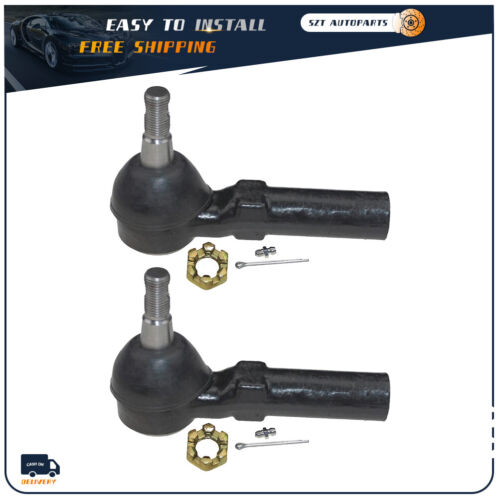
1x Front Lower Left Control Arm -K6203331x Front Lower Right Control Arm -K6203342x Front Inner Tie Rod End -EV4201x Front Outer Tie Rod End - Passenger Side -ES36001x Front Outer Tie Rod End - Driver Side -ES36012x Front Sway Bar End Link -K903442x Rear Sway Bar End Link -K90345
3.Note
(1).Please check the Compatible Fitment Chart above before payment making sure all the suspension parts listed on this page are compatible with your automobile.
Front Lower Control Arm Tie Rod End Sway Bar For 02-03 Lexus ES300 Toyota Camry
1.Fitting the Following vehicle:
2002-2003 Lexus ES300 2002-2003 Toyota Camry
2.Package Includes:
1x Front Lower Left Control Arm -K6203331x Front Lower Right Control Arm -K6203342x Front Inner Tie Rod End -EV4201x Front Outer Tie Rod End - Passenger Side -ES36001x Front Outer Tie Rod End - Driver Side -ES36012x Front Sway Bar End Link -K903442x Rear Sway Bar End Link -K90345
3.Note
(1).Please check the Compatible Fitment Chart above before payment making sure all the suspension parts listed on this page are compatible with your automobile.
(2).Although some parts have grease fittings, other parts are factory sealed, but do not affect the fit and quality of the parts.
(3).Please contact our customer services for targeted discount after all the items are received if you have reached any targeted discount thresholds, the terms of which is at the bottom of this page.
10 Year Warranty
This item is backed by our 10-year warranty. In the event this item should fail due to manufacturing defects during intended use, we will replace the part free of charge. This warranty covers the cost of the part only.
Please note: Any modifications to an item of any kind before contacting us will void any and all warranty coverage for this item. Please contact us before modifying the part so that we have the opportunity to correct the situation.
Suspension Control Arm Replacement Guideline:
Control arms are installed in pairs on the front and rear axle and connect the chassis to the wheels as part of the suspension. Therefore, they have a significant influence on the driving characteristics of the vehicle.
A dynamic or a comfortable driving style? The control arms are individually adjusted to the vehicle depending on the desired characteristics. They also absorb lateral movements and forces resulting from driving off and braking.
Picture(A)
A defective control arm can manifest in the following ways:
(1).Noise (squeaking, creaking, rumbling).
(2).Deteriorating driveability.
(3).Increasingly woolly and imprecise steering.
(4).Uneven tyre wear.
Tip:If the control arm is in working order, it is possible to only replace the defective bearings and joints. However, replacing bearings, control arm bushings and ball joints can be very complex and costly.
Picture(B)
1.First lift the vehicle using a car lift, ideally a wheel-free four-post car lift. This makes it easier to correctly tighten the control arm fixing screws.
WARNING:Depending on the axle design, the control arm may need to be secured against falling with a suitable device, e.g. a transmission lifter.
2.Treat the fixing screws and nuts of the control arm with rust solvent and leave it to work for a few minutes so that they are easier to loosen.
3.On vehicles with automatic headlight levelling, it may be necessary to detach the leveling sensor from the control arm.
Picture(C)
4.If the stabilizer is connected to the control arm, the next step is to loosen and remove the corresponding stabiliser fixing screws.
5.Loosen and remove the control arm fixing screws.
6.Loosen the ball joint at the steering knuckle with a suitable special tool (e.g. a puller).
7.Remove the old control arm.
Picture(D)
8.Clean the mounting flange of the ball joint pin on the steering knuckle with sandpaper and then with brake cleaner. Otherwise single rust particles can enter the new control arm joint via the ball pin, potentially leading to premature failure of the joint.
Picture(E)
9.Fit the new control arm with the supplied accessories and attach new fixing screws and nuts.
Picture(F)
10.Reattach the stabilizer and, if applicable, the leveling sensor for headlight leveling to the control arm.
NOTE:Do not tighten the fixing screws and nuts in this step, otherwise the rubber mounts will twist when the suspension compresses. This would lead to undesired preloading onf the mounts.
Picture(G)
11.Now lower the vehicle until the suspension is compressed. Depending on vehicle type, load or unload the vehicle until the required height published in the specific installation instruction is reached. This is where a wheel-free four-post car lift is advantageous, as the underside of the vehicle can still be easily accessed once lowered.
12.Tighten the fixing screws with the torque stipulated by the vehicle manufacturer.
13.Lower the vehicle all the way.
14.Measure the chassis and adjust if necessary.
15.Check and, if necessary, adjust the headlight settings on vehicles with automatic headlight leveling where the leveling sensor is attached to the control arm.
16.To conclude, test-drive the vehicle.
Frequently Asked Questions
(1).What's the function of control arm?
The control arm connects the hub and the frame of the car. There are ball joints on the hub side and bushings on the frame side to achieve up and down instead of forward and rearward.
(2).What is the significance of the control arm for the car?
As an important part of the car suspension, the control arm is used to transmit the required supporting force of the wheel and to withstand all the front and rear direction stresses. It is an important safety part of the chassis system. Therefore, it requires high strength and reliability in the design. Its fatigue strength is directly related to the safety of vehicles and members.
(3).How to tell the quality of control arm?
Look at the materials and processing of the control arm: the materials used to control the arm, common are steel and aluminum alloy. In ordinary family cars, steel control arms are very common, and the basic appeal is to meet the strength while controlling costs. In the middle and high-end models, you will see the control arm of the aluminum alloy and the wheel bearing housing. In addition to meeting the strength of the suspension, this material can further reduce the weight and reduce the weight of the suspension spring to improve the suspension response. Improve driving performance.
Look at chassis protection and workmanship: Regarding chassis protection, we mainly pay attention to whether it is equipped with engine under guard, whether there is coating or cover at the bottom of the car body, whether the oil pipe is covered with a guard plate, whether the front and rear wheel arches are protected. Board or coating coverage, etc.
(4).Do I need to replace the control arm if the bushings are worn? What is the safety risk?
Because the weight of the car is transferred through the control arm two rubber bushings are fitted at the pivot point and bolted to the frame. Road conditions and driving habits can contribute to the wear of these bushings which will become worn and fall apart. These bushing can be inspected by raising the car up and looking for an irregular configuration of the rubber center of the bushing. Many control arms have the ball joint manufactured into the arm which will be replaced along with the control arm itself. When one control arm is worn it is highly advised to replace the opposing arm.
(5).What is the average cost of replacing control arms?
The cost to replace control arms depend on the vehicle. Control arms cost different amounts depending on the vehicle, as well as the labor to install. Some are easy to install and take little time, while others can take several hours.
Sway Bar Stabilizer Link Replacement Guideline:
While driving, the following signs may indicate a faulty sway bar stabilizer link:
(1).Rattling and thumping noises on rough roads.
(2).Imprecise vehicle handling.
(3).Stronger inclination of the vehicle during cornering.
If the sway bar stabilizer link is found to be defective, it should be replaced as described below.
Picture(A)
1.Raise vehicle and remove front wheels.
Tip:Always check both stabilizer links and replace them in pairs if necessary.
2.Spray fastening nuts of the stabilizer link with rust remover and let act for a few minutes.
Picture(B)
3.Loosen the lower fastening nut of the stabilizer link at the stabilizer and remove.
Tip:If the ball stud also starts to turn, hold it with a suitable tool.
4.Press stabilizer link out of torsion bar.
Picture(C)
5.Loosen the upper fastening nut of the stabilizer link at the suspension strut and remove it.
Tip:If the ball stud also starts to turn, hold it with a suitable tool.
Picture(D)
6.Press stabilizer link at suspension strut out of bracket.
Picture(E)
7.Insert new stabilizer link at suspension strut.
Picture(F)
8.Tighten stabilizer link at suspension strut to the tightening torque specified by the vehicle manufacturer.
Tip:Secure the ball stud against twisting with a suitable tool.
Picture(G)
9.Insert new stabilizer link at stabilizer.
10.Tighten stabilizer link at stabilizer to the tightening torque specified by the vehicle manufacturer.
Tip:Secure the ball stud against twisting with a suitable tool.
Picture(H)
11.Remount the front wheels. Lower the vehicle and tighten the wheel studs to the tightening torque specified by the vehicle manufacturer.
Tip:Even if replacing the stabilizer link does not directly affect the chassis setting, we recommend checking the axle setting and adjusting if necessary after working on the suspension.
12.Conclude with a test drive.
Frequently Asked Questions
(1).Why should I get my tie rods inspected on a regular basis?
If you don't get your tie rods inspected on a regular basis, there are some warning signs to watch (and listen) for. If your vehicle pulls to one side while driving, or when braking, it's possible that bad tie rods may be the culprit. Your vehicle's tires will also show uneven wear on the inside and outside edge of the tire when there's a tire rod issue. However, one of the most noticeable signs of tie rods going bad will be a knocking sound coming from the front end of the vehicle when you turn into a parking space, or some other low speed, tight turning situation.
(2).Vibrations
One of the first symptoms that your tie rods are damaged or breaking is that the steering wheel will vibrate slightly. This is especially prevalent when you are speeding up or turning. This happens because the steering wheel is losing its control over the tires, causing the steering wheel to shimmy as you drive.
(3).Shaking
As the tie rods become further damaged, you will start to notice that the car itself will start to shake. This happens because the tires may start to wobble without you having full control over them. Although you should take your car into a mechanic at the first sign of tie rod problems, if you experience your car shaking you could be at risk for serious tie rod damage-which can cause accidents. Take your car into a mechanic if you experience this tie rod symptom.
(4).Wandering
If your tie rods continue to go unchecked or unfixed, the rods can completely break. This can cause you to lose all control of your car, possibly resulting in an accident. When this occurs, the car will may "wander" as you drive. At this point, the steering wheel will have no control over the tires and the tires will start moving independently, causing the car to drift while you are driving. If this happens while you are on a freeway or busy road, you and others could be at serious risk of an accident. If you experience wandering, stop your car, call a tow truck and take your car to the nearest mechanic.
Tie-Rod End Replacement Guideline:
If you feel a bump in the steering when driving over road bumps or curbs, this might be due to worn tie rod ends or inner tie rods. Clicking noises during sudden steering movements can also be symptoms of a defective tie rod. In order to determine the exact cause and replace the defective tie rod, the car must be elevated with a vehicle lift in order to be examined more closely.
This useful tip applies to the exchange of tie rod ends and inner tie rods, which together form the so-called tie rod.
Picture(A)
Note: Cleanliness is extremely important when working on the power steering. Incorrect work and contamination can lead to leakage and, in the worst case, to failure of the steering assistance.
1.Lift the vehicle and dismount the front axle wheels.
2.Spray the fastening nut of the tie rod end with rust remover and leave it on for a few minutes.
Picture(B)
3.Dismount the front underride guard.
Picture(C)
4.Loosen the fastening nut from the tie rod and remove it completely.
5.Remove the tie rod end from the steering knuckle using an appropriate ball joint separator.
Picture(D)
6.Remove the clamp of the bellow on the steering gear.
7.Push the bellow towards the tie rod end.
Picture(E)
8.Unscrew the inner tie rod from the rack.
9.Clean the sealing face of the bellow at the steering gear.
Picture(F)
10.Clean the lug of the rubber contact surface of the ball joint in the steering knuckle.
Note:Always use new self-locking nuts and bolts for a reliable repair.
11.Screw the new inner tie rod into the rack and tighten it with the tightening torque that has been specified by the vehicle manufacturer.
Picture(G)
12.Mount the bellow and close the clamps with the appropriate special tool.
Note:Incorrect mounting of the bellow can lead to corrosion of the rack: the steering gear starts leaking which can lead to a failure in the steering assistance.
Picture(H)
13.Secure the ball joint in the steering knuckle and mount the nut. Please observe the tightening torque suggested by the vehicle manufacturer.
Note:During mounting, the ball stud should not turn within the ball joint. This can cause damage inside the ball joint and can lead to early failure.
Tip:Secure the ball stud against twisting with a suitable tool.
Picture(I)
14.Mount the front underride guard.
15.Mount the front wheels and tighten them with the tightening torque recommended by the vehicle manufacturer.
control arm car,suspension arm,front rear control arm ball joint
Superseded Part Number
car tie rod end replacement,inner and outer tie rod end,rods ends
Control Arm Construction
Forged
Adjustable
Yes
Performance Part
No
Cotter Pin Hole
Yes
Material
Alloy Steel
Mounting Style
Bolt-On
Finish
Coated
Shipping
* Product will be shipped within 2 business days after full payment is received and verified. Delivery Time is about 3-7 business days to most of countries.
* All domestic orders will be shipped via USPS, UPS or FedEx from our US warehouse and usually arrives to your door in ab out 3-5 business days.
* We ship the package to your shipping address in eBay. Please tell us your shipping address if it is different from the one in eBay.
* The tracking number will be given for the customer to check the shipping status online (registered or faster service only).
* We are not responsible for any wrong or undeliverable addresses. Please verify and update your shipping address on eBay during checkout.
Return/Refunds
* You have 30 days to contact us and 10 days to return it from the date it was received. If this item is in your possession more than 7 days, it is considered used and we will not issue you a refund or replacement. There are NO EXCEPTIONS!
* All returned items must be in the original packaging and you must provide us with the shipping tracking number, specific reason for the return, and item custom lable.
We will refund your full winning bid amount, upon receipt of the item in its original condition and packaging with all components and accessories included, AFTER both Buyer and Seller cancel the transaction from eBay. OR, you may choose to have a replacement.
Feedback
* We maintain high standards of excellence (five stars review)and strive for 100% customer satisfaction! FEEDBACK IS VERY IMPORTANT TO US. We request that you contact us immediately BEFORE you give us neutral or negative feedback, so that we can satisfactorily address your concerns.
* It is impossible to address issues if we do not know about them!
Warranty policy
* We stand behind every product we sell.
* All of our brand new items come with a 60-Days money-back guarantee.
* We define the item as defective only if it doesn't function as described.
* It is the buyer's responsibility to understand the item description before bidding.
* We will replace the defective items, provided that they are in stock within the warranty period posted with the listing and the buyer return the original item and pay for the S&H cost for the replacement.
* We will refund the purchase price if the replacement is not available or buyer prefers a refund and send the original item back at his/her own cost.
* Man-made damage by abuse or wrong operation is not covered by this warranty.
* No product liability insurance is assumed.
Customer service
Q: When will the item be shipped out? A: This item will be shipped with 1 business day once payment completed. Q: Where is my tracking number? A: Please log on your account, click "my eBay"-->"my summary", or open your email box and find the shipping notification email. Q: How do I return an item? A: My tore accepts returns. Items must be returned within 60 days. Refunds will be given as money back. Please contact our customer service before you return an item.
Front Lower Control Arm Tie Rod End Sway Bar For 02-03 Lexus ES300 Toyota Camry
1.Fitting the Following vehicle:
2002-2003 Lexus ES300 2002-2003 Toyota Camry
2.Package Includes:
1x Front Lower Left Control Arm -K6203331x Front Lower Right Control Arm -K6203342x Front Inner Tie Rod End -EV4201x Front Outer Tie Rod End - Passenger Side -ES36001x Front Outer Tie Rod End - Driver Side -ES36012x Front Sway Bar End Link -K903442x Rear Sway Bar End Link -K90345
3.Note
(1).Please check the Compatible Fitment Chart above before payment making sure all the suspension parts listed on this page are compatible with your automobile.
(2).Although some parts have grease fittings, other parts are factory sealed, but do not affect the fit and quality of the parts.
(3).Please contact our customer services for targeted discount after all the items are received if you have reached any targeted discount thresholds, the terms of which is at the bottom of this page.
10 Year Warranty
This item is backed by our 10-year warranty. In the event this item should fail due to manufacturing defects during intended use, we will replace the part free of charge. This warranty covers the cost of the part only.
Please note: Any modifications to an item of any kind before contacting us will void any and all warranty coverage for this item. Please contact us before modifying the part so that we have the opportunity to correct the situation.
Suspension Control Arm Replacement Guideline:
Control arms are installed in pairs on the front and rear axle and connect the chassis to the wheels as part of the suspension. Therefore, they have a significant influence on the driving characteristics of the vehicle.
A dynamic or a comfortable driving style? The control arms are individually adjusted to the vehicle depending on the desired characteristics. They also absorb lateral movements and forces resulting from driving off and braking.
Picture(A)
A defective control arm can manifest in the following ways:
(1).Noise (squeaking, creaking, rumbling).
(2).Deteriorating driveability.
(3).Increasingly woolly and imprecise steering.
(4).Uneven tyre wear.
Tip:If the control arm is in working order, it is possible to only replace the defective bearings and joints. However, replacing bearings, control arm bushings and ball joints can be very complex and costly.
Picture(B)
1.First lift the vehicle using a car lift, ideally a wheel-free four-post car lift. This makes it easier to correctly tighten the control arm fixing screws.
WARNING:Depending on the axle design, the control arm may need to be secured against falling with a suitable device, e.g. a transmission lifter.
2.Treat the fixing screws and nuts of the control arm with rust solvent and leave it to work for a few minutes so that they are easier to loosen.
3.On vehicles with automatic headlight levelling, it may be necessary to detach the leveling sensor from the control arm.
Picture(C)
4.If the stabilizer is connected to the control arm, the next step is to loosen and remove the corresponding stabiliser fixing screws.
5.Loosen and remove the control arm fixing screws.
6.Loosen the ball joint at the steering knuckle with a suitable special tool (e.g. a puller).
7.Remove the old control arm.
Picture(D)
8.Clean the mounting flange of the ball joint pin on the steering knuckle with sandpaper and then with brake cleaner. Otherwise single rust particles can enter the new control arm joint via the ball pin, potentially leading to premature failure of the joint.
Picture(E)
9.Fit the new control arm with the supplied accessories and attach new fixing screws and nuts.
Picture(F)
10.Reattach the stabilizer and, if applicable, the leveling sensor for headlight leveling to the control arm.
NOTE:Do not tighten the fixing screws and nuts in this step, otherwise the rubber mounts will twist when the suspension compresses. This would lead to undesired preloading onf the mounts.
Picture(G)
11.Now lower the vehicle until the suspension is compressed. Depending on vehicle type, load or unload the vehicle until the required height published in the specific installation instruction is reached. This is where a wheel-free four-post car lift is advantageous, as the underside of the vehicle can still be easily accessed once lowered.
12.Tighten the fixing screws with the torque stipulated by the vehicle manufacturer.
13.Lower the vehicle all the way.
14.Measure the chassis and adjust if necessary.
15.Check and, if necessary, adjust the headlight settings on vehicles with automatic headlight leveling where the leveling sensor is attached to the control arm.
16.To conclude, test-drive the vehicle.
Frequently Asked Questions
(1).What's the function of control arm?
The control arm connects the hub and the frame of the car. There are ball joints on the hub side and bushings on the frame side to achieve up and down instead of forward and rearward.
(2).What is the significance of the control arm for the car?
As an important part of the car suspension, the control arm is used to transmit the required supporting force of the wheel and to withstand all the front and rear direction stresses. It is an important safety part of the chassis system. Therefore, it requires high strength and reliability in the design. Its fatigue strength is directly related to the safety of vehicles and members.
(3).How to tell the quality of control arm?
Look at the materials and processing of the control arm: the materials used to control the arm, common are steel and aluminum alloy. In ordinary family cars, steel control arms are very common, and the basic appeal is to meet the strength while controlling costs. In the middle and high-end models, you will see the control arm of the aluminum alloy and the wheel bearing housing. In addition to meeting the strength of the suspension, this material can further reduce the weight and reduce the weight of the suspension spring to improve the suspension response. Improve driving performance.
Look at chassis protection and workmanship: Regarding chassis protection, we mainly pay attention to whether it is equipped with engine under guard, whether there is coating or cover at the bottom of the car body, whether the oil pipe is covered with a guard plate, whether the front and rear wheel arches are protected. Board or coating coverage, etc.
(4).Do I need to replace the control arm if the bushings are worn? What is the safety risk?
Because the weight of the car is transferred through the control arm two rubber bushings are fitted at the pivot point and bolted to the frame. Road conditions and driving habits can contribute to the wear of these bushings which will become worn and fall apart. These bushing can be inspected by raising the car up and looking for an irregular configuration of the rubber center of the bushing. Many control arms have the ball joint manufactured into the arm which will be replaced along with the control arm itself. When one control arm is worn it is highly advised to replace the opposing arm.
(5).What is the average cost of replacing control arms?
The cost to replace control arms depend on the vehicle. Control arms cost different amounts depending on the vehicle, as well as the labor to install. Some are easy to install and take little time, while others can take several hours.
Sway Bar Stabilizer Link Replacement Guideline:
While driving, the following signs may indicate a faulty sway bar stabilizer link:
(1).Rattling and thumping noises on rough roads.
(2).Imprecise vehicle handling.
(3).Stronger inclination of the vehicle during cornering.
If the sway bar stabilizer link is found to be defective, it should be replaced as described below.
Picture(A)
1.Raise vehicle and remove front wheels.
Tip:Always check both stabilizer links and replace them in pairs if necessary.
2.Spray fastening nuts of the stabilizer link with rust remover and let act for a few minutes.
Picture(B)
3.Loosen the lower fastening nut of the stabilizer link at the stabilizer and remove.
Tip:If the ball stud also starts to turn, hold it with a suitable tool.
4.Press stabilizer link out of torsion bar.
Picture(C)
5.Loosen the upper fastening nut of the stabilizer link at the suspension strut and remove it.
Tip:If the ball stud also starts to turn, hold it with a suitable tool.
Picture(D)
6.Press stabilizer link at suspension strut out of bracket.
Picture(E)
7.Insert new stabilizer link at suspension strut.
Picture(F)
8.Tighten stabilizer link at suspension strut to the tightening torque specified by the vehicle manufacturer.
Tip:Secure the ball stud against twisting with a suitable tool.
Picture(G)
9.Insert new stabilizer link at stabilizer.
10.Tighten stabilizer link at stabilizer to the tightening torque specified by the vehicle manufacturer.
Tip:Secure the ball stud against twisting with a suitable tool.
Picture(H)
11.Remount the front wheels. Lower the vehicle and tighten the wheel studs to the tightening torque specified by the vehicle manufacturer.
Tip:Even if replacing the stabilizer link does not directly affect the chassis setting, we recommend checking the axle setting and adjusting if necessary after working on the suspension.
12.Conclude with a test drive.
Frequently Asked Questions
(1).Why should I get my tie rods inspected on a regular basis?
If you don't get your tie rods inspected on a regular basis, there are some warning signs to watch (and listen) for. If your vehicle pulls to one side while driving, or when braking, it's possible that bad tie rods may be the culprit. Your vehicle's tires will also show uneven wear on the inside and outside edge of the tire when there's a tire rod issue. However, one of the most noticeable signs of tie rods going bad will be a knocking sound coming from the front end of the vehicle when you turn into a parking space, or some other low speed, tight turning situation.
(2).Vibrations
One of the first symptoms that your tie rods are damaged or breaking is that the steering wheel will vibrate slightly. This is especially prevalent when you are speeding up or turning. This happens because the steering wheel is losing its control over the tires, causing the steering wheel to shimmy as you drive.
(3).Shaking
As the tie rods become further damaged, you will start to notice that the car itself will start to shake. This happens because the tires may start to wobble without you having full control over them. Although you should take your car into a mechanic at the first sign of tie rod problems, if you experience your car shaking you could be at risk for serious tie rod damage-which can cause accidents. Take your car into a mechanic if you experience this tie rod symptom.
(4).Wandering
If your tie rods continue to go unchecked or unfixed, the rods can completely break. This can cause you to lose all control of your car, possibly resulting in an accident. When this occurs, the car will may "wander" as you drive. At this point, the steering wheel will have no control over the tires and the tires will start moving independently, causing the car to drift while you are driving. If this happens while you are on a freeway or busy road, you and others could be at serious risk of an accident. If you experience wandering, stop your car, call a tow truck and take your car to the nearest mechanic.
Tie-Rod End Replacement Guideline:
If you feel a bump in the steering when driving over road bumps or curbs, this might be due to worn tie rod ends or inner tie rods. Clicking noises during sudden steering movements can also be symptoms of a defective tie rod. In order to determine the exact cause and replace the defective tie rod, the car must be elevated with a vehicle lift in order to be examined more closely.
This useful tip applies to the exchange of tie rod ends and inner tie rods, which together form the so-called tie rod.
Picture(A)
Note: Cleanliness is extremely important when working on the power steering. Incorrect work and contamination can lead to leakage and, in the worst case, to failure of the steering assistance.
1.Lift the vehicle and dismount the front axle wheels.
2.Spray the fastening nut of the tie rod end with rust remover and leave it on for a few minutes.
Picture(B)
3.Dismount the front underride guard.
Picture(C)
4.Loosen the fastening nut from the tie rod and remove it completely.
5.Remove the tie rod end from the steering knuckle using an appropriate ball joint separator.
Picture(D)
6.Remove the clamp of the bellow on the steering gear.
7.Push the bellow towards the tie rod end.
Picture(E)
8.Unscrew the inner tie rod from the rack.
9.Clean the sealing face of the bellow at the steering gear.
Picture(F)
10.Clean the lug of the rubber contact surface of the ball joint in the steering knuckle.
Note:Always use new self-locking nuts and bolts for a reliable repair.
11.Screw the new inner tie rod into the rack and tighten it with the tightening torque that has been specified by the vehicle manufacturer.
Picture(G)
12.Mount the bellow and close the clamps with the appropriate special tool.
Note:Incorrect mounting of the bellow can lead to corrosion of the rack: the steering gear starts leaking which can lead to a failure in the steering assistance.
Picture(H)
13.Secure the ball joint in the steering knuckle and mount the nut. Please observe the tightening torque suggested by the vehicle manufacturer.
Note:During mounting, the ball stud should not turn within the ball joint. This can cause damage inside the ball joint and can lead to early failure.
Tip:Secure the ball stud against twisting with a suitable tool.
Picture(I)
14.Mount the front underride guard.
15.Mount the front wheels and tighten them with the tightening torque recommended by the vehicle manufacturer.
* Product will be shipped within 2 business days after full payment is received and verified. Delivery Time is about 3-7 business days to most of countries.
* All domestic orders will be shipped via USPS, UPS or FedEx from our US warehouse and usually arrives to your door in ab out 3-5 business days.
* We ship the package to your shipping address in eBay. Please tell us your shipping address if it is different from the one in eBay.
* The tracking number will be given for the customer to check the shipping status online (registered or faster service only).
* We are not responsible for any wrong or undeliverable addresses. Please verify and update your shipping address on eBay during checkout.
* You have 30 days to contact us and 10 days to return it from the date it was received. If this item is in your possession more than 7 days, it is considered used and we will not issue you a refund or replacement. There are NO EXCEPTIONS!
* All returned items must be in the original packaging and you must provide us with the shipping tracking number, specific reason for the return, and item custom lable.
We will refund your full winning bid amount, upon receipt of the item in its original condition and packaging with all components and accessories included, AFTER both Buyer and Seller cancel the transaction from eBay. OR, you may choose to have a replacement.
* We maintain high standards of excellence (five stars review)and strive for 100% customer satisfaction! FEEDBACK IS VERY IMPORTANT TO US. We request that you contact us immediately BEFORE you give us neutral or negative feedback, so that we can satisfactorily address your concerns.
* It is impossible to address issues if we do not know about them!
* We stand behind every product we sell.
* All of our brand new items come with a 60-Days money-back guarantee.
* We define the item as defective only if it doesn't function as described.
* It is the buyer's responsibility to understand the item description before bidding.
* We will replace the defective items, provided that they are in stock within the warranty period posted with the listing and the buyer return the original item and pay for the S&H cost for the replacement.
* We will refund the purchase price if the replacement is not available or buyer prefers a refund and send the original item back at his/her own cost.
* Man-made damage by abuse or wrong operation is not covered by this warranty.
* No product liability insurance is assumed.
Q: When will the item be shipped out? A: This item will be shipped with 1 business day once payment completed. Q: Where is my tracking number? A: Please log on your account, click "my eBay"-->"my summary", or open your email box and find the shipping notification email. Q: How do I return an item? A: My tore accepts returns. Items must be returned within 60 days. Refunds will be given as money back. Please contact our customer service before you return an item.