
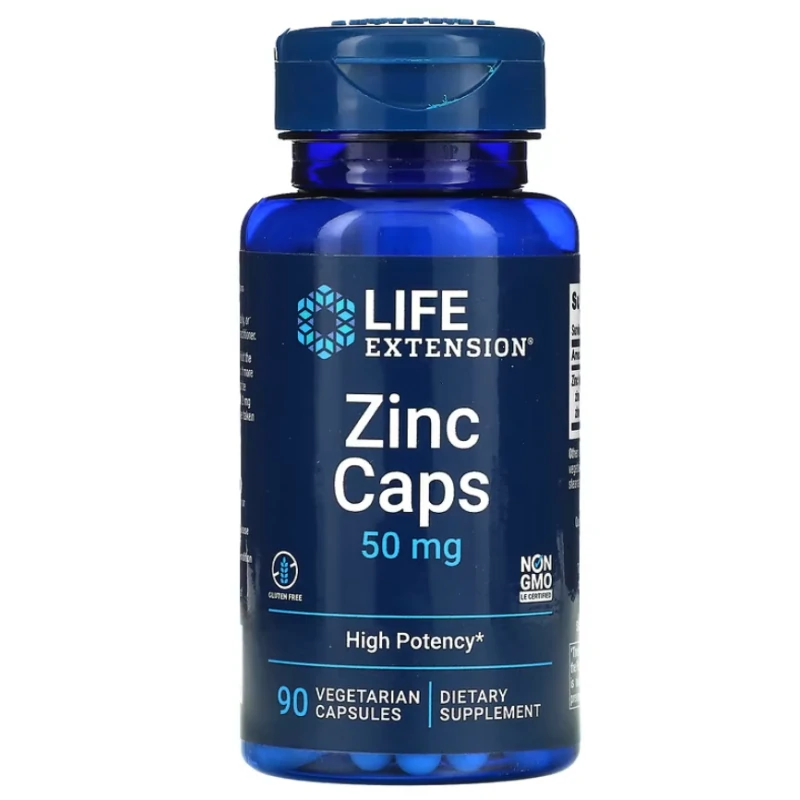
Life Extension Zinc 50 mg, 90 capsules


Life Extension Zinc 50 mg, 90 capsules
Zinc Caps by Life Extension, is a dietary supplement in vegetarian capsules containing zinc in the form of OptiZinc® zinc monomethionine, zinc citrate.
Role in the body:
 Zinc supplementation significantly reduces fasting blood glucose (FBS) and glycated haemoglobin (HbA1c) levels.
Zinc plays an important role in bone health by promoting the development and regeneration of bone tissue.
Zinc supplementation can significantly reduce symptoms of depression in adults.
Dietary zinc supplementation may have a role in reducing the risk of cardiovascular disease.
Zinc supplementation may reduce inflammatory markers such as C-reactive protein.
Zinc supplementation significantly reduces fasting blood glucose (FBS) and glycated haemoglobin (HbA1c) levels.
Zinc plays an important role in bone health by promoting the development and regeneration of bone tissue.
Zinc supplementation can significantly reduce symptoms of depression in adults.
Dietary zinc supplementation may have a role in reducing the risk of cardiovascular disease.
Zinc supplementation may reduce inflammatory markers such as C-reactive protein.

Description
Life Extension Zinc Caps
 Free GMO
  Gluten-free
  Vegetarian
 Ingredients:
Pack size: 90 vegetarian capsules
Single serving: 1 capsule
Number of servings per pack: 90
| Ingredients | 1 capsule | RWS |
| Zinc (as OptiZinc® zinc monomethionine, Zinc citrate) | 50 mg | 500% |
RWS - Daily reference intake value
<> No daily reference intake value is set
Ingredients:
Zinc (as OptiZinc® zinc monomethionine, zinc citrate); microcrystalline cellulose, capsule shell: vegetable cellulose, anti-caking agents: magnesium salts of fatty acids, silica.
Directions for use:
Unless otherwise advised by your doctor, one (1) capsule daily with or without a meal.
Contraindications:
Hypersensitivity to any of the ingredients in the preparation. During pregnancy and lactation, consult your doctor or pharmacist before use.
Storage:
Store in a dry and dark place, at a temperature of 0-25ºC, out of the reach of small children.
Important:
The product must not be used as a substitute (replacement) for a properly varied diet. A balanced diet and a healthy lifestyle is important for the functioning of the human body. Do not exceed the maximum recommended daily serving.
Manufacturer:
Quality Supplements and Vitamnins Inc.
Ft. Lauderdale, FL 33309
United States
Entity responsible:
NMM Sp. z o.o.
Bocheńska 3/17
31-061 Kraków

Clinical research
Effect of zinc supplementation on glycemic biomarkers: an umbrella of interventional meta-analyses
Conclusion: Zinc supplementation significantly reduced FBS, HOMA-IR, insulin and HbA1c. These results suggest that zinc is a potentially effective complementary intervention to improve biomarkers of type 2 diabetes.
Is Zinc an Important Trace Element on Bone-Related Diseases and Complications? A Meta-analysis and Systematic Review from Serum Level, Dietary Intake, and Supplementation Aspects
Conclusion: Zinc plays a key role in bone health, and its supplementation can improve bone mineral density and bone turnover markers, suggesting a potential role in preventing osteoporosis.
Zinc: dietary intake and impact of supplementation on immune function in elderly
Conclusion: The elderly are often deficient in dietary zinc, which weakens their immunity, but zinc supplementation, especially when considering IL-6 polymorphism, can promote healthy aging and improve the immune response.
Zinc: an essential micronutrient
Conclusion: Zinc is a key micronutrient that supports metabolism, immunity and eye health, effective in treating Wilson's disease and preventing certain infections.
Zinc Deficiency and Zinc Supplementation in Allergic Diseases
Conclusion: Zinc deficiency can contribute to the development of allergic diseases, and zinc supplementation has been shown to have a positive effect on modulating the immune system and alleviating allergy symptoms.