A RARE £2 coin could be worth as much as £350 due to a small error made during the minting process.
There are thought to be around 17,000 of the “Mule Britannia” silver coin in circulation and the defect which makes it valuable could be easily missed.
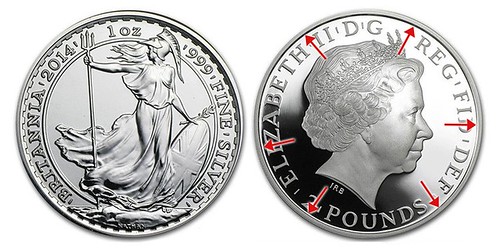
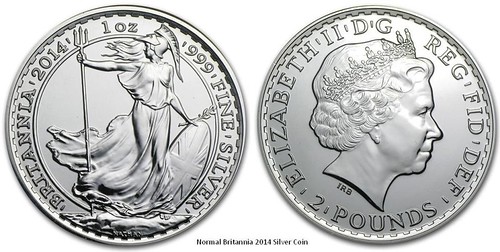
You can identify the coin by checking the front face, a portrait of the Queen, to see if the rim is missing dents.
Coin fans on eBay have been paying as much as £350 on eBay for the £2 Mule Britannia, according to completed listings on the auction site.
Although, some savvy collectors have snapped it up for as little as £60.
Approximately 17,000 examples of the 2014 Britannia 1-ounce silver £2 coins were struck with an obverse die intended for the Royal Mint’s inaugural Lunar bullion issue, celebrating the Year of the Horse in 2014. In addition, an estimated 38,000 examples of the Year of the Horse 1-ounce silver £2 coin were struck with an obverse die intended for the Britannia £2 coin.
A “mule” in coinage results when two dies not intended to be paired together are used to strike coinage. The word “mule” plays off the animal that is the offspring of a male donkey and female horse.
The Ian Rank-Broadley effigy of Queen Elizabeth II graces the obverse of both versions of both coins. A generally tiny but significant detail on the obverse makes the difference.
On standard examples of the Year of the Horse coin, no dentils are found about the rim; the standard Britannia coin has dentils. All Britannia coins are supposed to have dentils inside the rim on both sides of the coin, while both sides of the Year of the Horse coins are designed without dentils.
The Royal Mint confirmed the existence of both error coins, though an official did not specifically refer to either piece as a “mule.” Calling the dentils “edge decoration,” Jenny Manders, a spokesperson for the Royal Mint, released a statement noting that, “Some of our recent bullion customers may have noticed a slight change in the design of the edge decoration of our UK 2014 £2 Britannia bullion coin, and the UK 2014 £2 Lunar bullion coin. ... The quality and value of the coins remains the same.”
As with other mule coins, the value of the errors is considered much higher than the standard versions of the respective coins.