
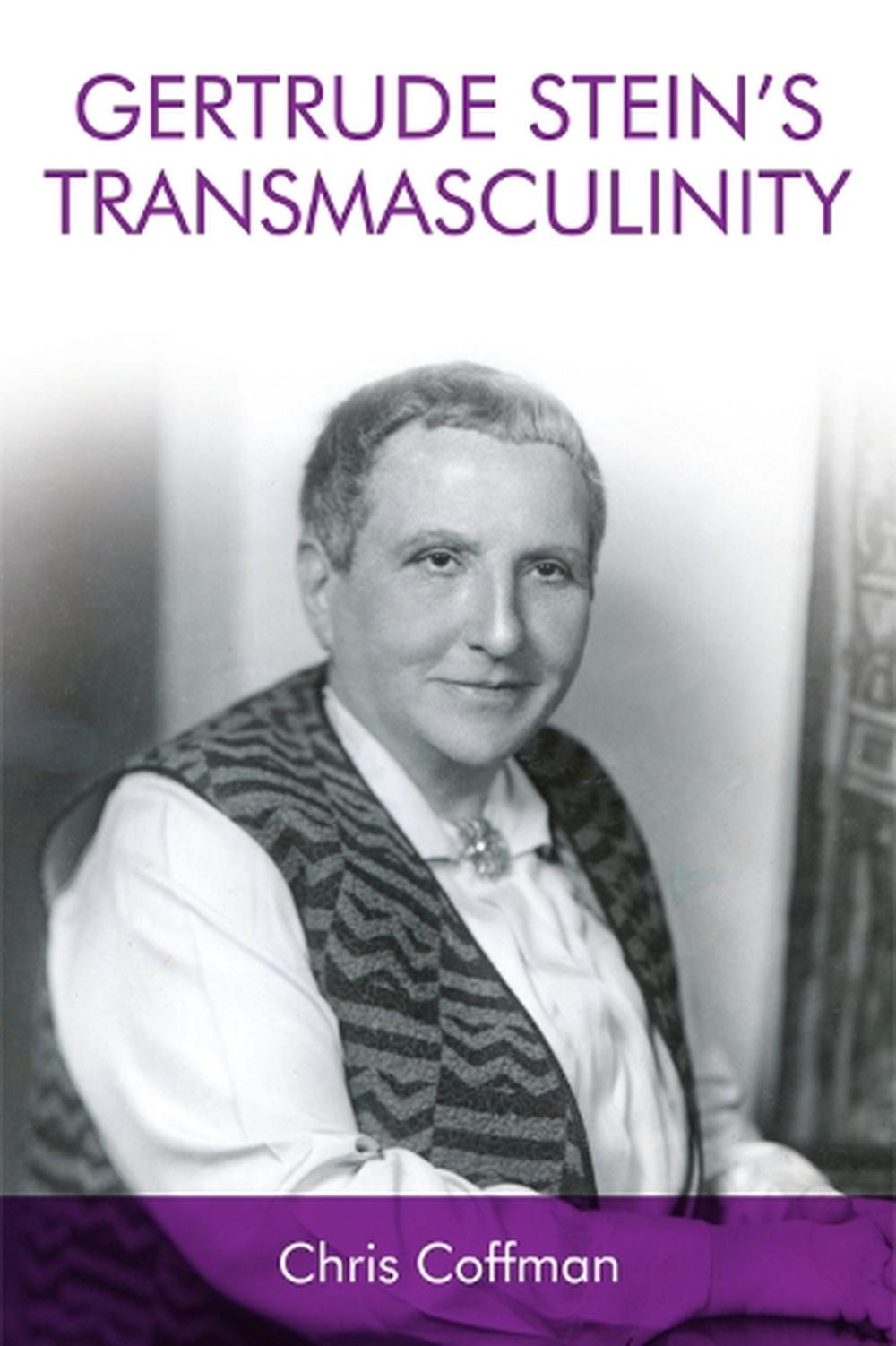
Gertrude Stein's Transmasculinity
by Chris Coffman
This thoughtful and sophisticated book views Gertrude Stein's life and writings through the lens of transgender theory.
Hardcover
English
Brand New
Publisher Description
Argues that Gertrude Stein's gender can best be described as 'transmasculine'
This thoughtful and sophisticated book views Gertrude Stein's life and writings through the lens of transgender theory. Reframing earlier scholarship that falsely assumes that Stein's masculinity was a misogynist manifestation of self-hatred, Chris Coffman argues that her gender was transmasculine and affirms her masculinity as a vital force in her life and work.
This book uses Stein's writings and others' literary and visual texts about her to illuminate the ways her transmasculinity was formed through her relationship with her feminine partner, Alice B. Toklas, and through her masculine homosocial bonds with modernist figures such as Jane Heap, Pablo Picasso, Ernest Hemingway and Carl Van Vechten.
Key Features:
Reads Stein's experimental writing through transgender theoryApproaches Gertrude Stein's masculinity and relationship with Alice B. Toklas through transgender theoryExamines Stein's masculine homosocial bonds with male modernists such as Pablo Picasso, Ernest Hemingway, and Carl Van VechtenOffers new readings of materials from the Gertrude Stein and Alice B. Toklas Papers at Yale University's Beinecke Library
Back Cover
'Gertrude Stein's Transmasculinity is a distinctive contribution to modernist scholarship and to queer studies. Through the concept of "transmasculinity", Coffman shows that Stein criticism has consistently missed something very important, something that changes how we conceive Stein's identity, importance and place among male modernist peers.'Merrill Cole, Western Illinois UniversityArgues that Gertrude Stein's gender can best be described as 'transmasculine'This thoughtful and sophisticated book views Gertrude Stein's life and writings through the lens of transgender theory. Reframing earlier scholarship that falsely assumes that Stein's masculinity was a misogynist manifestation of self-hatred, Chris Coffman argues that her gender was transmasculine and affirms her masculinity as a vital force in her life and work. This book uses Stein's writings - and others' literary and visual texts about her - to illuminate the ways her transmasculinity was formed through her relationship with her feminine partner, Alice B. Toklas, and through her masculine homosocial bonds with modernist figures such as Jane Heap, Pablo Picasso, Ernest Hemingway and Carl Van Coffman is Professor of English at the University of Alaska image: Gertrude Stein, undated portrait
Flap
'Gertrude Stein's Transmasculinity is a distinctive contribution to modernist scholarship and to queer studies. Through the concept of "transmasculinity", Coffman shows that Stein criticism has consistently missed something very important, something that changes how we conceive Stein's identity, importance and place among male modernist peers.'Merrill Cole, Western Illinois UniversityArgues that Gertrude Stein's gender can best be described as 'transmasculine'This thoughtful and sophisticated book views Gertrude Stein's life and writings through the lens of transgender theory. Reframing earlier scholarship that falsely assumes that Stein's masculinity was a misogynist manifestation of self-hatred, Chris Coffman argues that her gender was transmasculine and affirms her masculinity as a vital force in her life and book uses Stein's writings - and others' literary and visual texts about her - to illuminate the ways her transmasculinity was formed through her relationship with her feminine partner, Alice B. Toklas, and through her masculine homosocial bonds with modernist figures such as Jane Heap, Pablo Picasso, Ernest Hemingway and Carl Van Coffman is Professor of English at the University of Alaska image: Gertrude Stein, undated portrait
Table of Contents
AcknowledgementsIllustrationsIntroduction: Gertrude Stein's TransmasculinitySeeing Stein's MasculinityReading Stein's Genders: Multiple Identifications in the 1900sReading Stein's Genders: Transmasculine Signification in the 1910s and 1920sVisual Economies of Queer Desire in The Autobiography of Alice B. ToklasPicasso's Stein / Stein's Picasso: Cubist Perspective / Masculine Homosociality'Torquere': Stein's and Hemingway's Queer RelationalityStein, Van Vechten, and Modernism's Queer GazeCoda: Gertrude Stein IconBibliographyIndex
Review
Gertrude Stein's Masculinity is a distinctive contribution to modernist scholarship and to queer studies. Through the concept of 'transmasculinity', Coffman shows that Stein criticism has consistently missed something very important, something that changes how we conceive Stein's identity, importance, and place among male modernist peers. * Merrill Cole, Western Illinois University *
Review Quote
Gertrude Stein's Masculinityis a distinctive contribution to modernist scholarship and to queer studies. Through the concept of 'transmasculinity', Coffman shows that Stein criticism has consistently missed something very important, something that changes how we conceive Stein's identity, importance, and place among male modernist peers.
Promotional "Headline"
Argues that Gertrude Stein's gender can best be described as 'transmasculine'
Description for Reader
Argues that Gertrude Stein's gender can best be described as 'transmasculine' This thoughtful and sophisticated book views Gertrude Stein's life and writings through the lens of transgender theory. Reframing earlier scholarship that falsely assumes that Stein's masculinity was a misogynist manifestation of self-hatred, Chris Coffman argues that her gender was transmasculine and affirms her masculinity as a vital force in her life and work. This book uses Stein's writings - and others' literary and visual texts about her - to illuminate the ways her transmasculinity was formed through her relationship with her feminine partner, Alice B. Toklas, and through her masculine homosocial bonds with modernist figures such as Jane Heap, Pablo Picasso, Ernest Hemingway and Carl Van Vechten. Key Features: Reads Stein's experimental writing through transgender theory Approaches Gertrude Stein's masculinity and relationship with Alice B. Toklas through transgender theory Examines Stein's masculine homosocial bonds with male modernists such as Pablo Picasso, Ernest Hemingway, and Carl Van Vechten Offers new readings of materials from the Gertrude Stein and Alice B. Toklas Papers at Yale University's Beinecke Library
Feature
Key Features: Reads Stein's experimental writing through transgender theory Approaches Gertrude Stein's masculinity and relationship with Alice B. Toklas through transgender theory Examines Stein's masculine homosocial bonds with male modernists such as Pablo Picasso, Ernest Hemingway, and Carl Van Vechten Offers new readings of materials from the Gertrude Stein and Alice B. Toklas Papers at Yale University's Beinecke Library
Description for Sales People
Reads Stein's experimental writing through transgender theory Approaches Gertrude Stein's masculinity and relationship with Alice B. Toklas through transgender theory Examines Stein's masculine homosocial bonds with male modernists such as Pablo Picasso, Ernest Hemingway, and Carl Van Vechten
Description for Teachers/Educators
Modernism, American Literature, Gender Theory, Transgender Studies, Experimental Writing, Queer Theory, Feminist Theory, Women Writers, Twentieth-Century Literature
Details
