SRAM Code RSC Hydraulic Disc Brake 4 Piston
Complete Pre-Bled Front&Rear Set
- SRAM CODE R Hydraulic Brake Set - brand new.
- Genuine SRAM OEM as is supplied with a new bike build.
- Pre-bled. Perfect upgrade for Trail Enduro E-MTB.
- Fast Free Tracked Shipping. More than 60% off RRP!!
- Comes without rotors and adaptors to allow customisation to your bike.
- If you have seen a better deal, make us an offer and we will beat it.
The impeccable combination of power, modulation and consistency introduced in the Sram Guide brake series, which was developed for trail and enduro applications, has made converts of some of the world’s best downhill racers. But there’s an increasing need for more power and more control, as the definition of "possible" continues to change. The all-new Code brake is purpose built for high-performance, heavy-duty applications. Based on Guide architecture, Code’s fluid reservoir and pistons are bigger. The Code is designed to deliver massive power, predictable modulation and incredible heat management for braking control on the longest descents and under the burliest loads.
Specifications
- Brake Type: Hydraulic
- Blade Material: Aluminium - Forged
- Orientation: Front, Rear
- Pad Type: Steel-backed organic
- Bracket: Direct mount DIR
- Pistons: 4
Hose Length
- Front Hose Length: 850mm
- Rear Hose Length: 1650mm
SRAM Code R brakes review
SRAM's wallet-friendly Code stoppers
Our rating
4
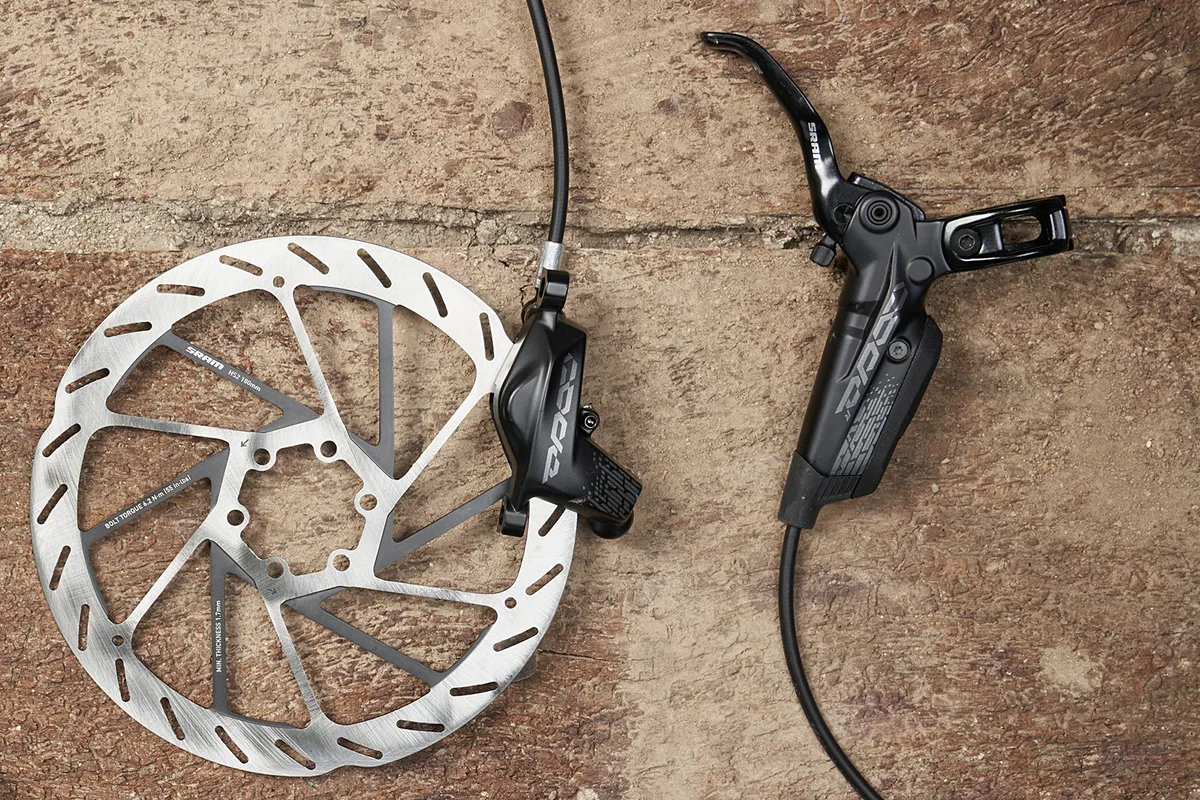
SRAM’s Code family of brakes are its big stoppers for everything from electric mountain bikes to enduro racing.
They sport four-piston calipers that include ‘head shield’ technology designed to ensure consistent performance whatever the situation.
SRAM Code R specification
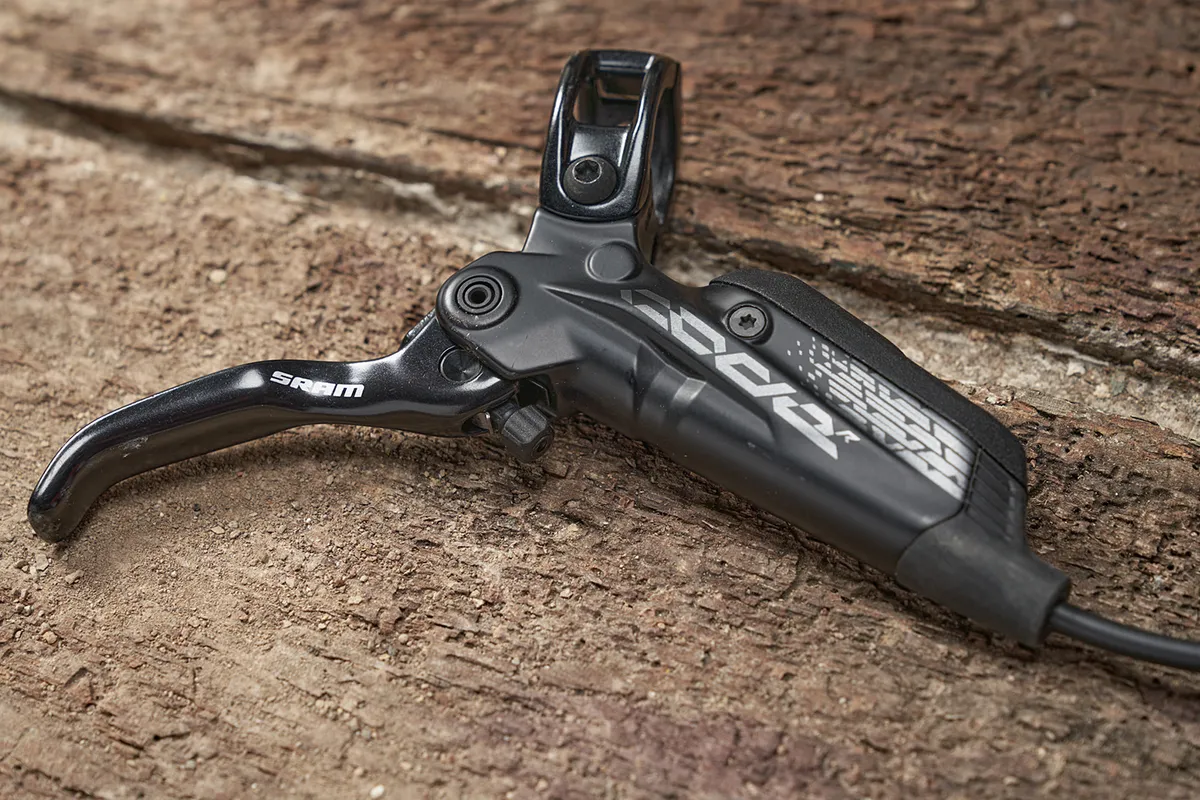
The Code R is the cheapest tier in SRAM’s powerful Code line, with a more basic lever offering than the pricier Code RSC I reviewed recently.
As with all of SRAM’s brakes, the lever attaches to the bar with its Matchmaker clamp. This enables easy integration of SRAM shifter or dropper levers, although aftermarket Shimano adaptors are also available.
The clamp is a separate hinged item, with the brake lever body being held between the clamp’s T25 bolt.
It can be a bit of a fiddle to set up, getting the clamp and body aligned while threading and screwing the bolt in, but once done, it’s an easy setup to use and adjust to your preferences.
The aluminium lever blade is a touch longer than Shimano’s offerings and has a relatively straight profile, though there’s an upturned end to keep your finger locked in place. The blade’s surface is smooth, rather than textured.
Adjustment on this budget brake is limited to lever reach, but an external dial gives a good range of adjustment. The dial is easier to rotate if you push the lever blade out a little while you twist it.
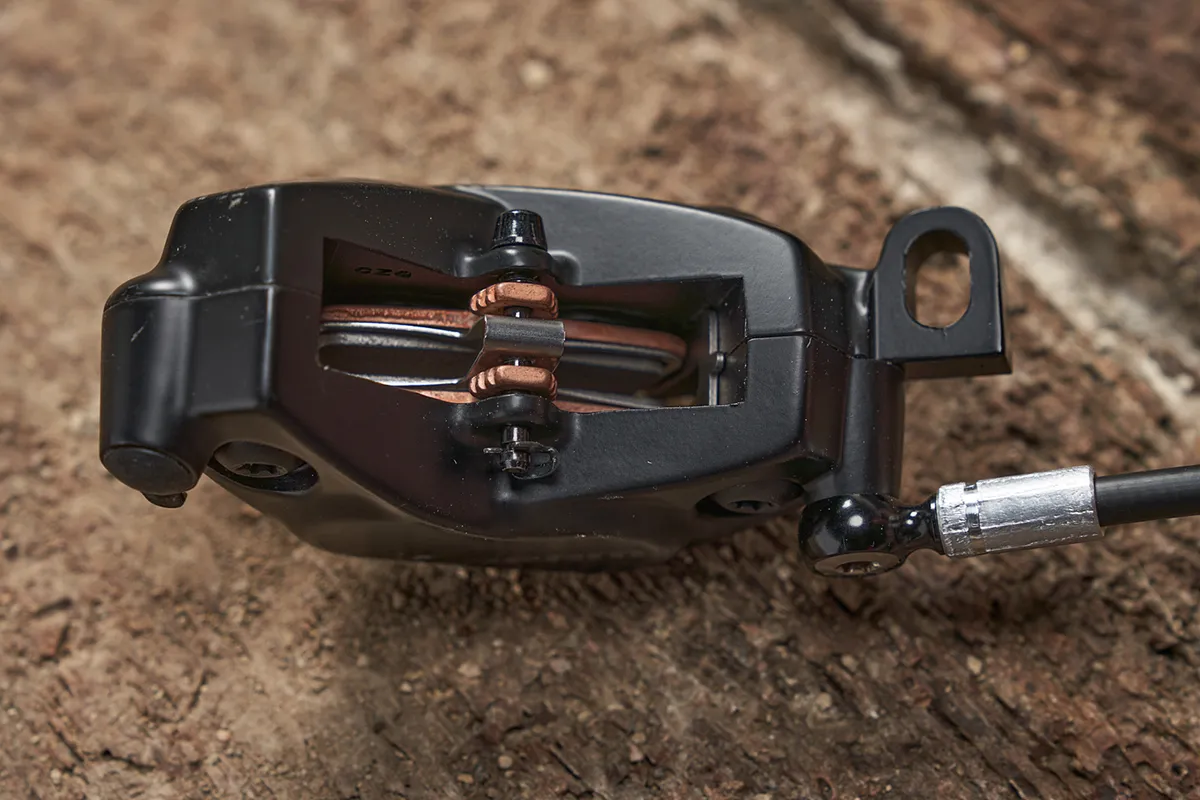
The two-piece aluminium caliper holds a long sintered brake pad, kept in place with a single bolt. A small metal heat shield separates the leading edge pad’s backing plate from the caliper body. SRAM claims this can reduce caliper fluid temperatures by up to 20 degrees Celsius.
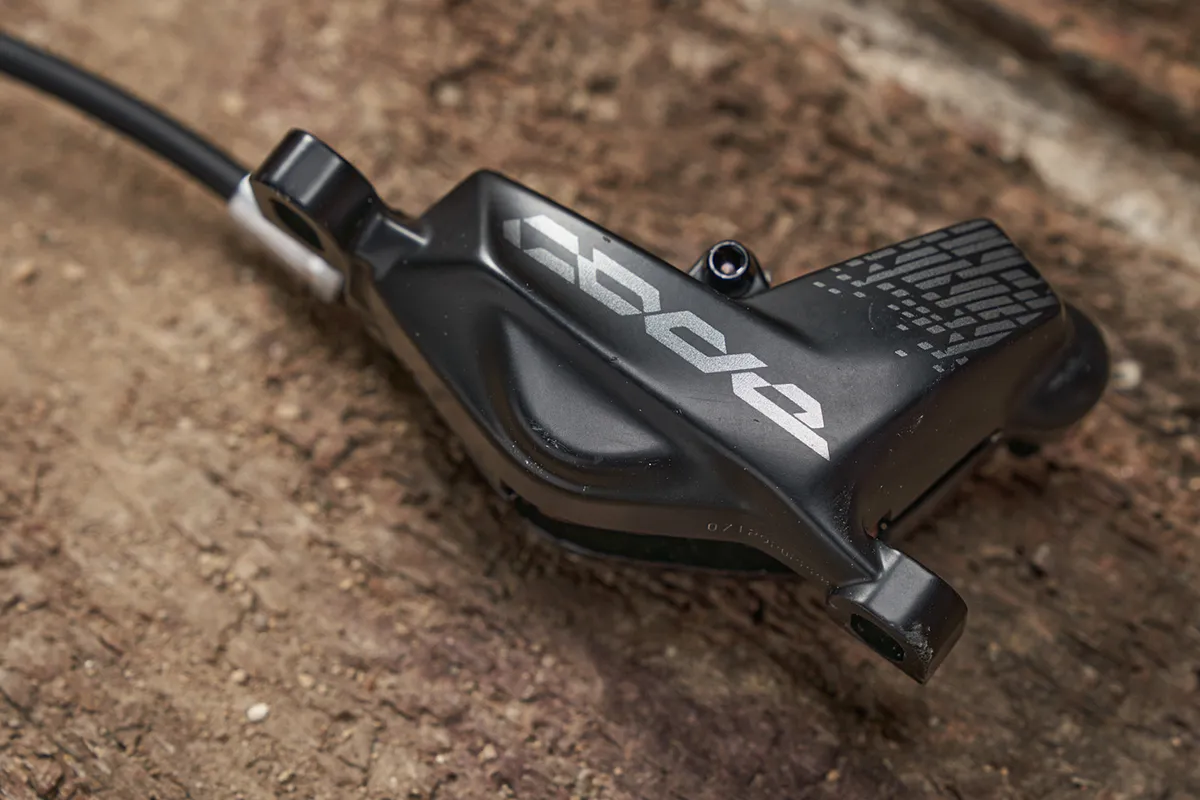
The hose leaves the caliper via an adjustable banjo, aiding rear-end hose routing. Because the brake lever can be used on either side of the bar (it has a ‘flip-flop’ design), all brakes come with a relatively long hose.
Cutting and bleeding the hoses is easy, with the right tools. The barb screws into the hose, and onto that screws the olive – a neat setup.
Bleeding the brakes should be done using SRAM’s Bleeding Edge tool. It’s an extra expense, and the process takes a little longer in practice, but the system allows for consistent bleeds and much less oil overspill than other methods.
I tested the brakes with SRAM’s HS2 rotor, which has been designed to improve power and reduce noise.
SRAM Code R performance
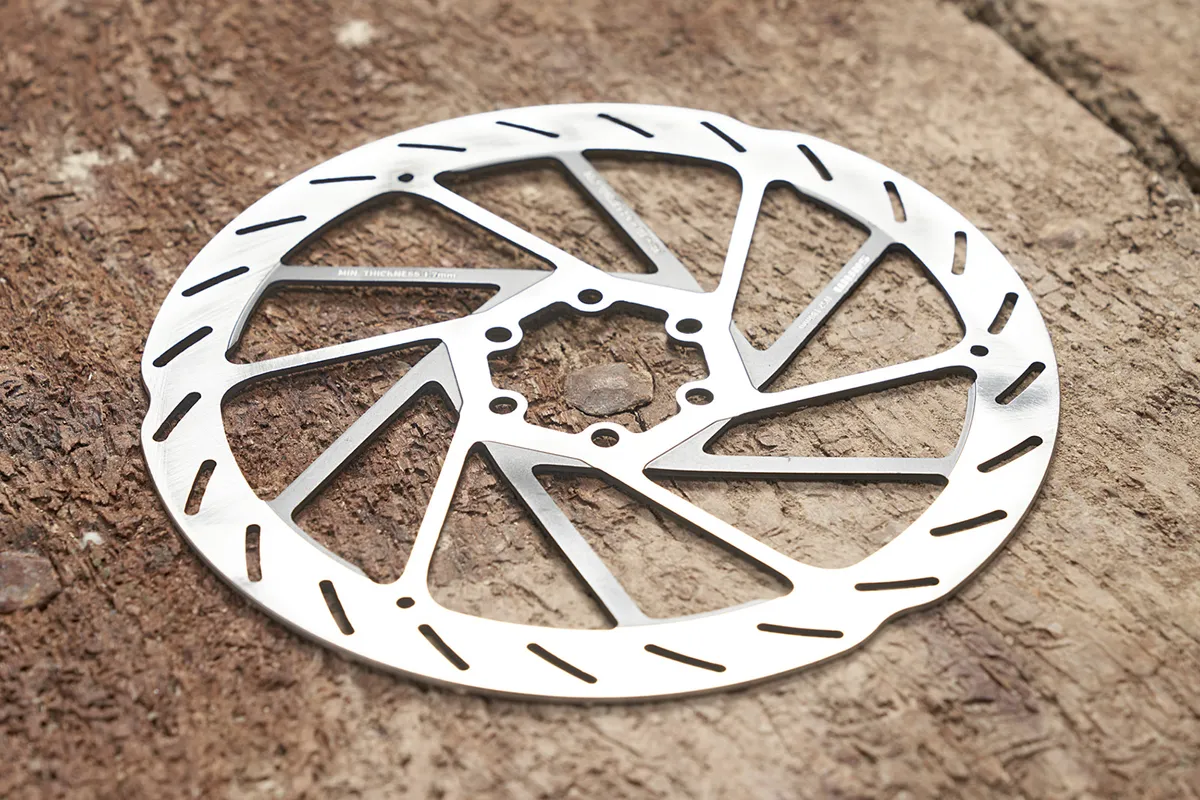
It’s easy to see why Code brakes are popular with gravity-fed riders. Simply put, with the HS2 rotor, there is power in buckets – backed up with decent control too.
With the factory bleed, there’s quite a bit of lever free stroke before the pads contact the rotor. This is because the Code R uses SRAM’s DirectLink pivot, rather than the SwingLink found in the Code RSC.
The SwingLink reduces the dead stroke in the lever movement by making the pads move further per unit of lever movement early in the stroke. As such, I ran the levers a touch further out with the Code R than I might otherwise, in order to get the bite point where I like.
When the pads bite the rotor, there’s good initial power, but they aren’t overly grabby, helping the front wheel maintain grip on loose or slippery surfaces. Pull the lever a touch more, though, and the full force of the brake comes through.
The power curve feels linear, building predictably as you pull the lever, though right at the end of the lever’s stroke the power builds to a real crescendo. At its maximum, the power provided is amongst the best. I had no issues running these brakes on downhill bikes or e-MTBs.
The lever stroke is light, and achieving maximum power is easy with a single finger. I experienced next to no lever-body flex, which certainly helps give the brakes a crisp feel.
On the face of it, these are exceptional brakes, given their cost. I ride a lot of Code R brakes on test bikes, testament to their popularity.
I have found the pistons can get quite sticky, and so a bit of maintenance is needed occasionally to keep them performing consistently.
When pads do stick, there’s an impact on their ability to adjust for pad wear, and so lever-reach adjustments are required to compensate, because there’s no bite-point adjustment.
SRAM Code R bottom line
The Code R is a great, relatively pocket-friendly brake. It might not be the lightest, nor the most feature-laden, but in terms of stopping power there are few better brakes for the money.
This performance remains consistent, so long as you stay on top of maintenance, keeping those pistons moving freely in the caliper.