|
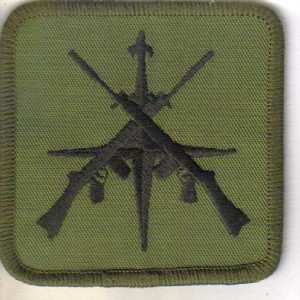
ROYAL AIR FORCE REGIMENT 16 squadron DZ/TRF patch
|
The INDIANA JONES OF EBAY does it again !!...........I have managed to purchase THREE militaria collections.....& TWO Police collections.....mainly patches, badges,insignia & headgear.
One of the main collection of patches & insignia, is a real treasure trove......I showed samples from it to one dealer who wanted to buy the entire collection...but I would rather let YOU the collectors have a chance than him obtain them solely for profit.
The origianal owner collected some older RARER patches...and also filled the gaps of 'difficult / impossible to find 'items with good reproduction patches. I am Not an expert...........so this collection of patches will be listed as low priced NO reserve........there are genuine and some good repros...I am not sure which is which....come on bag a bargain.............any q's please email me.
DO NOT MISS OUT
NO RESERVE
This item is a SINGLE of cloth rounded corner, square SHAPED patch showing a pair black Crossed (SLR ) Rifles superimposed on a black NATO 'star' on an olive background - earlier NON-plastic backed
aprox 78 x 78
This is from the ROYAL AIR FORCE REGIMENT
16 squadron was disbanded in 2007
I am sure that you experts can correct me or supply other details.
This is in nice UNISSUED condition .
The Royal Air Force Regiment (RAF Regt) is a specialist airfield defence Corps founded by Royal Warrant in 1942. After a 29 week training course, its members are trained and equipped to prevent a successful enemy attack in the first instance; minimise the damage caused by a successful attack; and ensure that air operations can continue without delay in the aftermath of an attack, the RAF Regiment are also experts in CBRN (Chemical, Biological, Radiological and Nuclear) defence and equipped with advanced vehicles and detection measures and RAF Regiment instructors are responsible for training all RAF personnel Royal Air Force in basic Force Protection, such as first aid, weapon handling and CBRN skills. Members of the Regiment are known within the RAF as 'The Regiment', 'Rock Apes' or 'Rocks'.
History
The genesis of the RAF Regiment was with the creation of No. 1 Armoured Car Company RAF in 1921 for operations in Iraq, followed shortly afterwards by Nos. II and 3 companies. These were equipped with Rolls-Royce Armoured Cars and were highly successful in ground combat operations throughout the Middle East in the 1920s and 1930s. The RAF Regiment came into existence, in name, on 5 February 1942. From the start it had both field squadrons and light anti-aircraft squadrons, the latter originally armed with Hispano 20mm cannon and then the Bofors 40 mm anti-aircraft gun. Its role was to seize, secure and defend airfields to enable air operations to take place. Several parachute squadrons were formed to assist in the seizing of airfields and No. II Squadron retains this capability. 284 Field Squadron was the first RAF unit to arrive in West Berlin in 1945, to secure RAF Gatow.
During World War II, the RAF Regiment grew to a force of 66,000 men in 280 Squadrons of 185 men each (each squadron including five officers). Each squadron consisted of a Headquarters Flight, three Rifle Flights, an Air-Defence Flight, and an Armoured-Car Flight. The flights were grouped together into Wings as needed. It also operated six Armoured Car Squadrons to provide an area response capability to several RAF stations. Light Armoured Squadrons, equipped with FV101 Scorpion and FV107 Scimitar light tanks, continued to be operated into the 1980s.
Formerly the RAF's firefighters were also members of the RAF Regiment, although they are now independent of it.
Origin of the "Rock Ape" nickname
In the past the nickname "Rock Ape" has been attributed to their traditional role guarding areas of Gibraltar, but this is not so. The term came into use after an accident in the Western Aden Protectorate in November 1952. Two Regiment officers serving with the APL at Dhala decided to amuse themselves by going out to shoot some of the baboons (locally referred to as "rock apes"). The officers drew rifles and split up to hunt the apes, yet in the semi-darkness one of the officers fired at a moving object in the distance. When he reached the target he discovered he had shot the other officer. After emergency treatment Flight Lieutenant Mason survived to return to service a few months later. When asked why he had fired at his friend by a board of inquiry the officer replied that his target had "looked just like a rock ape" in the half light. The remark soon reverberated around the RAF and it was not long before the term was in general use.
Organisation and current role
The RAF Regiment comes under command of 2 Group, Air Command. Its members are organised into eight regular squadrons, of which seven are field squadrons which are highly mobile, heavily armed dismounted close combat units optimised for active protection of air assets. They are extremely versatile and are able to counter the whole spectrum of ground-based threats to the RAF. Field Squadrons are trained to move quickly around the battlefield on foot or mounted in helicopters and specially adapted Land Rovers for defending airfields against ground attack. The Regiment also has three Royal Auxiliary Air Force (RAuxAF) squadrons.
Members of the RAF Regiment are trained, equipped and manned to deal with the requirements of protecting high-value air assets during operations across the spectrum of conflict. They are particularly equipped with a range of direct and indirect fire systems and specialist surveillance and night vision equipment. Each member of a field squadron is required to master a wide range of skills that include covert observation and target acquisition, and dismounted close combat. The unique nature of air operations is such that RAF Regiment personnel must have a specific understanding of its requirements in order to ensure that the tactics, techniques and procedures employed do not disrupt those operations. Additionally, because air bases are fixed and supporting elements are unable to redeploy quickly, field squadrons must engage an attacking adversary at the earliest opportunity to prevent air operations from being disrupted.
The way a Field Sqn operates depends upon the threat they are facing. They could be mounting defensive positions one day, whilst switching to aggressive patrolling a long way outside of the airfield the next. The Sqn operates by firstly finding the enemy, then fixing him in position using the Support Weapons flight and finally striking using the Rifle Flights to destroy him.
Field Squadrons employ a variety of tactics to defend airfields, often operating up to 30 km from the airfield or air asset in mobile long range patrols. Field Squadrons are divided into Flights, which are the equivalent of an army platoon. Each squadron contains several Rifle Flights, whose task is to engage the enemy at very close range, and a Support Weapons Flight, which provides fire support to the Rifle Flights by using machine guns, mortars, portable anti-tank weapons, and snipers.
The field squadrons are 166 strong (increasing soon to 171 strong) making them considerably larger than an infantry company in the army. All regular RAF Regiment personnel are male, in line with the British Government policy that women cannot serve in combat units, the Auxiliary Squadrons do recruit women as part of the Squadron strength. There are approximately 2,000 regular airmen (i.e. Other Ranks), 300 regular officers, and 500 reservists.
RAF Regiment personnel man the majority of Tactical Air Control Parties (TACPs) that coordinate Close Air Support for the British Army. These small teams move with Airborne, Armoured and Infantry units in order to identify enemy targets and call in air assets to attack them. They are also trained to call in artillery fire. TACPs are required to move quickly around the battlefield and can be inserted by vehicle, helicopter or parachute.
The RAF Regiment's basic training has recently increased to incorporate the field gunners course and currently stands at 29 weeks.
Specialist squadrons and units
-
-
II Squadron is a parachute-trained Field Squadron which is capable of inserting by parachute and securing forward airfields.
-
3 Squadron is a Field Squadron which until recently has been deployed to guarantee the security of RAF Aldergrove and Belfast International Airport in Northern Ireland. The squadron relocated to RAF Wittering in February 2007 after a 7 month tour in Basra, Iraq.
-
15 Squadron is a Field Squadron with a past linked to Rapier Surface-to-Air missile system. The hand over of Rapier to the Royal Artillery has allowed 15 to become a fully operational Field Squadron
-
27 Squadron used to be an element of the Jt CBRN Regt alongside 1st Royal Tank Regt. Where they operated the chemical, biological and radiological detection equipment. They are now a full field squadron along with the others at RAF Honnington, Suffolk.
-
In addition, the Regiment has a ground extraction unit attached to No. 28 Squadron RAF, which provides Search and Rescue teams to recover downed RAF Aircrew.
-
51 Squadron also took part in the 1991 Gulf War, the 2003 invasion of Iraq and had recently been deployed in Afghanistan for a six month tour ending in September 2007.
-
63 Squadron, also the Queen's Colour Squadron, is a Field Squadron which represents the RAF at high profile ceremonial occasions (including mounting the Queen's Guard at Buckingham Palace), and is also responsible for guarding the Queen's Colour of the Royal Air Force. It is a fully fledged field squadron and took part in the 1982 Falklands Campaign, the 2003 invasion of Iraq and had recently been deployed in Afghanistan.
-
The RAF Regiment provides training teams for all RAF stations, which are responsible for training station personnel in Force Protection and operational deployment skills.
-
The Regiment is also responsible for the Defence CBRN Centre at Winterborne Gunner which trains personnel from all three services and the civilian police in CBRN defence skills. It also provides CBRN specialist advice and support to other organisations.
-
RAF Regiment personnel man several Tactical Air Control Parties, including three in the Army's 16 Air Assault Brigade. These parties contain RAF Regiment Forward Air Controllers who are responsible for directing fire support from fast jet attack aircraft in support of ground combat forces.
-
A flight of 40 RAF Regiment personnel forms part of the tri-service Special Forces Support Group
thanks Wiki
The RAF Regiment grew to 50,000 highly trained men during World War II, making up 270 anti-aircraft, infantry and armoured car Sqn's who served wherever the RAF operated. Today's RAF Regiment is very small in numbers, but still highly trained, many changes have taken place with Sqn being disbanded and reformed and in the last 2 years ( 2006-2008)
thanks RAFREGIMENT.NET
DO NOT MISS OUT.
combine ANY amount of patches,badges ,epaulettes or insignia for ONE post charge
Postage - please check for country- or email me for details
For insignia unless otherwise listed
this item has FREE shipping to
the UK,RECORDED
to EUROPE-AIRMAIL
to the USA & CANADA-AIRMAIL
to AUSTRALIA & The Far EAST AIRMAIL
Express , insured or courrier on request.if this item goes for a higher price insured is recommended but up to you.
|
|
|
|
|
|