PLEASE READ PAYMENT AND OTHER DETAILS CAREFULLY BEFORE BIDDING ON THIS ITEM.Please do not bid if you cannot abide by them.
Please note that we suggest insurance as once posted it is out of our care, and we do not refund for lost items by postal services, please make sure you fully understand this point. All images are part of the description...........
Due to claims of lost mail all winning bids over $20 with letter rate will now have to pay for fully rego mail.
We do not send images prior to action ending or after its conclusion.
We send all buyers personal postal confirmation and do not use the ebay checkout system,WE COMBINE POSTAGE.
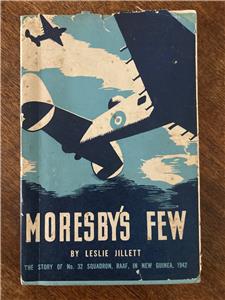
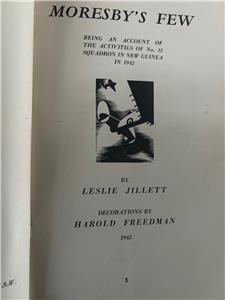
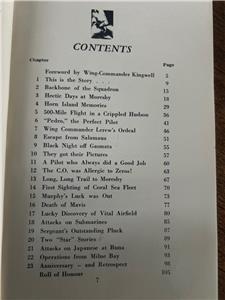
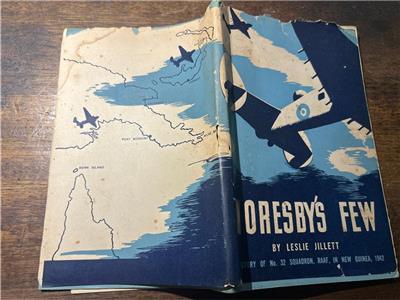
In original and used condition is this Moresby's Few. Being an Account of the Activities of No. 32 Squadron in New Guinea in 1942.
by Jillett, Leslie and Freedman, Harold ,illustrator. Published by The North Western Courier, Narrabri, NSW, 1945, first and only edition.
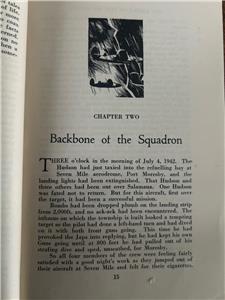
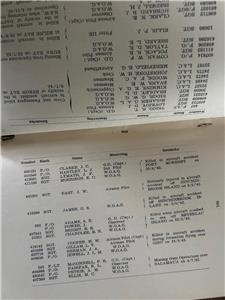
Softcover with dustjacket, 22x14.5cm,108 pages,Honour Roll, bw woodcut decorations.
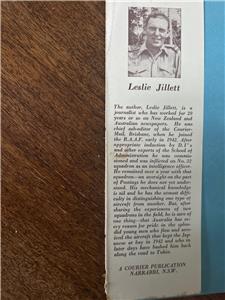
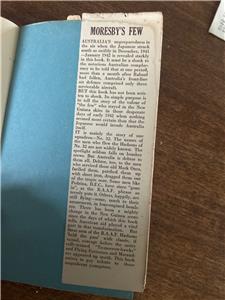
D/J has tattered edges with chips and tears,appears to have been reglued at the top of spine, wear to spine area,general wear (see images).
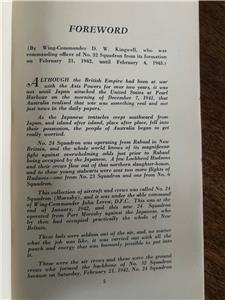
No. 32 Squadron formed at Port Moresby on 21 February 1942. It was established as an armed reconnaissance / bomber unit, equipped with Lockheed Hudson aircraft, and was raised by aggregating elements of other RAAF Hudson squadrons deployed from their home bases for combat operations against Japanese forces.
Many of these units had suffered high casualties of men and aircraft.
No. 32 Squadron's first mission took place the day it was formed, when aircraft were launched to search for a reported enemy submarine. A few days later, the squadron undertook the first of many bombing raids on the Japanese air base at Gasmata. After only a few weeks of operations, due to enemy raids on Port Moresby's Seven Mile airfield, 32 Squadron was withdrawn to Horn Island, off Cape York in Queensland.
It staged through Seven Mile on its missions, aircraft refuelling there en route to their targets. In March 1942, one of the squadron's Hudsons was the first to spot the Japanese convoy transporting the forces for the invasion of the New Guinea mainland. Later the same month, the squadron engaged Japanese forces landing at Lae and Salamaua. In July 1942, No. 32 Squadron was active in the Gona area and during the lead-up to the Battle of Milne Bay and the start of the Kokoda campaign.No. 32 Squadron re-deployed south later in 1942, to Sydney from whence it conducted anti-submarine patrols, initially from RAAF Base Richmond and then an airfield near Camden. In March 1943, the Hudsons were replaced by locally built versions of the Bristol Beaufort which it used for the rest of the war. The squadron was disbanded in November 1945.
The skill and fighting spirit of a lone, outnumbered crew from No. 32 Squadron impressed Saburō Sakai, who would become among the highest-scoring Japanese aces of the war. Pilot Officer Warren Cowan, Pilot Officer David Taylor, Sergeant Russell Polack and Sergeant Lauri Sheard, in Hudson Mk IIIA A16–201, were killed in action after being shot down by Sakai on 22 July 1942.
A16–201 was intercepted over Buna, New Guinea by nine Mitsubishi A6M "Zeroes" of the Tainan Kaigun Kōkūtai, led by Sakai. The Hudson's crew surprised the Zero pilots by taking the initiative in a turning dogfight and were apparently unscathed for at least 10 minutes. Sakai observed that after he killed or wounded the Hudson's rear/upper gunner, the pilot became less able to evade his rounds. The Hudson caught fire and crashed in jungle near the coastal village of Popogo. So impressed were the Japanese pilots by their opponents that, many years after the war's end, Sakai asked Australian researchers to help him identify the pilot. In 1997, Sakai took the unusual step of writing to the Australian government, recommending that Cowan be "posthumously awarded your country's highest military decoration". The suggestion was rejected on the grounds that all such recommendations had been closed at the war's end. Wonderfulll rare in the d/j that is even more rare.
Despite the wear a sensational addition for the RAAF unit historian.
One on ABE books for $500.
Please view my many and varied current listings.