|
| SUPER FAST SHIPPING ~ 5 DAYS EXPEDITED SHIPPING |
| The Beautiful World of Jamawar Pashminas WE SHIP WORLDWIDE LUXURIOUS FEELING WEARING THIS FINEST CASHERE
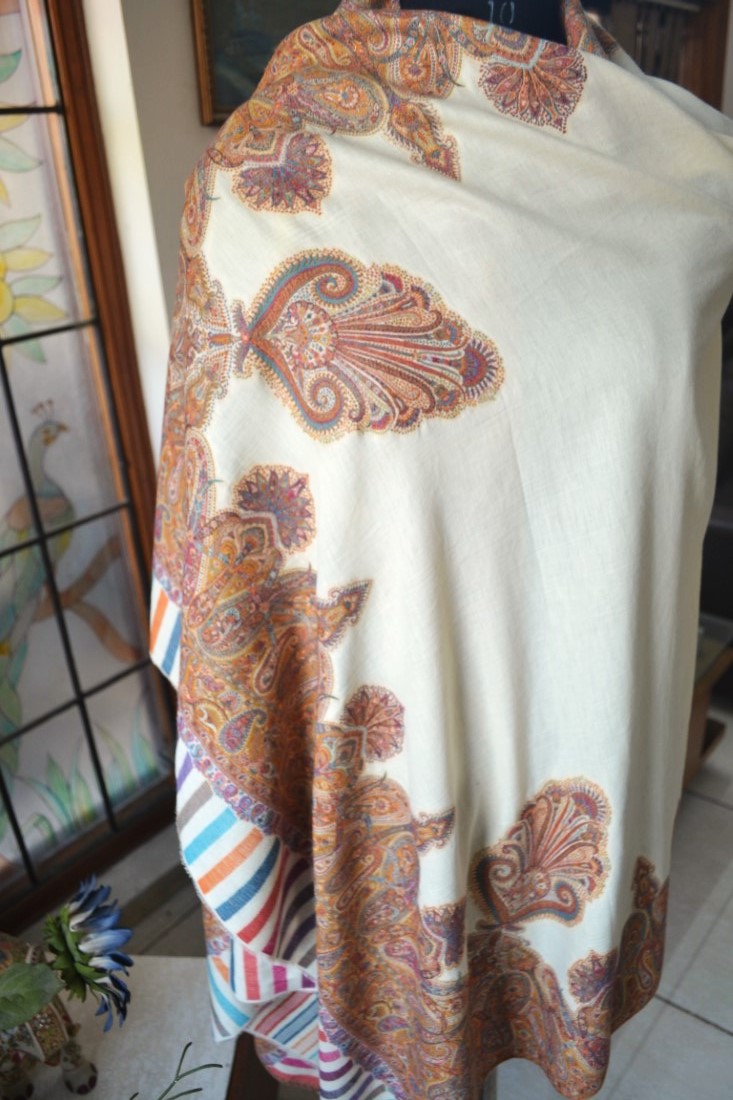
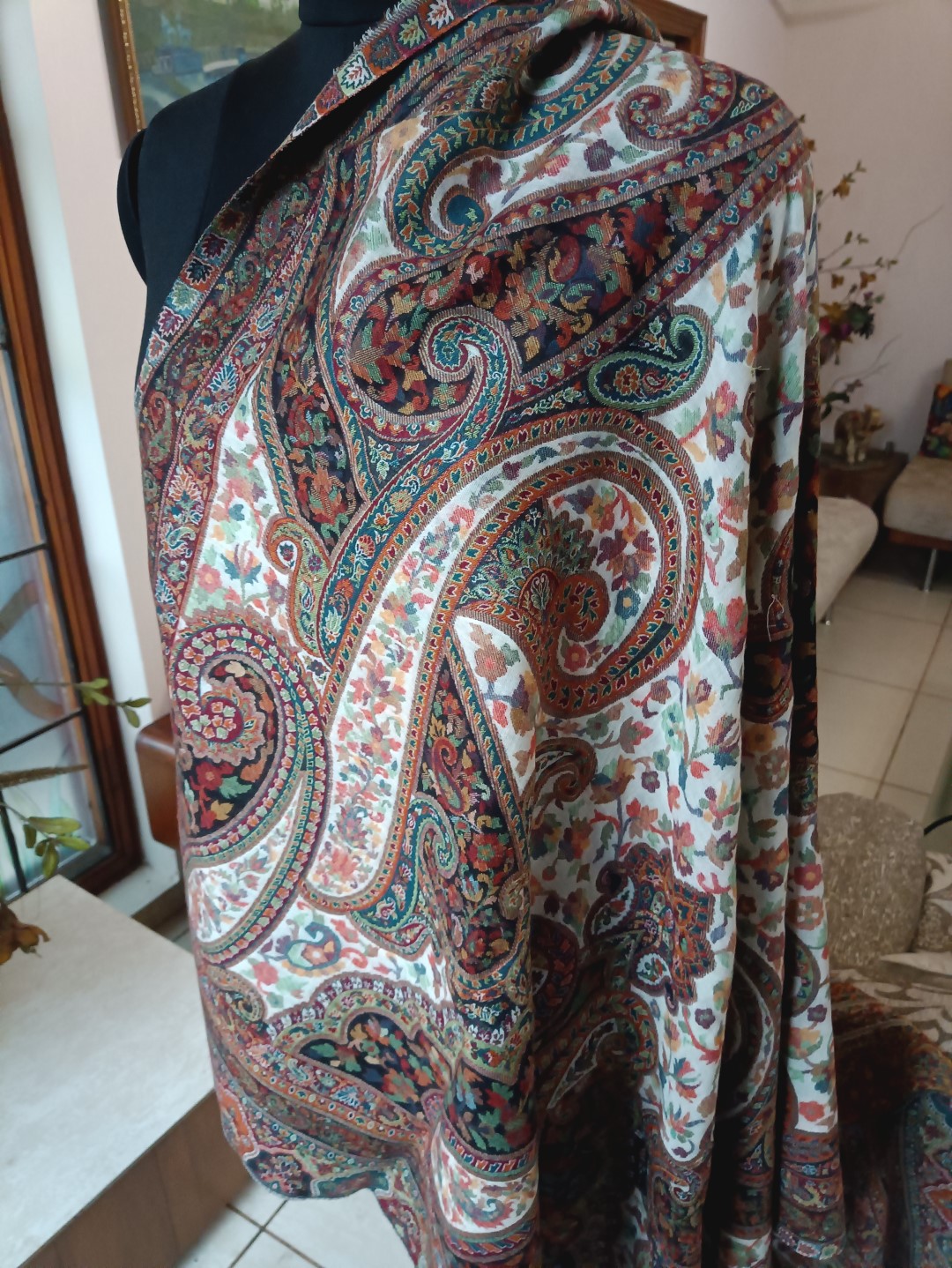
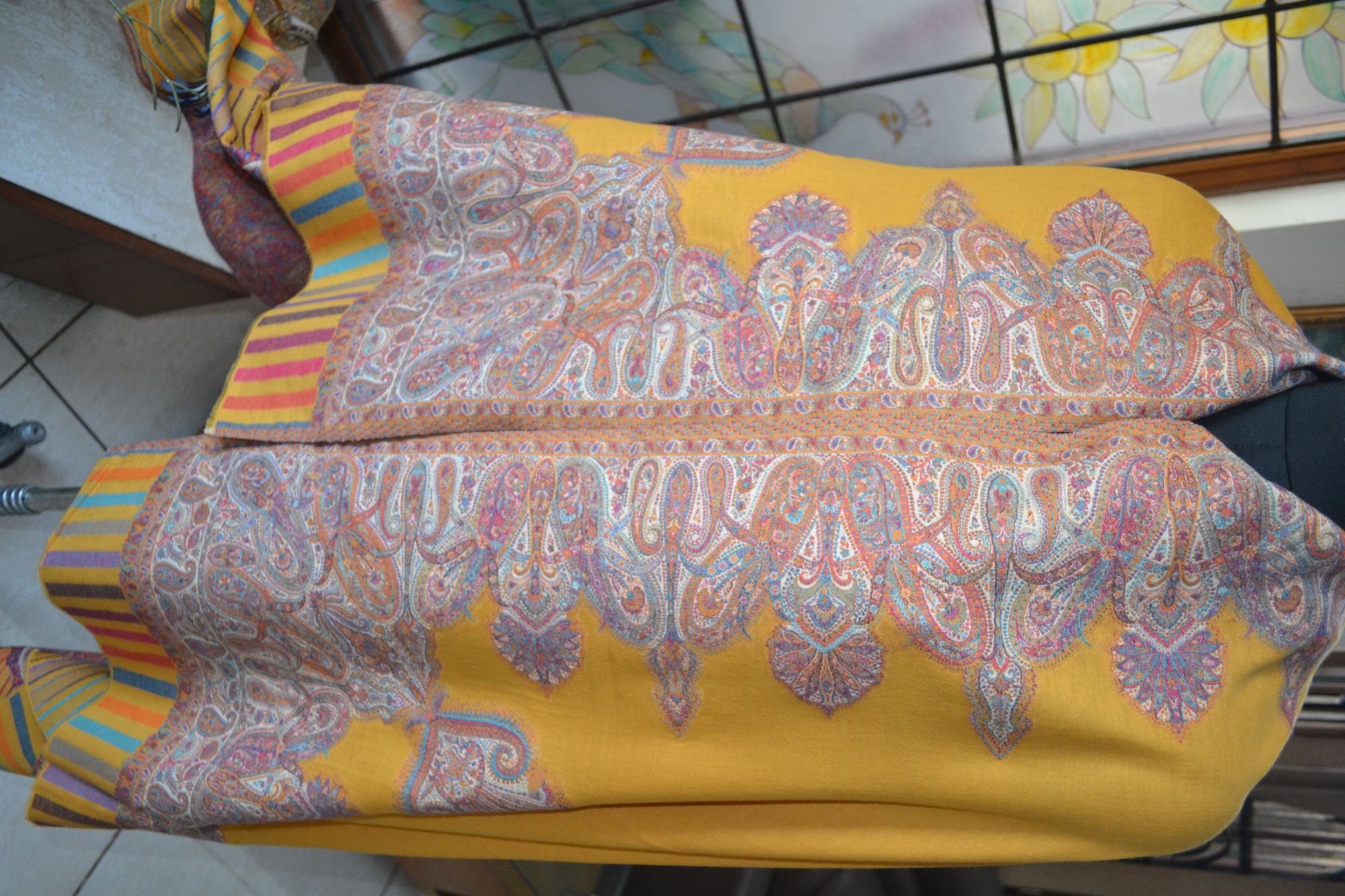
EXCLUSIVELY FOR YOU  Kani Shawl EXOTIC - D7 UNIQUE its woven not printed ( Please note they are one sided, not reversible) YOU WILL LOOK A CLASS APART, A VERY BEAUTIFUL SHAWL About Kani Shawls Specialty As late as the 18th century, jamavar shawls from India were hand woven using different color bobbins called kanis , hence derived the name known as "kani " shawls. The name was sign of highest ranking jamavar shawls. Now the hand weaving of that type of intricately designed jamavar shawl is no longer commercially viable, since one shawl would take a craftsman weaver months or years, to complete. Now Kani Jamavar shawls today are made on automated jacquard looms by us and is liked by all due to rare craftsmanship which is difficult to replicate though many try to copy us.
we have crafted the technique by developing a techniques to more
closely replicate this intricate crisply multicolor motifs of the
original kani jamavar shawls. Surprisingly it sells in market as Kani
shawl the original so developed is the technique As kani shawl will usually incorporate a large number of colors the weft threads on a kani shawl are carried along as floats on the back side of the shawl and are only woven in when their colors are required. When the weaving is finished, the float threads are cut away by hand. This hand cutting is a time consuming process delicate one and add to a shawl’s cost. Kani are the original kashmiri shawls, responsible for the love affair that has been going on for centuries. Due to automation, complexity and time needed to produce a fine shawl their production has gone down significantly over the past 150 years. Today, though not obsolete, they are very rare, and there is only a limited number of weavers dedicated to their production.
EMAIL US YOUR DESIRED DESIGN
|