
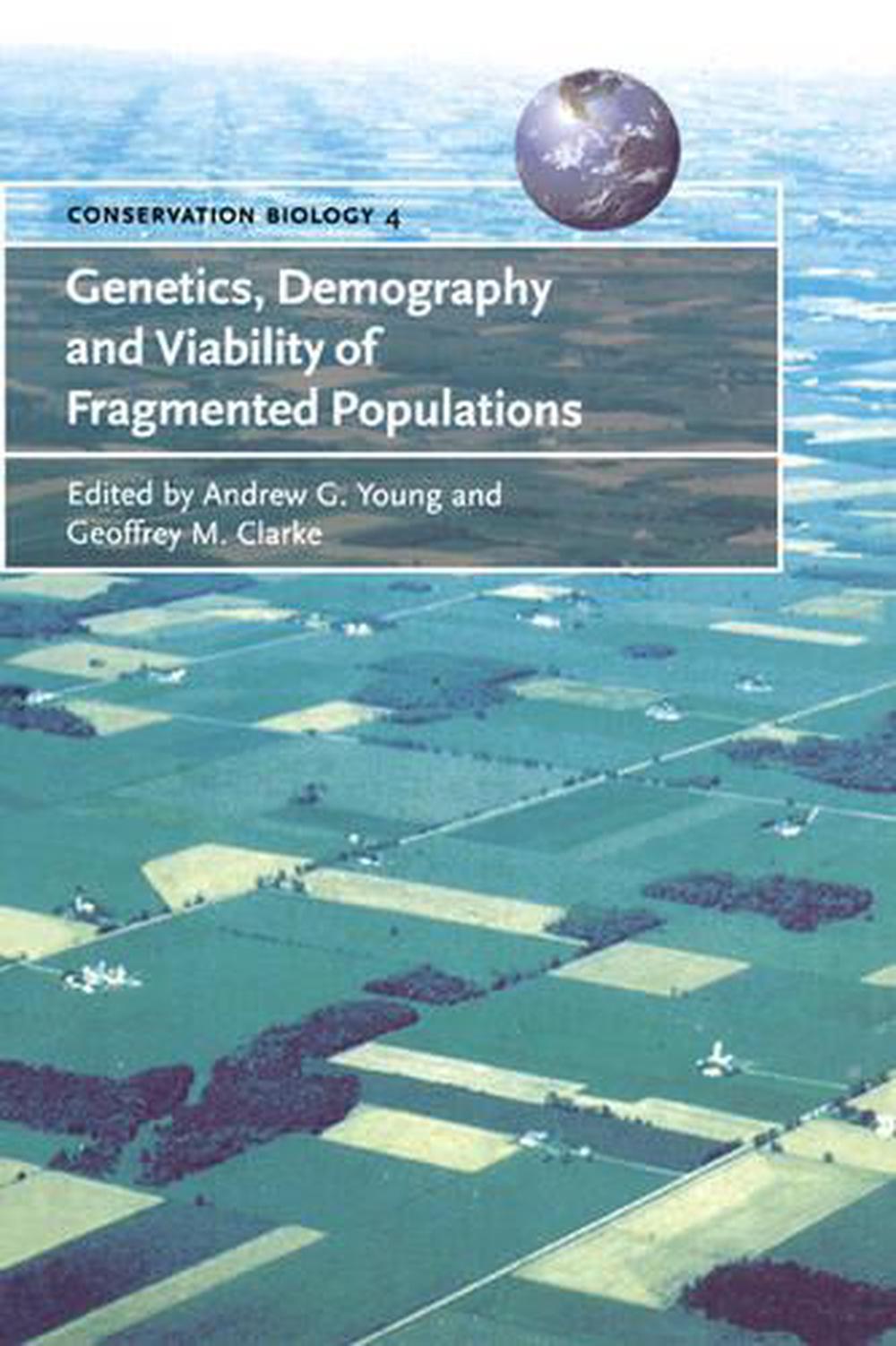
Genetics, Demography and Viability of Fragmented Populations
by Andrew G. Young, Geoffrey M. Clarke
An introduction to the genetic and demographic issues relevant to the conservation of fragmented populations.
Paperback
English
Brand New
Publisher Description
Habitat fragmentation is one of the most ubiquitous and serious environmental threats confronting the long-term survival of plant and animal species worldwide. As species become restricted to remnant habitats, effective management for long-term conservation requires a quantitative understanding of the genetic and demographic effects of habitat fragmentation, and the implications for population viability. This book provides a detailed introduction to the genetic and demographic issues relevant to the conservation of fragmented populations such as demographic stochasticity, genetic erosion, inbreeding, metapopulation biology, and population viability analysis. The volume presents case studies on animals and plants, which illustrate a variety of approaches to examining long-term population viability. Some of the approaches include the application of molecular genetic markers, the investigation of reproductive biology, and the combination of demographic monitoring and modeling.
Table of Contents
Foreword P. Brussard; 1. Introduction: genetics, demography and the conservation of fragmented populations G. Clarke and A. Young; Part I. Introductory Concepts: 2. Managing and monitoring genetic erosion W. Sherwin and C. Moritz; 3. Inbreeding and outbreeding depression in fragmented populations M. Dudash and C. Fenster; 4. Demography and extinction in small populations K. Holsinger; 5. The metapopulation paradigm: a fragmented view of conservation biology P. Thrall, J. Burdon and B. Murray; 6. Population viability analysis for conservation: the good, the bad and the undescribed M. Burgman and H. Possingham; 7. Applications of population genetics and molecular techniques to conservation biology P. Hedrick; Part II. Animal Case Studies: 8. Inbreeding in small populations of red-cockaded woodpeckers: insights from a spatially-explicit individual-based model S. Daniels, J. Priddy and J. Walters; 9. Genetic erosion in isolated small mammal populations following rain forest fragmentation S. Srikwan and D. Woodruff; 10. The Tumut experiment - integrating demographic and genetic studies to unravel fragmentation effects: a case study of the native bush rat D. Lindenmayer and R. Peakall; 11. Demographic evidence of inbreeding depression in wild golden lion tamarins J. Dietz, A. Baker and J. Ballou; 12. Inferring demography from genetics - a case study of the endangered golden sun moth, Synemon plana G. Clarke; 13. Genetic population structure in desert bighorn sheep: implications for conservation in Arizona G. Gutierreez-Espelta, S. Kalinowski and P. Hedrick; Part III. Plant Case Studies: 14. Limited forest fragmentation improves reproduction in the declining New Zealand mistletoe Peraxilla tetrapetala (Loranthaceae) D. Kelly, J. Ladley, A. Robertson and D. Norton; 15. Ecology and genetics of Grevillea (Proteaceae); 16. Genetic and demographic influences on population persistence: gene flow and genetic rescue in Silene alba C. Richards; 17. Fragmentation in central American dry forests - genetic impacts on Swietenia humulis (Meliaceae) G. White and D. Boshier; 18. Population viability analysis of the rare Gentiana pneumonanthe: importance of genetics, demography and reproductive biology J. Oostermeijer; 19. Genetic erosion, restricted mating and reduced viability in fragmented populations of the endangered grassland herb Rutidosis leptorrhynchoides A. Young, A. Brown, B. Murray, P. Thrall and C. Miller; Part IV. Conclusions and Future Directions: 20. What do we know about the genetic and demographic effects of habitat fragmentation and where do we go from here? A. Young and G. Clarke; Index.
Review
'I really enjoyed some of the case studies … understanding deterministic decline and its cure represents the greatest challenges to conservation biology. However, Clarke and Young show that understanding small-population processes might help maintain populations until 'the patient' can be cured.' Ken Norris, Biologist
Promotional
A detailed introduction to the genetic and demographic issues relevant to the conservation of fragmented populations.
Review Quote
"...this book provides scientific guidance for a way forward." L. Scott Mills, Quarterly Review of Biology
Promotional "Headline"
A detailed introduction to the genetic and demographic issues relevant to the conservation of fragmented populations.
Description for Bookstore
This book provides a detailed introduction to the genetic and demographic issues relevant to the conservation of fragmented populations and presents two sets of case studies, one on animals, the other on plants, which illustrate a variety of approaches to examine long-term population viability.
Description for Library
This book provides a detailed introduction to the genetic and demographic issues relevant to the conservation of fragmented populations and presents two sets of case studies, one on animals, the other on plants, which illustrate a variety of approaches to examine long-term population viability.
Details
