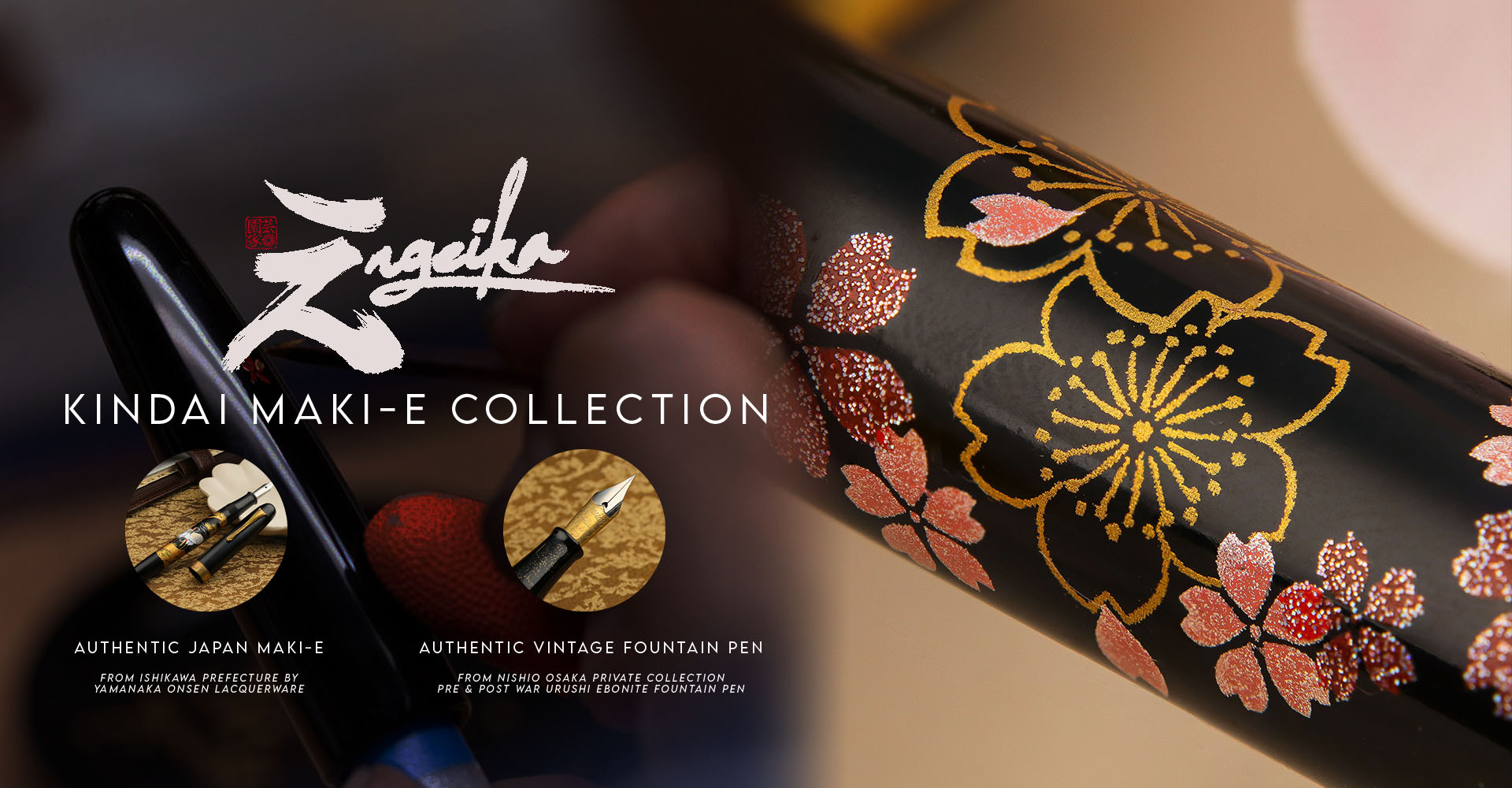
Urushi Kindai maki-e by oshita art studio lacquer house Kindai Maki-e, or Modern Maki-e, is a contemporary interpretation of the traditional Japanese art form of Maki-e. Maki-e involves decorating lacquerware or other surfaces with intricate designs using powdered metals, typically gold and silver, as well as other materials like crushed seashells and gemstones. These designs are created by skilled artisans who painstakingly apply these materials to the surface and then lacquer over them multiple times to create a smooth, durable finish. Kindai Maki-e However provides an alternative method to the famous art craft. Instead of painting and decorating the pen with a paintbrush by hand, the Modern Maki-e technique uses digitally printed Maki-e designs on to a surface area. Can be a pen, bowl, laptop, or phone. However, how Oshita Art Studio Does Modern Maki-e takes it to the next level. They use screen printing and print the maki-e design onto the pen using thin layers of screen print papers and then coated with a thin layer of urushi and later decorated with Gold powder and Silver Powder by hand to add an extra touch to the pen.
Today, Oshita Studio boasts an impressive roster of collaborations, having worked with renowned fountain pen companies like Pilot, Sailor, Platinum, and even Wancher. They have played a pivotal role in crafting affordable Maki-e Fountain Pens bridging the gap between the rich history of Maki-e artistry and modern writing instruments. ABOUT THE DESIGN: CRANE |


Nib & How to use
14KT Gold-Plated Hollywood Star Iridium Nib
The 14KT Gold-Plated Hollywood Star Iridium nib is a decorative yet functional nib commonly found on vintage-inspired or mass-produced fountain pens. Unlike solid gold nibs, this nib is typically made from a base metal (usually stainless steel) and finished with a layer of 14K gold plating, giving it the warm appearance of gold while maintaining durability and affordability.
The “Iridium” designation refers to the hard tipping material applied to the nib’s writing point, which is designed for long-lasting performance. While historically true iridium was used, modern nibs use a durable alloy from the platinum group of metals to achieve the same wear resistance and smoothness . This tipping ensures the nib can withstand regular writing without wearing down quickly.
The “Hollywood Star” marking is primarily a branding or stylistic engraving, often used to give the nib a more premium or distinctive identity rather than indicating a specific manufacturer or gold content standard. Similarly, terms like “14KT Gold-Plated” should not be confused with solid 14K gold--this refers only to the surface finish, not the core material.

In writing performance, these nibs are generally firm, reliable, and smooth, offering consistent ink flow and a controlled feel on paper. They are well-suited for everyday use, especially for those who prefer durability and low maintenance over the softer, more responsive feel of solid gold nibs.
Overall, the 14KT Gold-Plated Hollywood Star Iridium nib represents a practical and visually appealing option, combining classic gold aesthetics with modern durability and dependable writing performance.
HOW TO USE
The Tomeshiki Filler System (or the Ink Stopper Filler System) functions similiarly to a eyedropper, the piston at the back is a mechanism that stops or allows the ink to flow into the nib. It is a old Japanese Filler Mechanism that have been disregarded as time passed for more easier ink access. Even we ourselve have discovered this type of filler found only in Japanese made Vintage pens.
To use the pen
- Unscrew the grip section to separate it from the barrel.
- Use an eyedropper to inject ink directly into the barrel
- Reattach the grip section securely.
- Once sealed, turn the piston knob (at the end of the barrel) counterclockwise to open the ink stopper.
- Hold the pen nib-down to allow ink to flow into the feed. After a few minutes, the pen should begin to write.
- Turn the piston clockwise again to close the ink stopper.
- If the ink in the feed runs out, simply repeat step 4 to allow more ink to flow in.

| Nib Size F Material Iridium |
Condition
|
A |
In Mint Condition! There are minimal wear and tear on the cap and the sac have be replaced and tested The whole pen is made out of Black ebonite body construction and has been customized by applying Kindai Maki-e print by Oshita Art Studio Maki-e
|
|
Item Specifics
◆
|
|
Brand Nishio
Material Urushi Ebonite
Ink Color Black
Nib Size Fine (F)
Nib Material Iridium
Vintage Yes
Country of Origin Japan
Modified Item Urushi Modern Maki-e
Pen Type Fountain
Body Details Nishio Crane Fountain Pen Modern Maki-e
MPN Nishio Urushi Makie
|
|
ENGEIKA 円花家 — Horticulturist · Est. 1987 For every seed you plant, let us help nurture it together. At Engeika, your satisfaction grows through our lifelong experience, sincere passion, and careful attention to every detail. Founded in 1987, Engeika has grown into a leading direct-to-customer e-commerce retailer specializing in writing instruments, watches, bags & cases, and lighters. Our mission is to bring exceptional products with outstanding quality, craftsmanship, and design to customers around the world. The Kindai Maki-e Collection represents our deepest passion: the marriage of Japan's ancient lacquer tradition with the writing instrument — objects that are as much art as they are tools. We warmly welcome messages in any language. We will always do our best to reply in English or Japanese. Item Condition — Engeika Grade All our pens are original and authentic, sourced directly from collectors and estate holders. We provide a grade tier to help you understand the pen's condition before purchasing. S TIER — Almost like Brand New: Exceptional condition, no rust, original filling system intact, vivid nib colour, smooth and polished. A TIER — Excellent: Only minor flaws. Possible small nib chips, hairline scratches. Filling system works properly. No cracks. B TIER — Good: Perfectly usable. May have some clip rust or changed nib colour. Filling system may have been replaced. C TIER — Fair: Functional with noticeable scratches. Trim may be rusted or chipped. Filling system requires replacement. F TIER — Poor: Still writable but cosmetically poor. Major refurbishment conducted; some original characteristics may be lost. For Maki-e pieces, the lacquer decoration grade is assessed separately from the pen body. Please review all photographs carefully and contact us for additional images if needed. Returns accepted within 30 days of delivery. Buyer pays return shipping. Item must be returned in the same condition as received. Vintage and Maki-e items may show normal signs of age and use. Please review all photos carefully and contact us with any questions before purchase. Refund issued after returned item inspection. Worldwide Shipping & Customs 2026 Update ⚠ Attention: High-Duty Regions (LATAM) For buyers in the following regions, import fees in 2026 are significantly higher than the global average. These fees are determined by your government and are not included in the shipping price. 🇧🇷 BRAZIL: Combined taxes (II, PIS/COFINS, and ICMS) often reach 60–80% of the total value. A valid CPF (Tax ID) is strictly required for all shipments. 🇨🇱 CHILE: The duty-free threshold is only $30 USD. Orders above this are subject to 6% duty + 19% VAT on the total cost (including shipping). 🇦🇷 ARGENTINA: Strict "door-to-door" regulations apply. Buyers may need to confirm receipt on the AFIP website to clear customs. Global Shipping Status USA: Standard Shipping via Japan Post remains suspended. All US-bound orders ship via Express Courier (DDP) to comply with current US import regulations. TURKEY: All orders ship via Japan Post EMS ($30 USD). Turkish customs require a Customs Broker; these fees are the buyer's responsibility and are non-refundable if the package is rejected. RESTRICTED: We are currently unable to deliver to Russia, North Korea, Belarus, or Ukraine. Express-Only Regions — $75 USD Flat Rate Due to current logistics challenges, shipping to the following countries is $75 USD via Express Shipping by default: Yemen, Cyprus, Jordan, Kuwait, Lebanon, UAE, Oman, Venezuela, Qatar, Egypt. For US Customers: All-Inclusive (DDP) Final Price Guarantee: Your checkout total includes the 20% US Import Duty, the $20 Government Surcharge, and all brokerage fees. No Surprise Bills: You will not receive an invoice from the courier (UPS/DHL) for additional taxes. For International Customers (Non-US): Standard (DDU) Buyer Responsibility: You are responsible for local VAT, GST, and duties. Payment Tip: Pay duties online via the carrier link (UPS/DHL) to avoid the $12.00 ICOD surcharge and speed up delivery by 1–2 days. Shipping Transparency & Online Payment 100% Prepaid Transport: We pay 100% of the international transport fees before your item leaves Japan. In 99% of cases, your order arrives with no further delivery fees — only government duties apply. How to Pay Customs Duties: When your package arrives, the carrier (UPS or DHL) will contact you via SMS or Email with a payment link. Pay online immediately to avoid surcharges. › UPS "ICOD" Fee: $12.00 surcharge for charges collected at the door — waived if you pay online. › DHL Disbursement Savings: Discounted rate via their "On Demand Delivery" portal — higher "Cash Handling" fee if paid in person. › Japan Post EMS: Your local post office may charge $5–$10 for "Postage Due" or final-mile processing. Important Policies › Address: Please input your shipping address in the English alphabet only. › Combined Shipping: We offer combined shipping for up to 10 items purchased within 3 days. › Customs Refusal: If a package is returned because customs fees were not paid, we will refund the order minus the cost of two-way shipping (to and from your country) and any unpaid fees. |