Global Shipping
Combine your items!
Gemstone Expert
20+ years experience
Secure
Safe Packaging
Risk Free
30-Day Returns
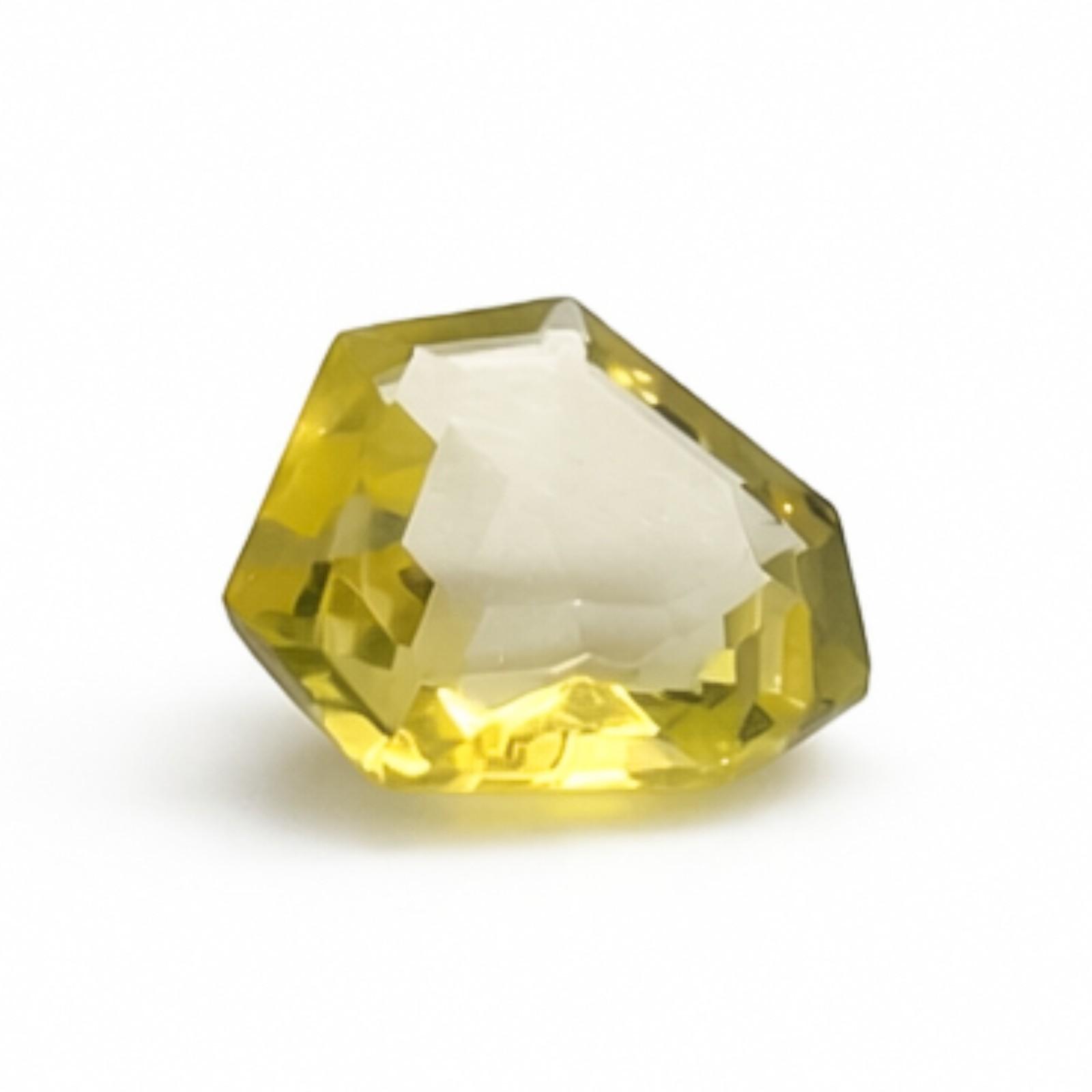
1.51 ct BERYL - BRAZIL
SKU: BERY0005 | Location: Vault 1
verified
- ✓ Expert Verified Gemstone
- ✓ Fast Handling & Shipping
- ✓ Secure Vault Packaging
Beryl from the massive pegmatite fields of Brazil represents the "hexagonal-pillar" peak of the silicate world. A beryllium aluminum silicate, it is a species I have always respected for its structural discipline and its ability to host some of the most legendary varieties in gemology. From the "sea-blue" of Aquamarine to the "neon-pink" of Morganite, Brazilian Beryl is a prize of pure crystallographic architecture ; it offers a vitreous luster and a "solid" presence that makes it a true "high-vibration" foundation for the systematic vault. As an artist, I find the "perfect" six-sided symmetry of a Brazilian Beryl prism to be one of nature's most sophisticated designs.
The Heritage & Discovery
Historical Significance: Beryl is a vital species for understanding the concentration of rare elements like Beryllium in granite pegmatites. Historically, Brazil has been the world's most consistent producer of "world-class" Beryl specimens since the early 19th century. In the world of fine minerals, it is celebrated for its natural, "monumental" scale , with the Brazilian interior yielding crystals of staggering size and clarity. It stands as a symbol of growth and clarity, bridging the gap between common rock-forming minerals and the elite world of "top-tier" precious gems. It serves as a reminder that the Earth's crust can produce ethereal perfection when allowed to crystallize undisturbed in the deep pegmatite pockets of the South American shield.
Discovery: The name is derived from the Greek beryllos , referring to a "precious blue-green color-of-sea-water stone." Scientifically, it defines a hardness of 7.5 to 8 on the Mohs scale. Its discovery in the Minas Gerais region provided mineralogists with the first clear look at the species' potential for "neon" and "water-clear" varieties on a commercial scale. My own respect for this material grew from observing its "trace-element" sensitivity ; specifically, how a tiny fraction of Iron ($Fe$) creates the "cool-blue" of Aquamarine, while Manganese ($Mn$) produces the "delicate-rose" of Morganite.
Important Mines: The undisputed world capital for the finest Brazilian Beryl is the Minas Gerais state, specifically the Marambaia and Padre Paraíso regions for Aquamarine. I also have a high regard for the "strawberry-pink" Morganite from the Urucum Mine and the "golden" Heliodor from the Itinga district. For the vault, I prioritize Brazilian material that exhibits "sharp" terminal faces and "liquid" transparency, as these highlight the mineral's sophisticated, three-dimensional growth history.
Mineralogical Profile
Description: Beryl is a beryllium aluminum silicate that crystallizes in the hexagonal system. It sits at a 7.5 to 8 on the Mohs scale , making it a durable and "tough" gemstone, though it remains a "brittle" mineral that requires precision when handling. It is characterized by its vitreous luster and its unmistakable "six-sided" prismatic habit.
One of its most identifying traits is its cyclosilicate structure , where rings of silicate tetrahedra create "channels" that can host water molecules or alkali ions. It has a moderate refractive index (n approx 1.57 to 1.60) and a specific gravity (SG approx 2.6 to 2.9). Because it forms in evolved pegmatites, it is often found in association with Quartz, Feldspar, Muscovite, and Tourmaline. When I select a piece for the collection, I look for "razor-sharp" prism edges and "even" color saturation, as these highlight the sophisticated, three-dimensional geometry of the mineral's growth. It is a dense, high-vibration mineral that offers a unique, "architectural" beauty unlike any other silicate species.
Chemical Formula: Be 3 Al 2 (SiO 3 ) 6
Gemstone Specifications
| Gem Variety | Beryl |
| Origin | Brazil |
| Weight | 1.51 carats |
| Color | Yellow |
| Dimensions | 9.1 mm x 7.8 mm x 2.9 mm |
| Shape | Round |
| Treatment | No treatment |
| Certificate | On Request |
Verified history from our original eBay account.
Secure Global Logistics To ensure total legal compliance and security for high-value assets, all logistics are managed by my authorized agent in Bangkok: Asama James (Business Reg: 3100905529191).
- Origin: Items are dispatched directly from our secure facility in Bangkok, Thailand.
- Dispatch Time: We ship within 1-3 business days of cleared payment.
- Combined Shipping: We offer combined shipping for multiple acquisitions. Please request a "Combined Invoice" before completing payment to receive your shipping discount.
- Customs & Duties: International buyers are responsible for any import duties, taxes, or VAT charged by their destination country. These are not included in the item or shipping price.
100% Collector Satisfaction Guarantee I stand behind the scientific accuracy and quality of every stone in the vault.
- Returns: We accept returns within 30 days of receipt.
- Condition: The gemstone must be returned in its original, unaltered condition.
- Resolution: If you encounter any issues with your acquisition, please message me directly. My goal is to work out a solution that ensures you are 100% satisfied with your experience.
Secure Payment. We accept all major payment methods through eBay's secure checkout system, including Credit Cards, PayPal, Apple Pay, and Google Pay.
Personal Verification & Certification
- Identity: Every stone is personally inspected by me. I take scientific accuracy seriously; however, with hundreds of species in the vault, I remain open to professional dialogue and corrections from fellow gemologists.
- Laboratory Certification: For "Investment Grade" stones, certifications from world-renowned labs (AIGS, GRS, etc.) can be obtained upon request.
- Note: Lab processing can take up to 2 months.
- Costs: The buyer covers lab fees; a copy of the official laboratory invoice will be provided for transparency.
- Visual Accuracy: We utilize professional macro-photography to reveal the "soul" of the gem. While monitor settings may vary, we strive for 100% visual fidelity to the stone's true appearance.
Welcome to Freakingcat's Private Vault
20 Years of Expertise | 15,600+ Positive Reviews | 100% Feedback
Known to the eBay community since 2003 as Freakingcat, I have spent two decades curated a premier private collection of rare minerals. Now based in Bangkok, Thailand—the heart of the gem trade—I am offering these hand-selected specimens to you directly.
Note on our New Account: eBay policies prevent me from transferring my historical feedback to this Thai-based venture. While our score starts fresh, my legacy of trust remains.
Secure & Professional: To ensure full legal compliance and global shipping reliability, all logistics are managed by my trusted agent and partner of 20 years, Asama James (Business Reg: 3100905529191).
The account is new; the passion and expertise are 20 years deep. Welcome to the Vault.