
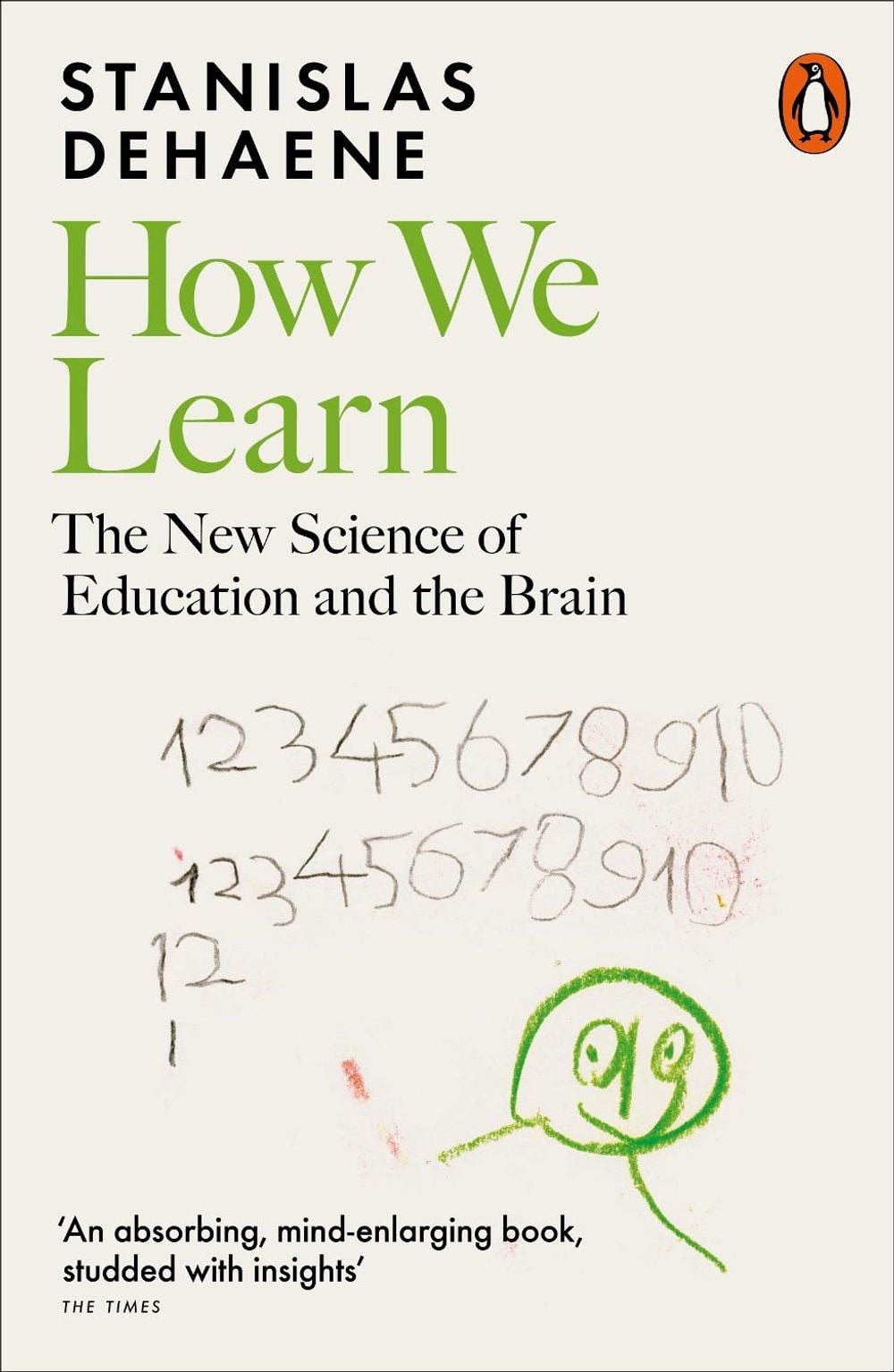
How We Learn
by Stanislas Dehaene
An illuminating dive into the latest science of how we learn - and how we do it better than machinesIn today's technological society, with an unprecedented amount of information at our fingertips, learning plays a more central role than ever. In How We Learn, Stanislas Dehaene decodes its biological mechanisms, delving into the neuronal, synaptic, and molecular processes taking place in the brain. He explains why youth is such a sensitive period, but also assures us that we can enhance our learning and memory at any age. We can all \"learn to learn\" by taking advantage of the four pillars of the brain's learning algorithm: attention, active engagement, error feedback, and human brain is an extraordinary machine. Its ability to process information and adapt to circumstances is unparalleled, and it remains the best source of inspiration for recent developments in artificial intelligence. How We Learn finds the boundary of computer science, neurobiology, and cognitive psychology to explain how to make the best use of the brain's learning algorithms, in our schools and universities as well as in everyday life.
Paperback
English
Brand New
Review
This is an absorbing, mind-enlarging book, studded with insights ... Could have significant real-world results. -- James McConnachie * Sunday Times *
An entertaining survey of how science from brain scans to psychological tests is helping inspire pedagogy. Dehaene challenges many tropes [and] describes much of his own pioneering work ... Well translated from the French with some touching references to his upbringing, from the cult film La Jetée to the writing of Daniel Pennac. -- Andrew Jack * Financial Times *
An expert overview of learning ... Dehaene's fourth insightful exploration of neuroscience will pay dividends for attentive readers. * Kirkus *
Review Text
This is an absorbing, mind-enlarging book, studded with insights ... Could have significant real-world results.
Review Quote
This is an absorbing, mind-enlarging book, studded with insights ... Could have significant real-world results.
Promotional "Headline"
An illuminating dive into the latest science of how we learn - and how we do it better than machines
Details
