Global Shipping
Combine your items!
Gemstone Expert
20+ years experience
Secure
Safe Packaging
Risk Free
30-Day Returns
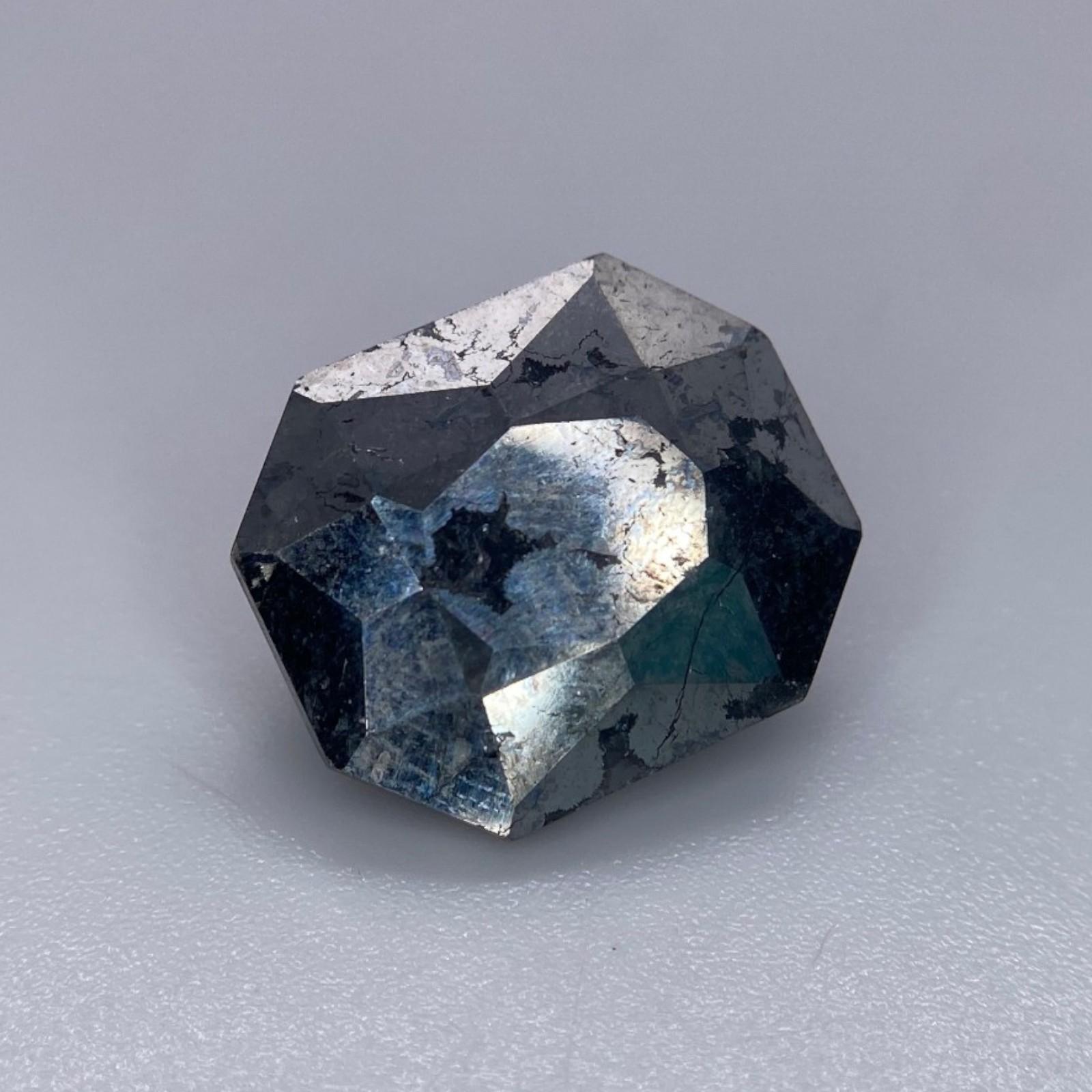
24.60 ct COBALTITE - CANADA
SKU: COBA0007 | Location: Vault 1
verified
- ✓ Expert Verified Gemstone
- ✓ Fast Handling & Shipping
- ✓ Secure Vault Packaging
Cobaltite represents the "metallic-mirror" peak of the sulfide world. A cobalt arsenic sulfide, it is a species I have always respected for its high-vibration "steel-grey" luster and its incredible cubic to pyritohedral symmetry. For the specialist, a top-tier Cobaltite is a prize of elemental concentration ; it offers a metallic luster and a "solid" presence that makes it a true "high-density" asset for the systematic vault. As an artist, I find the way Cobaltite mimics the geometry of Pyrite but with a sophisticated, "cool-toned" silver-pink hue to be a masterpiece of natural alchemy.
The Heritage & Discovery
Historical Significance: Cobaltite is a vital species for understanding the primary mineralization of hydrothermal veins and contact metamorphic deposits. Historically, it was a major ore of cobalt—the "goblin" element named by miners who found its arsenic-rich fumes difficult to process. In the world of fine minerals, it is celebrated for its natural, "sculptural" perfection . It stands as a symbol of structural integrity, bridging the gap between heavy industrial ores and the elite world of "sharp-edged" collector crystals. It serves as a reminder that the most "formidable" chemical combinations can yield the most "precise" geometric results.
Discovery: The mineral was formally named in 1797 by Martin Heinrich Klaproth , derived from the German Kobold , referring to the "underground spirits" or goblins of medieval mining lore. Scientifically, it is a member of the cobaltite group and is closely related to Gersdorffite and Pyrite. Its discovery in the Håkansboda and Tunaberg regions of Sweden provided mineralogists with the first clear look at the species' potential for "mirror-bright" pyritohedrons. My own respect for this material grew from observing its "steely" brilliance ; specifically, when the faces are untarnished, they reflect light with a "crispness" that is unmistakable to the trained eye.
Important Mines: The undisputed world capitals for the finest, "pyritohedral" Cobaltite are the Håkansboda and Tunaberg mines in Sweden . These classic European specimens set the global benchmark for crystal size and luster. I also have a high regard for the spectacular "massive-to-crystalline" finds from the Cobalt District in Ontario, Canada , and the rare, "sharp" cubes from the Bou Azzer district in Morocco . For the vault, I prioritize the Swedish material for its unmatched "mirror-finish" and its legendary status in historical mineralogy.
Mineralogical Profile
Description: Cobaltite is a cobalt arsenic sulfide that crystallizes in the orthorhombic system (though it frequently appears isometric/cubic due to pseudomorphism or twinning). It sits at a 5.5 on the Mohs scale , making it a relatively hard and durable mineral, though its arsenic content requires handled with professional care. It is characterized by its metallic luster and its unmistakable, "silver-white" to "reddish-grey" color palette.
One of its most identifying traits is its perfect cubic cleavage and its high specific gravity SG approx 6.33, making it feel remarkably "heavy" for its size. It has an opaque diaphaneity and a "grey-black" streak. Because it forms in high-temperature hydrothermal environments, it is often found in association with Chalcopyrite, Arsenopyrite, and Erythrite (its "cobalt-bloom" oxidation product). When I select a piece for the collection, I look for "razor-sharp" edges and a lack of surface oxidation, as these highlight the sophisticated, three-dimensional geometry of the mineral's growth. It is a dense, high-vibration mineral that offers a unique, "steely-neon" beauty unlike any other sulfide species.
Chemical Formula: CoAsS
Gemstone Specifications
| Gem Variety | Cobaltite |
| Origin | Canada |
| Weight | 24.60 carats |
| Color | Not Specified |
| Dimensions | 15.5 mm x 13.2 mm x 7.9 mm |
| Shape | Octagon |
| Treatment | No treatment |
| Certificate | On Request |
Verified history from our original eBay account.
Secure Global Logistics To ensure total legal compliance and security for high-value assets, all logistics are managed by my authorized agent in Bangkok: Asama James (Business Reg: 3100905529191).
- Origin: Items are dispatched directly from our secure facility in Bangkok, Thailand.
- Dispatch Time: We ship within 1-3 business days of cleared payment.
- Combined Shipping: We offer combined shipping for multiple acquisitions. Please request a "Combined Invoice" before completing payment to receive your shipping discount.
- Customs & Duties: International buyers are responsible for any import duties, taxes, or VAT charged by their destination country. These are not included in the item or shipping price.
100% Collector Satisfaction Guarantee I stand behind the scientific accuracy and quality of every stone in the vault.
- Returns: We accept returns within 30 days of receipt.
- Condition: The gemstone must be returned in its original, unaltered condition.
- Resolution: If you encounter any issues with your acquisition, please message me directly. My goal is to work out a solution that ensures you are 100% satisfied with your experience.
Secure Payment. We accept all major payment methods through eBay's secure checkout system, including Credit Cards, PayPal, Apple Pay, and Google Pay.
Personal Verification & Certification
- Identity: Every stone is personally inspected by me. I take scientific accuracy seriously; however, with hundreds of species in the vault, I remain open to professional dialogue and corrections from fellow gemologists.
- Laboratory Certification: For "Investment Grade" stones, certifications from world-renowned labs (AIGS, GRS, etc.) can be obtained upon request.
- Note: Lab processing can take up to 2 months.
- Costs: The buyer covers lab fees; a copy of the official laboratory invoice will be provided for transparency.
- Visual Accuracy: We utilize professional macro-photography to reveal the "soul" of the gem. While monitor settings may vary, we strive for 100% visual fidelity to the stone's true appearance.
Welcome to Freakingcat's Private Vault
20 Years of Expertise | 15,600+ Positive Reviews | 100% Feedback
Known to the eBay community since 2003 as Freakingcat, I have spent two decades curated a premier private collection of rare minerals. Now based in Bangkok, Thailand—the heart of the gem trade—I am offering these hand-selected specimens to you directly.
Note on our New Account: eBay policies prevent me from transferring my historical feedback to this Thai-based venture. While our score starts fresh, my legacy of trust remains.
Secure & Professional: To ensure full legal compliance and global shipping reliability, all logistics are managed by my trusted agent and partner of 20 years, Asama James (Business Reg: 3100905529191).
The account is new; the passion and expertise are 20 years deep. Welcome to the Vault.