
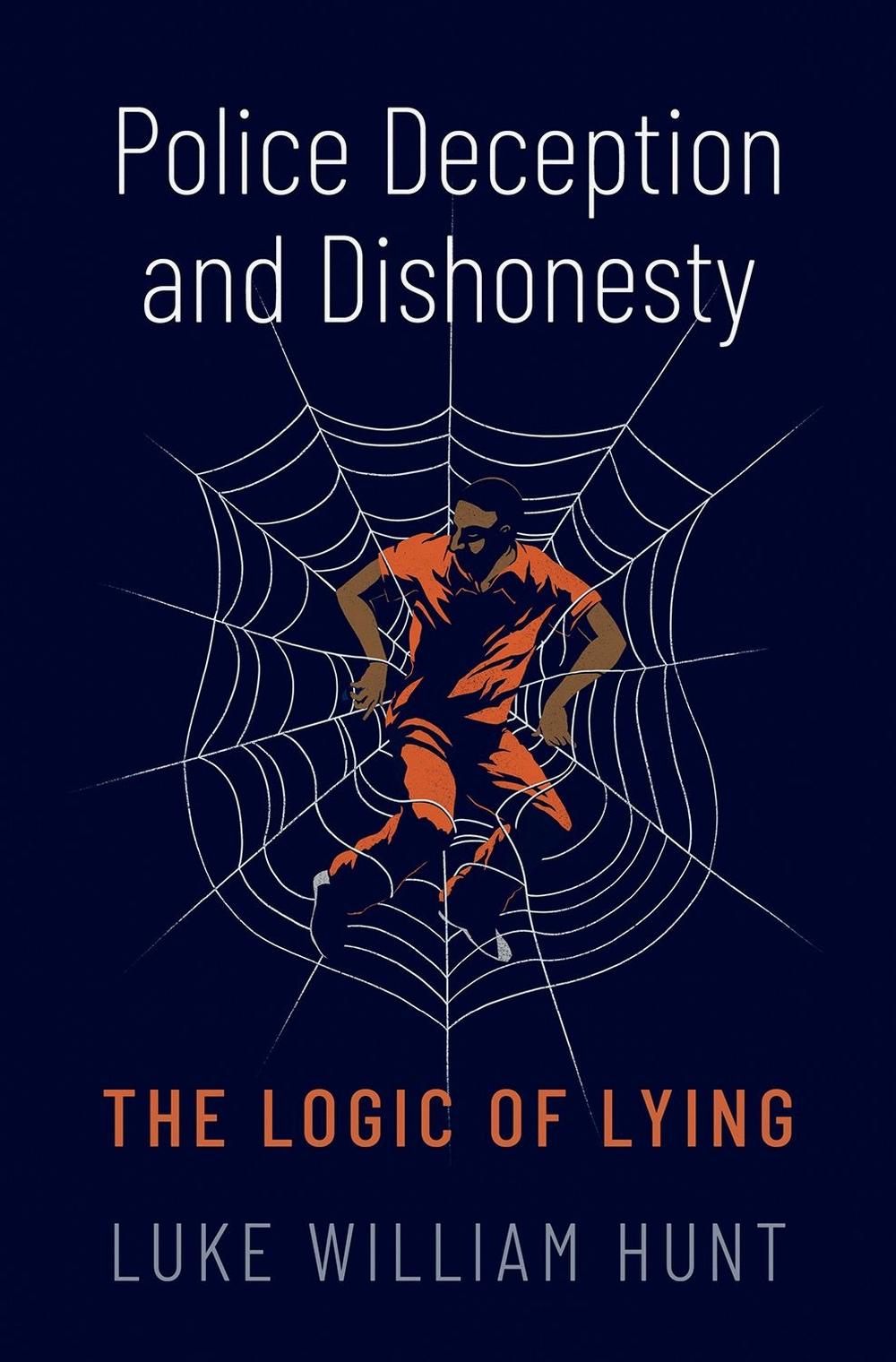
Police Deception and Dishonesty
by Luke William Hunt
Luke William Hunt is a philosophy professor and former FBI Special Agent. In Police Deception and Dishonesty, he evocatively illustrates how the police's widespread use of proactive deception and dishonesty is inconsistent with fundamental norms of political morality. Drawing on his experience, a range of literature, and case studies regarding interrogations, undercover operations, pretextual detentions, and other common scenarios, Hunt makes a compelling case that many proactive tactics erode public faith in the police institution and weaken the police's legitimacy.
Hardcover
English
Brand New
Publisher Description
Cooperative relations steeped in honesty and good faith are a necessity for any viable society. This is especially relevant to the police institution because the police are entrusted to promote justice and security. Despite the necessity of societal honesty and good faith, the police institution has embraced deception, dishonesty, and bad faith as tools of the trade for providing security. In fact, it seems that providing security is impossible withoutusing deception and dishonesty during interrogations, undercover operations, pretextual detentions, and other common scenarios. This presents a paradox related to the erosion of public faith in the policeinstitution and the weakening of the police's Police Deception and Dishonesty, Luke William Hunt--a philosophy professor and former FBI Special Agent--seeks to solve this puzzle by showing that many of our assumptions about policing and security are unjustified. Specifically, they are unjustified in the way many of our assumptions about security were unjustified after the 9/11 terrorist attacks, when state institutions embraced a variety of brutalrules and tactics in pursuit of perceived security enhancements. The police are likewise unjustified in their pursuit of many supposed security enhancements that rely on proactive deception, dishonesty, and badfaith. Hunt shows that there are compelling reasons to think that the police's widespread use of proactive deception and dishonesty is inconsistent with fundamental norms of political morality regarding fraud and the rule of law. Although there are times and places for dishonesty and deception in policing, Hunt evocatively illustrates why those times and places should be much more limited than current practices suggest.
Table of Contents
PrefaceThe Logic of Lying: Five Presumed Justifications for Police DishonestyIntroduction: On Beating a Broken Bone with a BootPART I THE IVORY TOWER1. Force and Fraud in the World (and the Nine Circles of Hell)Five Questions and Answers Explored in Chapter 11. On the Nature of Law (and Cannibalism)2. Universalistic Positive Morality (and Infanticide)2. Good Faith PolicingFive Questions and Answers Explored in Chapter 21. Truth2. Good Faith3. Concrete Agreements and Fraud4. Social Contracts and Institutional Good FaithInterlude: From THE IVORY TOWER to THE STREETFive Questions and Answers Explored in the Interlude1. Values2. Methods3. Other Approaches4. TrustPART II THE STREET3. Case Studies: Fraud and Deception as Law Enforcement MeansFive Questions and Answers Explored in Chapter 31. A Preliminary Objection and Case Study: International Ruse2. Case study: Covering up3. Case Study: Controlling Citizens4. Case Study: Catching Criminals5. Case Study: Coercing Confessions6. Case Study: Convicting Citizens4. Case Studies: Honesty, Transparency, and DemocracyFive Questions and Answers Explored in Chapter 41. A Preliminary Objection and Case Study: FISA Fiasco2. Case Study: Pandemic Privacy and Third-Party-Opacity3. Case Study: Investigating Anarchists and Abortionists4. Case Study: Pre-crimeEpilogue: Beyond Basketball - From Proactive to ReactiveThe Logic of Legitimacy: Five Justifications for Police HonestyIndex
Review
Luke Hunt's Police Deception and Dishonesty offers a penetrating exploration of a problem that has received less attention than that of outright police violence, but is arguably even more pervasive and pernicious. Employing his well-trained philosophical chops, and drawing on his experience as a former FBI special agent (surely, an exceptionally rare combination), Hunt offers a compelling argument for the vital role that truthful and honest policing needs to play in a liberal society. * Stuart Green, Distinguished Professor of Law, Rutgers University *
Luke Hunt is one of today's leading philosophers on policing. In Police Deception and Dishonesty, he weaves together philosophy and real-world experience to show how many deceptive practices widespread in policing, whatever their short-term benefits, can have devastating consequences for police legitimacy. This book is essential reading for philosophers and practitioners alike. * Ben Jones, Assistant Director and Professor, Rock Ethics Institute, Public Policy, Penn State University *
The book is especially powerful because it provides context for the widespread deception and ultimate violations of the rule of law. Hunt details the ways in which scholars have ignored the impact of deception and instead have focused on the politics of deception. The conclusion is a must read for every scholar of the field in considering next steps regarding honesty in law enforcement. Hunt's work is powerful for a variety of ways but most notably because it lays a foundation and provides examples of how that foundation has impacted structures and institutions in law enforcement. Researchers can quickly see that there simply is not another book quite like this, making Hunt's work groundbreaking. * A. R. S. Lorenz, Choice *
Details
