
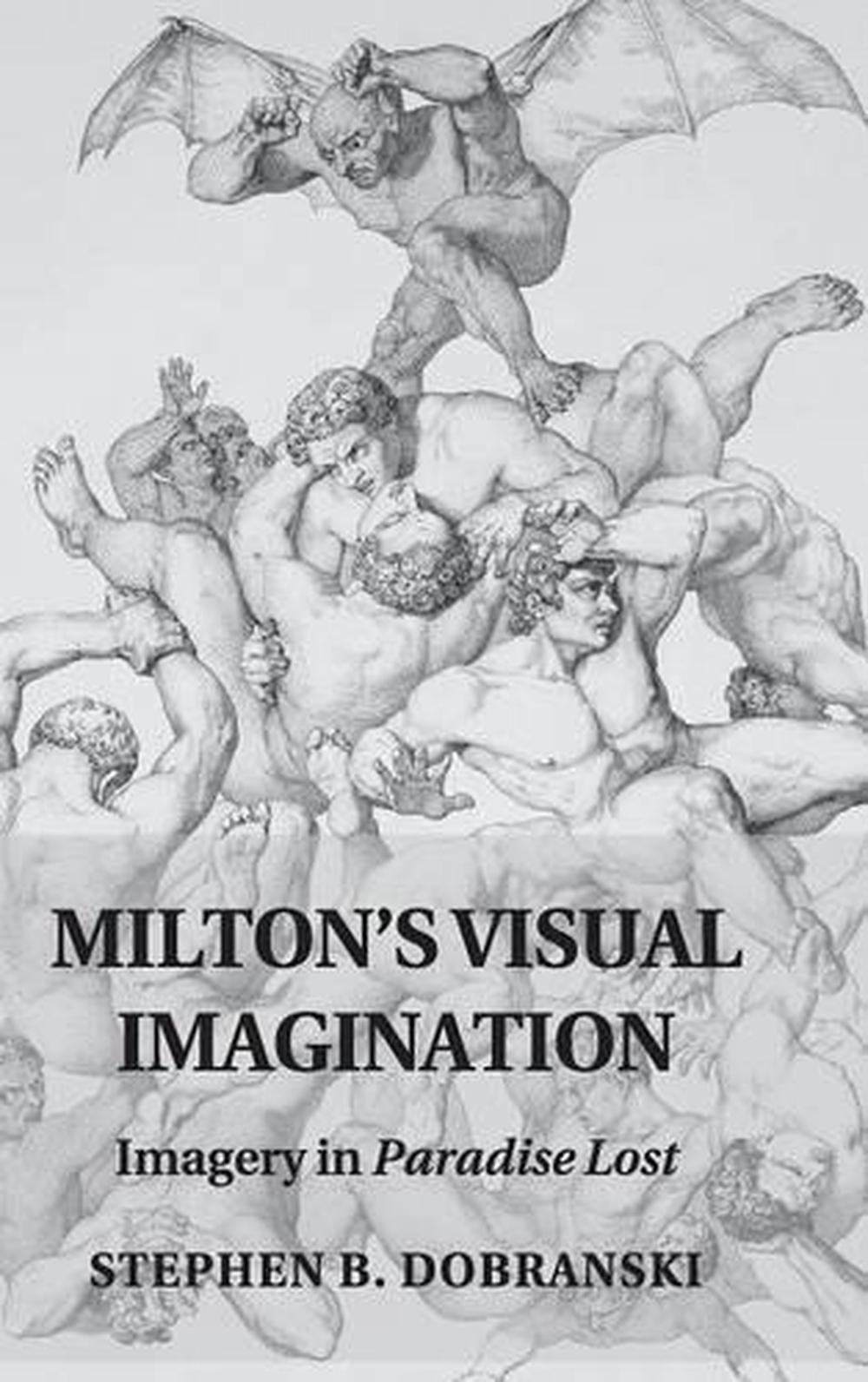
Milton's Visual Imagination
by Stephen B. Dobranski
Critics have traditionally thought of John Milton as an author who wrote for the ear more than the eye. In Milton's Visual Imagination, Stephen B. Dobranski proposes that, on the contrary, Milton enriches his biblical source text with acute and sometimes astonishing visual details.
Hardcover
English
Brand New
Publisher Description
Critics have traditionally found fault with the descriptions and images in John Milton's poetry and thought of him as an author who wrote for the ear more than the eye. In Milton's Visual Imagination, Stephen B. Dobranski proposes that, on the contrary, Milton enriches his biblical source text with acute and sometimes astonishing visual details. He contends that Milton's imagery - traditionally disparaged by critics - advances the epic's narrative while expressing the author's heterodox beliefs. In particular, Milton exploits the meaning of objects and gestures to overcome the inherent difficulty of his subject and to accommodate seventeenth-century readers. Bringing together Milton's material philosophy with an analysis of both his poetic tradition and cultural circumstances, this book is a major contribution to our understanding of early modern visual culture as well as of Milton's epic.
Table of Contents
1. Introduction: of things invisible; 2. Free will and God's scales; 3. Heaven's gates; 4. Pondering Satan's shield; 5. What do bad angels look like?; 6. Transported touch; 7. Clustering and curling locks; 8. Images of the future and the son.
Review
'Dobranski finds Milton to have drawn much more on the material, visible, workaday world around him, for the conveyance of those impossible descriptions, than has been recognized until now.' Roberta Klimt, The Times Literary Supplement
'Despite Dobranski's erudition and engagement with previous criticism, his prose is always lucid.' B. E. Brandt, Choice
'Readers will welcome Dobranski's careful readings and explanations of the images and their functions as well as his inclusion of many clearly reproduced illustrations. Milton scholars will appreciate his ongoing engagement with the critical history and present state of his subject. The book itself is notably readable. Dobranski explains many difficult points with admirable clarity. Thus, this study deserves and should find a wide audience of scholars and students.' Elizabeth Skerpan-Wheeler, Renaissance Quarterly
'Stephen B. Dobranski's splendid Milton's Visual Imagination: Imagery in 'Paradise Lost' draws upon the materialist turn in early modern studies, and specifically the vitalist turn in Milton studies, to confute an accusation prevalent since the days of Samuel Johnson: that Paradise Lost's visual imagery is impoverished. Dobranski's purpose, however, is not simply to demonstrate that Milton's imagery is vivid. Rather, he explicates the theological, cultural, and poetic import of the nature of visual imagery in Paradise Lost's Heaven, Hell, and Eden.' Katherine Eggert, SEL Studies in English Literature 1500–1900
'Milton's Visual Imagination has the strengths that we have come to expect from Stephen Dobranski's writing: sensitive close readings, careful research, and a staunch return to issues left unresolved or insufficiently considered by Milton scholars … The value of Milton's Visual Imagination lies in its eloquent, subtle demonstration of how images work in Milton's poem.' Karen L. Edwards, Modern Philology
'It is full of vividly presented material things that often cast direct or associative light on Paradise Lost. Dobranski always astutely positions his own claims in relation to those made by others... an extremely illuminating and thought-provoking book.' Colin Burrow, Milton Quarterly
Promotional
Milton's Visual Imagination contends that Milton enriches his biblical source text with acute and sometimes astonishing visual details.
Review Quote
'Dobranski finds Milton to have drawn much more on the material, visible, workaday world around him, for the conveyance of those impossible descriptions, than has been recognized until now.' Roberta Klimt, The Times Literary Supplement
Promotional "Headline"
Milton's Visual Imagination contends that Milton enriches his biblical source text with acute and sometimes astonishing visual details.
Description for Bookstore
Critics have traditionally thought of John Milton as an author who wrote for the ear more than the eye. In Milton's Visual Imagination, Stephen B. Dobranski proposes that, on the contrary, Milton enriches his biblical source text with acute and sometimes astonishing visual details.
Description for Library
Critics have traditionally thought of John Milton as an author who wrote for the ear more than the eye. In Milton's Visual Imagination, Stephen B. Dobranski proposes that, on the contrary, Milton enriches his biblical source text with acute and sometimes astonishing visual details.
Details
