
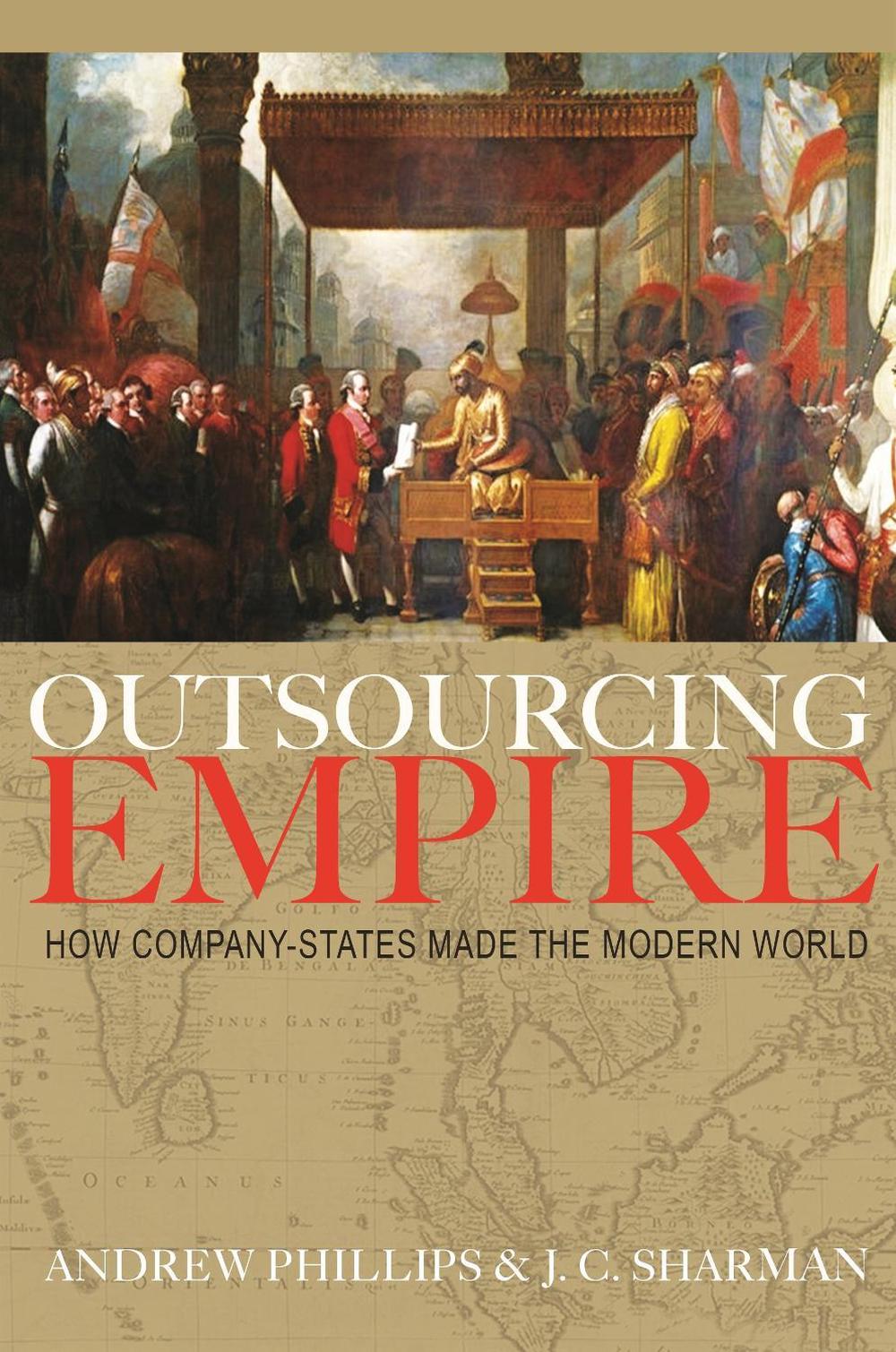
Outsourcing Empire
by Andrew Phillips, J.C. Sharman, Professor Andrew Phillips
How chartered company-states spearheaded European expansion and helped create the world's first genuinely global order.
Paperback
English
Brand New
Publisher Description
How chartered company-states spearheaded European expansion and helped create the world's first genuinely global order.From Spanish conquistadors to British colonialists, the prevailing story of European empire-building has focused on the rival ambitions of competing states. But as Outsourcing Empire shows, from the seventeenth to the twentieth centuries, company-states - not sovereign states - drove European expansion, building the world's first genuinely international system. Company-states were hybrid ventures: pioneering multinational trading firms run for profit, with founding charters that granted them sovereign powers of war, peace, and rule. Those like the English and Dutch East India Companies carved out corporate empires in Asia, while other company-states pushed forward European expansion through North America, Africa, and the South Pacific. In this comparative exploration, Andrew Phillips and J. C. Sharman explain the rise and fall of company-states, why some succeeded while others failed, and their role as vanguards of capitalism and imperialism.In dealing with alien civilisations to the East and West, Europeans relied primarily on company-states to mediate geographic and cultural distances in trade and diplomacy. Emerging as improvised solutions to bridge the gap between European rulers' expansive geopolitical ambitions and their scarce means, company-states succeeded best where they could balance the twin imperatives of power and profit. Yet as European states strengthened from the late eighteenth century onward, and a sense of separate public and private spheres grew, the company-states lost their usefulness and legitimacy.Bringing a fresh understanding to the ways cross-cultural relations were handled across the oceans, Outsourcing Empire examines the significance of company-states as key progenitors of the globalised world.
Review
"This fascinating book presents a bold and powerful argument, sustains a clear narrative, and deftly weaves together theory and history. Its comparative element, which brings together the activities of company-states in Asia, the Americas, and Africa, is a major strength, as is its assessment of why some company-states succeeded and others failed. Outsourcing Empire is a signal contribution to debates in historical international relations." - George Lawson, London School of Economics "This accomplished and valuable book introduces the neglected subject of company-states to the literature on the formation of the global political order. With clear and engaging writing, Phillips and Sharman make an important case for the impact of company-states and advances the history of global international relations and the chartered companies." - Emily Erikson, Yale University
Long Description
How chartered company-states spearheaded European expansion and helped create the world's first genuinely global order. From Spanish conquistadors to British colonialists, the prevailing story of European empire-building has focused on the rival ambitions of competing states. But as Outsourcing Empire shows, from the seventeenth to the twentieth centuries, company-states -- not sovereign states -- drove European expansion, building the world's first genuinely international system. Company-states were hybrid ventures: pioneering multinational trading firms run for profit, with founding charters that granted them sovereign powers of war, peace, and rule. Those like the English and Dutch East India Companies carved out corporate empires in Asia, while other company-states pushed forward European expansion through North America, Africa, and the South Pacific. In this comparative exploration, Andrew Phillips and J. C. Sharman explain the rise and fall of company-states, why some succeeded while others failed, and their role as vanguards of capitalism and imperialism. In dealing with alien civilisations to the East and West, Europeans relied primarily on company-states to mediate geographic and cultural distances in trade and diplomacy. Emerging as improvised solutions to bridge the gap between European rulers' expansive geopolitical ambitions and their scarce means, company-states succeeded best where they could balance the twin imperatives of power and profit. Yet as European states strengthened from the late eighteenth century onward, and a sense of separate public and private spheres grew, the company-states lost their usefulness and legitimacy. Bringing a fresh understanding to the ways cross-cultural relations were handled across the oceans, Outsourcing Empire examines the significance of company-states as key progenitors of the globalised world.
Details
