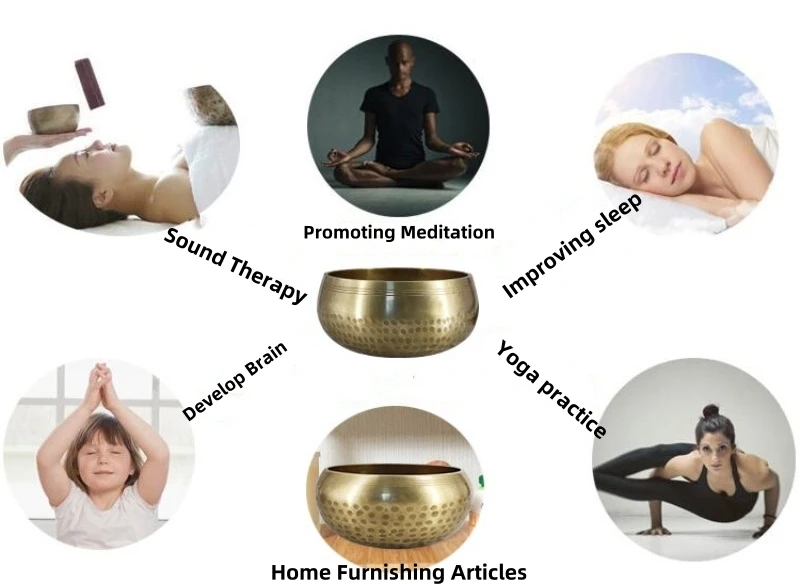
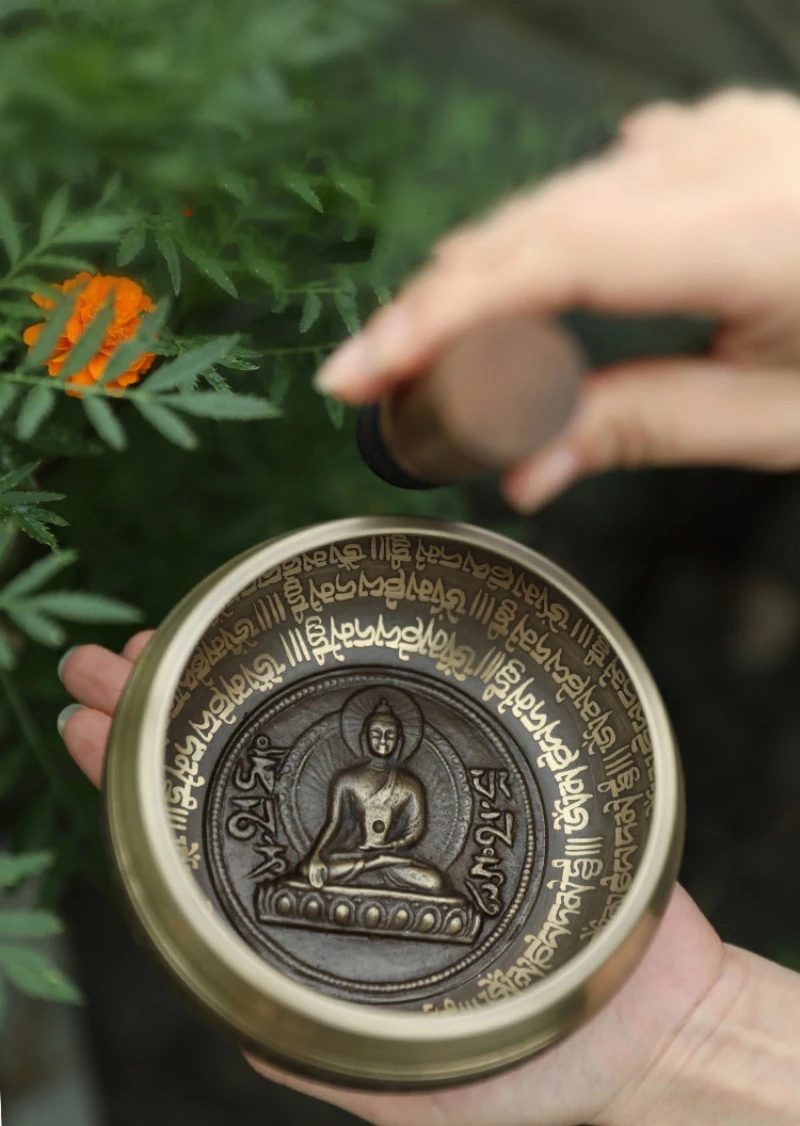
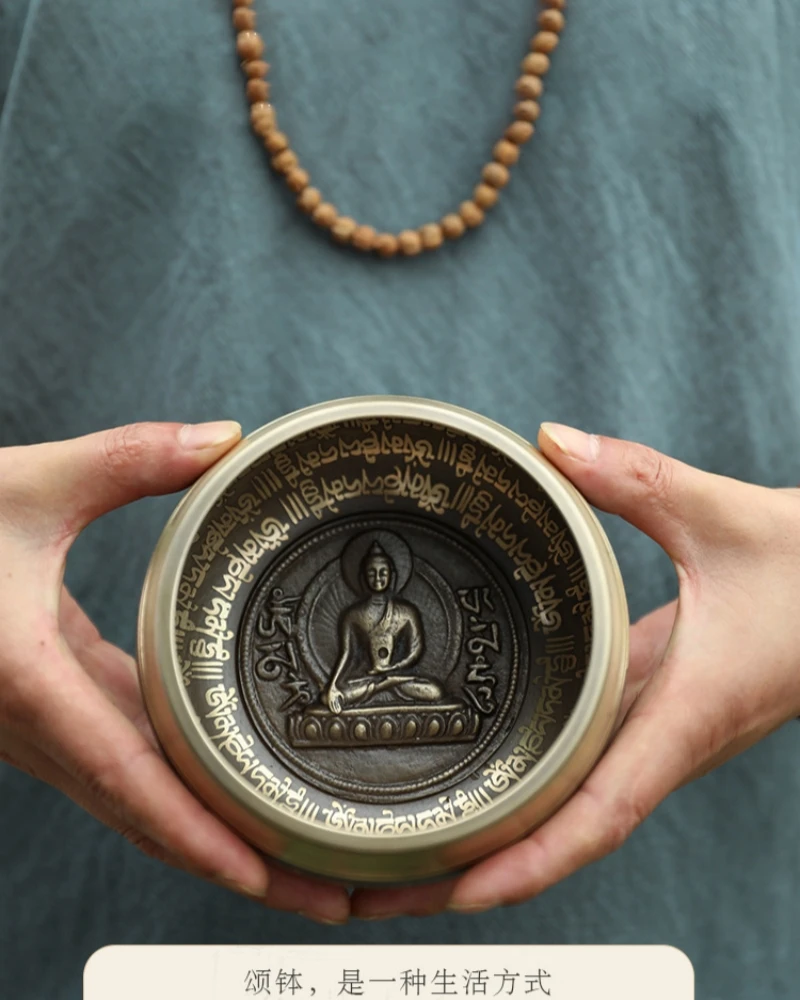
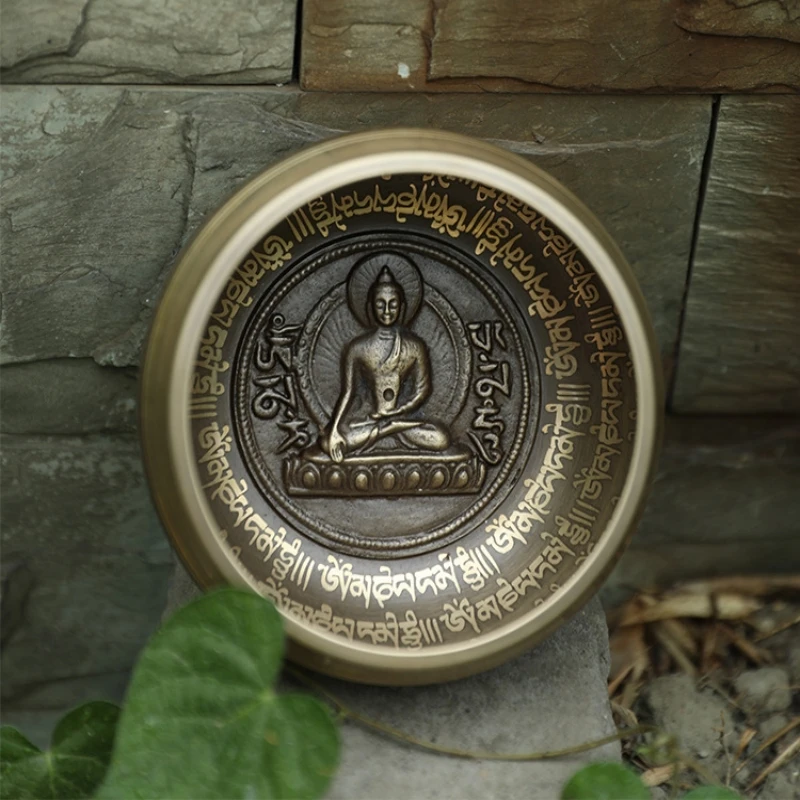
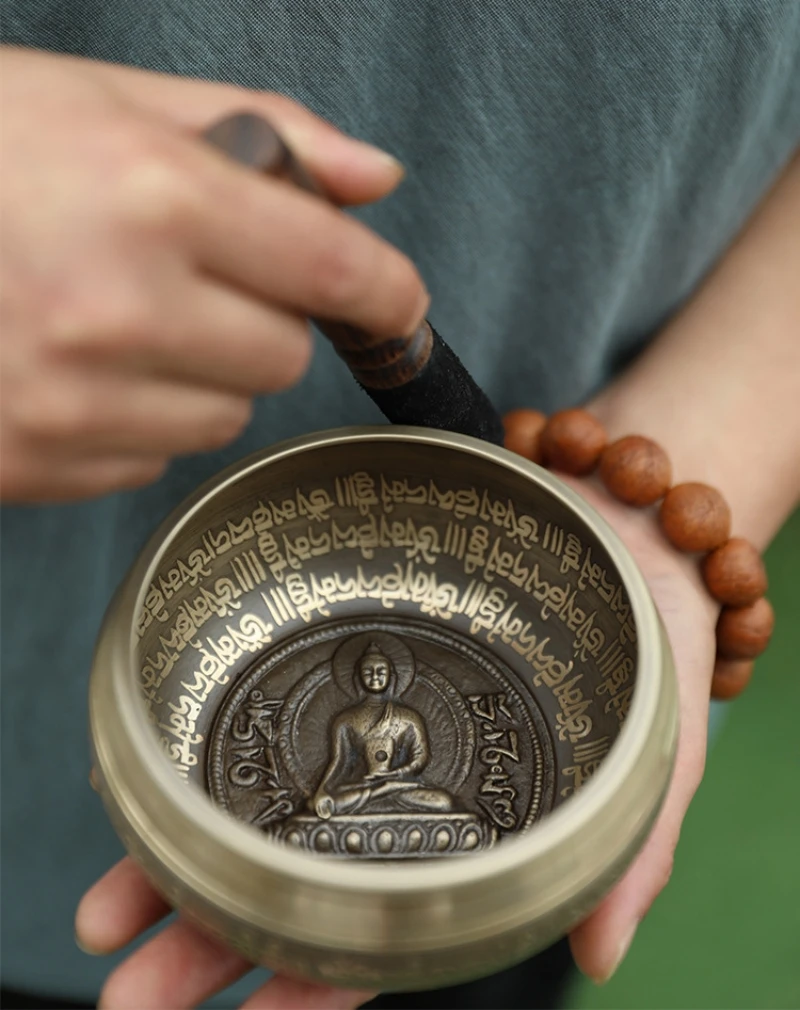
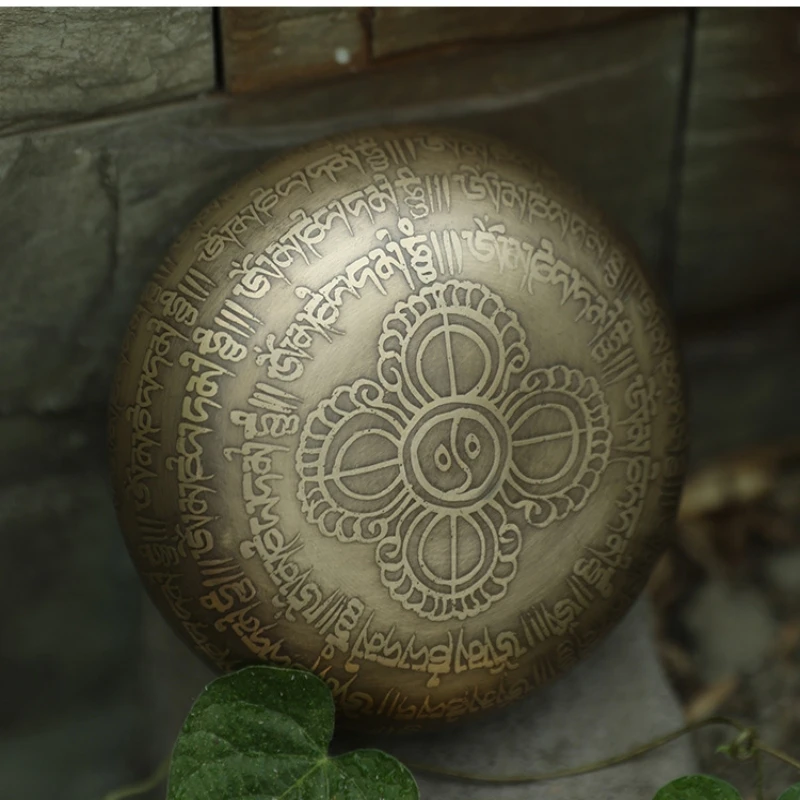
Nepal Handmade Resonant Bronze Singing Blows Yoga Therapy Meditación Cuenco tibetano Sound Healing Instrument Buddhist Blows Home Furnishing Articles, Ear cleaning, Foot massage, SPA, Peace of mind pure sound
Culture: Singing Bowl (also known as "Buddha's Voice Bowl")
1.Origins & Spread
Over 1,200 years ago, singing bowls were introduced from India to Tibet through cultural exchange. Later, Tibetan people brought them to Nepal as daily utensils and family heirlooms. In recent years, they have gained popularity for physical and spiritual healing. Although Tibetan singing bowls did not originate in Tibet, they earned their name due to their deep connection with Tibetan culture.
2. Discovery of Healing Properties
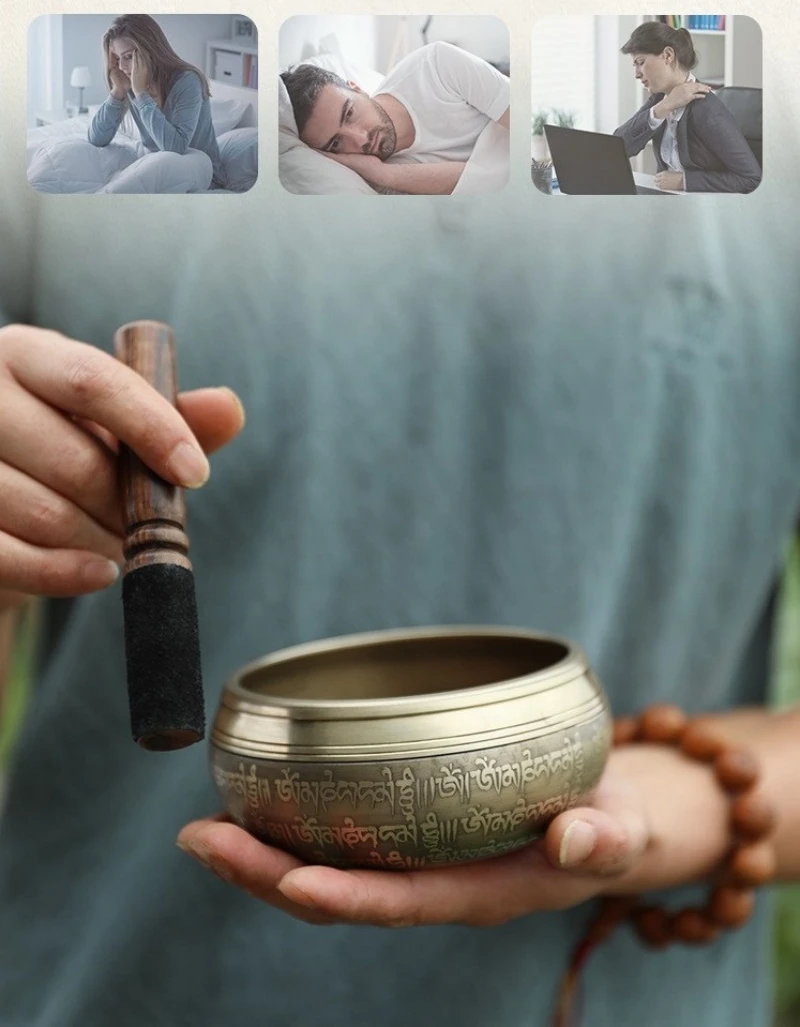
Tibetans discovered during daily use that when struck, these bowls—originally used as food containers—produced a mesmerizing, tranquil sound. This soothing resonance helps induce deep meditation, opening the door to self-healing by alleviating mental and physical suffering.
3. Material & Scientific Resonance
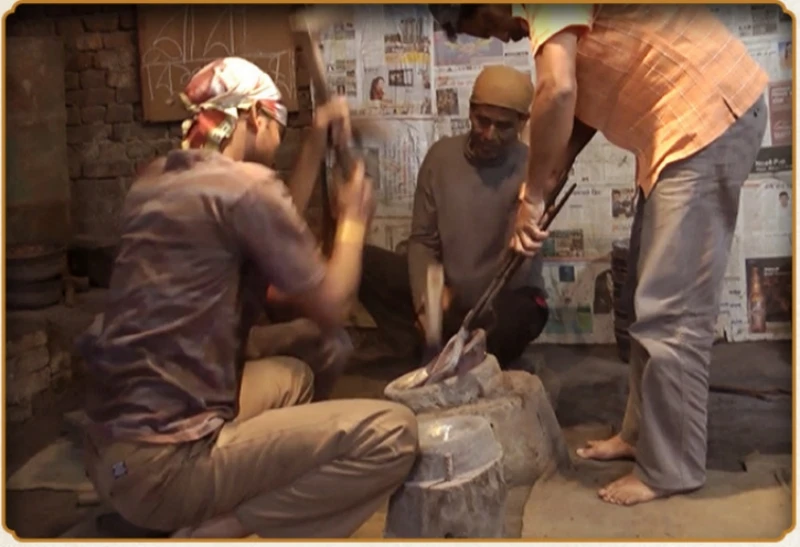
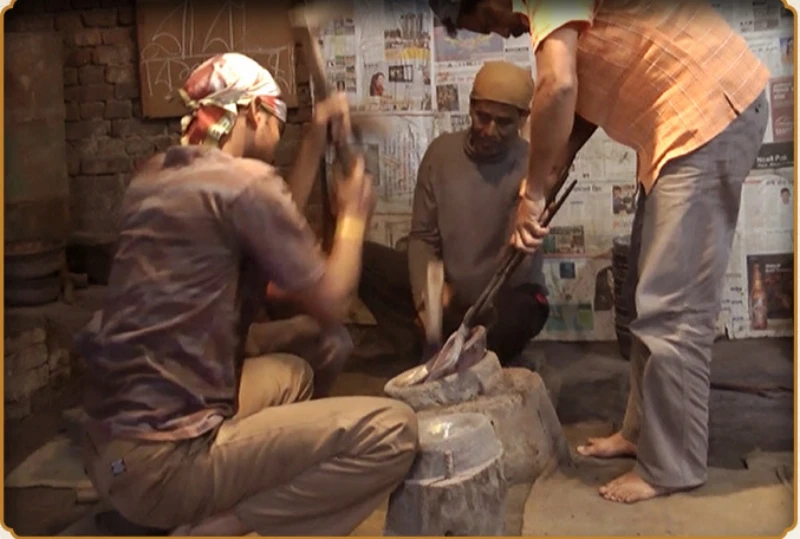
Singing bowls are crafted from metals mined in the Himalayas, later smelted and hand-hammered. Their sound resonates with the natural frequencies of the universe, influencing the vibrational frequency of nearby molecules. When a singing bowl is played, even the smallest atoms within our bodies respond to its vibrations—including our thoughts and consciousness.
4. Craftsmanship & Metallurgy
Singing bowls are made from an alloy of 5 to 12 metals, primarily copper. During production, the metals are melted, mixed, and cast into a rough mold. Due to the casting process, internal bubbles or uneven textures may occur. Thus, the bowl is reheated and meticulously hand-hammered to refine its structure, ensuring uniform thickness and dense, seamless layers.