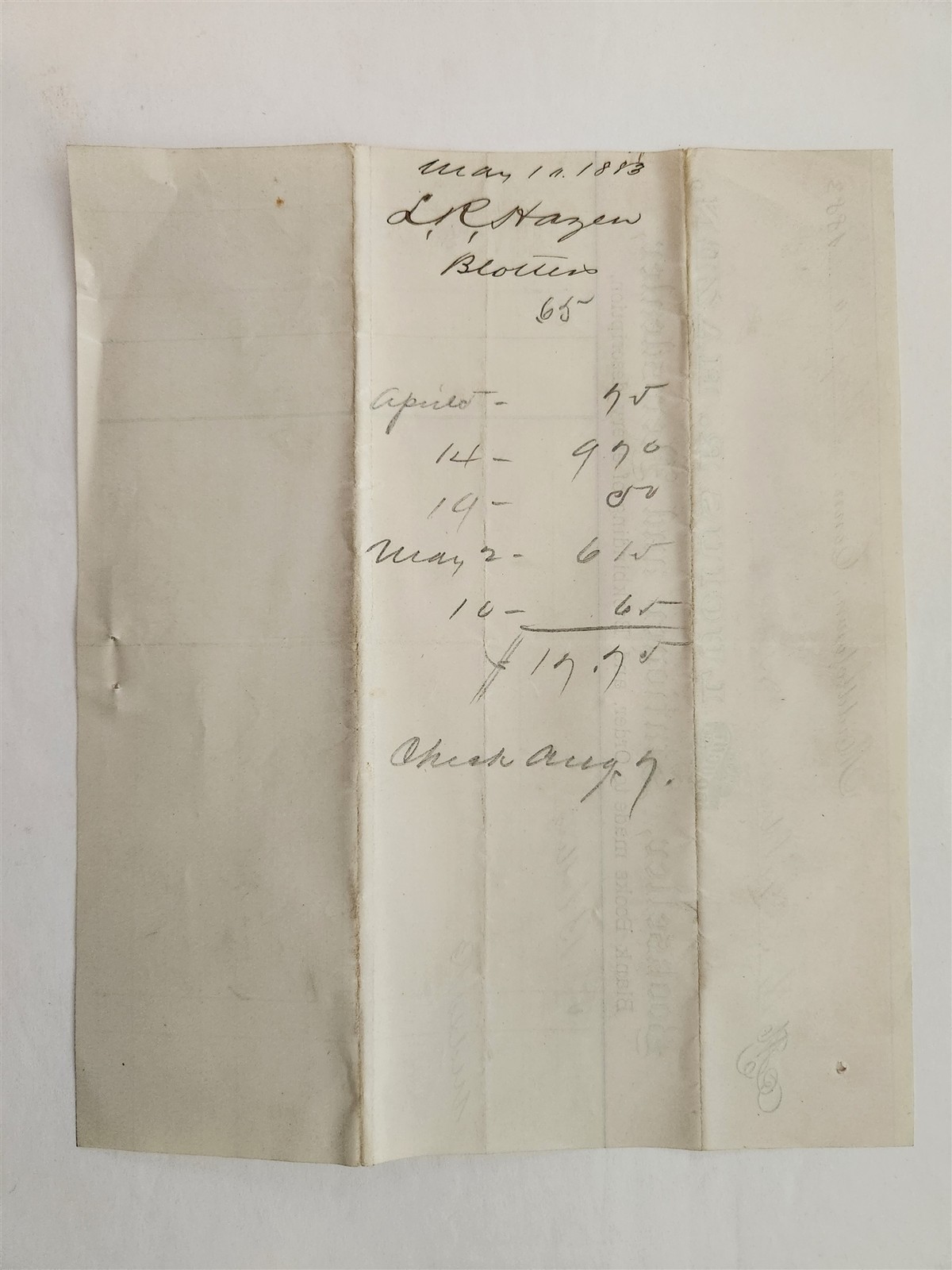
1883 antique LUCIUS R. HAZEN middletown ct INVOICE books stationery
SCROLL DOWN for MORE PHOTOS in DESCRIPTION
Click HERE to view or search ANTIQUE.COTTAGE listings.
Offered here is an original 1858 antique merchant invoice from RUFUS ELMER, a Springfield, Massachusetts dealer specializing in boots and shoes, operating in the years immediately preceding the American Civil War.
?? Document Details-
Dated November 26, 1858
-
Issued in Springfield, Mass.
-
Merchant: RUFUS ELMER
-
Printed trade block advertises:
-
Boots
-
Shoes
-
Rubbers
-
-
Location noted as Opposite American House
-
Handwritten line item for men’s thick boots
-
Price noted: $29.50
-
Shipped “this day by R.R. to Middletown”
-
Docketed on reverse in period ink
HISTORICAL CONTEXT – GILDERSLEEVE SHIPBUILDING
Founded in 1821 at Portland, Connecticut, the Gildersleeve yard became one of the most prolific wooden shipbuilding operations on the Connecticut River. Operating under S. GILDERSLEEVE & SON and related firm names, the company relied on suppliers throughout New York and New England for iron, lead, fittings, and finished components — relationships documented in surviving bills such as this example.
PROVENANCE
This billhead comes from a larger surviving group of original 19th-century Gildersleeve shipbuilding papers, including invoices, receipts, correspondence, and account statements. Other documents from this same Gildersleeve archive are listed separately unless otherwise sold.
S. GILDERSLEEVE & CO. was part of a long-established and highly productive Connecticut River shipbuilding family, operating from Portland, Connecticut (historically known as Gildersleeve) throughout much of the 19th century. The Gildersleeve shipyard was founded in 1821, during the rapid rise of American wooden ship construction, and became one of the most enduring family-run yards in New England.
The enterprise began under SYLVESTER GILDERSLEEVE, whose reputation as a skilled shipbuilder led to steady commercial success. As sons and relatives joined the business, the firm appeared under several closely related names, including S. GILDERSLEEVE & SON, S. GILDERSLEEVE & SONS, and S. GILDERSLEEVE & CO. These variations reflect generational involvement rather than separate companies, all referring to the same Portland, Connecticut shipbuilding operation along the Connecticut River.
During the 1830s through the 1850s, the Gildersleeve yard constructed a wide range of vessels—schooners, brigs, barques, and full-rigged ships—many of which entered important coastal and international trade routes. Notably, ships built by the Gildersleeves were used in the New York–Galveston trade, helping support commerce between the northeastern United States and the rapidly developing ports of Texas. By the mid-19th century, Gildersleeve-built vessels were sailing worldwide, underscoring the yard’s reputation for durable, well-crafted ships.
The shipyard remained active into the Civil War era, a period that challenged traditional wooden shipbuilders but also created new demands for maritime expertise. Across the 19th century, the Gildersleeve operation is credited with the construction of well over one hundred vessels, placing it among the more significant shipbuilding families in Connecticut’s maritime history.
Original surviving documents from S. GILDERSLEEVE & CO.—including correspondence, contracts, invoices, and shipyard paperwork—are scarce. Such materials offer a rare, firsthand view into the business operations of an American shipyard during the golden age of sail, making them especially desirable to collectors of maritime history, New England industrial history, and 19th-century commercial ephemera.
Gildersleeve family members associated with the shipbuilding firm:
-
SYLVESTER GILDERSLEEVE – Founder of the Portland, Connecticut shipyard (active beginning 1821)
-
HENRY GILDERSLEEVE – Prominent second-generation shipbuilder, active during the mid-19th century
-
SAMUEL GILDERSLEEVE – Associated with later firm operations and family business management
-
OLIVER GILDERSLEEVE – Documented member of the extended Gildersleeve family; appears in 19th-century records connected to the Portland operation and may be referenced in company paperwork
-
Additional sons and relatives participated as the firm expanded, reflecting a multi-generational family enterprise typical of major Connecticut River shipyards
Extra collector-interest notes:
-
The Connecticut River was one of the most important shipbuilding corridors in the United States during the 1800s, and Portland shipyards were central to that industry.
-
Gildersleeve shipyard records are held by major maritime institutions, indicating the firm’s recognized historical importance.
-
Company documents often survive only as isolated examples, making individual pieces attractive both as standalone artifacts and as research material for ship histories and genealogy.
[[Terry - LINK - ANCESTRY]
CONDITION: See listing description and photos.

- International buyers are responsible to pay VAT or other Taxes to their countries as required.
- eBAY collects and remits sales tax on behalf of several states. If you are a dealer, you can write to eBay to file a form to become tax exempt.
LOC:
LOC2: PAPERBOX32-MULTI-TMKTK-F250104BDS225G

Powered by SixBit's eCommerce Solution