HOT LISTING





Item Specifics:
- Condition:NEW
- Design / Type:PMGR
- Voltage:12
- kW:1.4
- Rotation:CCW
- Tooth Count:9
- Mounting Hardware Included:No
- Unit Finish:Same as OE
- Number of Pieces:1
- Country of Origin:CN
- Other Part #:M000T20171, M000T20175, 428000-2290, 428000-2291
Part Number:
- Saab: 32-00-6007
For subaru: 23300-AA460, 23300-AA570, 23300-AA49A
Denso: 428000-2290, 428000-2291
For mitsubishi: M000T20171, M000T20175
Lester: 17840, 17955
Arrowhead: SMT0292, SND0553
BBB Ind: 17840, 17955
Bosch Remanufactured: SR4132X
Carquest: 17840S, 17955S
TYC: 1-17840, 1-17955
Remy Remanufactured: 17378, 17526, 17475
J & N Automotive: 410-48181
Denso First Time Fit For : 280-4153, 280-4316, 280-0357
MPA: 17840, 19415
NAPA: 244-6921, 244-8509
NAPA Pro Series: 17840, 17955
Rayloc: 446921, 2448509
Wilson: 91-27-3346, 91-29-5681
Dixie Electric: S-8741, S-80375, S-80156
For mitsubishi Sales: M0T20171, M0T20175
Excel: 21398
FITS:
Saab 9-2X 2005-2006 H4 2.5L 2458cc A.T.
For subaru B9 Tribeca 2006-2007 H6 3.0L 3000cc
For subaru Forester 2014-2018 H4 2.0L 1998cc 122cid
For subaru Forester 2009-2010 H4 2.5L 2458cc A.T. wo/Turbo
For subaru Forester 2003-2008 H4 2.5L 2458cc A.T.
For subaru Forester 2009-2013 H4 2.5L 2458cc w/Turbo
For subaru Forester 2011-2018 H4 2.5L 2498cc 152cid A.T. wo/Turbo
For subaru Impreza 2012-2016 H4 2.0L 1995cc Automatic Trans.
For subaru Impreza 2004 H4 2.5L 2458cc A.T. EJ251
For subaru Impreza 2005-2007 H4 2.5L 2458cc A.T. EJ253
For subaru Impreza 2008-2010 H4 2.5L 2458cc A.T. EJ253; EJ255
For subaru Impreza 2006-2007 H4 2.5L 2458cc A.T. EJ255
For subaru Impreza 2011 H4 2.5L 2458cc A.T.; 2.5i; 2.5i Premium; Outback Sport EJ253
For subaru Legacy 2005-2007 H4 2.5L 2458cc A.T.
For subaru Outback 2005-2007 H4 2.5L 2458cc A.T.
For subaru Outback 2005-2007 H6 3.0L 3000cc
*NOTE: "M.T" Indicates Manual Transmission / "A.T" Indicates Automatic Transmission*
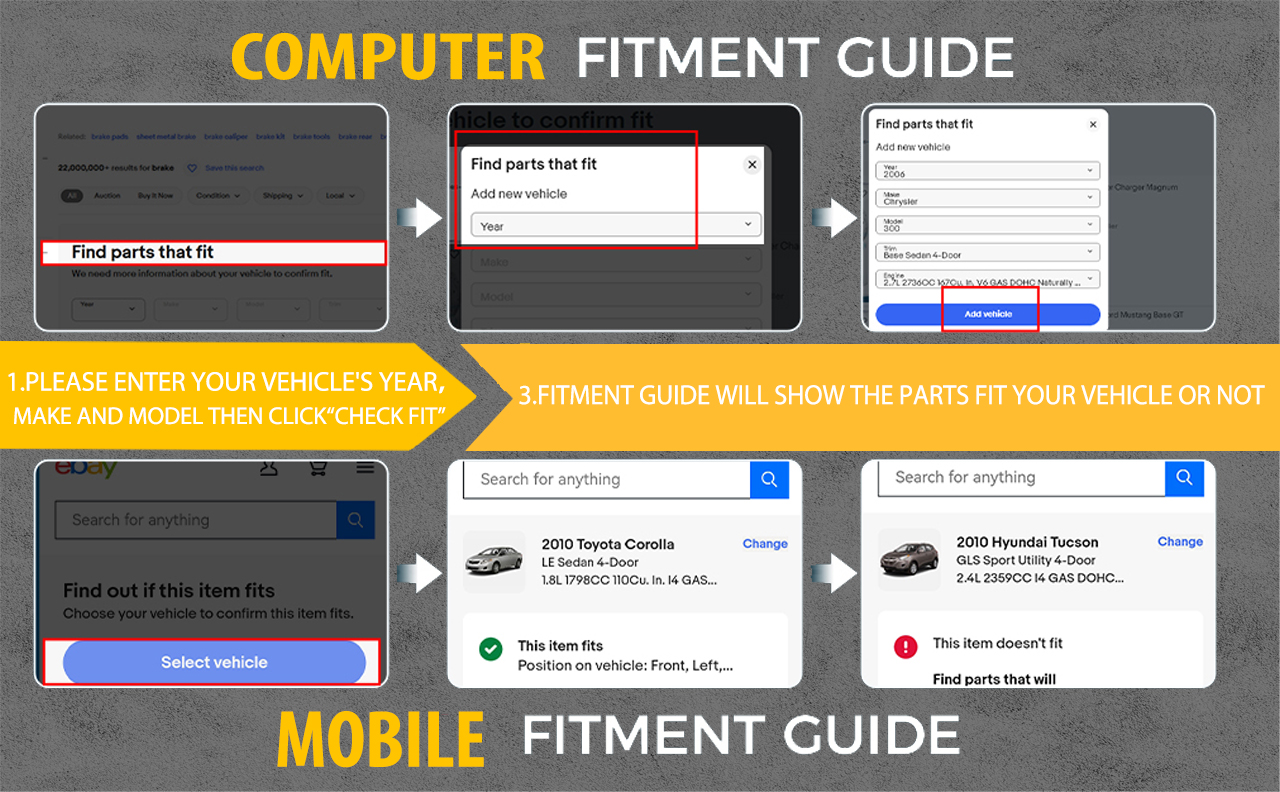
Please Reach Out To Customer Service To Confirm Fitment, If Necessary.
Package Includes:
- 1 x Starter
Starter (engine):
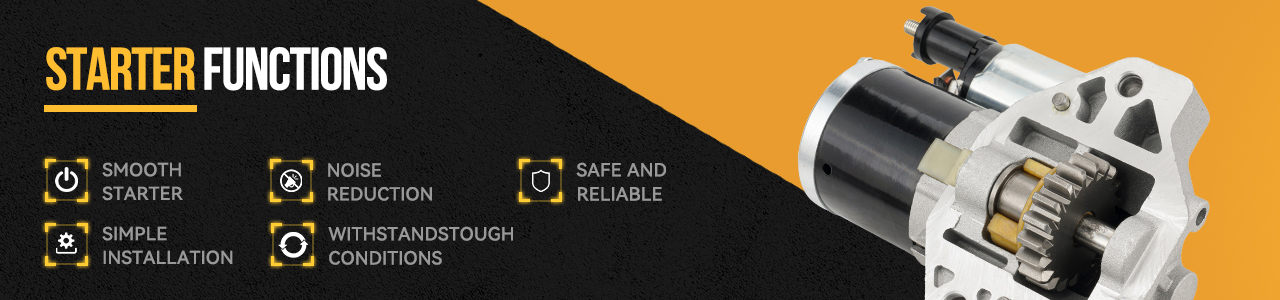
- A starter (also self-starter, cranking motor, or starter motor) is a device used to rotate (crank) an internal-combustion engine so as to initiate the engine's operation under its own power.Starters can be electric, pneumatic, or hydraulic. In the case of very large engines, the starter can even be another internal-combustion engine.
Fault check:
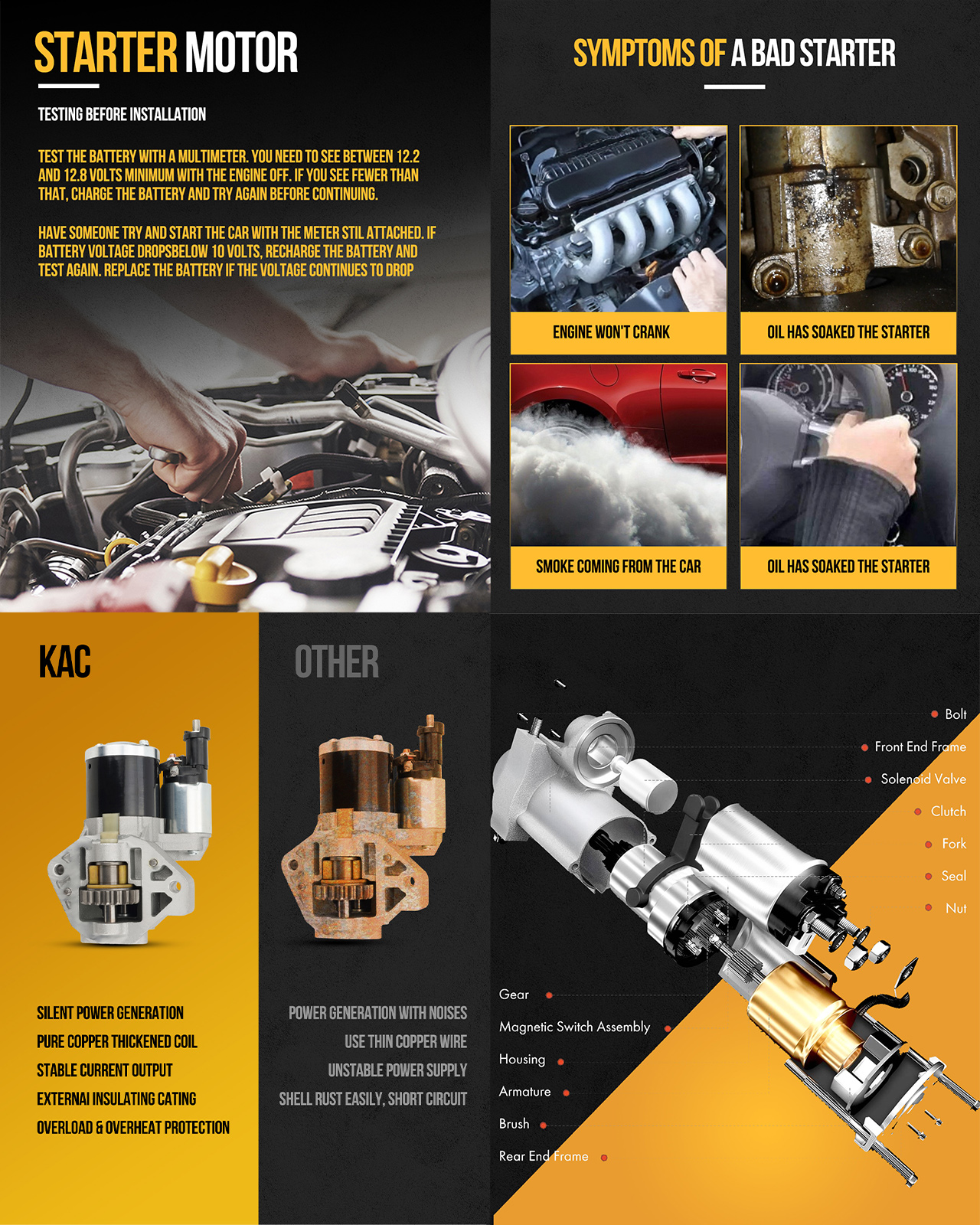
The starter often has failures and phenomena that cannot rotate or rotate slowly. In this case, check the following aspects:
- 1. The battery has no electricity or the electricity is weak, so the starter cannot rotate or rotate slowly.
- 2. The starter thread is loose or off, and the switch or adsorption switch fails.
- 3. The brush is worn out or the brush surface is not correct, and the spring is weak, resulting in poor contact of the rectifier.
- 4. Excitation coil or armature coil is short-circuited or disconnected.
- 5. The rectifier is fouled and the mica sheet is protruding, causing poor contact between the brush and the rectifier.Organization maintenance
- In the process of starting the engine, the starter must draw in 344~400Ah from the battery. Therefore, in order to prevent the battery from over-current or damage, the starting time should not exceed
- 5s. In winter, it is easy to start difficult to start. Multiple starting times should not be too long, and appropriate intervals should be left in each starting.
How to Install a Car Starter:
There’s never a convenient time for your vehicle’s starter to fail. A car starter's job is to kick over the engine in your car so your vehicle starts.When you find yourself with a vehicle that won’t start, there are a number of a number of issues that may be the culprit,but once you’ve narrowed it down to a faulty starter, you can replace it using just common hand tools.
Part 1: Removing a Bad Starter
(1).Disconnect the battery.
You will not need to remove the positive cable on the battery.
Always disconnect the battery before servicing the electrical system in your vehicle.
(2).Jack up the vehicle if need be.
Ensure you jack the vehicle up on firm, level ground.
(3).Locate the starter.
The smaller cylinder attached to the starter is the starter solenoid.
A wire should run directly from the positive terminal on the battery or from the fuse box under the hood to the top terminal on the starter solenoid.

(4).Disconnect the wiring to the solenoid.
In some cases, it may just be clips you need to disconnect for the wiring.
On some starters, you will need to loosen bolts or screws that hold the wires in place.
(5).Remove the starter retaining bolts then the starter.
Be sure to use the correct size socket, otherwise you risk damaging the bolts.
(6).Compare the new starter to the old one. Slide the starter into place.
If the two starters don’t look mostly identical, it may not be the correct starter for your vehicle.
New starter solenoids often come with four terminals, but can be used with only two.

Part 2: Installing a New Starter
(7).Insert the starter retainer bolts.
If the bolt does not thread properly, unscrew it and try again.
Make sure the bolts are tight so they can’t vibrate loose while the engine is running.
(8).Connect the wiring to the starter solenoid.
With the starter secured in place, reconnect the wiring you disconnected from the old starter onto the terminals on the new one. If your new solenoid has four terminals but your old one had two, only utilize the top and bottom terminal on the new solenoid. If your old one had four and the new one does as well, connect them to the same terminals they were connected to on the old one.
(9).Reconnect the battery.
With the starter installed and wired, reconnect the black cable to the negative terminal on the battery and tighten it in place. Insert the key into the ignition and attempt to start the vehicle.
If the vehicle fails to start with the new starter in place, ensure the battery is fully charged.

(10).Listen to the vehicle as you attempt to start it.
As you turn the key in the ignition, listen for the sounds the engine makes to help determine if you have an issue with your starter. If the engine makes no sound whatsoever, or you hear only a faint clicking, it may be because there isn’t enough power reaching the electric starter motor.
(11).Ensure the battery terminals are clean and secure.Charge your vehicle’s battery.
A weak connection from the battery can prevent the engine from starting.
Wear gloves when cleaning battery terminals to avoid getting battery acid on your skin.
If you suspect the battery may simply be low on power, try charging it using either a trickle charger or another vehicle to jump start it. Be sure to connect the red cable to the positive terminal on each vehicle and the black to the negative.
(12).Check to see the starter solenoid is bad.
If the test light does not light up, it means power is not reaching the starter motor due to a faulty solenoid or a dead battery.
If the test light does light up, it means the solenoid is good, but the starter itself may have failed.

Frequently Asked Questions:
(1).Why is my car starter burning out?
You likely cranked the starter for too long.
(2).I have to change the starter fairly often in my car. What could be causing this?
A leak of some sort could be fouling the starter if fluid is dripping on it. If that's the case,
replacing the starter doesn't fix the leak so it's only a matter of time before the new starter fails.
(3).What is the black wire connected to?
He black wire can be commonly associated with the wire that connects the battery to the ignition.
If this is not the wire that you are referring to then it could be a random wire that has been detached from your fuse box?
How big is this wire? If it is rather stout then that would be your battery cables. If it is a small wire then it could be several different things.
Follow it and find the origin of the wire, it could be a simple fix just take a look at it.
(4).What does a bad starter sound like?
In my case, there was very little noise when the ignition was turned, and all that was heard was a distinctive click.
One really common sign is if you see any smoke coming from the starter.
(5).If my car is grinding when I turn the key, does that mean I have a bad starter?
No. It's your flywheel. When you start your car the grinding noise would be your flywheel that's connected to the starter.
_01.jpg)
_02.jpg)
_03.jpg)
NEW LISTING


On Feb 19, 2026 at 22:03:13 PST, seller added the following information: