|
Dutch
Colonial New York Silver Schilling
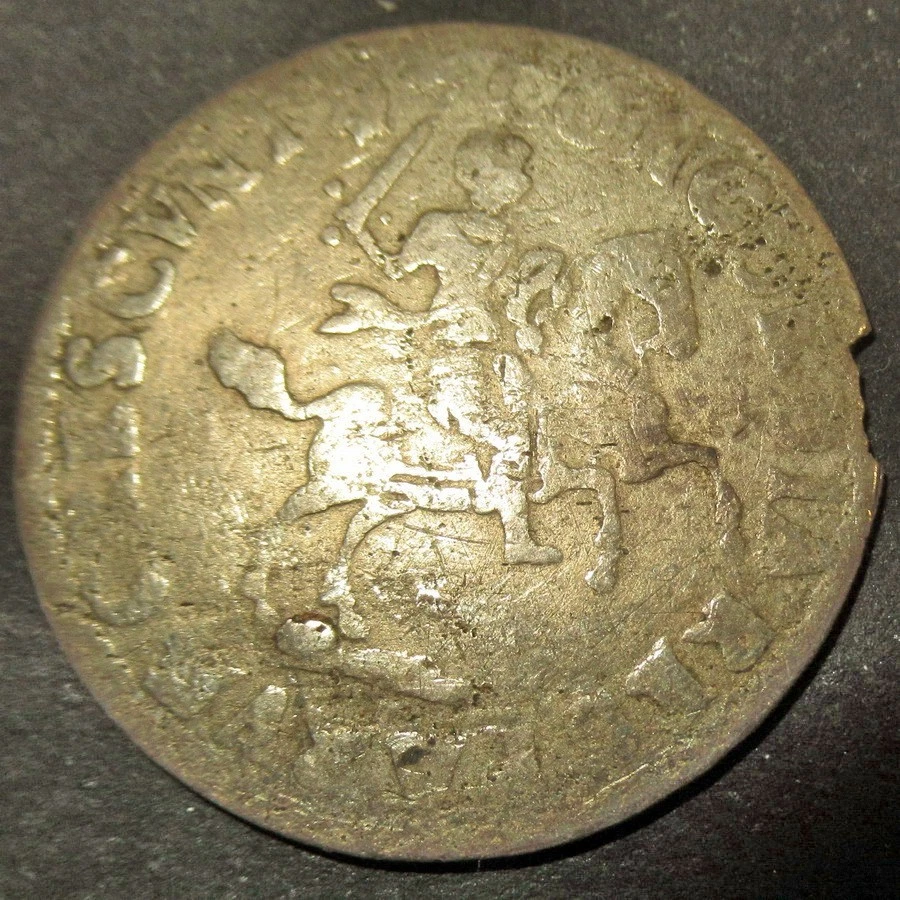
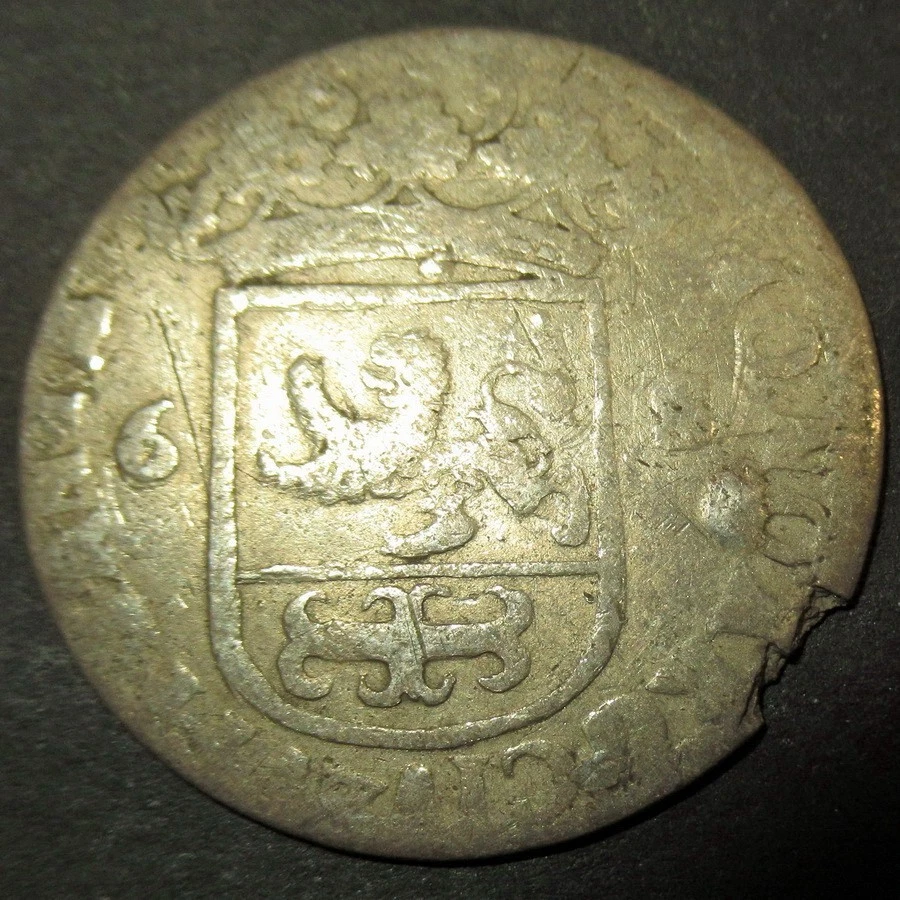
Rider Schilling 1691, Zutphen City
Mint
|
HENRY
HUDSON DISCOVERED MANHATTAN ON SEPTEMBER 11,
1609 AND EXPLORED MAINE, CAPE COD AND SAILED
SOME DISTANCE UP THE HUDSON RIVER, WHICH NOW
BEARS HIS NAME. THE DUTCH WOULD LATER CLAIM
THIS AREA AND ESTABLISH A COLONY AS NEW
AMSTERDAM, THOUGH IT IS SAID THAT HUDSON
HIMSELF GAVE THE NAME STATEN ISLAND (DUTCH:
STAATEN EYLANDT) TO THAT PART OF WHAT IS NOW
NEW YORK, IN HONOR OF THE STATES-GENERAL OR
PARLIAMENT OF THE NETHERLANDS. |
This coin is accompanied by a Certificate of
Authenticity!

|
Dutch Colonial Silver
New York Shilling- This amazing Silver coin
was minted over 300 years ago and is similar to
the ones used by the Dutch in the era when they
bought the island of Manhattan (present-day New
York City) for the equivalent of $24 in Dutch
coins. These were brought to the colonies by
the Dutch when they settled in New Amsterdam,
now New York. Because of that these are called
New York pennies and dimes. This is an
historical coin and it would make a great
addition to your collection.
Schelling - Dutch
Schilling in the 16th through the 18th century.
It was worth 6 stuiver.
The value often shown 6-S.
|
|
Zutphen
City, Silver
Knight Shilling
1691 |
|
Weight: 4.4 grams Size:
26mm Material: Silver |
|
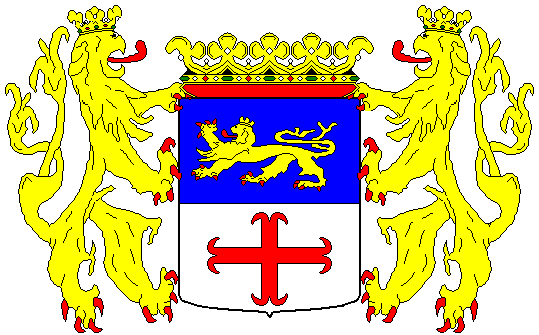
Zutphen is a city in the
province of Gelderland in the
Netherlands. It lies some 30 km
north-east of Arnhem, on the Eastern
bank of the river IJssel at the point
where it is joined by the Berkel. The
name Zutphen (first mentioned in the
eleventh century) appears to mean 'zuid-veen',
or in English, south-fen.
About 300 AD a Germanic settlement
was the first permanent town on a
complex of low river dunes. Whereas many
such settlements were abandoned in the
early Middle Ages, Zutphen on its
strategic confluence of IJssel and
Berkel stayed. After the incorporation
of the IJssel lands in Charlemagne's
Francia, Zutphen became a local center
of governance under a count. The Normans
raided and ravaged it about 900.
Afterwards a system of walls was built
to protect the budding town. Having
been fortified the town stood several sieges, specially
during the wars of freedom waged by the Dutch against
Spain, the most celebrated fight under its walls being
the one in September 1586 when Sir Philip Sidney was
mortally wounded. Taken by the Spaniards in 1587 by the
treachery of the English commander Rowland York, Zutphen
was recovered by Maurice, prince of Orange, in 1591, and
except for two short periods, one in 1672 and the other
during the French Revolutionary Wars, it has since then
remained a part of the Netherlands. Its fortifications
were dismantled in 1874. |
Colonial New York
Silver Knight Shilling
|
In the 1600’s, the “Golden Age” of Dutch history, the
Netherlands became a great sea and colonial power. This was
due, in no small part, to the Dutch East India Company (Vereenigde
Oostindishche Compagnie, or VOC, in Dutch). The VOC was the
first company in the world to issue stock, and by 1669, it
had become the richest private company the world had ever
seen, with over 150 merchant ships, 40 warships, 50,000
employees, and a private army of 10,000 soldiers. The VOC
assumed many of the functions of the government of the
Netherlands, including minting coins, which circulated
wherever the Dutch settled or traded.
Manhattan was discovered in 1609 (believe it or not, on
September 11, 1609) by Henry Hudson, commander of the VOC
ship, the Half Moon. The province of New Netherland (which
later became the State of New York) was created in 1624. Its
capital was New Amsterdam, which lay on the southern tip of
Manhattan— “purchased” from the Indians by Peter Minuit for
$24 in trade goods. Of course, the Indians had no concept of
land ownership, and only later discovered what the Dutch had
in mind when they were handing out trinkets.
Because the Dutch were instrumental in the
early development of New York, Dutch coinage
joined the Spanish, Portuguese, and British
coins that were used for daily transactions
all over the American colonies. One of the
coins used in old New York was the VOC
Silver knight shilling, now popularly known
as the original New York knight shilling.
These coins are all in Very Fine condition for the type,
with nice clear dates ranging from the 1630’s to the 1700’s,
which makes them all over 300 years old. This is a terrific
opportunity to acquire some interesting examples of an
important early American colonial coin type— at an extremely
low price. |

*** AUTHENTICITY GUARANTEED FOR LIFE ***
Shipping policy:
Economy Regular mail shipping: 3.99 Euro worldwide (buyer's risk for
lost by post!)
If the total value is above 50 Euro, Registered mail is required for
safety reasons.
Registered mail shipping:
11.99 Euro within Europe, 14.99 Euro worldwide, Combined
shipping accepted. |