Item Condition: **NOTE** : PAGES MAY SHOW AGE WEAR AND IMPERFECTIONS TO MARGINS, WITH CLOSED NICKS AND CUTS, WHICH DO NOT AFFECT AD IMAGE OR TEXT WHEN MATTED AND FRAMED.
DATE OF THIS ** ORIGINAL ** ADVERTISEMENT / ADVERT / AD:
DATE PRINTED ON ITEM: 1928
GREAT DECOR / ART FOR: HOME OFFICE BUSINESS SHOP STORE CASINO LOFT STUDIO GARAGE SHE SHED Carrozzeria Castagna is an Italian coachbuilding company based in Milan, Italy. Sources provide very different information about the company's origins. Some internet sources believe that it was founded in 1849 by Carlo Castagna. According to another account, the company goes back to the Milanese carriage manufacturer Paolo Mainetti, who was founded in 1835. Its owner took the then nine-year-old Carlo Castagna into his company as an apprentice in 1849 or 1864. Over the years, Castagna rose to senior positions, according to this source. In the 1890s he became director of the company and partner. Under his leadership, Mainetti gradually bought up local competitors Albini, Enrico Orsaniga and Eugenio Ferrari and merged them to form Ferrari, Mainetti & Orsaniga. In 1894 Carlo Castagna took over the majority share in this company. After a restructuring and the participation of new investors from the Milanese aristocracy the company was given the name Fabbriche Riunite die Carrozze già Mainetti, Ferrari ed Orsaniga di C. Castagna in 1901, which was shortened to Carrozzeria Carlo Castagna in 1906. In 1905, Castagna shifted the company's activities to the construction of automobile bodies. After Carlo Castagna's death in 1914, his son Ercole, born in 1885, initially took over the management of the company alone; In 1919, Carlo Castagna's younger son Emilio also joined the company. Emilio Castagna was responsible for designing numerous automobile bodies in the 1920s. At the beginning of the 1920s, the factory site reached a size of 32,000 m2. Castagna had 400 employees and produced around 100 bodies per year. After the company became the largest Italian body manufacturer in the 1930s, producing bodies for companies such as Isotta Fraschini, Duesenberg, Alfa Romeo, Lancia, and Mercedes-Benz, production of civilian automobiles came to a standstill at the beginning of the Second World War. In 1942, the factories in Milan were completely destroyed in a bombardment. Emilio Castagna, who had already left the family business in 1940, founded an independent company in Milan, Carrozzeria Emilio Castagna, which existed until 1960 and primarily produced small series based on Fiat models. After the end of the war, Ercole Castagna and the parent company moved into new production facilities in the Lombard community of Venegono Superiore. The attempt to build on the successes of the pre-war period failed. Castagna still designed and built some special bodies for Alfa Romeo and Lancia chassis, but given Italy's economic difficulties in the early post-war period, it did not find enough customers to continue the company permanently. In 1954 Carrozzeria Carlo Castagna ceased operations. The company still exist today somehow, and gained the awards of "Compasso d'oro" in 2018. Castagna began manufacturing automobile bodies in 1905. Following on from the customer base of Ferrari, Mainetti & Orsaniga, the automobile bodies were also intended for wealthy clients. From the beginning, Castagna produced for the Italian nobility; Later vehicles were also created for popes. The first car dressed by Castagna was a Fiat 24 HP for the Princess of Savoy. Further chassis came in the early phase from Mercedes-Benz, OTAV and Rochet-Schneider. Among the sensational creations from the pre-war period was a teardrop-shaped limousine called Aerodinamica, which was commissioned by the Milanese industrialist Marco Ricotti in 1914 and based on the ALFA 40/60 HP. During the First World War, the production of automotive bodies for private customers came to a standstill; Castagna built ambulances and trailers during the war years. After the end of the war, Castagna turned back to luxury automobiles. The company designed and built unique models and small series for chassis from Alfa Romeo, Fiat, Isotta Fraschini and Lancia, and more rarely also from Mercedes-Benz and Duesenberg. They also used innovative techniques such as bodywork made of aluminum sheets for their bodies. From 1929 onwards, station wagons were also created in the Woodie style adopted from the US, which the Castagna Milano company, which was founded in 1994, also repeatedly took up. In the second half of the 1930s, Emilio Castagna's designs were often influenced by the trend in aerodynamics; Numerous bodies with flowing, rounded lines were created, particularly on Alfa Romeo 6C chassis. Another special feature of Castagna were the so-called Vistotal bodies. These bodies had frameless windshields. With the side windows directly adjacent to it, which were also without frames, there was an undisturbed all-round view, which anticipated the effect of a panoramic window. For the Vistotal bodies, Castagna used a patent from the French body manufacturer Labourdette, which the latter had marketed under the name Vutotal since 1935. During the Second World War, Castagna produced military vehicles. After the end of the war, the company continued to produce a few unique pieces and small series upon customer request, increasingly in the pontoon style since the late 1940s. Advertising vehicles were also created, including a Simca designed as a sewing machine. Isotta Fraschini is an Italian luxury car manufacturer, also producing trucks, as well as engines for marine and aviation use. Founded inMilan, Italy, in 1900 by Cesare Isotta and the brothers Vincenzo, Antonio, and Oreste Fraschini, in 1955 it was merged with engine manufacturer Breda Motori and renamed F.A. Isotta Fraschini e Motori Breda. The firm was named for its founders, Cesare Isotta and Vincenzo Fraschini, who had been importing Mors and Renault automobiles as well as Aster proprietary engines since 1899. The company they founded as Società Milanese Automobili Isotta, Fraschini & C. on 27 January 1900 had the stated purpose to "Import, sell, repair cars". Prior to establishing their own products in 1904, Isotta and Fraschini assembled cars very similar to Renaults, with Aster engines. They differed from the real Renaults in having a neater underslung front radiator arrangement. The first automobile bearing this marque featured a four-cylinder engine with an output of 24 horsepower (18 kW). The car, driven by Vincenzo Fraschini, appeared in several races. In 1905, Isotta Fraschini gained notoriety in the Coppa Florio, where they entered a Tipo D with a 17.2-litre (1,050 cu in) 100 horsepower (75 kW) engine. For a short time in 1907, Isotta Fraschini merged with French automobile company Lorraine-Dietrich. The firm started making race cars using this same 100 horsepower (75 kW) engine, establishing the company's reputation and giving its name considerable cachet. It was also one of the first companies to successfully market cars with four-wheel brakes, following their invention by Arrol-Johnston of Scotland in 1909. They were also among the early pioneers of overhead cam (OHC), with an engine designed by Giustino Cattaneo. Isotta Fraschini introduced their Tipo 8, the first production automobile to be powered by a straight-eight engine, at the Paris Salon in 1919 and began delivering them to customers in 1920. With the growth of the wealthy middle class in North America in the 1920s, Isotta Fraschini marketed deluxe limousines to the new American aristocracy. Early film stars Clara Bow and Rudolph Valentino drove Isotta Fraschinis. A 1929 Tipo 8A Castagna Transformable is featured in the 1950 film Sunset Boulevard and another appears in the 1934 film Death Takes a Holiday with Fredric March. An Isotta Fraschini also makes a featured appearance in the 1946 film Without Reservations with John Wayne and Claudette Colbert. Also, an Isotta Fraschini was gigolo Lindsay Marriott's car in Raymond Chandler's book Farewell, My Lovely (1940) that was made into the motion picture Murder, My Sweet (1944), starring Dick Powell and Claire Trevor. The grille of the Isotta Fraschini with the lightning bolt insignia is seen parked in a ravine, right before Douglas Walton's character Lindsay Marriott is killed. An oversized Isotta Fraschini is also the vehicle of choice for Dick and Nicole Diver in F. Scott Fitzgerald's 1933 novel Tender is the Night. Seriously affected by the economic crisis of the 1930s and by the disruptions of World War II, Isotta Fraschini stopped making cars after the war (1949). Only five of the last model, the Monterosa, were produced. The plants were converted to produce marine engines. The company was left on the company register and in 1955 it was merged with engine manufacturer Breda Motori and named F.A. Isotta Fraschini e Motori Breda. The company started to produce trolley buses again and in the 1960s built a new diesel engine factory in Bari. In the 1980s, the company was renamed Isotta Fraschini Motori SpA and it became part of the Fincantieri group, with administrative headquarters in the old factory in Bari.
**For multiple purchases please wait for our combined invoice. Shipping discount are ONLY available with this method. Thank You.
SPECIAL CHARACTERISTICS/DESCRIPTIVE WORDS: LUXURY ROYALTY
ILLUSTRATOR/ARTIST: ILLUSTRATION
ADVERT SIZE: SEE PHOTO FOR DIMENSIONS (ALL DIMENSIONS IN INCHES)
ALL items we sell are ORIGINAL and 100% guaranteed --- (we code all our items to insure authenticity) ---- we stand behind this.
As graphic collectors ourselves, we take great pride in doing the best job we can to preserve and extend the wonderful historic graphics of the past.
PLEASE LOOK AT OUR PHOTO CLOSELY AS IT IS (ALBEIT LOWER RESOLUTION) THE PRODUCT BEING SOLD.....NOT STOCK IMAGES
We ship via United States Postal Service. We have a 3 day handling time not including weekends or holidays.
A Note to our international buyers (Including Canada). Please read before placing a bid or buying an item:
**Import taxes, duties and charges are not included in the item price or shipping charges. These charges are the buyer's responsibility. Please check with your country's customs office to determine what these additional costs will be prior to bidding/buying on items. These charges are normally collected by the shipping company or when you pick the item up, this is not an additional shipping charge. We do not mark merchandise values below value or mark items as GIFTS, US and International government laws prohibit this so please don't ask us to. We are not responsible for shipping times to international buyer's. Your country's customs may hold the package for a month or more.
**We pride ourselves on quality products, great service, accurate gradations and fast shipping.**
BRANCHWATER BOOKS GRADING SCALE:
GOOD-->VERY GOOD-->FINE

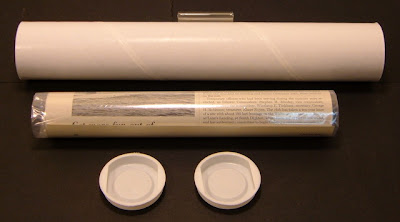
YOUR AD WILL BE SHIPPED ROLLED IN A PROTECTIVE PLASTIC BAG IN AN 80mm (TWICE USPS RECOMMENDED) THICK, 2 INCHES IN DIAMETER (SO AS NOT TO STRESS THE PAPER) SHIPPING TUBE WITH PRESS TIGHT PLASTIC END CAPS.
FC7552

Powered by SixBit's eCommerce Solution