Item Condition: **NOTE** : PAGES MAY SHOW AGE WEAR AND IMPERFECTIONS TO MARGINS, WITH CLOSED NICKS AND CUTS, WHICH DO NOT AFFECT AD IMAGE OR TEXT WHEN MATTED AND FRAMED.
DATE OF THIS ** ORIGINAL ** ADVERTISEMENT / ADVERT / AD:
DATE PRINTED ON ITEM: 1960
GREAT DECOR / ART FOR: HOME OFFICE BUSINESS SHOP STORE CASINO LOFT STUDIO GARAGE SHE SHED
The Nash Rambler is a North American automobile produced by the Nash Motors division of Nash-Kelvinator Corporation from 1950 until 1954 in sedan, wagon, and fixed-profile convertible body styles. On 1 May 1954, Nash-Kelvinator merged with the Hudson Motor Car Company to form American Motors Corporation (AMC). The initial run of the Nash Rambler was then built by AMC in Kenosha, Wisconsin, until 1955. The Nash Rambler established a new segment in the automobile market and is widely acknowledged to be the first successful modern American compact car. This Rambler model also established the idea of a small but luxurious economy car. From 1950 through 1955, the Nash Rambler was the first production for this platform. American Motors reintroduced an almost identical "new" 1958 Rambler American for a second model run. This was a rare feat of having two distinct and successful model runs, an almost unheard-of phenomenon in automotive history. Nash-Kelvinator's President George W. Mason saw that the company needed to compete more effectively and insisted a new car had to be different from the existing models in the market offered by the "Big Three" U.S. automakers. Mason also realized the fundamental problem that had eluded other automakers trying to market smaller-sized cars to Americans: low price was not enough to sell in large volumes, but "also had to be big enough to appeal to families as their primary car." Therefore, the Rambler was designed to be smaller than contemporary cars, yet still able to accommodate five passengers comfortably. Nash engineers had initially penned the styling during World War II. The new car was the company's entry into the lower-price segment dominated by Chevrolet, Ford, and Plymouth models. The Rambler was designed to be lighter and have smaller dimensions than the other popular cars. With a strategy focused on efficiency, Nash could save on materials in its production while owners would have better fuel economy than other cars of the era. The Nash Rambler rode on a 100 in (2,540 mm) wheelbase, and power came from Nash's proven 172.6 cu in (2.8 L) L-head (flathead) straight-6 cylinder engine that produced 82 hp (61 kW; 82 hp). Following the design of the larger "senior" Nash models, the compact Rambler's styling was rounded in form and also had an envelope body – Nash's characteristic styling with fender skirts that also enclosed the front wheels.[This design feature did not impair the car's cornering ability significantly. The compact Rambler line was designed with several body styles, but the inaugural year was limited to a single model: a fully equipped 2-door fixed-profile convertible. The decision to bring the new car out first in a higher market segment with more standard features was a calculated risk by Mason. Foremost in this strategy was the need to give the new Rambler a positive public image. Mason knew the car would fail if seen by the public as a "cheap little car". This was confirmed in small car comparisons in the media that described the "well-equipped and stylish, the little Rambler is economical and easy to drive" with no "stripped-down" versions, but available in only high-end convertible, station wagon, or hardtop (no "B-pillar") body styles. He knew what Crosley was finding out with its line of mini cars, and what the Henry J would teach Kaiser Motors; namely, that Americans would rather buy a nice used car than a new car that is perceived as inferior or substandard. Like other fixed-profile convertibles, the Rambler retained the bodywork's doors and rear-side window frames, unlike traditional convertibles that used frame-free side windows. This metal structure served as the side guides or rails for the retractable waterproof canvas top. This design allowed Nash to utilize its unibody construction on its new compact. It made the body very rigid for an open-top car without the need for additional bracing. The strength of the windshield pillars and roof-rail structure was demonstrated by the entire vehicle flipped upside down, and the rails and supports were undamaged. The convertible top is cable-driven and electrically operated. The design is similar to other fixed-profile convertibles, including the 1936 Fiat 500 "Topolino", Nissan Figaro (1991), Citroën 2CV (1948–1990), Vespa 400 (1957), and the 1957 Fiat 500 (1957) as well as its 2007 Fiat 500 successor. In developing this new car, Nash had planned planned to call it the Diplomat. This name would have rounded out the Nash family of vehicles; since starting with the 1950 model year, the 600 line was renamed the Statesman, and the Ambassador remained the flagship line. When the managers learned that Dodge had already reserved the Diplomat name for a planned two-door hardtop body style, Nash delved into its past, and resurrected the Rambler name from an 1897 prototype and its first production model, in 1902. Rambler was also one of the popular early American automobile brands. On 22 May 1950, the automaker filed trademarks for the Rambler and also the Statesman names. The historical context of the Nash Rambler, along with the Nash-Healey and later the Metropolitan, was that U.S. citizens were exposed to and gained experience with the smaller, more efficient compact, and sporty European cars during the Second World War. Nash's CEO had also visited Italy, France, and England to observe the development of small vehicles in those markets. Some of the styling cues for the convertible Rambler came from Italian designs. The new car's input included the approach of more compact cars that came from Nash-Kelvinator having vast markets overseas. This influence is also seen directly in the Pininfarina-designed models. American Motors would later continue to import European design and styling flair to incorporate into its products, such as the Hornet Sportabouts by Gucci, the Javelins by Pierre Cardin, and the Matador coupes by Oleg Cassini. After offering only two-door-only models, Nash introduced a four-door sedan and a four-door station wagon in the Nash Rambler line starting with the 1954 model year. This was the automaker's response to demands of larger families for more roomy Ramblers. The four-door body styles rode on a longer, 108 in (2,743 mm) wheelbase. Following the industry practice at the time, the heater and radio were now made optional. Added to the options list was Nash's exclusive integrated automobile air conditioning system, a "very sophisticated setup" for the time incorporated heating, ventilation, and air conditioning in one system that was "priced lower than any other competing system; at $345, it was a remarkable advance." The four-door Rambler sedan was at first only available in "Custom" trim. The "Country Club" hardtop became available in the lower-priced "Super" trim and without the "Custom" model's standard Continental tire (external spare tire carrier). The 4-door station wagons were designated Cross Country. They featured an unusual roofline that followed the slope of the sedan's roof, then dipped down behind the rear seat area before leveling and continuing rearward. The design by Bill Reddig allowed the use of the same dies to produce door framing for sedans and station wagons, while the dip in the rear portion of the roof included a roof rack as standard equipment to reduce the visual effect of the wagon's lowered roofline. There was turmoil in the U.S. automobile market as the Ford-Chevy sales war broke out and the two largest domestic automakers cut prices to gain sales volume. This battle decimated the remaining independent automakers in their search for customers. The marketing battle put a squeeze on the much smaller independent automakers, so even though the Nash Rambler economy cars proved popular in the marketplace, they were not particularly profitable for the company. On 1 May 1954, Nash and Hudson Motor Car Company announced a merger, and the successor corporation was named American Motors Corporation (AMC). Following the merger, Hudson dealers began receiving Ramblers that were badged as Hudson brand cars. The Hudson Ramblers and Nash Ramblers were identical, save for the brand name and minor badging. The Nash Rambler's most significant change for the 1955 model year was opening the front wheel wells resulting in a 6-foot (2 m) decrease in the turn-circle diameter from previous year's versions, with the two-door models having the smallest in the industry at 36 ft (11 m). The "traditional" Nash fixed fender skirts were removed and the front track (the distance between the center points of the wheels on the axle as they come in contact with the road) was increased to be even greater than was the Rambler's rear tread. Designers Edmund Anderson, Pinin Farina, and Meade Moore did not like the design element that was insisted by George Mason, so soon as Mason died, "Anderson hastily redesigned the front fenders." Tongue-in-cheek, Popular Science magazine described the altered design for 1955: the "little Rambler loses its pants." As part of the facelift for 1955, the Rambler's grille was also redesigned with only the center emblem differentiating the cars now sold by both Nash and Hudson dealers. The Rambler was a new model for Hudson dealers and it replaced the compact Hudson Jet. The interiors of the economical Nash Rambler were designed by Helene Rother to also appeal to the feminine eye. American Motors featured "Created to Your Discriminating Taste" in the car's marketing knowing what women looked for in a car and Rother's designs featured elegant, stylish, and expensive fabrics that coordinated in colors and trim. Model and trim combinations were again reshuffled with a two-door Suburban and Club two-door sedans available in "Deluxe" or "Super" versions. Four-door sedans and wagons came as Super or Custom models, while a new Deluxe four-door sedan was introduced. The pillarless Country Club hardtop was reduced to only the "Custom" trim, while the convertible model was no longer available. Fleet sales-only versions included a Deliveryman wagon that was not shown in the regular catalog, as well as another new model, a three-passenger business coupe: a two-door sedan with no rear seat. The automaker's marketing efforts included sponsorship of the Disneyland television show on the American Broadcasting Company (ABC) network. The inaugural broadcast was on 25 October 1955; just five days after the new Ramblers debuted in both Nash and Hudson dealerships, and the Disney show quickly became one of the top-watched programs in the U.S., thus helping AMC sell more cars. The focus continued on fuel efficiency and economy of operation. A Rambler four-door set a new record for cars with automatic transmissions achieving 27.47 mpg-US (8.56 L/100 km; 32.99 mpg-imp) in the 1955 Mobil Economy Run. The U.S. domestic market was turning to bigger and bigger cars; therefore, prospects for the compact Nash Rambler line were limited and production was discontinued after the 1955 model year. Nash Motors Company was an American automobile manufacturer based in Kenosha, Wisconsin from 1916 until 1937. From 1937 through 1954, Nash Motors was the automotive division of Nash-Kelvinator. As sales of smaller firms declined after 1950 in the wake of the domestic Big Three automakers’ (General Motors, Ford, and Chrysler) advantages in production, distribution, and revenue, Nash merged with Hudson Motors to form American Motors Corporation (AMC). Nash automobile production continued from 1954 through 1957 under AMC. Innovations by Nash included the introduction of an automobile heating and ventilation system in 1938 that is still used today, unibody construction in 1941, seat belts in 1950, a U.S.-built compact car in 1950, and an early muscle car in 1957. The Nash Ambassador received a complete restyle for 1952 and celebrated the automaker's 50th anniversary as the predecessor firm, the Thomas B. Jeffery Company, marketed its first cars in 1902. The Golden Anniversary Nash Airflyte featured styling publicly credited to Pininfarina. Yet, the design was a combination of the Italian coachbuilder with ideas from Edmund E. Anderson, the lead designer at Nash. The new cars had more conventional lines than the previous 1949 through 1951 Ambassadors and they received several design awards. The large "envelope-bodied" sedans followed the pattern of Nash's enclosed wheels along with now larger die cast "toothy" grille bars. Several European touches were incorporated into production such as the reverse-slanted C-pillars and an interior fishnet "parcel holder" mounted above the windshield for keeping maps and sunglasses. Nash claimed that the Ambassador's comfort and luxury features were so advanced "that other new cars seem outdated in comparison" and advertised the Ambassador as having the broadest and most comfortable seating. The 1952 unit-body design "were good-looking notchbacks" that "looked like nothing on the road," and the cars continued into 1954, almost unchanged. The 1955 models received a revised front grille with integral headlamps. The rear end was redesigned with more pronounced tailfins for 1956, while the final year saw a new front end with "quad" headlamps or two stacked headlamps per side. The 1952 Ambassador was available in the "Super" and "Custom" series as a two- or four-door sedan and a two-door "Country Club" hardtop. The Super included Nash's basic features with the Custom adding two-tone upholstery with foam-topped seat cushions designed by Helene Rother, an electric clock, directional signals, chrome wheel discs, and automatic interior courtesy lights. Standard was the "Super Jetfire" 252.6 cu in (4.1 L) 120 hp (89 kW; 122 PS) I6 engine and was available with optional dual-range Hydramatic automatic transmission or a Warner Gear overdrive unit. Due to materials restrictions caused by the Korean War, Nash sales, like many other carmakers, dropped off sharply in 1952. The Ambassador received minor changes, such as small chrome spacers on the cowl air scoop. Ambassadors were available with dual carburetors and a high-compression aluminum head producing 140 hp (104 kW; 142 PS) as the "Le Mans" option as from the Nash-Healey. With the end of the Korean War, a battle for market leadership began between two historic rival automakers, Ford and Chevrolet. There was also a shift from a seller's to a buyer's market, making it more difficult for the smaller U.S. automakers to compete with the Big Three (Ford, GM, and Chrysler). The Big Three could afford annual styling changes to enhance their sales appeal. To differentiate the model and its styling by Pinin Farina of Europe, as well as the luxury custom interiors and the record-setting Le Mans Dual Jet-Fire engine, Nash advertised the Ambassador Country Club hardtop with the headline "To the Boy Who Wanted a Stutz Bearcat", inviting men to recall their youthful dreams (arguably the first true American sportscar) by driving the 1953 Ambassador "to thrill to the wonder and romance of travel again". In 1954 the Nash Ambassador was the first American automobile to have a front-end, fully integrated heating, ventilating, and air-conditioning system. The heating and ventilation system was called Weather Eye and now could be equipped with Nash-Kelvinators' advanced Automobile air conditioning unit. While other manufacturers in America at the time offered A/C on some models, their air conditioning units were driven by a large and heavy, trunk mounted expander and heat exchanger that carried the air into the car via clear plastic tubes and out through ceiling mounted vents. Nash's unit was inexpensive, compact, fit under the hood, and could circulate fresh or recycled air. With a single thermostatic control, the Nash passenger compartment air cooling option was described as "a good and remarkably inexpensive" system. The option was priced well below systems offered by other carmakers (in 1955, Nash offered it at US$345, against $550 for Oldsmobile or $570 for Chrysler); other makers, such as Ford, did not even offer optional air conditioning. (At the time, even a heater was not always standard equipment.) The Ambassador continued with only a few changes. A new "floating" grille concave grille and partially chromed headlamp bezels were added to the front end. A redesigned instrument panel was a major change inside. The base trim was called "Super," while the higher "Custom" models featured a continental spare tire carrier, and many other upgrades were available in four-door sedan and two-door "Country Club" hardtop forms. The standard 252.6 cu in (4.1 L) I6 was now rated at 130 hp (97 kW; 132 PS) at 3,700 rpm with its 7.6:1 compression ratio and a one-barrel Carter carburetor. A sales war developed between Ford and General Motors between 1953 and 1954, leaving little business for the other domestic automakers. Ford and Chevrolet were shipping their standard size models to their respective dealers no matter if there were any orders for them. A price war with deep discounts to sell these cars meant declining sales for the independent carmakers (Hudson, Kaiser, Nash, Packard, and Studebaker). Nash-Kelvinator merged with ailing Hudson Motor Car Company as of January 14, 1954, to form American Motors Corporation (AMC), and both Nash and Hudson dealers sold the compact-sized Ramblers that were identical save for the "Nash" or "Hudson" badging. Although the "senior" Nash and Hudson models continued to be marketed, sales of the Rambler were powering the company's bottom line. As the compact Rambler's fortunes increased, sales of the senior Nash cars, including the Ambassador, decreased. A total of 21,428 Ambassadors were built in 1954. The Airflyte styling entered its final season with the heavily facelifted 1955 versions created under the direction of Edmund E. Anderson. "Scenaramic" wrap-around windshields accompanied a new front-end treatment with a new oval grille incorporating the headlights. The front fenders featured raised front wheel arches that showed more of the front wheel and tire than Nash had revealed since the 1949 models debuted. Ambassadors were now available with a V8 engine for the first time. The engine was supplied by Packard as part of George W. Mason's vision to have Packard join AMC to help achieve the economies of scale of the domestic Big Three automakers. The 320 cu in (5.2 L) V8 produced 120 hp (89 kW; 122 PS) and mated to Packard's Ultramatic automatic transmission. Ambassador models fielded for 1956 were heavily re-styled in the rear with big "lollipop" taillights, and the cars were offered in a variety of two- and three-tone color schemes. The Ambassador line up was reduced to Super sedans with I6 engines as well as V8 powered Super and Custom sedans and the hardtop Custom Country Club. The Packard V8 was upped to the 352 CID model and available for the entire model year. In April 1956 AMC introduced its 250 cu in (4.1 L) V8 engine producing 190 bhp (142 kW; 193 PS). The AMC 250 V8 was only used in the Nash Ambassador Special and the Hudson Hornet Special. The "Specials" were the lighter (by ~350 pounds) and shorter Statesman and Wasp bodies with Ambassador and Hornet trim. The 1957 models were the first cars equipped with "quad" headlights as standard equipment.[They were vertically stacked in the front fender "pontoons". The 1957 models featured enlarged front wheel well openings to almost "normal" size. The wheels were now 14-inch with standard 8.00x14 tires. The standard engine for the 1957 Ambassador was AMC's own V8, a modern overhead valve design displacing 327 cu in (5.4 L). This was an enlarged version of the 1956 250 with the same stroke (3.25") and a larger bore (4.0" compared to 3.5" -- different block castings). It featured a forged steel crankshaft, a 4-barrel carburetor, and dual exhausts. The new engine was rated at 255 hp (190 kW; 259 PS) and 345 pound force-feet (468 N·m) of torque. Available were a 3-speed manual transmission, an automatic overdrive unit, or Packard's Ultramatic automatic transmission. The Custom models standard features included power brakes, individually adjustable reclining front seats, rear seat center armrest, hood ornament, and many more. Special leather seating surfaces and a continental tire kit were optional. After the production of under 3,600 big Nash cars, the final Nash Ambassador rolled off the Kenosha, Wisconsin production line in the summer of 1957. Nevertheless, the Ambassador - as a top-of-the-line model name - would continue to be marketed under Rambler and AMC brands through 1974.
SPECIAL CHARACTERISTICS/DESCRIPTIVE WORDS: BASEBALL PITCHER CARTOON BY WILLARD MULLIN
ILLUSTRATOR/ARTIST: REAL COLOR PHOTO INSERT PLUS CARTOON BY
Willard Mullin (September 14, 1902 – December 20, 1978) was an American sports cartoonist. He is most famous for his creation of the "Brooklyn Bum", the personification of the Brooklyn Dodgers baseball team, based on circus clown Emmett Kelly's "Weary Willie" hobo persona. He was widely published: he cartooned daily for Scripps-Howard's New York World-Telegram and Sun for decades and was often published in Scripps-Howard's twenty papers, as well as in the Sporting News.
Mullin was often commissioned to draw cover illustrations for yearbooks of the Brooklyn Dodgers, the New York Giants, and---after those teams moved to the West Coast---the New York Mets. Mullin also did covers for Harlem Globetrotters yearbooks. When the Mets looked to be winning the National League East in 1969, Time commissioned Mullin to draw a cover for a feature on the team. Jerry Mitchell's history of the early Mets, The Amazin' Mets, featured several previously published Mullin cartoons illustrating their early struggles.
An oversize retrospective collection of Willard Mullin cartoons, titled Willard Mullin's Golden Age of Baseball: Drawings 1934–1972, was published by Fantagraphics Books in 2013. The book also contains biographical and historical information. In 2015, Fantagraphics Books published Willard Mullin's Casey at the Bat and Other Diamond Tales. This book features Mullin's thirteen drawings to match the thirteen verses of Ernest Thayer's famous baseball poem, the poem as written in Mullin's once-celebrated cartoon lettering style, and a few selections from Mullin's other baseball cartoons. Until the Fantagraphics publication, the Mullin "Casey" had only ever been seen by those who attended an early 1950s convention of the National Association, then the overseers of Minor League Baseball and were given copies of the Mullin "Casey."
He received the Reuben Award in 1954 for his work, as well as the National Cartoonists Society Sports Cartoon Award for each year from 1957 through 1962, and again in 1964 and 1965.
ADVERT SIZE: SEE PHOTO FOR DIMENSIONS (ALL DIMENSIONS IN INCHES)
**For multiple purchases please wait for our combined invoice. Shipping discount are ONLY available with this method. Thank You.
ALL items we sell are ORIGINAL and 100% guaranteed --- (we code all our items to insure authenticity) ---- we stand behind this.
As graphic collectors ourselves, we take great pride in doing the best job we can to preserve and extend the wonderful historic graphics of the past.
PLEASE LOOK AT OUR PHOTO CLOSELY AS IT IS (ALBEIT LOWER RESOLUTION) THE PRODUCT BEING SOLD.....NOT STOCK IMAGES
We ship via United States Postal Service. We have a 3 day handling time not including weekends or holidays.
A Note to our international buyers (Including Canada). Please read before placing a bid or buying an item:
**Import taxes, duties and charges are not included in the item price or shipping charges. These charges are the buyer's responsibility. Please check with your country's customs office to determine what these additional costs will be prior to bidding/buying on items. These charges are normally collected by the shipping company or when you pick the item up, this is not an additional shipping charge. We do not mark merchandise values below value or mark items as GIFTS, US and International government laws prohibit this so please don't ask us to. We are not responsible for shipping times to international buyer's. Your country's customs may hold the package for a month or more.
**We pride ourselves on quality products, great service, accurate gradations and fast shipping.**
BRANCHWATER BOOKS GRADING SCALE:
GOOD-->VERY GOOD-->FINE

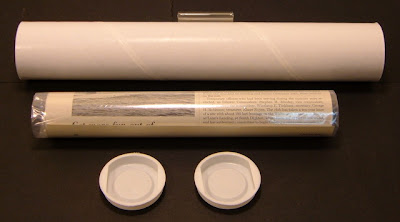
YOUR AD WILL BE SHIPPED ROLLED IN A PROTECTIVE PLASTIC BAG IN AN 80mm (TWICE USPS RECOMMENDED) THICK, 2 INCHES IN DIAMETER (SO AS NOT TO STRESS THE PAPER) SHIPPING TUBE WITH PRESS TIGHT PLASTIC END CAPS.
35985

Powered by SixBit's eCommerce Solution