Item Condition: **NOTE** : PAGES MAY SHOW AGE WEAR AND IMPERFECTIONS TO MARGINS, WITH CLOSED NICKS AND CUTS, WHICH DO NOT AFFECT AD IMAGE OR TEXT WHEN MATTED AND FRAMED.
DATE OF THIS ** ORIGINAL ** ADVERTISEMENT / ADVERT / AD:
DATE PRINTED ON ITEM: 1934
GREAT DECOR / ART FOR: HOME OFFICE BUSINESS SHOP STORE CASINO LOFT STUDIO GARAGE SHE SHED After the troubles of 1929, Buick sought to restore their image with the introduction of a refreshed model line, complete with a simplified naming scheme. The low-cost Marquette brand notwithstanding, Buick’s 1930 lineup consisted of the Series 40, Series 50, and Series 60, with 118-inch, 124-inch, and 132-inch wheelbases, respectively. All Buicks had overhead-valve inline six-cylinder engines, and the Series 50 and 60 shared the larger 331.4 cubic-inch, 99 horsepower unit. The technical improvements paired with graceful new styling that fully redeemed the folly of the previous year. As the flagship of the range, the Series 60 was available in seven different body styles starting with the sporty 2/4-passenger rumble seat roadster priced at $1,585, and culminating with an elegant factory-built limousine at $2,070, putting the big Buick just below LaSalle in GM’s hierarchy. All Series 60 models shared the same 132-inch wheelbase, allowing for particularly striking and well-proportioned styling, especially the two-door styles. In 2017, the Classic Car Club of America recognized the 1930 Series 60 as a Full Classic, making it one of a select few Buicks to join that elite company. Beautifully restored and presented in a handsome blue and black livery, this 1930 Buick Series 60 is one of fewer than ten factory-built roadsters known by the Buick Club of America. This example was the subject of a high-quality, body-off, nut-and-bolt restoration performed in the late 1990s, and it has been very well maintained in the years since. In 1996, Mr. P.E. Kneedler of Rancho Cordova, California, discovered this rare Buick tucked away at a winery in nearby Placerville, California. Photos taken shortly after its discovery reveal the Buick was a complete and driving car before the restoration, albeit a bit tired with many layers of paint on the body. After removing years of old paint, the restorers found the body to be remarkably good, with virtually no corrosion in the sheet metal and excellent original wood. There was little doubt the big Buick had lived a charmed life out on the west coast. The comprehensive, photo-documented restoration included stripping and repainting the chassis, along with a complete overhaul of the driveline. Following years of care and enjoyment with private collectors, this Buick now displays a charming character and subtle mellowing of the restoration. The main body features lovely dark blue paint, trimmed with light blue accents and black fenders. The paintwork has a warm luster, with fine detailing overall and a very slight patina from care and enjoyment. It wears numerous period-correct accessories, including dual Trippe Lights, twin side-mount spares, wind wings, cowl lamps, Mercury mascot (the god, not the car), and a truck rack complete with a covered factory accessory trunk. Chrome plating all appears in good order, and it rides on restored wood-spoke artillery wheels with whitewall tires and chrome center caps. The sporty cockpit has room for two in front with a rumble seat for two occasional passengers. The black leather upholstery has taken on a rich and inviting character with use, showing some minor creasing on the driver’s side. The dash is painted black, with a burl walnut insert and original instruments and controls all presented in good order. Door panels and carpets are tidy and consistent with the well-kept older restoration. A navy-blue canvas top and matching trunk cover complement the paint colors wonderfully, and a set of matching side screens are included for all-weather touring comfort. Buick’s 331.4 cubic-inch inline-six is nicely presented under the hood, painted the proper shade of dark green and detailed with period-correct hardware, wiring, and plumbing. The painted surfaces show some wear consistent with regular use, providing a good foundation for additional detailing if the next owner so chooses. The chassis and undercarriage show signs of routine running, with a moderate patina appropriate for a tour-ready example. It runs and drives well, with plenty of power and excellent road manners. As a CCCA Full Classic, this Buick Series 60 Roadster is an ideal candidate for entry in CARavan tours and other club gatherings. It is a rare, highly attractive, and well-restored example of a very rare Classic Era Buick that is wonderfully suited to regular enjoyment. Buick is one of the oldest automobile brands in the world and is currently the oldest in the United States still active today. Autocar, founded in 1897, is the oldest motor vehicle manufacturer in the western hemisphere; while originally an automobile maker, Autocar now builds heavy trucks. Oldsmobile, also an early automaker founded in 1897, is now defunct; Studebaker was founded in 1852, but did not begin producing automobiles until 1902; Henry Ford produced his first car in 1896 but did not start the Ford Motor Company until 1903, and during the period in between was involved with other automobile manufacturers such as Cadillac, founded in 1902. The first two Buick automobiles were made in 1899 and 1900 at the "Buick Auto-Vim and Power Company" by chief engineer Walter Marr, but company owner David Dunbar Buick was reluctant to begin making automobiles, being satisfied with stationary and marine engine production, so Marr left Buick in 1901 to found his own automobile company under his own name. His replacement was Eugene Richard, who applied for a patent in 1902 for Marr's valve-in-head (overhead valve) engine, which patent, number 771,095, was awarded to Richard in the name of Buick in 1904. In 1903, the third Buick automobile was made, this time by Richard, but in 1904 Buick, whose company was now called "Buick Motor Company", moved from Detroit to Flint, Michigan, and Richard stayed behind. Marr was rehired in Flint as chief engineer, to begin making automobiles in production. That year, 37 Buick automobiles were made, production increasing to 750 in 1905, 1,400 in 1906, 4,641 in 1907, and 8,820 in 1908, taking the number one spot away from close competitors Ford, Maxwell and Olds Motor Works. Buick proclaimed themselves the largest car manufacturer in the world this year. David Buick incorporated his company as the Buick Motor Company on May 19, 1903, in Detroit, Michigan. Buick had been financed by a friend and fellow automobile enthusiast, Benjamin Briscoe, who in September 1903 sold control of the business to James H. Whiting, of Flint Wagon Works, in Flint, Michigan. Whiting moved Buick to Flint, to a location across the street from his factory, with the idea of adding Buick's engines to his wagons. David Buick stayed on as a manager and re-hired Walter Marr as chief engineer. The engine Buick and Marr developed for this automobile was a two-cylinder valve-in-head engine of 159 cubic inches, with each cylinder horizontal and opposed to the other by 180 degrees. Whiting built only a few automobiles in 1904, the Model B, before running out of operating capital, causing him to bring in William C. Durant that year as a controlling investor. Durant built a few more model B's in 1904, stepped up production for the model C in 1905, and spent the next four years turning Buick into the biggest-selling automobile brand in the US. During the 19th century, Durant had made his fortune as co-owner, also in Flint, with Josiah Dallas Dort, of the Durant-Dort Carriage Company, which by 1904 was the largest carriage-making company in the country and one of the largest in the world. Durant moved most Buick production to the former Durant-Dort Imperial Wheel plant in Jackson, Michigan in 1905. Buick continued car production in Jackson through 1907, when Factory #1 was completed in Flint. The Jackson plant continued production with Buick trucks through 1912. David Buick sold his stock upon departure in 1906, making him a wealthy man, but he died in modest circumstances 25 years later. In 1907, Durant agreed to supply motors to R. S. McLaughlin in Canada, an automaker, and in 1908 he founded General Motors. Between 1899 and 1902, two prototype vehicles were builT in Detroit, Michigan by Walter Lorenzo Marr. Some documentation exists of the 1901 or 1902 prototype with tiller steering similar to the Oldsmobile Curved Dash. In mid-1904, another prototype was constructed for an endurance run, which convinced Whiting to authorize the production of the first models offered to the public. The architecture of this prototype was the basis for the Model B. The first Buick made for sale, the 1904 horizontally opposed 2-cylinder engine Model B, was built in Flint, Michigan at a re-purposed factory that was known as the Flint Wagon Works. There were 37 Buicks made that year, none of which survive. There are, however, two replicas in existence: the 1904 endurance car, at the Buick Gallery & Research Center in Flint, and a Model B assembled by an enthusiast in California for the division's 100th anniversary. Both of these vehicles use various parts from Buicks of that early era, as well as fabricated parts. These vehicles were each constructed with the two known surviving 1904 engines. The early success of Buick is attributed mainly to what it called the valve-in-head engine, now known as the overhead valve (OHV), engine patented by Eugene Richard and developed by Richard, Buick, and Marr. The Model F had a two-cylinder engine, an 87-inch wheelbase, and weighed 1,800 lbs. The creation of General Motors is attributed mainly to the success of Buick, so it can be said Marr and Richard's designs directly led to GM. The power train and chassis architecture introduced on the Model B was continued through the 1909 Model F. The Model F was similar to the Model G, a lower-priced two-seat roadster, produced from 1906 until 1909. Both the F and G were powered by a 159 cu in (2.6 L) two-cylinder 159 engine producing 22 hp (16 kW; 22 PS) along with a 2-speed transmission as well as mechanical brakes on the rear wheels. The flat-twin engine is inherently balanced, with torque presented to the chassis in a longitudinal manner. The engine was mounted amidships. Billy Durant was a promoter, and Buick soon became the largest carmaker in America. Durant embarked on a series of corporate acquisitions, calling the new firm General Motors. At first, the manufacturers comprising General Motors competed against each other, but Durant ended that. He wanted each General Motors division to target one class of buyers. Buick was positioned below the Cadillac brand. To save on resources, Buick vehicles shared a common platform, called the GM A platform, that was shared with Chevrolet, Oakland, Oldsmobile, and Cadillac. At first, Buick followed the likes of Napier in automobile racing, winning the first-ever race held at Indianapolis Motor Speedway.
**For multiple purchases please wait for our combined invoice. Shipping discount are ONLY available with this method. Thank You.
SPECIAL CHARACTERISTICS/DESCRIPTIVE WORDS: BODY BY FISHER BUILT IN TRUNK WOMAN DRIVER GARDEN CHILD HULA HOOP
Rolling into the 1930s, Buick was riding high; their confidence boosted after a series of highly successful years. The late 1920s had been quite good for General Motors’ cornerstone marque, readily achieving top-five results in the sales charts. In 1929, Buick celebrated its silver anniversary with the introduction of a line of larger and more powerful models, styled by the recently appointed head of GM’s new Art and Colour Section, Harley Earl. Unfortunately, the new design was not universally loved, and a prominent bulge along the beltline earned it the nickname, the “pregnant Buick,” however unfair that may have been. Aside from the unfounded criticisms of the styling, the 1929 models were well built and had excellent performance courtesy of a range of overhead-valve six-cylinder engines
Buick is a division of the American automobile manufacturer General Motors (GM). Started by automotive pioneer David Dunbar Buick in 1899, it was among the first American automobile brands and was the company that established General Motors in 1908. Before the establishment of General Motors, GM founder William C. Durant had served as Buick's general manager and major investor. With the demise of Oldsmobile in 2004, Buick became the oldest surviving American carmaker. Buick is positioned as a premium automobile brand, selling luxury vehicles positioned below the flagship luxury Cadillac division.
ILLUSTRATOR/ARTIST: B/W ILLUSTRATION
ADVERT SIZE: SEE PHOTO FOR DIMENSIONS (ALL DIMENSIONS IN INCHES)
ALL items we sell are ORIGINAL and 100% guaranteed --- (we code all our items to insure authenticity) ---- we stand behind this.
As graphic collectors ourselves, we take great pride in doing the best job we can to preserve and extend the wonderful historic graphics of the past.
PLEASE LOOK AT OUR PHOTO CLOSELY AS IT IS (ALBEIT LOWER RESOLUTION) THE PRODUCT BEING SOLD.....NOT STOCK IMAGES
We ship via United States Postal Service. We have a 3 day handling time not including weekends or holidays.
A Note to our international buyers (Including Canada). Please read before placing a bid or buying an item:
**Import taxes, duties and charges are not included in the item price or shipping charges. These charges are the buyer's responsibility. Please check with your country's customs office to determine what these additional costs will be prior to bidding/buying on items. These charges are normally collected by the shipping company or when you pick the item up, this is not an additional shipping charge. We do not mark merchandise values below value or mark items as GIFTS, US and International government laws prohibit this so please don't ask us to. We are not responsible for shipping times to international buyer's. Your country's customs may hold the package for a month or more.
**We pride ourselves on quality products, great service, accurate gradations and fast shipping.**
BRANCHWATER BOOKS GRADING SCALE:
GOOD-->VERY GOOD-->FINE

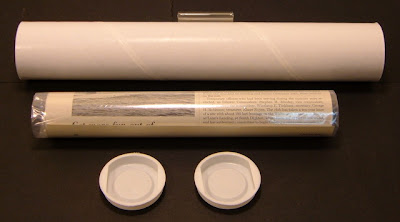
YOUR AD WILL BE SHIPPED ROLLED IN A PROTECTIVE PLASTIC BAG IN AN 80mm (TWICE USPS RECOMMENDED) THICK, 2 INCHES IN DIAMETER (SO AS NOT TO STRESS THE PAPER) SHIPPING TUBE WITH PRESS TIGHT PLASTIC END CAPS.
34586

Powered by SixBit's eCommerce Solution