Item Description
Carbon Fibre Sheet Twill Weave with a Matte Finish on one Side Only.
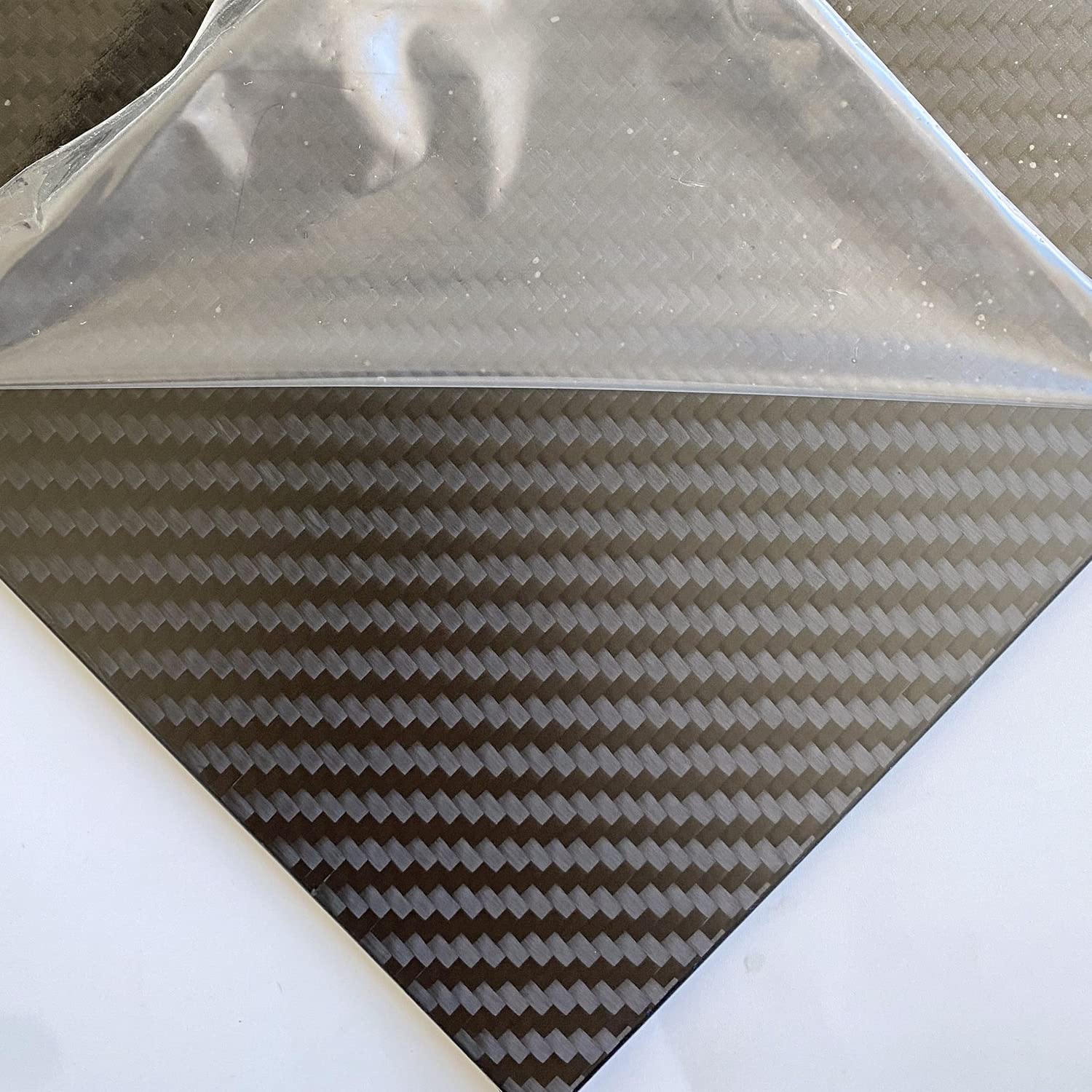
- RC Model Parts
- Race Cars & Automotive
- Drones
- Industrial Robotics
- Musical Instruments
- Bikes
- Furniture

The resin infusion process used in creating these twill weave sheets ensures that the carbon fibers are completely saturated with resin, providing strength and durability without adding unnecessary weight. The process involves placing the carbon fiber fabric in a mold and drawing resin into it under vacuum pressure. This method ensures that the sheet has minimal air bubbles or imperfections, which is critical for maintaining structural integrity. For sheets with a matte cosmetic finish, the resin infusion process is carefully controlled to produce a smooth, uniform finish on the visible side while leaving the other side more functional and unfinished.
Twill weave carbon fiber sheets offer several advantages, particularly in applications that require a balance of strength and flexibility. Compared to plain weave, the twill pattern provides better drapability, allowing the material to conform more easily to complex curves and shapes without wrinkling or compromising its integrity. This makes twill weave sheets particularly well-suited for parts in the automotive, aerospace, and marine industries, where the material may need to wrap around intricate surfaces. Additionally, the twill weave's aesthetic appeal is often preferred in visible applications, where the diagonal pattern provides a modern, high-tech look.
From a performance standpoint, carbon fiber matte twill weave sheets infused with resin are exceptionally resistant to fatigue, impact, and harsh environmental conditions. The resin acts as a protective barrier, shielding the fibers from moisture, chemicals, and UV damage. The matte finish, unlike a glossy surface, does not reflect light, making it ideal for applications where glare is undesirable, such as in automotive interiors, dashboard components, or architectural design elements. Despite the matte appearance, the material retains all the inherent strength and durability of carbon fiber, making it suitable for both functional and cosmetic applications.

Specifications - Sheet Sizes - Different
| Specification | Value |
|---|---|
| Thickness | 1.0mm - 5.0mm |
| Tolerance | + - 0.2mm |
| Type | Carbon Fibre Sheet |
| Bonding | Epoxy Resin |
| Pattern | Twill Weave (one Side) |
| Finish | Matte Finish |
| Colour | Black |
Technical Data for Resin-Infused Carbon Fiber Matte Twill Sheets
Below is a general overview of the technical specifications for resin-infused carbon fiber matte twill sheets. The exact values can vary depending on the manufacturer, resin type, and specific fiber grade.
1. Material Composition:
- Fiber Type: High-strength carbon fiber (typically Toray T300, T700, or equivalent).
- Weave Style: Twill weave (2x2 is common for aesthetic and structural balance).
- Matrix Material: Epoxy, polyester, or vinyl ester resin (infused for optimal fiber wet-out and minimal voids).
- Finish: Matte surface on one or both sides for a premium, non-reflective appearance.
2. Physical Properties:
- Density: 1.5–1.6 g/cm³ (depending on resin content and fiber grade).
- Thickness Range: Typically 0.3 mm to 5 mm (custom thicknesses may be available).
- Fiber Volume Fraction (Vf): 50–60% (indicative of high-performance laminates).
- Surface Finish: Matte (anti-glare and fingerprint-resistant).
3. Mechanical Properties:
- Tensile Strength: ~500–700 MPa (fiber-dominated, depends on grade and layup).
- Tensile Modulus: ~50–70 GPa.
- Flexural Strength: ~600–900 MPa.
- Flexural Modulus: ~60–80 GPa.
- Interlaminar Shear Strength (ILSS): ~40–60 MPa.
- Impact Resistance: High resistance to low-energy impacts due to the toughened resin system.
4. Thermal Properties:
- Glass Transition Temperature (Tg): ~120–180°C (varies with resin system).
- Maximum Operating Temperature: ~80–150°C (short-term exposures may tolerate higher limits).
- Coefficient of Thermal Expansion (CTE): ~1–5 x 10⁻⁶ /°C (fiber-dominated).
5. Additional Characteristics:
- Corrosion Resistance: Excellent (ideal for harsh environments).
- UV Stability: Enhanced with UV-protective resins or coatings (optional for outdoor use).
- Electrical Conductivity: Conductive due to carbon fibers.
- Water Absorption: <0.5% (minimal, depending on resin used).