Click image to enlarge
Description
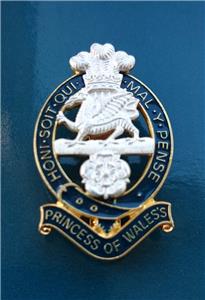
Princess of Wales's Royal Regiment (Queen's and Royal Hampshires) Cap Badge
Superb quality Bi-metal, Parade Cap Badge in a Silver Gilt and enamel finish, from the British Army's senior English Line Regiment.
Cap Badge is in Mint condition, complete with it's mounted brass metal slider.
NSN: 8455-99-978-9649
DESC: Soldiers: Gilding metal and nickel silver. Gilt and silver plated. Blue enamel finish.
The Regimental Badge is a composition of the badges of the forebear regiments. The centrepiece is the Elizabethan Dragon, awarded to The Buffs, in recognition of their Tudor orgin, by Queen Anne, probably in 1707.
Below the Tudor Dragon is the Hampshire Rose, as worn by the Trained Bands of Hampshire, who fought so gallantly for King Henry V at Agincourt in 1415.
The surrounding device inscribed with the motto 'Honi Soit Qui Mal Y Pense' (Shame on him who thinks ill of it), is a garter, as awarded to the Knights of The Garter, England's oldest Order of Chivalry, founded by King Edward III in 1348. The garter is taken from the badge of The Royal Sussex Regiment granted to the Regiment when it was awarded it's 'Royal' status in 1832 and the officers' badge of The Royal Hampshire Regiment.
The feathers above the Tudor Dragon are the ostrich plumes awarded to The Black Prince, but taken from the helmet of the slain King John of Bohemia at the Battle of Crecy in 1346. The 15th Prince of Wales considered the 77th (East Middlesex) Regiment to be deserving of the plumes for its exploits in India.The award was given the King's approval in 1810 and was subsequently in the badge of The Middlesex Regiment. The crown holding the feathers is the Prince of Wales coronet.
A guaranteed new quality item.
Brief Regimental History
The Princess of Wales's Royal Regiment (or PWRR, also known as 'The Tigers') is the senior English Infantry Regiment of the British Army, part of the Queen's Division, and second only in Line Infantry order of precedence to the The Royal Regiment of Scotland.
It was formed in 1992 by the amalgamation of The Queen's Regiment and The Royal Hampshire Regiment and holds the oldest Battle Honour in the British Army (Tangier,1662-80) which was not awarded until 1909. Through its ancestry via the Queen's Regiment to the Queen's Royal Regiment (West Surrey), the PWRR is the most senior English Line Infantry Regiment. The current Regiment was named in honour of Diana, Princess of Wales.
The PWRR is the county Regiment of the following (it also recruits in London):
- London
- Surrey
- Kent
- Sussex
- Hampshire
- Middlesex
- Isle of Wight
- Channel Islands
It is also the only Infantry Regiment that recruits from the Channel Islands.
Upon its creation, HRH The Princess of Wales and HM Queen of Denmark were Allied Colonels-in-Chief of the PWRR. When the Princess divorced HRH The Prince of Wales, she resigned as Colonel-in-chief and the Queen of Denmark has remained its Colonel-in-Chief since.
The 1st battalion served a seven-month tour of Iraq in 2004 with a second tour following in 2006, and finally a tour in 2009 where the battalion was split between Afghanistan and Iraq (last combat operation in Iraq). Many of the operations carried out by the battalion during the first tour were named after stations on the London Underground. Elements of of 1 PWRR helped train the Iraqi National Army and oversaw the withdrawal of UK Forces fom Basra. 1st Battalion was deployed to Afghanistan again in August 2011 to form the nucleus of the Police Mentoring Advisory Group (PMAG) with individual companies detached to other Battlegroups around Helmand province. The 1st Battalion under Army 2020 will move from Paderborn, Germany to be stationed in Bulford Camp.
The regiment's 2nd Battalion were based in Shackleton Barracks, Northern Ireland, the last resident battalion deployed in this role under Operation Banner. After two years at Alexandra Barracks in Dhekelia in Cyprus, they moved to Woolwich Garrison, London, to take up a public duties role in August 2010, a role they performed for three years. 2nd Battalion deployed to Cyprus again in 2014. It remains one of the infantry units rotating between the UK and British Forces Cyprus.
Structure
The Regimental Headquarters (RHQ) is at the Tower of London, whilst the Regiment itself comprises four Battalions:
- 1st Battalion - Armoured Infantry (20th Armoured Brigade)
- 2nd Battalion - Light Infantry serving in UK
- 3rd Battalion - Army Reserve Light Infantry serving with 7th Infantry Brigade and Headquarters East
- 4th Battalion - Army Reserve Light Infantry serving with 7th Infantry Brigade and Headquarters East
There is also a single Army Reserve Company, B (Queen's) Company of the London Regiment.
Surrey Army Cadet Force and Kent Army Cadet Force is affiliated with the Regiment and members wear the Regiment's Cap Badge. Also some Combined Cadet Force contingents including Chichester High School, Kingston Grammer School, Brighton College, Wilson's School, Hampton School, Wimbledon College, Tonbridge School and Alleyn's School are affiliated and wear the Cap Badge and Stable Belt.
Public Duties
The Regiment's 2nd Battalion moved from Alexandria Barracks, Dhekelia after two years in Cyprus to Woolwich Garrison, London, to take up a Public Duties role as of August 2010 with the Battalion's Corps of Drums performing at Windsor Castle and Buckingham Palace. This ended on Sunday 3rd February 2013, with the Battalion being the last Light Role Infantry unit to perform Public Duties; this will now revert full-time back to the Household Division. The Corps of Drums attained the role of best in the British Army. Prior to Cyprus, 2 PWRR were based in Ballykelly, Northern Ireland, the last Resident Battalion deployed in this role under Operation Banner.
Victoria Cross and other decorations
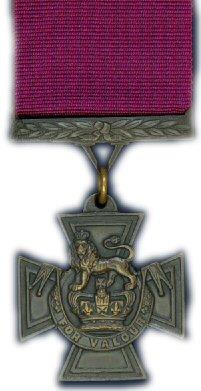
The Regiment as a whole has attained fifty-seven Victoria Cross awards making it the British Army's most decorated Regiment.
21st Century
A total of thirty seven medals and awards were awarded to the Regiments 1st Battalion for their service during operations in Iraq in 2004 including a Victoria Cross, two Distinguished Service Orders, two Conspicuous Gallantry Crosses, one Member of the Order of the British Empire for gallantry, ten Military Crosses, and seventeen Mentioned in Despatches, making them the most highly decorated serving Regiment in the British Army at that time.
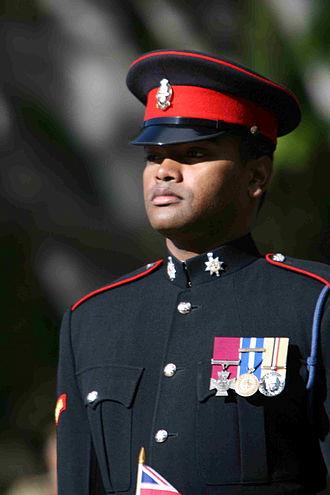
Private Johnson Beharry of the 1st Battalion, PWRR was awarded the Victoria Cross for his actions during his unit's deployment to Al-Almarah, near Basrah. This was the first award of the VC since 1982.
As a Private soldier, driving a Warrior Armoured Vehicle, he carried out two individual acts of great heroism by which he saved the lives of his comrades. Both were in direct face of the enemy, under intense fire, at great personal risk to himself (one leading to him sustaining very serious injuries). His valour was worthy of the highest recognition.
Whilst operating out of CIMIC House. Beharry was promoted from Corporal to Sergeant in early 2013.
Whilst attached to the 1st Battalion, Michelle Norris of the Royal Army Medical Corps became the first woman to be awarded the Military Cross following her actions on June 11, 2006.
The Commanding Officer Lieutenant Colonel (now Brigadier) Matt Maer stated "It has been said that 1 PWRR Battle Group faced the most constant period of conflict of any British Army unit since the Korean War.......The Battle Group in Maysan Province faced over 100 contacts in one day alone and close to 900 over the tour......Every single man who deployed on Operation TELIC had been in some form of contact. That in itself made a tour like no other". Awards continued to be earned by the Regiment on successive tours, including the award of the American Legion of Merit to Major General Paul Newton, the Colonel of the Regiment.
Danish connection
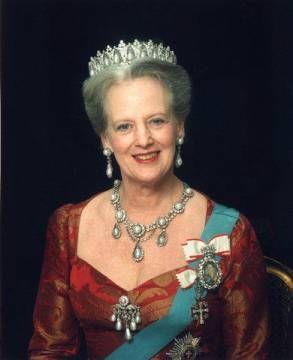
HM Queen Margrethe II of Denmark
The PWRR is one of only two Regiments in the British Army that has a foreign Monarch as its Colonel-in-Chief (the other is The Light Dragoons). Queen Margrethe II was previously the Colonel-in-Chief of the Queen's Regiment, continuing a tradition in her family dating back to the appointment of King Frederick VIII as the Colonel-in-Chief of The Buff's (Royal East Kent Regiment), one of the ancestor Regiments of the PWRR, in 1906.
Battle Honours
- (combined Battle Honours of The Queen's Regiment, and The Royal Hampshire Regiment, with the following emblazoned:)
- The Regimental Colours1: Tangier 1662-80, Namur 1695, Gibraltar 1704-5, Blenheim, Ramillies, Oudenarde, Malplaquet, Dettingen, Minden, Louisburg, Guadeloupe 1759, Quebec 1759, Belleisle, Tournay, Barrosa, Martinique 1762, Seringapatam, Maida, Corunna, Talavera, Albuhera, Almaraz, Vittoria, Peninsula, Punniar, Moodkee, Sobraon, Inkerman, Sevastopol, Lucknow, Taku Forts, Pekin 1860, New Zealand, Afghanistan 1879-80, Nile 1884-85, Burma 1885-87, Relief of Ladysmith, Paardeberg, South Africa 1899-1902, Korea 1950-51
- The Queen's Colours: Mons, Retreat from Mons, Aisne 1914, Ypres 1914 '15 '17 '18, Hill 60, Festubert 1915, Somme 1916 '18, Albert 1916 '18, Arras 1917 '18, Cambrai 1917 '18, Hindenburg Line, Italy 1917-18, Doiran 1917-18, Landing at Helles, Gaza, Jerusalem, Palestine 1917-18, Kut al Amara 1915 '17, Mesopotamia 1915-18, North West Frontier India 1915 1916-17, Dunkirk 1940, Normandy Landing, Caen, Rhine, North-West Europe 1944-45, Abyssinia 1941, El Alamein, Tebourba Gap, Hunt's Gap, Longstop Hill 1943, North Africa 1940-43, Sicily 1943, Salerno, Anzio, Cassino, Gothic Line, Italy 1943-45, Malta 1940-42, Malaya 1941-42, Hong Kong, Defence of Kohima, Burma 1943-45
- 1. also emblazoned:
- The Naval Crown superscribed "1st June 1794" - from the Queen's Royal Regiment (West Surrey)
- The Sphinx superscribed "Egypt" - from the Queen's Royal Regiment (West Surrey) & Queen's Own Royal West Kent Regiment
- The Royal Tiger superscribed "India" - from the Royal Hampshire Regiment
Order of precedence
| Preceded by The Royal Regiment of Scotland |
Infantry Order of Precedence | Succeeded by The Duke of Lancaster's Regiment |
Alliances
- Canada - The Queen's York Rangers (1st American Regiment)
- Canada - The South Alberta Light Horse
- Canada - 49th (Sault Ste Marie) Field Regiment, Royal Canadian Artillery
- Canada - The Queen's Own Rifles of Canada
- Canada - The Hastings and Prince Edward Regiment
- Canada - 1st Battalion, Royal New Brunswick Regiment (Carleton and York)
- Canada - The Essex and Kent Scottish Regiment
- Australia - The Royal New South Wales Regiment
- Australia - The Royal Western Australia Regiment
- Australia - University of New South Wales Regiment
- New Zealand - Hauraki Regiment
- New Zealand - Waikato Mounted Rifles
- Pakistan - 12th, 14th, 15th, and 17th Battalions, The Punjab Regiment
- Royal Navy - HMS Excellent
- France - Le 35e Régiment d'Infanterie - Bond of Friendship
- Denmark - Den Kongelige Livgarde - Bond of Friendship
Notable former member of a predessor Regiment
- Victor Andrew de Bier Everleigh McLaglen (10 December 1886 – 7 November 1959) was an English Boxer and World War I veteran who became a successful Film Actor. Towards the end of his life he was naturalised as a U.S. citizen.
McLaglen was born in Tunbridge Wells, Kent. His father, later a Bishop of the Free Protestant Episcopal Church of England, moved the family to South Africa when McLaglen was a child. He had eight brothers and a sister. Four of his brothers also became actors: Arthur (1888–1972), an actor and sculptor, and Clifford (1892–1978), Cyril (1899–1987) and Kenneth (circa 1901-1979). Other siblings included Frederick (b. circa 1882), Sydney (b. circa 1884), Lewis (b. circa 1889), and a sister, Lily (b. circa 1893). Another brother, Leopold McLaglen, who appeared in one film, gained notoriety prior to World War I as a showman and self-proclaimed World Jujutsu Champion, who authored a book on the subject.
He left home at fourteen to join the British Army with the intention of fighting in the Second Boer War. However, much to his chagrin, he was stationed at Windsor Castle with the Life Guards and was later forced to leave the Army when his true age was discovered.
Four years later, he moved to Canada, where he earned a living as a wrestler and heavyweight boxer, with several notable wins in the ring. One of his most famous fights was against Heavyweight Champion Jack Johnson, in a 6 round exhibition bout. This was Johnson's first bout since winning the heavyweight title from Tommy Burns. Between bouts, McLaglen toured with a Circus, which offered $25 to anyone who could go three rounds with him. He returned to Britain in 1913 and during World War I served as a Captain (acting) with the 10th Battalion, Middlesex Regiment, part of The Princess of Wales's Royal Regiment (Queen's and Royal Hampshires). Later he claimed to have served with the Royal Irish Fusiliers. He served for a time as Military Provost Marshal for the city of Baghdad. He also continued boxing, and was named Heavyweight Champion of the British Army in 1918. After the war, he began taking roles in British silent films.
McLaglen's career took a surprise turn in the 1920s, when he moved to Hollywood. He became a popular character actor, with a particular knack for playing drunks. He also usually played Irishmen, leading many film fans to mistakenly assume he was Irish rather than English. McLaglen played one of the titular Unholy Three in Lon Chaney, Sr.'s original silent version of the macabre crime drama. The highlight of his career was an Academy Award for Best Actor for his role in The Informer (1935), based on a novel by Liam O'Flaherty; Frank Tashlin's 1938 cartoon Have You Got Any Castles? features a caricature of McLaglen emerging from the novel and literally informing someone about some shady characters. Arguably his most famous film remains Gunga Din (1939) with Cary Grant and Douglas Fairbanks, Jr., an adventure epic loosely based on Rudyard Kipling's poem and partially remade decades later as Indiana Jones and the Temple of Doom (1984). McLaglen was nominated again, this time for Best Supporting Actor for his role opposite John Wayne in The Quiet Man (1952). He was especially popular with director John Ford, who frequently included McLaglen in his films, often as comedy relief. Toward the end of his career, McLaglen made several guest appearances on Television, particularly in Western series such as Have Gun, Will Travel and Rawhide. The episodes of those series in which McLaglen guest-starred were both directed by his son, Andrew V. McLaglen, who later was a film director frequently directing John Wayne.
Victor McLaglen was the elder brother of the actor Cyril McLaglen.
Victor McLaglen was married three times. His first marriage was to Enid Lamont in 1919. The couple had one daughter, Sheila, and one son, Andrew. Andrew McLaglen was a Television and Film director. Andrew's children, Mary and Josh McLaglen, are both Film producers and directors. Sheila's daughter, Gwyneth Horder-Payton, is a Television director. Enid Lamont McLaglen died in 1942 as a result of a horse riding accident.
Victor McLaglen married twice more. His second marriage was to Suzanne M. Brueggeman. That marriage lasted from 1943 until 1948. His third and final marriage was to Margaret Pumphrey, whom he married in 1948. He remained married to Margaret, a Seattle socialite, until his death of a heart attack in 1959. He had by that time become a naturalized U.S. citizen. He was buried in Forest Lawn Memorial Park in Glendale, California.
Princess of Wales's Royal Regiment Museum
The Princess of Wales's Royal Regiment Museum is located in Dover Castle, Dover, Kent. Exhibits trace the Regiment's history, and include displays of photographs, paintings, weapons, badges, medals, uniforms and Regimental regalia.
The collection traces the history of the Princess of Wales’s Royal Regiment, direct successor of twelve forbear Regiments through four and a quarter centuries of service to the Crown. Starting in 1572 with the deployment of a Tudor Company to support the Dutch in their war against the Spanish and the raising of a Regiment in 1661 to Garrison the North African port of Tangier, which earned the first ever awarded Battle Honour “Tangier 1662-80” a series of displays, interactive videos and recordings takes the visitor right up to the Regiment’s most recent operations in support of the UN and NATO.
Address:
Princess of Wales's Royal Regiment & Queen's Regiment Museum
5 Keep Yard,
Dover Castle,
Dover,
CT16 1HU
| The Princess of Wales's Royal Regiment | |
|---|---|
Cap Badge of the Princess of Wales's Royal Regiment |
|
| Active | 9 September, 1992 - Present |
| Country |  United Kingdom United Kingdom |
| Branch |  Army Army |
| Type | Line Infantry |
| Role | 1st Battalion - Armoured Infantry 2nd Battalion - Light Infantry 3rd Battalion - Army Reserve 4th Battalion - Army Reserve |
| Size | Four Battalions |
| Part of | Queen's Division |
| Garrison/HQ |
RHQ - HM Tower of London 1st Battalion - Barker Barracks, Paderborn, Germany2nd Battalion - Kendrew Barracks, Nr Cottismore, Rutland 3rd Battalion - Manston, Isle of Thanet, Kent 4th Battalion - |
| Motto(s) | "Honi soit qui mal y pense" ("Shame on him who thinks ill of it") |
| Nickname | The Tigers |
| March | Quick - The Farmer's Boy/Soldiers of the Queen Slow - The Minden Rose |
| Commanders | |
| Colonel in Chief | HM Queen Margrethe II of Denmark |
| Colonel of the Regiment |
Brigadier Richard William Dennis OBE ADC |
| Insignia | |
| Tactical Recognition Flash | |
| Arm Badge |
Blue from The Queens Regiment
From Royal Hampshire Regiment Worn on Combat Shirts
|
| Abbreviation | PWRR |
MILITARY - BRITISH ARMY
Other Badges and items are also available via 'Buy it Now' from our eBay Store.
Buyers!!! Please read all of the Sale listing before buying, including the section below, and note acceptable methods of Payment and Postage details (especially if you are buying from outside the UK).
We will not be held accountable for the buyers own mistakes.
Or visit our eBay Store 'Tomo's Collectables'
Check out our other Items For Sale!
Be sure to add us to your favourites list!
|
|||||||||||||
