1-Pint Of Resin And 1-Pint Of Curing Agent
DESCRIPTION
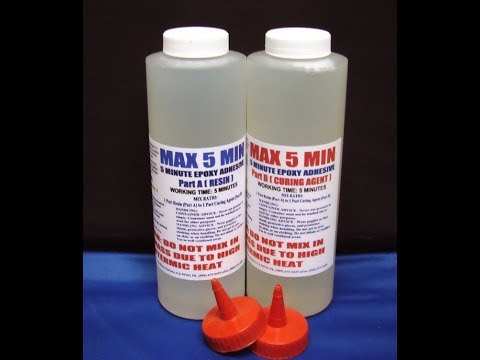
MAX 5MIN A/B is a two part toughened epoxy/polymercaptan resin system that provides fast set up time suitable for bonding, general assembly, and construction. It is an improved performance equivalent to the common 5-minute epoxy resins that are typically supplied in dual-syringe packaging but formulated to provide higher tensile shear and peel strength.
This offering is presented at a much lower bulk pricing than the common pre-packaged kits typically offered in commercial hardware stores. MAX 5MIN A/B offers higher peel strength than the conventional 5- minute systems which makes it suitable for a wider selection of bondable substrates.

Use the included Yorker caps to dispense with ease
and minimize over pouring and reduce spills.
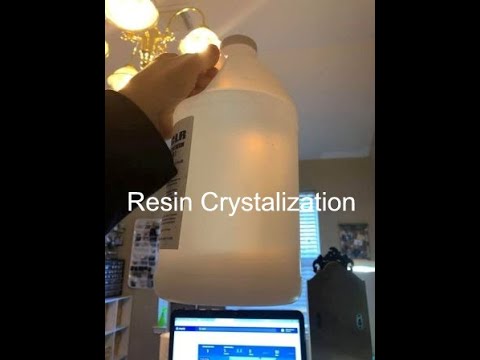
RESIN CRYSTALLIZATION FROM PROLONGED STORAGE
OR COLD WEATHER EXPOSURE
The resin component or the PART A may crystallize due to cold
temperature exposure.
Please inspect the resin component for any
solidified crystals which will appear as waxy solid or cloudiness on the bottom
of the PART A bottle. An information postcard is included with each package.
View the following video for identification and processing. Do not use unless processed to revert any crystallized resin back to a liquid state and avoid poor cured results.
Performance Demonstration
MAX 5Min Epoxy Resin System
Video will open in a new window
1000 Gram Load

MAX 5MIN A/B can be
used for bonding composites, metals, concrete, glass, wood, and almost all
types of substrates. It offers ease of use, fast setup time, and adequate bond
strength for light to medium-duty adhesive applications.
It can also be used
as a fast-setting impregnating resin for fiberglass, Kevlar, and carbon fiber
reinforcing and field repairs, or as a casting resin of small to medium parts
for rapid prototyping.
MAX 5MIN A/B can also be used for waterproofing porous or absorbent substrates,
such as wood, textiles,, masonry, and stone.
MAX 5MIN A/B can be used as an adhesive to bond to plastic substrates such as
ABS and Polypropylene (PP). High- and Low-Density Polyethylene (HDPE and LDPE)
and Polyethylene Terephthalate (PET) with proper surface pretreatment before
significant adhesion develops due to the inherent low surface tension or poor
wettability of substrates.
Corona treating or
Flame Treating the plastic, as demonstrated below, enables MAX 5MIN A/B
adequate surface bonding of plastic substrates.
Flame Treating Of Plastics To Improve Bond Strengthrrr
SURFACE PREPARATION OF SUBSTRATES FOR BONDING OR COATING
In virtually every application the
quality of the bond between the resin system and the surface to which it is
applied is improved if the surface is clean and dry. This is particularly true
of adhesive applications where stress will be applied to the cured bond line.
It is also true where protective coatings are used. The following surface
preparation procedures are recommended.
In virtually every application the quality of the bond between the resin system and the surface to which it is applied is improved if the surface is clean and dry. This is particularly true of adhesive applications where stress will be applied to the cured bond line. It is also true where protective coatings are used. The following surface preparation procedures are recommended.
METALS
1. Degrease – Wipe faying surfaces with Methyl Ethyl Ketone (MEK) to remove all oil, dirt, and grease.
2. Etch – For optimum results, metal parts should be immersed in a chromic acid bath solution consisting of:
Sodium dichromate – 4 parts by weight
Sulfuric acid – 10 parts by weight
Water – 30 parts by weight
The solution should be held at a temperature of 160°F (71°C), and the parts left immersed for 5 to 7 minutes.
3. Rinse – remove metal parts from etching bath and rinse in clean cold water (de-ionized water is recommended). If thoroughly clean, metal surfaces so treated will hold a thin film of water.
4. Dry – To accelerate drying, items to be bonded can be placed in an air-circulating oven.
ALTERNATE PROCEDURE
1. Degrease, scour and dry – Often etching as outlined above is not practical. The metal surfaces may be cleaned by degreasing as noted above, scouring with an alkaline cleanser followed by rinsing and drying.
2. Degrease and dry – Degrease the surface as noted above, sand or sandblast the surface lightly but thoroughly. Rinse with acetone or Methyl Ethyl Ketone (MEK), and dry
GLASS
1. Degrease – With MEK as above, or with a strong boiling solution of a good grade household detergent.
2. Etch – For optimum results, degreasing can be followed with the chromic acid bath outlined above.
WOOD
1. Sand – Bonding surfaces should be sanded lightly, but thoroughly to remove all external contamination.
2. Clean – Carefully remove all dust, or particles of wood from sanded areas. A stiff and clean brush or compressed air can be used.
PLASTIC
1. Clean – Remove all dirt, oil, or other surface contaminants with soap and water, followed by thorough rinsing and allow to dry. A solvent that does not have a detrimental effect may also be used.
2. Sand – Surfaces to be bonded should be sanded lightly, but thoroughly to remove surface sheen.
3. Clean – Carefully remove all dust or particles of plastic from the sanded area. A clean brush, lint-free cloth, or compressed air may be used.
Obtaining an adequate
bond strength when bonding plastic-to-plastic substrates or plastic to
dissimilar substrates is often a challenge for resin system. In
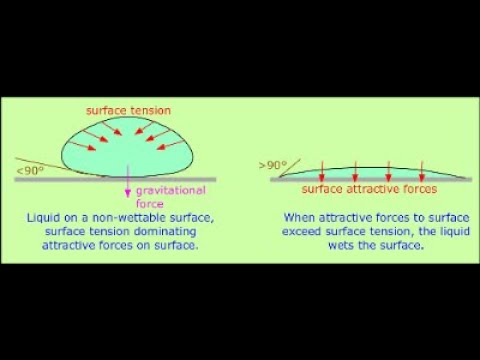
general, plastic surfaces demonstrate poor ‘wettability’ or the ability of
a liquid to form a continuous film. These types of substrates or
are called LSE or Low Surface Energy substrates and
typically thermoplastic surfaces fall within this category.
Teflon or its
generic name PTFE and other polyethylene derivatives such as HDPE, LDPE, UHMW
and olefinic-based plastics demonstrate poor liquid wettability due to its low
surface energy. To create a viable bondable surface condition for these types
of plastics, it must be surface treated by creating a superficial oxidized
surface to increase its dynamic surface tension. Various types of physical
treatment can be used to increase the surface energy of
plastics, mostly through oxidation of the superficial layer.
Flame treatment is
the most widely used and cost-effective pre-treatment for polyethylene (HDPE,
LDPE, UHMW) and polyolefin-based plastics prior to polymer bonding or printing.
It consists of exposing the surface to be coated to a suitable oxidizing flame
during a short period of time (0.2 to 3 sec.).
The resulting change
of the surface by creating an oxidized surface greatly improves the liquids
ability to wet-out the surface thus creating a strong adhesive bond between the
surface and the coating.
Flame Treating Of Plastics For Bonding
A Flame Treating
process consists of exposing the surface to a suitable oxidizing flame for a
period in the range 0.2 to 3.0 seconds.This treatment brings about a change to the polymer surface that increases its
surface energy allowing fluids to effectively wet-out the surface and permits a
strong adhesive molecular and mechanical bond.
Propane Torch Used To
Flame Treat UHMW Plastics


Adjust the propane torch so that a low oxygen
burning flame is achieved and pass over the area to be treated several times
until a slight haze is noticed on the surface of the substrate.

Note
the improved wettability of the flame treated side allowing the tension
modified liquid to effectively wet-out the surface. By modifying the
surface condition of the plastic, polymer bonding is now possible.
Bond Configuration And Design


| METALS 1. Degrease – Wipe faying surfaces with Methyl Ethyl Ketone (MEK) to remove all oil, dirt, and grease. 2. Etch – For optimum results, metal parts should be immersed in a chromic acid bath solution consisting of: Sodium dichromate – 4 parts by weight Sulfuric acid – 10 parts by weight Water – 30 parts by weight The solution should be held at a temperature of 160°F (71°C), and the parts left immersed for 5 to 7 minutes. 3. Rinse – remove metal parts from etching bath and rinse in clean cold water (de-ionized water is recommended). If thoroughly clean, metal surfaces so treated will hold a thin film of water. 4. Dry – To accelerate drying, items to be bonded can be placed in an air-circulating oven. ALTERNATE PROCEDURE 1. Degrease, scour and dry – Often etching as outlined above is not practical. The metal surfaces may be cleaned by degreasing as noted above, scouring with an alkaline cleanser followed by rinsing and drying. 2. Degrease and dry – Degrease the surface as noted above, sand or sandblast the surface lightly but thoroughly. Rinse with acetone or Methyl Ethyl Ketone (MEK), and dry |
GLASS 1. Degrease – With MEK as above, or with a strong boiling solution of a good grade household detergent. 2. Etch – For optimum results, degreasing can be followed with the chromic acid bath outlined above. WOOD 1. Sand – Bonding surfaces should be sanded lightly, but thoroughly to remove all external contamination. 2. Clean – Carefully remove all dust, or particles of wood from sanded areas. A stiff and clean brush or compressed air can be used. PLASTIC 1. Clean – Remove all dirt, oil, or other surface contaminants with soap and water, followed by thorough rinsing and allow to dry. A solvent that does not have a detrimental effect may also be used. 2. Sand – Surfaces to be bonded should be sanded lightly, but thoroughly to remove surface sheen. 3. Clean – Carefully remove all dust or particles of plastic from the sanded area. A clean brush, lint-free cloth, or compressed air may be used. |
Obtaining an adequate bond strength when bonding plastic-to-plastic substrates or plastic to dissimilar substrates is often a challenge for resin system. In general, plastic surfaces demonstrate poor ‘wettability’ or the ability of a liquid to form a continuous film. These types of substrates or are called LSE or Low Surface Energy substrates and typically thermoplastic surfaces fall within this category.
Teflon or its generic name PTFE and other polyethylene derivatives such as HDPE, LDPE, UHMW and olefinic-based plastics demonstrate poor liquid wettability due to its low surface energy. To create a viable bondable surface condition for these types of plastics, it must be surface treated by creating a superficial oxidized surface to increase its dynamic surface tension. Various types of physical treatment can be used to increase the surface energy of plastics, mostly through oxidation of the superficial layer.
Flame treatment is
the most widely used and cost-effective pre-treatment for polyethylene (HDPE,
LDPE, UHMW) and polyolefin-based plastics prior to polymer bonding or printing.
It consists of exposing the surface to be coated to a suitable oxidizing flame
during a short period of time (0.2 to 3 sec.).
The resulting change
of the surface by creating an oxidized surface greatly improves the liquids
ability to wet-out the surface thus creating a strong adhesive bond between the
surface and the coating.
Flame Treating Of Plastics For Bonding
A Flame Treating
process consists of exposing the surface to a suitable oxidizing flame for a
period in the range 0.2 to 3.0 seconds.This treatment brings about a change to the polymer surface that increases its
surface energy allowing fluids to effectively wet-out the surface and permits a
strong adhesive molecular and mechanical bond.
Propane Torch Used To
Flame Treat UHMW Plastics
Adjust the propane torch so that a low oxygen burning flame is achieved and pass over the area to be treated several times until a slight haze is noticed on the surface of the substrate.
Note the improved wettability of the flame treated side allowing the tension modified liquid to effectively wet-out the surface. By modifying the surface condition of the plastic, polymer bonding is now possible.
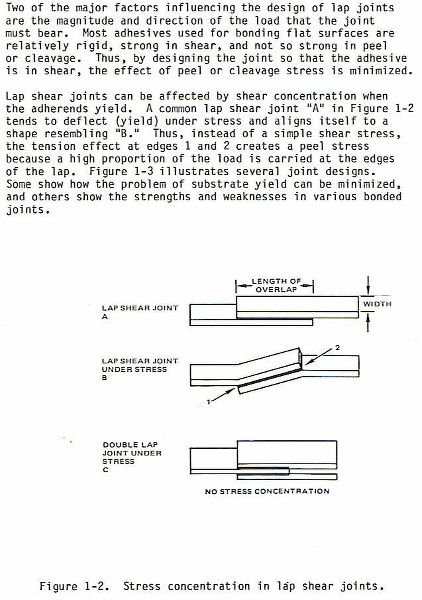
Bond Configuration And Design

Storage Secure the caps for both bottles after use and store above 65°F minimum temperature to prevent re-crystallization. The resin system will remain viable for at least 12 months or longer when stored properly.
RESIN SYSTEMS AT OUR eBay STORE 
IMPORTANT NOTICE
Your purchase constitutes the acceptance of this
disclaimer.
Please review before purchasing this product.
The user should thoroughly test any proposed use of this product and independently conclude satisfactory
performance in the application. Likewise, if the manner in which this product
is used requires government approval or clearance, the user must obtain said
approval.
The information contained herein is
based on data believed to be accurate at the time of publication. The data and
parameters cited have been obtained from published sources and from Polymer
Composites Inc. laboratories, using materials under controlled conditions. Data
of this type should not be used for a specification for fabrication and design.
It is the user's responsibility to determine this product's fitness for use.
There is no warranty of merchantability for fitness of use, nor any other express or implied warranty.
The user's exclusive remedy and the manufacturer's liability are limited to a refund of the purchase price or replacement of the product within the agreed warranty period. Polymer Composites Inc. and its direct representative will not be liable for incidental or consequential damages of any kind.
Determination of the suitability of any kind of information or product for the use contemplated by the user, the manner of that use, and whether there is any infringement of patents is the sole liability of the user.
IMPORTANT NOTICE
Your purchase constitutes the acceptance of this disclaimer.
Please review before purchasing this product.
The user should thoroughly test any proposed use of this product and independently conclude satisfactory performance in the application. Likewise, if the manner in which this product is used requires government approval or clearance, the user must obtain said approval.
The information contained herein is based on data believed to be accurate at the time of publication. The data and parameters cited have been obtained from published sources and from Polymer Composites Inc. laboratories, using materials under controlled conditions. Data of this type should not be used for a specification for fabrication and design. It is the user's responsibility to determine this product's fitness for use.
There is no warranty of merchantability for fitness of use, nor any other express or implied warranty.
The user's exclusive remedy and the manufacturer's liability are limited to a refund of the purchase price or replacement of the product within the agreed warranty period. Polymer Composites Inc. and its direct representative will not be liable for incidental or consequential damages of any kind.
Determination of the suitability of any kind of information or product for the use contemplated by the user, the manner of that use, and whether there is any infringement of patents is the sole liability of the user.