Professional Voltage Tester Pen

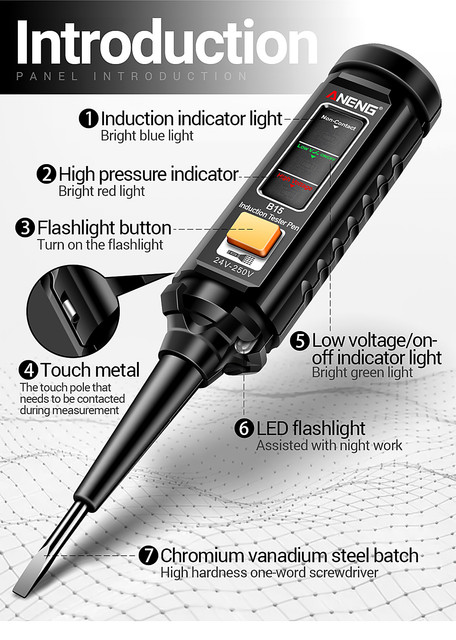
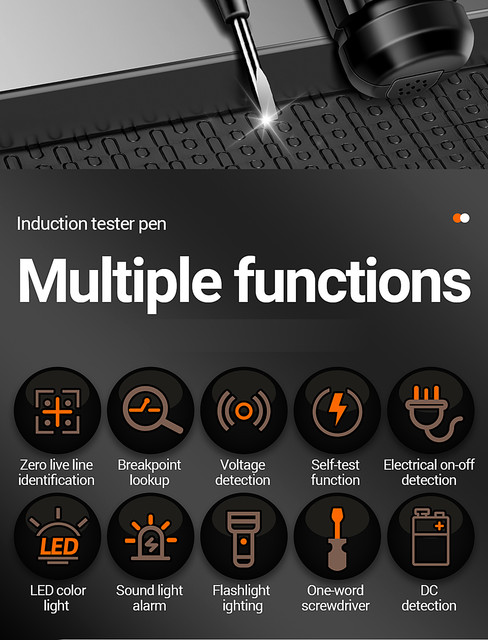
A compact, pocket-size AC voltage tester pen that combines non-contact voltage detection, a live and neutral wire finder, a continuity / break-point check, a built-in LED torch and a slotted screwdriver tip in one tool. Three colour-coded LEDs and a beeper make results quick to read, which makes it a handy addition to any DIY or electrician’s tool kit.
|
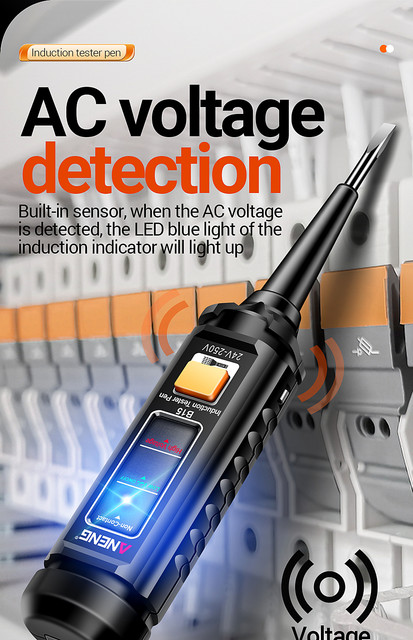
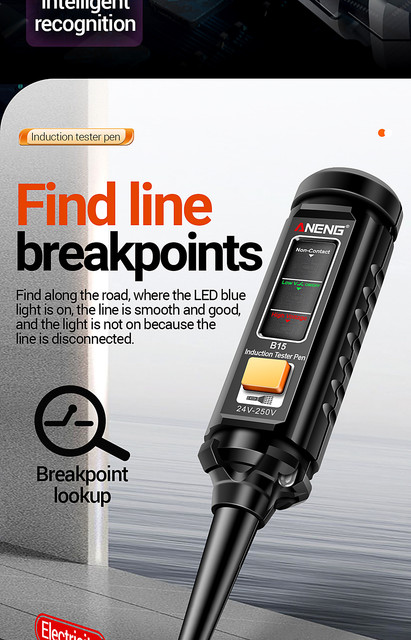
Non-Contact AC Detection Hold the tip near a cable or socket. The blue induction light shows AC voltage is present, without touching the conductor. |
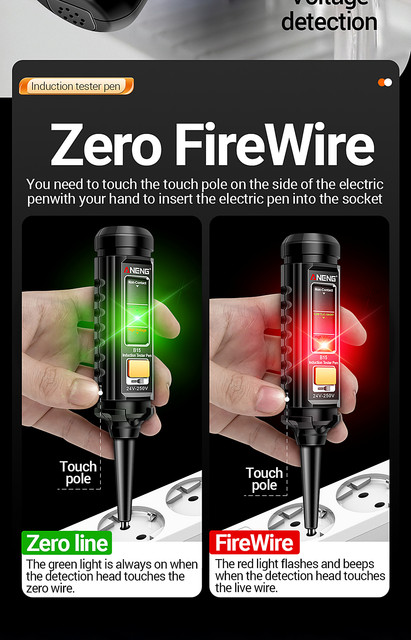
Live & Neutral Wire Finder Touch the side contact pole and test a socket. Green = neutral. Flashing red with a beep = live. |
|
Continuity & Break-Point Check Trace a cable to find where it stops lighting up, or check plug leads and cable cores for breaks. |
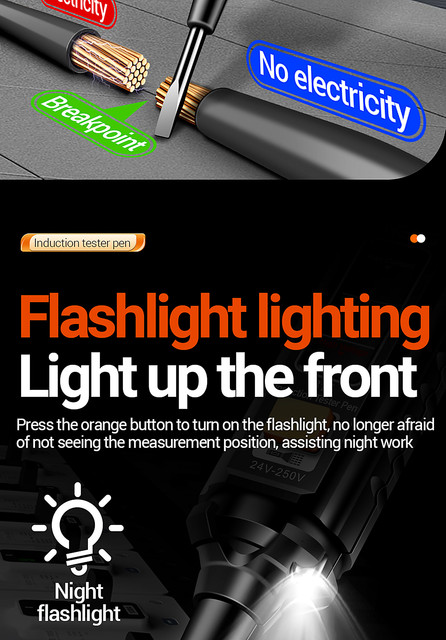
Built-in LED Torch Press the orange button to light up the work area in dim fuse boxes, loft spaces and behind sockets. |
|
Self-Test & Battery Check Confirm the pen is working before every job, and use it to check the charge of small batteries (indicator only). |
Screwdriver Tip & Pocket Clip Slotted chrome vanadium steel tip in a lightweight ABS body (36g) with a clip for your pocket or tool belt. |
1. Self-test first. Hold the pen and touch the side contact pole. A green light means the pen’s batteries are good. No light means replace the batteries.
2. Live / neutral check. Keep a finger on the side contact pole and touch the tip to the socket contact. Green = neutral, flashing red + beep = live.
3. Non-contact check. Bring the tip close to a cable, socket or switch without touching. Blue light = AC voltage detected.
4. Break-point finder. Run the tip along the cable. The blue light goes out where the line is broken.
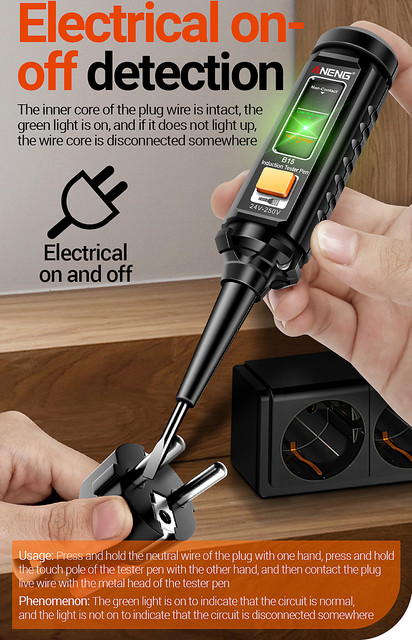
5. Continuity (on/off) test. For unplugged leads and cables only: hold the contact pole and touch the cable ends as shown in the pictures. Green = circuit intact, no light = a break somewhere.
6. Torch. Press the orange button to switch the LED torch on or off.


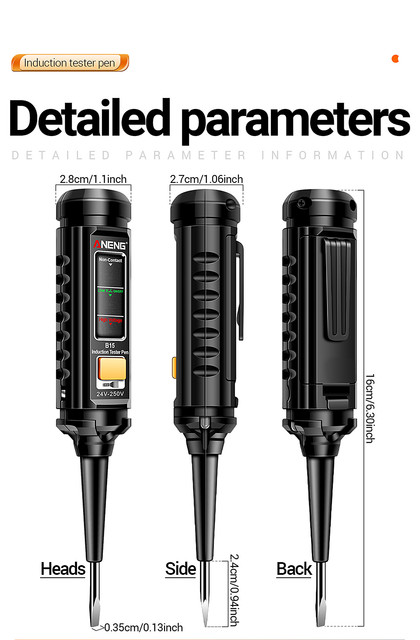
Measurements are approximate. Please allow for small differences between batches.
Checking sockets, plugs, extension leads and switches • tracing cable breaks • checking mains wiring for live and neutral • household DIY jobs • workshops and tool kits • car and garage use with small batteries • a spare pocket tester for electricians and maintenance staff.
1 × Voltage Tester Pen (Model B15)
2 × AAA batteries are required and are not included.
Electrical testing involves a risk of electric shock. This is a basic indicator pen and is not a replacement for a CAT-rated multimeter or approved voltage indicator, or for professional safety procedures. It should only be used by a competent adult who has read the instructions. Never rely on a tester pen alone to confirm that a circuit is dead: test on a known live source before and after use, isolate the supply, and use a qualified electrician for fixed wiring. Do not use the screwdriver tip on live circuits. Results may vary with shielded cables, wet conditions and insulation type.