
- Product Overview
- See Reviews
100% plant-based gray hair dye “Red”
Madder · Beet · Tulsi
Harness the power of plants—through your hair and scalp
This is a blended powder made by drying the leaves, roots, and stems of organically grown madder, beet, and tulsi. It dyes only the gray portions of hair into a red-toned shade. With repeated use, the color develops greater depth.
Ingredients
Ingredients: madder stem, beet root, holy basil (tulsi) leaf.
*We use raw materials produced through organic farming.
* Fair for Life certified fair-trade product

I wondered whether it would turn out a vivid, bright red, but the first finish was a beautiful madder red with slightly stronger red tones than the Orange in the same series. I heard that “Red” contains herbs recommended for those experiencing imbalances such as malignant tumors, and that made sense to me, because it includes beet—so rich in iron and folate that it’s even called “edible blood transfusion”—as well as tulsi (kamimeboki / holy basil), which has been treasured since ancient times in Ayurveda as an elixir of immortality and a panacea. Red is also a powerful color that evokes vitality, energy, and passion, so I feel that continuing to use it will deepen and intensify my hair color and help both body and mind feel more energetic. (Staff N, female, 30s)
I don’t have that much gray hair yet, but I’d long been concerned about my fine, limp hair texture, as well as postpartum shedding and thinning. After attending Dr. Morita’s lecture, I decided to start EcoVeda care. They say many people have restored their hair’s natural beauty and resolved their hair concerns by quitting salon coloring and perms and continuing EcoVeda care! And it makes sense: each product contains different medicinal herbs blended in a way that makes them easy to absorb through the skin—like taking herbal medicine through the head! I felt it could be a fun way to become both beautiful and healthy. Because I have children, I can’t always leave it on as long as the product instructions say, but even so, after repeating it a few times, my hair took on color and gained moisture and bounce. I also feel that not only my hair but even the skin on my face becomes more hydrated and feels better. I was impressed that my scalp no longer gets greasy and makes my hair fall flat. Perhaps the excessive and misguided hair care I’d been doing was preventing my hair’s natural self-cleansing ability from working. It’s also fun to choose one depending on my mood and condition—“Let’s use this today♪”—and the henna scent is pleasant and soothing. I also like that it’s safe even if my kids touch my hair. I’d like to keep incorporating henna into my daily life without overdoing it, and continue for a long time. (Staff N, female, 30s)
How to Use
Put the powder into a container and mix while adding lukewarm water. Once it becomes a paste thick enough not to drip from the hair, apply to the entire head of hair. Because results vary from person to person, use a leave-on time of roughly 60 minutes minimum to 90 minutes maximum as a guideline. After leaving it on, rinse thoroughly with warm water and use shampoo.
※Apply immediately after mixing the powder. (It can be used within 24 hours.)


Precautions for Use
This product is made from natural plants, but in rare cases it may cause an allergic reaction. If it does not suit your skin, discontinue use. Take special care if you have previously experienced a rash from hair dyes. Always perform a patch test before use. If it accidentally gets into your eyes, rinse immediately. If it gets on clothing, the color may not come out, so please be careful. Do not store in humid places.
How to Do a Patch Test
Clean an inconspicuous area such as the inside of your arm or behind your ear. Dissolve a small amount of powder in lukewarm water. After dissolving, apply an area about the size of a 10-yen coin with a cotton swab, let it air-dry, and leave it untouched for 2 days (48 hours). If you feel any abnormalities such as itching or swelling immediately after application or during the 2 days (48 hours), wash it off immediately and do not dye your hair. The applied area will be stained a red-orange color, but it will gradually fade over time.
Morita-Style “Beautiful Hair Regeneration Method”
What does truly “beautiful hair” mean? The only way to obtain “beautiful hair” is to change your own awareness. “Beautiful hair” begins with restoring the scalp and hair to a healthy state. Why not reclaim your natural “beautiful hair” with the power of plants?
[1] Don’t color your hair; don’t get perms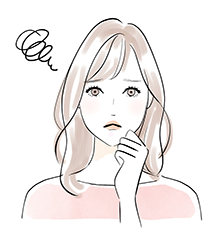 A major cause of hair damage is chemicals such as perm solutions and hair dyes. They accelerate hair aging beyond your actual age. The chemicals used for coloring and perms damage the structure of the hair. First, stop coloring and perming. If you keep using them, not only will gray hair increase at a younger-than-average stage, but thinning hair will also progress. Rather than destroying the material, cherish the hair you were born with.
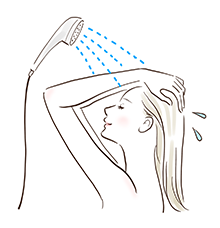 Keeping the scalp healthy helps good hair grow. If you wash too much and the scalp’s oils drastically decrease, the body will produce excess oil and the scalp will become even oilier. If you moisturize with treatment, the scalp stops producing oil and dryness progresses. Using too much product can remain on the hair, clog pores, and lead to frizzy/kinky hair and hair loss.
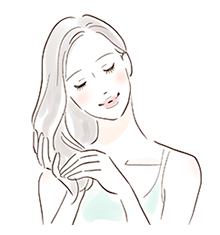 Henna helps repair damaged hair and keeps the scalp healthy. What lends support to regenerating damaged hair and scalp is “henna,” which is 100% natural and made from plants. “Henna” not only has a treatment effect for hair, but also has antioxidant power (※1) that keeps the scalp healthy, and it can also dye gray hair. It also helps calm hair that is too frizzy to manage. When henna is applied to the scalp, the quality of newly growing hair improves. Use henna to promote regeneration of damaged hair and scalp, cherish your own beautiful hair, and age gracefully. (Source: Beautiful Hair Regeneration Method, Laksmi (laksmi-jp.com))
Q&A Answering frequently asked questions
Q.What is henna?
A.Henna is a plant that has been used since ancient Egypt (B.C.). The plant is called “Henna.” It is a shrub about 3–6 m tall that blooms cream-colored flowers. Its leaves are green and contain a red pigment called “lawsone,” and it has traditionally been used to dye eyebrows, nails, and hair. The Japanese name 指甲花 (shikōka) also comes from its use in dyeing fingernails. In Ayurveda, the traditional medicine of India, it has been used as a remedy for preventing skin diseases, and for wounds and burns. In India, for festivals and celebrations, women apply “mehndi,” drawing patterns on the skin with henna.
[Family] Lythraceae
[Scientific name] Lawsonia inermis
[Common name] Henna
[Japanese name] 指甲花 (shikōka)
[Native regions] Well-drained soil in sunny places in North Africa, Southeast Asia, and India
Q.Do EcoVeda organic herbal hair colors contain chemicals such as ammonia or PPD (p-phenylenediamine)?
A.No. They contain no chemicals or toxic substances. They are 100% organically grown plants.
Q.I’m pregnant. Is it okay to keep using EcoVeda organic herbal hair color?
A.It’s better to avoid use during pregnancy. Some herbs have a cooling effect on the body, and during pregnancy it’s better to avoid cooling the body.
Q.Is it okay to use EcoVeda organic herbal hair color during my period?
A.Because henna cools the body, if you use it, please take care not to let your body get cold.
Q.I have atopic dermatitis. Can I use henna?
A.If you have a skin condition and have eczema or inflammation on the scalp, and your skin is dry and flaky, even water alone may sting, so please refrain from using it.
Q.Can henna be used on children?
A.Children do not have gray hair, so henna cannot be used for coloring, but it can be expected to provide a treatment effect and improve frizz. If it’s high-quality henna with no chemicals, it can be used without issue. However, since children have weaker immunity than adults, be sure to perform a patch test just as you would for adults, and avoid use when the child is not feeling well.
Q.I have a lot of gray hair—can I dye my whole head?
A.EcoVeda organic herbal hair color is a 100% organically grown plant-based hair color that can dye gray hair. Because it is 100% plant-based, about 4–5 consecutive uses are required to dye gray hair thoroughly.
Q.Can EcoVeda organic herbal hair color be used on hair damaged by perms or hair coloring?
A.It can be used on hair damaged by perms or coloring, but effects generally appear after about 5–6 uses. Multiple applications are needed to repair damaged cuticles.
Q.Why doesn’t my hair color change immediately after using EcoVeda organic herbal hair color?
A.After rinsing and drying, hair color does not stabilize for about 48 hours. With 100% plant-based hair color, the pigment adheres to the hair’s keratin and develops color by oxidizing when exposed to oxygen (air). When using an herbal hair color with a high proportion of indigo, gray hair may look green or blue immediately after treatment, but as time passes (while exposed to air), it develops color and settles. Using it several times will deepen the color and help achieve your desired shade.
Q.My natural hair color is dark and looks heavy. Can EcoVeda organic herbal hair color make it brighter?
A.No, it cannot lighten hair. EcoVeda organic herbal hair color does not bleach hair the way chemical hair dyes do. It cannot lighten your natural (non-gray) hair color.
Q.After treatment, is it okay to shampoo while rinsing it out?
A.Please use shampoo according to your comfort. However, in seasons when you sweat a lot (such as summer), insufficient rinsing can cause stains on clothing, so rinse thoroughly.
Q.Is it okay to apply henna only to the gray hair around the hairline that bothers me?
A.Yes, that’s fine. Each repeated use increases the depth of color. The hairline is especially noticeable, so pressing the area after application with a paper towel, etc. helps it adhere well and dye beautifully.
Q.I stopped perms and coloring and started henna. My hair feels squeaky/rough—should I stop using henna?
A.Repairing chemically damaged hair takes time. Especially when using henna for the first time, you may feel roughness. The discomfort will lessen with repeated use.
Q.How often is it ideal to use henna?
A.Ideally once a week—like doing a weekly treatment. Color adherence deepens in proportion to frequency of use. You can gain treatment benefits and it may also help reduce hair loss and gray hair.
Q.Should I measure EcoVeda organic herbal hair color powder?
A.As a general guideline, we provide the following “Suggested Amounts.”
Short hair: 25 g + 100 ml lukewarm water
Medium hair: 50 g + 200 ml lukewarm water
Long hair: 75 g + 300 ml lukewarm water
Extra-long hair: 100 g + 400 ml lukewarm water
Q.Should I wash my hair before applying?
A.Washing is generally not necessary, but if you use hairspray or styling products, the dye may not adhere well, so wash it out beforehand.
Q.After applying, do I need to use plastic wrap or a cap?
A.Basically, it’s not necessary. Wrapping with a towel is enough. In cold winter weather, it’s okay to wrap plastic or a cap over the towel to keep warm, but in hot summer weather it can make you sweat and cause the mixture to drip, so it’s not necessary.
Q.If the mixture gets on my skin, how do I remove it?
A.It’s not a problem if it gets on your skin; simply wipe it off. If the color remains, it will gradually fade as you wash over time, depending on how much adhered.
Q.If my hair is almost all gray, during the transition to henna dyeing, can I apply it more frequently than once a week—every day or every 2–3 days—because the boundary bothers me?
A.More frequent applications are more effective, so it’s fine to apply on a shorter cycle.
Q.Can I mix EcoVeda organic herbal hair color “Orange” with “Dark Brown” or “Deep Chestnut” and apply them at once?
A.Mixing them makes it harder to dye. Basically, when “Orange” (henna) adheres well, the treatment effect improves, and applying “Dark Brown” or “Deep Chestnut” separately after leaving some days makes it dye more easily. The indigo contained in “Dark Brown” and “Deep Chestnut” is a natural herb, but it does not contain treatment components and is more stimulating, so using too much can make hair dry. Also, indigo alone does not dye beautifully—it can turn a greenish gray and fade easily. Therefore, the method is to first treat with henna to “care for hair damage” and “coat the hair so moisture in healthy hair does not decrease,” and then dye with an indigo-based colorant as a second step. It’s because the gray hair first becomes orange that indigo can bring it closer to black. If you dye using only a powder blended with indigo and henna from the start, both effects become half-baked and it won’t work well. Indigo dyes in the alkaline range and is weak to acidity. Henna, when dissolved in water, becomes acidic. In that case, neither henna nor indigo can fully demonstrate sufficient dyeing power. Rather than using a pre-blended henna+indigo at once, it’s better—even if it’s more work—to do a two-step process.
[Two-step application]
1. Apply henna | To condition the scalp and bring out the hair treatment effect, first apply henna.
2. Apply an indigo-based dye | Within 2–3 days immediately after rinsing out the henna, apply an indigo-main herbal dye. Use indigo powder immediately after mixing with water; if time passes, it will no longer adhere well.
Q.If I repeatedly apply EcoVeda organic herbal hair color “Orange” and “Dark Brown” or “Deep Chestnut,” what order should I use?
A.“Orange” is first and is very important, including as a treatment. “Dark Brown” and “Deep Chestnut” are second; when “Orange” has dyed well, they dye more easily. Think of “Dark Brown” and “Deep Chestnut” as products needed for adjusting the tone (used only on the sections dyed orange by henna to calm the color).
* Repeating “Orange” → “Dark Brown” → “Orange” → “Dark Brown” … results in brown tones
* Repeating “Orange” → “Deep Chestnut” → “Orange” → “Deep Chestnut” … results in dark brown/black-brown tones
※Tones change depending on how you use them repeatedly. (More “Orange” uses tends to keep hair in better condition.)
Q.About how much EcoVeda organic herbal hair color “Dark Brown” or “Deep Chestnut” should I use?
A.Since you apply it to darken areas where the brightness of “Orange” concerns you, the amount varies depending on the area you want to darken. Decide the amount based on your coverage area.
Q.After using EcoVeda organic herbal hair color “Dark Brown,” it feels like it didn’t dye—why?
A.Blue-toned plant dyes such as “Dark Brown” gradually dye as they oxidize (combine with oxygen in the air) over time, especially more than on the day of application. Please observe for a few days.
Q.How should EcoVeda organic herbal hair color “Red” and “Blonde” be used?
A.Please use them alone as gray-hair dyes. Use “Red” by itself to maintain red tones, and use “Blonde” by itself to maintain blonde tones. ※They cannot be used together with “Orange.”
Q.How long can it be stored after opening? Also, how long can leftover powder be stored? Does it deteriorate when it gets old?
A.After opening, prevent moisture from entering and use within about 3 months at room temperature as a guideline. If dissolved in lukewarm water, use immediately. (If time passes after mixing, the color becomes less likely to adhere.)
Quoted from Organic Henna & Herbs | Kaname Morita / Laksmi
Product Overview
• Net weight: 100 g
• Ingredients: madder stem, beet root, holy basil (tulsi) leaf
*We use raw materials produced through organic farming. / * Fair for Life certified fair-trade product

