|
DATE OF ** ORIGINAL ** INSERT PHOTO / COVER / PRINT: 1929 CITY / TOWN-STATE: DETAILS: Muriel Vanderbilt (November 23, 1900 – February 3, 1972) was an American socialite and a thoroughbred racehorse owner/breeder who was a member of the wealthy Vanderbilt family.[1][2] Early life[edit]Muriel was born on November 23, 1900, in New York City. She was the daughter of William Kissam Vanderbilt II (1878–1944) and Virginia Graham Fair (1875–1935).[3] Her paternal grandparents were William Kissam Vanderbilt and Alva Erskine Smith. Harold Stirling Vanderbilt was her uncle and Consuelo Vanderbilt, the Duchess of Marlborough until her divorce from Charles Spencer-Churchill, 9th Duke of Marlborough in 1921, was her aunt. Her maternal grandfather, James Graham Fair, was a United States senator from Nevada who made a large fortune investing in silver mines on the Comstock Lode.[4] Her parents separated when she was a small girl and she would grow up on Long Island and on the West Coast of the United States where her mother had been born.[5] Career[edit]She shared her father and grandfather Vanderbilt's love of horses. Her mother was also a fan of Thoroughbred horse racing and established Fair Stable that in 1924 and 1925 won back-to-back Horse of the Year honors with Sarazen. She owned a ranch in Carmel Valley, California, where she built stables and kept thoroughbred racehorses. In 1930, it was reported that she received permission by the Chief of police of Middletown to carry a pistol after riding breeches were stolen from her.[6] In May 1946, Frank B. Porter and his son Paul bought the 1,100 acres (450 ha) farm from Vanderbilt for an estiamted $200,000 (equivalent to $2,779,181 in 2021).[7] In 1947, with her third husband, she bought Edenvale Farms, a horse farm south of San Jose, California, where she bred and raised Thoroughbreds and built her own private training track. Her horse, Miche, won the 1952 Santa Anita Handicap and Desert Trial captured several important West Coast stakes including back-to-back editions of the Ramona Handicap. In 1956, she sold Edenvale Farm to Samuel Hamburger of San Francisco, for $650,000, who in turn sold it to real estate developers for approximately $1 million.[8] Later in life, Muriel Vanderbilt Adams owned an 80-acre (320,000 m2) horse farm in Marion County, Florida. Bred and trained at her Ocala farm in 1970, Desert Vixen was the most famous horse she ever owned and bred and in 1979 the filly was inducted into the United States' National Museum of Racing and Hall of Fame. The farm is now part of the exclusive gated community, Jumbolair. Personal life[edit]Muriel Vanderbilt married three times, the first in 1925 to Frederic Cameron Church, Jr., a Boston insurance executive.[9] The marriage ended in divorce in 1929 and in September 1931, she married New Yorker Henry Delafield Phelps (1902–1976).[10] Divorced from her second husband in 1936, she married for a third time in 1944 to John Payson Adams. Muriel died in Florida on February 3, 1972, at the age of seventy-one.[8] The Simmons Bedding Company is an American major manufacturer of mattresses and related bedding products, based in Atlanta, Georgia. The company was founded in 1870, and is one of the oldest companies of its kind in the United States. Simmons' flagship brand is Beautyrest. In addition to operating 18 manufacturing facilities in the United States and Puerto Rico, the company licenses its products internationally. According to a Simmons press release, net sales for 2005 were $855 million, and its revenue was $1.13 billion in 2007 and $1.228 billion in 2013.[1] As of 2011, Simmons ranked in third place among U.S. mattress manufacturers, with a 15.7 percent market share.[2] In 2012, Simmons and its sister company Serta International were acquired by American private equity company Advent International.[3] As of 2022, Simmons is a subsidiary of the American company Serta Simmons Bedding, LLC of Doraville, Georgia.[4] On January 23, 2023, Serta Simmons Bedding filed for Chapter 11 bankruptcy.[5] History[edit]Early history[edit]In 1870, Zalmon G. Simmons opened his first factory in Kenosha, Wisconsin. He started out by manufacturing wooden telegraph insulators and cheese boxes.[6] He branched into making bedsprings after receiving a patent for a woven-wire bedspring in payment of a debt.[7] In 1876, Simmons became the first manufacturer to mass-produce woven wire mattresses. This process helped the company produce beds faster and cheaper, and by 1889, with the introduction of spiral coil springs into woven mattresses, Simmons’ mattress prices dropped from $12 to 95 cents, making mattresses more widely affordable.[8] The business was incorporated in 1884 as the Northwestern Wire Mattress Company, adopting Simmons Manufacturing Company as its name in 1889. According to company records, by 1891 it was the largest company "of its kind in the world".[7] National business[edit]Zalmon Simmons, Jr., who took charge of the business after his father's death in 1910, oversaw additional growth.[7] In 1916, Simmons began advertising nationally, initiating its first national advertising campaign with a double-spread ad in the Saturday Evening Post.[6] By 1919, growth was fast. In response, Simmons acquired manufacturing plants in San Francisco, California; Los Angeles, California; Montreal, Quebec; Toronto, Ontario; Winnipeg, Manitoba; Vancouver, British Columbia; Elizabeth, New Jersey; Seattle, Washington; and Atlanta, Georgia.[6] The following year, Simmons started a new sales arrangement. Instead of purchasing a mattress directly off the retail floor, customers could test the product on in-store samples, order a mattress through the retailer, and receive direct delivery within the next 24 hours from one of Simmons' 64 warehouses.[6][7] This arrangement reduced the need for retailers to own and store their own product inventories.[6] In 1923, Simmons moved its corporate headquarters to New York City.[7] Equipment developed by Simmons in 1925 automated the process of coiling wire and inserting it into fabric sleeves, called encasements. This allowed mass production of pocketed coils, a type of coil that had been available only in very high-priced luxury mattresses. The pocketed coil is the basis for the Simmons Beautyrest mattress brand, which was introduced in 1925.[6] Although the new manufacturing technology greatly reduced its cost, at the time of its introduction a Beautyrest mattress sold for $39.50, three to four times more than the typical price for a standard wire mattress.[7] Simmons promoted its products aggressively with ads that included testimonials from famous people such as Eleanor Roosevelt in 1927 and Henry Ford, H.G. Wells, Thomas Edison, Guglielmo Marconi and George Bernard Shaw in 1929. Eleanor Roosevelt continued to promote the brand into the 1930s, through her radio show.[6] Cole Porter mentioned the Simmons brand in the lyrics of his 1934 song "Anything Goes".[9] In 1940, Simmons introduced the Hide-A-Bed, a sofa that incorporates a fold-out spring and mattress that pull out to form a bed. This became one of the company's best known products and was manufactured until the 1980s.[7] During World War II, Simmons' facilities were diverted to military production, making cots, parachutes, bazooka rockets and other products.[6][7] By the post-war year of 1947, the company was back in the mattress business and started using advertising to associate its products with the Hollywood glamor of actresses including Dorothy Lamour and Maureen O'Hara.[6] A research and development facility was established in Munster, Indiana, in 1957, building upon pioneering studies on human sleep behavior that Simmons had sponsored in the 1930s. In 1958, the company became the first U.S. mattress maker to produce mattresses in king and queen sizes,[6] an innovation that was promoted as solving the "space battle in the bedroom".[8] ARTIST: REAL PHOTOS THEME: EXTRA INFO (TEXT & IMAGE): BLACK AND WHITE INSERT PHOTOGRAPHY CAN EVOKE MANY MOODS / EMOTIONS.... WHEN FRAMED FOR DECOR USE. THESE INSERT PHOTO'S COME FROM VINTAGE PERIODICALS AND MOST OFTEN ARE THE *ONLY* GIVEN SOURCE OF THAT PHOTO. HAVING NEVER BEEN AVAILABLE FOR PURCHASE IN OTHER FORMATS THESE INSERT PHOTO'S ARE UNIQUE IN THIS FORM. THEY MAT AND FRAME UP WONDERFULLY WELL FOR THE WALL DECOR OF ANY HOME OR OFFICE. BLACK AND WHITE PHOTOGRAPHY HAS THAT DISTINCTIVE TOUCH OF ROMANTICISM AND NOSTALGIA THAT, THEREFORE, MAKES THEM BASICALLY TIMELESS IN STYLE. CONDITION: CLEAN, PERFECT FOR FRAMING AND DISPLAYING. ADVERT SIZE: SEE PHOTO - DIMENSIONS AT SIDES ARE SHOWN IN INCHES DESCRIPTION OF ITEM: A GREAT VINTAGE ORIGINAL B/W INSERT PHOTO. INSERT PHOTO'S ARE CAREFULLY REMOVED FROM VINTAGE PERIODICALS AND MAY BE TRIMMED IN PREPARATION FOR DISPLAYING. MARGINS ARE INCLUDED IN ADVERT SIZE. **NOTE** : PAGES MAY SHOW AGE WEAR AND IMPERFECTIONS TO MARGINS, WITH CLOSED NICKS AND CUTS, WHICH DO NOT AFFECT AD IMAGE OR TEXT WHEN MATTED AND FRAMED. THE ADVERT OR ARTICLE YOU RECEIVE WILL BE CRISP AND LEGIBLE, WE HAVE PURPOSEFULLY BLURRED THE IMAGE A LITTLE. At ADVERTISINGSHOP (DIVISION OF BRANCHWATER BOOKS) we look for rare & unusual ADVERTISING, COVERS + PRINTS of commercial graphics from throughout the world. ALL items we sell are ORIGINAL and 100% guaranteed --- (we code all our items to insure authenticity) ---- we stand behind this. As graphic collectors ourselves, we take great pride in doing the best job we can to preserve and extend to you wonderful historic graphics of the past. PLEASE LOOK AT OUR PHOTO'S CLOSELY AS THEY ARE IMAGES OF THE PRODUCT BEING SOLD..... NOT STOCK PHOTO'S We ship via United States Postal Service. We have a 3 day handling time not including weekends or holidays. **Import taxes, duties and charges are not included in the item price or shipping charges. These charges are the buyer's responsibility. Please check with your country's customs office to determine what these additional costs will be prior to bidding/buying on items. These charges are normally collected by the shipping company or when you pick the item up, this is not an additional shipping charge. We do not mark merchandise values below value or mark items as GIFTS, US and International government laws prohibit this so please don't ask us to. We are not responsible for shipping times to international buyer's. Your country's customs may hold the package for a month or more. **We pride ourselves on quality products, great service, accurate gradations and fast shipping.**  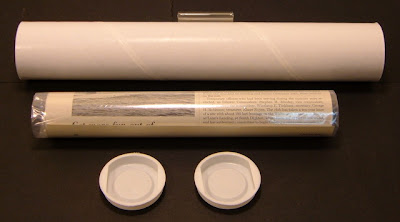
YOUR AD WILL BE SHIPPED ROLLED IN A PROTEctive PLASTIC BAG IN AN 80mm (TWICE USPS RECOMMENDED) THICK, 2 INCHES IN DIAMETER (SO AS NOT TO STRESS THE PAPER) SHIPPING TUBE WITH PRESS TIGHT PLASTIC END CAPS (TAPED FOR EXTRA PROTECTION). --If you cannot give 5 star rating please contact us so we may attempt to remedy the problem, Thank you.-- --Add ADVERTISINGSHOP to your seller favorite list today! We will be adding vintage and unusual advertising almost daily.-- Please visit our EBAY STORE: to find more vintage collectibles. Just click on the BOOK below. |
 |
| Branchwater Books and Ephemera |
32221

Powered by SixBit's eCommerce Solution