|
DATE OF ** ORIGINAL ** INSERT PHOTO / COVER / PRINT: 1910 CITY / TOWN-STATE: DETAILS: EARLY 1900'S ORIGINAL LIFE MAGAZINE ADVERTISEMENT HIGHLIGHTING THE ARTIST JOSEPH CHRISTIAN JC LEYENDECKER. MENS FASHION, HEALTH BEAUTY, SHAVING ETC. Gillette is an American brand of safety razors and other personal care products including shaving supplies, owned by the multi-national corporation Procter & Gamble (P&G). Based in Boston, Massachusetts, United States, it was owned by The Gillette Company, a supplier of products under various brands until that company merged into P&G in 2005. The Gillette Company was founded by King C. Gillette in 1901 as a safety razor manufacturer.[2] Under the leadership of Colman M. Mockler Jr. as CEO from 1975 to 1991,[3] the company was the target of multiple takeover attempts, from Ronald Perelman[4] and Coniston Partners.[3] In January 2005, Procter & Gamble announced plans to merge with the Gillette Company.[5] The Gillette Company's assets were incorporated into a P&G unit known internally as "Global Gillette". In July 2007, Global Gillette was dissolved and incorporated into Procter & Gamble's other two main divisions, Procter & Gamble Beauty and Procter & Gamble Household Care. Gillette's brands and products were divided between the two accordingly. The Gillette R&D center in Boston, Massachusetts, and the Gillette South Boston Manufacturing Center (known as "Gillette World Shaving Headquarters"), still exist as functional working locations under the Procter & Gamble-owned Gillette brand name.[6] Gillette's subsidiaries Braun and Oral-B, among others, have also been retained by P&G. HistoryInception and early yearsThe Gillette company and brand originate from the late 19th century when salesman and inventor King Camp Gillette came up with the idea of a safety razor that used disposable blades. Safety razors at the time were essentially short pieces of a straight razor clamped to a holder. The blade had to be stropped before each shave and after a time needed to be honed by a cutler.[7] Gillette's invention was inspired by his mentor at Crown Cork & Seal Company, William Painter, who had invented the Crown cork. Painter encouraged Gillette to come up with something that, like the Crown cork, could be thrown away once used.[8][9] While Gillette came up with the idea in 1895, developing the concept into a working model and drawings that could be submitted to the Patent Office took six years. Gillette had trouble finding anyone capable of developing a method to manufacture blades from thin sheet steel, but finally found William Emery Nickerson, an MIT graduate with a degree in chemistry. Gillette and other members of the project founded The American Safety Razor Company on September 28, 1901. The company had issues getting funding until Gillette's old friend John Joyce invested the necessary amount for the company to begin manufacturing.[10][8][9] Production began slowly in 1903, but the following year Nickerson succeeded in building a new blade grinding machine that had bottlenecked production. During its first year of operation, the company had sold 51 razors and 168 blades, but the second year saw sales rise to 90,884 razors and 123,648 blades. The company was renamed to the Gillette Safety Razor Company in 1904 and it quickly began to expand outside the United States. In 1905 the company opened a sales office in London and a blade manufacturing plant in Paris, and by 1906 Gillette had a blade plant in Canada, a sales operation in Mexico, and a European distribution network that sold in many nations, including Russia.[8][11] ARTIST: Joseph Christian Leyendecker (March 23, 1874 – July 25, 1951) was one of the most prominent and financially successful freelance commercial artists in the U.S. He was active between 1895 and 1951 producing drawings and panitings for hundreds of posters, books, advertisements, and magazine covers and stories. He is best known for his 80 covers for Collier's Weekly, 322 covers for The Saturday Evening Post, and advertising illustrations for B. Kuppenheimer men's clothing and Arrow brand shirts and detachable collars. He was one of the few known homosexual artists working in the early-twentieth century U.S.[1][2][3] Early life[edit]Leyendecker (also known as 'J. C.' or 'Joe') was born on March 23, 1874, in Montabaur, Germany to Peter Leyendecker (1838–1916) and Elizabeth Ortseifen Leyendecker (1845–1905). His brother and fellow illustrator Francis Xavier (aka "Frank") was born two years later. In 1882, the entire Leyendecker family immigrated to Chicago, Illinois, where Elizabeth's brother Adam Ortseifen was vice-president of the McAvoy Brewing Company. A sister, Augusta Mary arrived after the family immigrated to America.[2][3] As a teenager, around 1890, J. C. Leyendecker apprenticed at the Chicago printing and engraving company J. Manz & Company, eventually working his way up to the position of staff artist. At the same time he took night classes at the school of the Chicago Art Institute.[3] After studying drawing and anatomy under John Vanderpoel at the Chicago Art Institute, J. C. and Frank enrolled in the Académie Julian[4] in Paris from October 1895 through June 1897. Upon their return from Paris to Chicago, the Leyendecker brothers took an apartment in Hyde Park, Illinois. They also shared a studio in Chicago's Fine Arts Building at 410 South Michigan Ave. Career[edit]J. C. Leyendecker had a long career that extended from the mid-1890s until his death in 1951. During that time he worked for a wide range of commercial, editorial and government clients. Before 1902: Chicago and Paris[edit]As a staff artist at J. Manz & Company J. C. Leyendecker produced 60 Bible illustrations for the Powers Brothers Company, cover and interior illustrations for The Interior magazine, and frontispiece art for The Inland Printer. He also produced artwork for posters and book covers for the Chicago publisher E. A. Weeks.[5][6] He also provided artwork for a range of marketing materials for the Chicago men's clothier Hart, Schaffner & Marx.[7] While in Paris, J. C. Leyendecker continued providing art to Hart, Schaffner & Marx, produced artwork for 12 covers of The Inland Printer, and won a contest (out of 700 entries) for the poster and cover of the midsummer 1896 issue of The Century magazine, which garnered national newspaper and magazine coverage.[1][2][3] Upon his return from Paris in June 1897, Leyendecker illustrated for a range of mostly local clients including Hart, Schaffner & Marx, the Chicago department store Carson, Pirie & Scott, the Eastern Illinois Railroad, the Northern Pacific Railroad, Woman's Home Companion magazine, the stone cutter's trade journal Stone, Carter's monthly, the bird hobbyist magazine The Osprey, and books including Conan Doyle's Micah Clarke and Octave Thanet's A Book of True Lovers.[1][2] He also painted 132 scenes of America for L. W. Yaggy's laptop panorama of Biblical scenes titled Royal Scroll published by Powers, Fowler & Lewis (Chicago).[8] On May 20, 1899, Leyendecker received his first commission for a cover for The Saturday Evening Post launching a forty-four-year association with the magazine. Eventually, his work would appear on 322 covers of the magazine, introducing many iconic visual images and traditions including the New Year's Baby, the pudgy red-garbed rendition of Santa Claus, flowers for Mother's Day, and firecrackers on the 4th of July.[1] During the 1890s, Leyendecker was active in Chicago's arts community. He exhibited with and attended social events by the Palette and Chisel Club, the Art Students League, and the Chicago Society of Artists. In December 1895, some of his posters were exhibited at the Siegel, Cooper & Company department store in Chicago. In January 1898 his posters for covers of The Inland Printer were exhibited at the Kimball Cafetier (Chicago).[2][9] During his 1895-97 time studying in Paris, J. C. Leyendecker's work won four awards at the Académie Julian and one of his paintings titled "Portrait of My Brother" was exhibited in the Paris salon in 1897. One of his posters for Hart, Schaffner & Marx titled "The Horse Show" was exhibited as part of the award winning display of American manufacturers' posters at the Exposition Universelle (1900) in Paris.[7] After 1902: New York and New Rochelle[edit]After relocating to New York City in 1902, Leyendecker continued illustrating books, magazine covers and interiors, posters, and advertisements for a wide range of ever-larger and more-prominent clients. His illustrations for men's product advertising, pulp magazines, and college posters earned him a reputation as specialist in illustrations of men.[10] Major clients included the Philadelphia suitmaker A. B. Kirschbaum,[7] Wick Fancy Hat Bands,[11] Gillette Safety Razors,[12] E. Howard & Co. watches, Ivory Soap, Williams Shaving Cream, Karo Corn Syrup, Kingsford's Corn Starch, Interwoven socks, B. Kuppenheimer & Co., Cooper Underwear, and Cluett Peabody & Company, maker of Arrow brand shirts and detachable shirt collars and cuffs. The male models who appeared in Leyendecker's 1907-30 illustrations for Arrow shirt and collar ads were often referred to as "the" Arrow Collar Man even though they were modeled by a number of different men, some of whom went on to successful careers in theater, film, and television. Some models include Brian Donlevy, Fredric March, Jack Mulhall, Neil Hamilton, Ralph Forbes, and Reed Howes.[13] One of Leyendecker's most frequently used models was the Canadian-born Charles A. Beach (1881–1954). Leyendecker met Beach in 1903 when Beach came to the artist's New York studio looking for modeling work.[14] Beach subsequently appeared in many of Leyendecker's illustrations and the two enjoyed a nearly 50-year professional and personal relationship. Many Leyendecker biographers have described that relationship as having a romantic and sexual dimension.[4][15][16][17] Another important Leyendecker client was Kellogg's cereals. As part of a major advertising campaign, he painted a series of twenty different images of children eating Kellogg's Corn Flakes.[18] During the first World War and Second World War Leyendecker painted military recruitment posters and war bonds posters for the U.S. government. Decline of career[edit]After 1930, Leyendecker's career began to slow, perhaps in reaction to the popularity of his work in the previous decade or as a result of the economic downturn following the Wall Street Crash of 1929. Around 1930-31, Cluett Peabody & Company ceased using Leyendecker's illustrations in its advertisements for Arrow collars and shirts. In 1936, George Horace Lorimer, the famous editor at the Saturday Evening Post, retired and was replaced by Wesley Winans Stout (1937–1942) and then Ben Hibbs (1942–1962), both of whom rarely commissioned Leyendecker to illustrate covers.[19] Leyendecker's last cover for the Saturday Evening Post was of a New Year Baby for the January 2, 1943, issue.[20] New commissions were fewer in the 1930s and 1940s. These included posters for the United States Department of War, in which Leyendecker depicted commanding officers of the armed forces encouraging the purchases of bonds to support the nation's efforts in World War II.[19] Personal life[edit]Sexuality[edit]No statements (in Leyendecker's own words) survive concerning his sexual desires, behavior, or identity, however what is known about his personal life fits the pattern historians have identified for many homosexuals who lived during his time.[4][16][17][21][22] Leyendecker never married, and he lived with another man, model Charles A. Beach, for most of his adult life (1903–1951).[14] Beach was Leyendecker's studio manager and frequent model, and many biographers describe Beach as Leyendecker's romantic, sexual, or life partner. They also describe Leyendecker as "gay" or "homosexual."[1][3][4][16][23] Some historians have attributed the "homoeroticism" in some of Leyendecker's work to his sexuality while others have pointed to the collaborative nature of commercial art making which suggests the content of Leyendecker's work was more expressive of the times in which it was created than the artist's sexuality.[12][16][22][24][25] THEME: EXTRA INFO (TEXT & IMAGE): BLACK AND WHITE INSERT PHOTOGRAPHY CAN EVOKE MANY MOODS / EMOTIONS.... WHEN FRAMED FOR DECOR USE. THESE INSERT PHOTO'S COME FROM VINTAGE PERIODICALS AND MOST OFTEN ARE THE *ONLY* GIVEN SOURCE OF THAT PHOTO. HAVING NEVER BEEN AVAILABLE FOR PURCHASE IN OTHER FORMATS THESE INSERT PHOTO'S ARE UNIQUE IN THIS FORM. THEY MAT AND FRAME UP WONDERFULLY WELL FOR THE WALL DECOR OF ANY HOME OR OFFICE. BLACK AND WHITE PHOTOGRAPHY HAS THAT DISTINCTIVE TOUCH OF ROMANTICISM AND NOSTALGIA THAT, THEREFORE, MAKES THEM BASICALLY TIMELESS IN STYLE. CONDITION: CLEAN, PERFECT FOR FRAMING AND DISPLAYING. ADVERT SIZE: SEE PHOTO - DIMENSIONS AT SIDES ARE SHOWN IN INCHES DESCRIPTION OF ITEM: A GREAT VINTAGE ORIGINAL B/W INSERT PHOTO. INSERT PHOTO'S ARE CAREFULLY REMOVED FROM VINTAGE PERIODICALS AND MAY BE TRIMMED IN PREPARATION FOR DISPLAYING. MARGINS ARE INCLUDED IN ADVERT SIZE. **NOTE** : PAGES MAY SHOW AGE WEAR AND IMPERFECTIONS TO MARGINS, WITH CLOSED NICKS AND CUTS, WHICH DO NOT AFFECT AD IMAGE OR TEXT WHEN MATTED AND FRAMED. THE ADVERT OR ARTICLE YOU RECEIVE WILL BE CRISP AND LEGIBLE, WE HAVE PURPOSEFULLY BLURRED THE IMAGE A LITTLE. At ADVERTISINGSHOP (DIVISION OF BRANCHWATER BOOKS) we look for rare & unusual ADVERTISING, COVERS + PRINTS of commercial graphics from throughout the world. ALL items we sell are ORIGINAL and 100% guaranteed --- (we code all our items to insure authenticity) ---- we stand behind this. As graphic collectors ourselves, we take great pride in doing the best job we can to preserve and extend to you wonderful historic graphics of the past. PLEASE LOOK AT OUR PHOTO'S CLOSELY AS THEY ARE IMAGES OF THE PRODUCT BEING SOLD..... NOT STOCK PHOTO'S We ship via United States Postal Service. We have a 3 day handling time not including weekends or holidays. **Import taxes, duties and charges are not included in the item price or shipping charges. These charges are the buyer's responsibility. Please check with your country's customs office to determine what these additional costs will be prior to bidding/buying on items. These charges are normally collected by the shipping company or when you pick the item up, this is not an additional shipping charge. We do not mark merchandise values below value or mark items as GIFTS, US and International government laws prohibit this so please don't ask us to. We are not responsible for shipping times to international buyer's. Your country's customs may hold the package for a month or more. **We pride ourselves on quality products, great service, accurate gradations and fast shipping.**  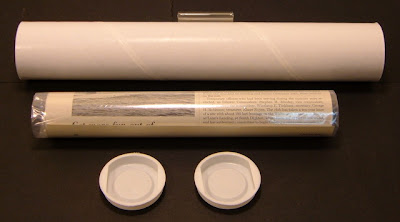
YOUR AD WILL BE SHIPPED ROLLED IN A PROTEctive PLASTIC BAG IN AN 80mm (TWICE USPS RECOMMENDED) THICK, 2 INCHES IN DIAMETER (SO AS NOT TO STRESS THE PAPER) SHIPPING TUBE WITH PRESS TIGHT PLASTIC END CAPS (TAPED FOR EXTRA PROTECTION). --If you cannot give 5 star rating please contact us so we may attempt to remedy the problem, Thank you.-- --Add ADVERTISINGSHOP to your seller favorite list today! We will be adding vintage and unusual advertising almost daily.-- Please visit our EBAY STORE: to find more vintage collectibles. Just click on the BOOK below. |
 |
| Branchwater Books and Ephemera |
ZY71

Powered by SixBit's eCommerce Solution